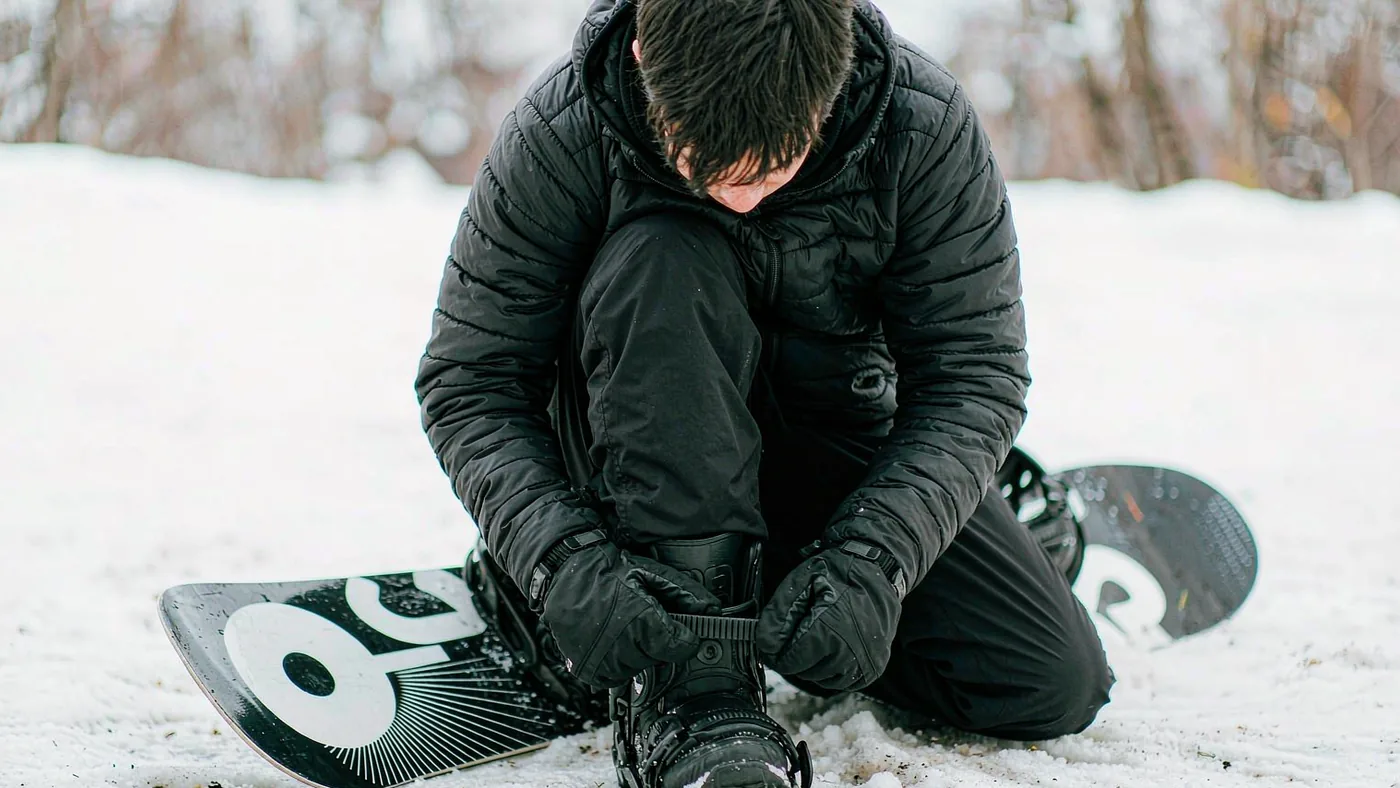
It is a Wednesday evening at an indoor slope outside Manchester, and the lift queue is full of people in their first month of riding. Almost every board in that queue is an entry-level deck, chosen carefully, sized properly, researched for a fortnight. Almost nobody is on a boot that fits. The money has gone in the wrong order, and you can watch the consequences at the top of every run: heels lifting inside the shell on the traverse, riders gripping with their toes to stop themselves sliding forward, and the general air of a foot negotiating with its boot rather than controlling a board.
Bindings get the same treatment, only later and more quietly. They are the last line of the budget, so they get whatever is left over — usually a soft freestyle model off a sale rack, or whatever came bundled with a package deal. For the first three days that is genuinely fine. You will not notice. By the end of week one, when you start holding an edge at any kind of speed, you will.
The honest position is this. A first binding should sit in the middle of the flex range, with hardware that still works at minus eight with wet gloves on. Buy the softest thing on the wall and you will be shopping again next winter. Buy the stiffest and you will spend the season working against your own equipment, wondering why every run feels like effort.
What a first binding actually needs
A flex in the middle of the range. A very soft binding flexes away from the boot at exactly the moment you are trying to press an edge into the snow. That is what is happening when a rider washes out on a firm red and sits down — the highback bends back, the boot moves inside the binding, and the message your legs are sending never arrives at the edge. A medium or medium-soft flex bends with the boot when you want it to and holds firm when you ask for a turn. Better still, it still works in your third season. A soft binding does not grow with you; it just becomes the thing you have to replace.
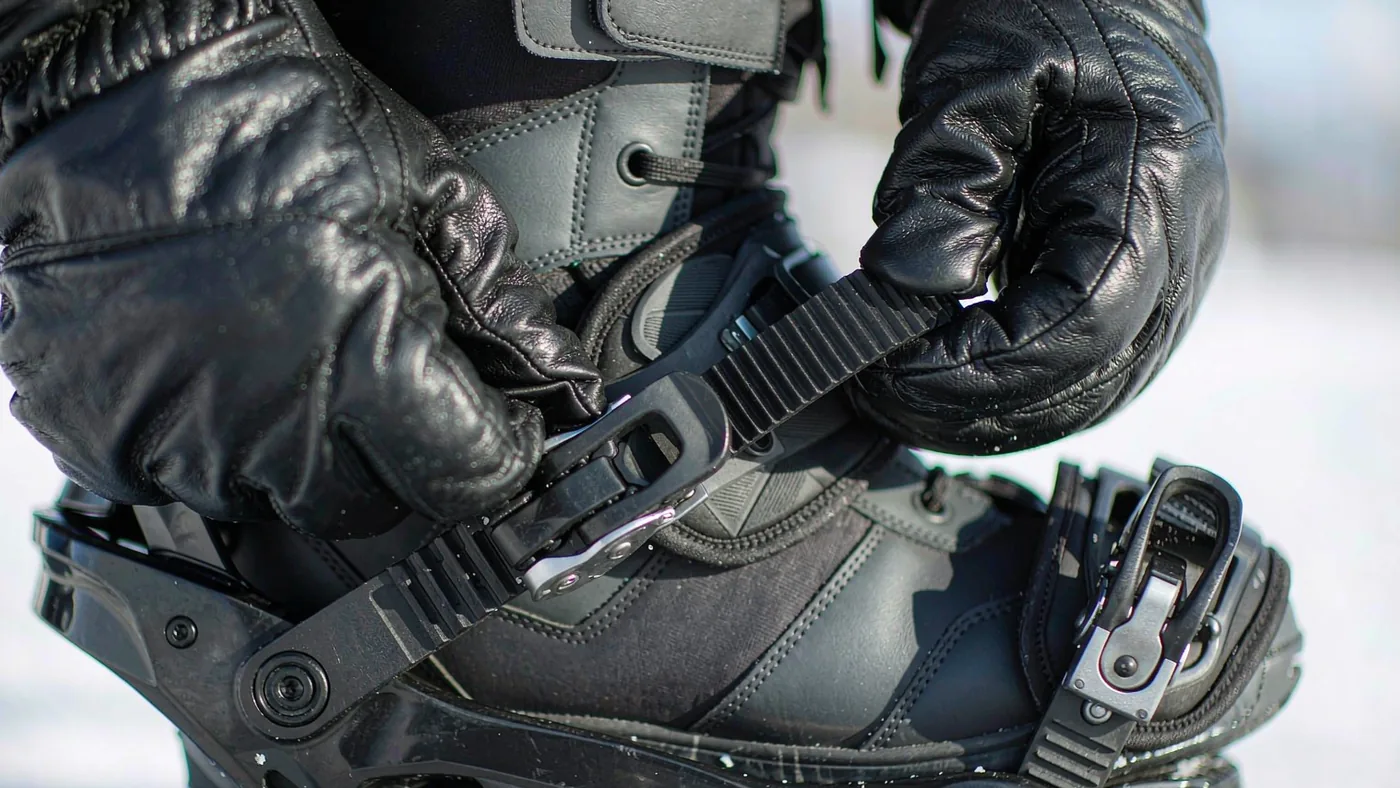
Ratchets that release with a gloved thumb. This is the specification nobody publishes and the one that ruins days. Cheap ratchets stiffen in the cold, and the ladder strap starts to chew. The test takes ten seconds in a shop: put your gloves on, strap the binding up, and try to release it. If you cannot do it with a thumb through a glove, imagine doing it at the top of a windswept drag lift with a board dangling off your other foot.
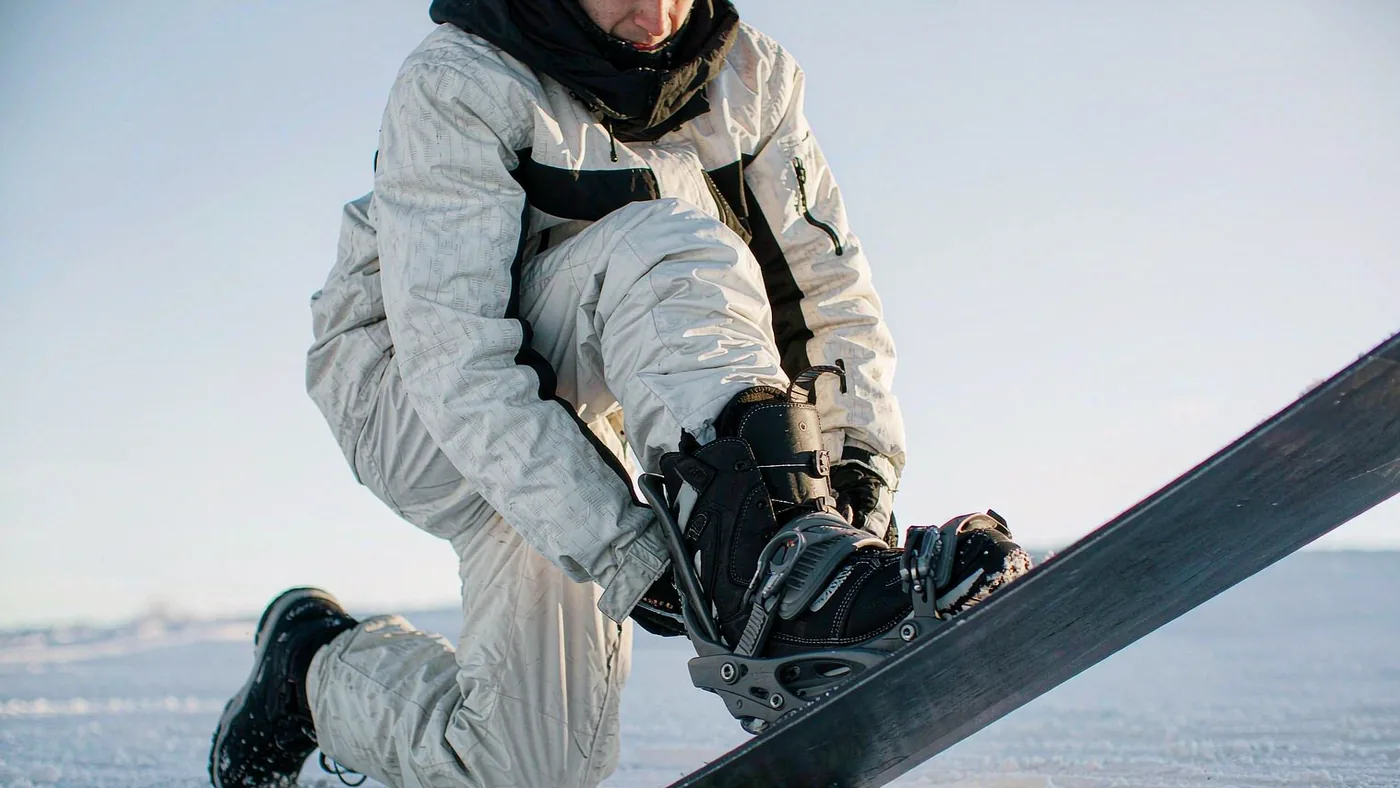
Straps that stay open when you step in. Soft, floppy straps fold over on themselves as you push your boot in, and you end up holding the strap with one hand and your board with the other. Straps with a bit of structure to them stay where they are put, which matters far more when you are unsteady than when you are not.
A baseplate that fits the board you own. Almost every binding mounts with a disc that drops into a standard insert pack, so compatibility is usually a non-issue. Burton boards are the exception: they use the channel, and most Burton bindings ship with hardware for both systems. Check this before you order rather than in the car park, because a bargain binding that will not mount to your board is not a bargain.
The picks
The default answer when someone asks which all-mountain binding to buy. Strong, simple, and it stays stiff enough to drive a proper board.
Best for
- All-mountain riders doing piste, park and travel
- Riders who want a binding to last several seasons
Worth skipping if
- Riders wanting an ultralight touring setup
- Anyone after a flexy, surfy feel
- Flex bias
- Medium
- Intended terrain
- All-mountain
- Mounting
- Universal disc, most board inserts
Strengths
- Reliable, long-lived and easy to service
- Firm enough for aggressive piste riding
- Straps work well with bulky boots
Trade-offs
- Heavier than premium carbon options
- Not the most playful binding in the park
Specifications reflect published manufacturer information, last checked 2026-09-28. We have not laboratory-tested this product; the assessment above is editorial, based on the published design and the rider profile it targets. How we review gear.
A softer-edged, more forgiving ride than the Union Force. If you want the mountain to feel slightly less harsh underfoot, this is the one.
Best for
- Riders who prefer a damped ride
- Joint pain on hard European pistes
Worth skipping if
- Budget builds
- Riders wanting the stiffest possible response
- Flex bias
- Medium-soft
- Intended terrain
- All-mountain
- Mounting
- Channel and standard discs
Strengths
- Noticeably smoother on icy, chattered snow
- Comfortable straps, even over thicker boots
- Fits a very wide range of boards
Trade-offs
- Slightly less direct than a stiffer binding
- Priced above the cheapest competitor options
Specifications reflect published manufacturer information, last checked 2026-09-28. We have not laboratory-tested this product; the assessment above is editorial, based on the published design and the rider profile it targets. How we review gear.
A comfortable, mid-flex binding that suits riders splitting time between park and groomers.
Best for
- All-mountain freestyle riders
- Riders wanting a softer binding
Worth skipping if
- Riders wanting maximum stiffness
- Flex bias
- Medium
- Intended terrain
- All-mountain freestyle
- Mounting
- Universal disc
Strengths
- Comfortable over long days
- Good value in the mid range
Trade-offs
- Less direct than a stiff binding
- Not built for extreme freeride
Specifications reflect published manufacturer information, last checked 2026-09-28. We have not laboratory-tested this product; the assessment above is editorial, based on the published design and the rider profile it targets. How we review gear.
How they compare
| Binding | Flex | Best suited to | Main strength | Main trade-off |
|---|---|---|---|---|
| Union Force | Medium | All-mountain riders doing piste, park and travel | Reliable, long-lived and easy to service | Heavier than premium carbon options |
| Burton Cartel | Medium-soft | Riders who want less chatter underfoot | Cushioned baseplate smooths icy, chattered snow | Slightly less direct than a stiffer binding |
| Rome D.O.D. | Medium | Riders splitting time between park and groomers | Comfortable over long days and good value | Not built for extreme freeride |
Flex and character notes are editorial judgements drawn from published manufacturer specifications and established rider consensus, last checked 28 September 2026.
Where beginners waste money
Carbon and the weight pitch. The premium tier in bindings buys lighter materials, mostly carbon in the baseplate and highback. That saving is real for a rider touring or logging serious mileage. For someone doing one or two weeks a year, the money is better spent on a boot that fits or a lesson at the start of the trip.
The stiff-is-better line. Stiffness is not a ladder you climb towards. It is a fit decision, like boot width. A binding that overpowers a lighter or less experienced rider makes every turn more work than it needs to be, and the only person it flatters is the one selling it.
Buying the binding before the boot. The boot decides fit and flex, and the binding has to match both. Buying in the other order is how riders end up with a firm binding, a soft boot and a board that feels vague in the middle of a turn.
If you are buying second-hand
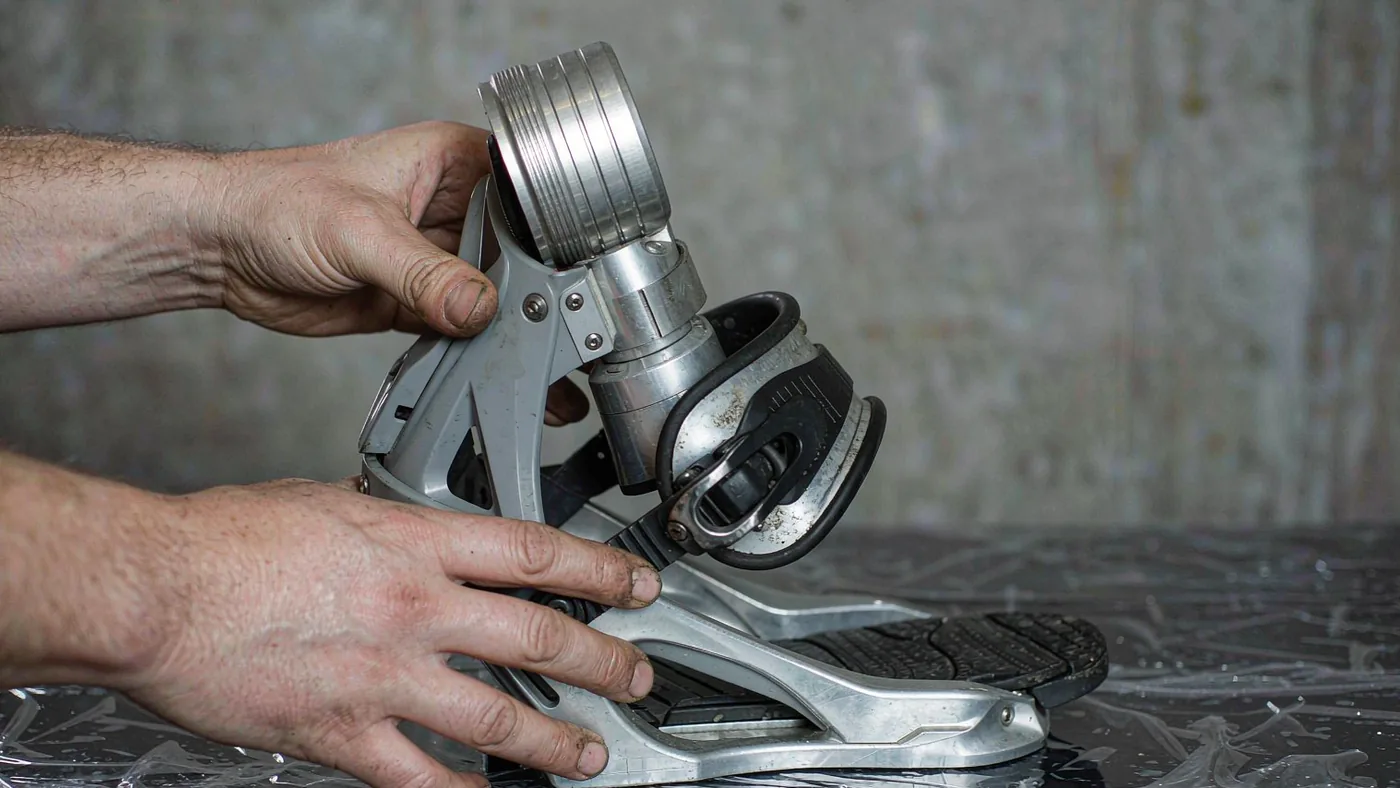
Bindings are one of the better things to buy used, because the failure points are visible. Look at the ladder straps for cracks, work the ratchet through its full travel, and check the baseplate and heelcup for hairline cracks around the mounting holes. Replaceable straps are worth more than a premium baseplate, because a strap you can buy and swap in ten minutes is the difference between a scuffed second-hand binding and a bin bag.
Verdict
For most first-season riders, the Union Force is the sensible buy: mid-flex, simple, serviceable and firm enough to still be useful once you can genuinely ride. If you feel every lump of refrozen slush through your knees, the Burton Cartel is the kinder ride. Do not buy the Rome D.O.D. if your aim is aggressive piste riding on hard morning snow — it is comfortable and playful, but it gives up directness, and a rider chasing grip will outgrow it faster than they expect.
Frequently asked questions
Should a beginner buy soft bindings because they are more forgiving?
Up to a point. A very soft binding is forgiving of bad technique, but it also fails to transmit what little edge pressure a beginner can generate, which slows progress. A medium flex gives you a connection you can feel. Riders under about 65kg can happily go one step softer than the manufacturer's medium; heavier riders should not.
How much should I spend on a first binding?
Budget tier is adequate for one week a year at a gentle pace. The money that is genuinely worth paying sits in the mid range, and it buys hardware: smoother ratchets, straps that do not crack, and a baseplate you can get a screwdriver onto. Expect a mid-range binding to last five seasons of a fortnight each.
Will my bindings fit any snowboard?
Almost any board with a standard insert pattern takes almost any binding, because the disc is universal. Burton boards use the channel, which needs either a channel-compatible disc or Burton's own hardware. Check the mounting system on your board before you order, and check the disc in the box before you leave the shop.
Do I need to match my binding brand to my boot brand?
No. Binding and boot brands are independent, and compatibility constraints are rare outside step-in systems, which require boots built with the matching connection points. Match the flex instead. A medium binding over a medium boot is a sensible pairing; a stiff binding over a soft boot wastes both.
Is it worth buying bindings at the end of the season?
Yes, if you can be flexible about size. Sizes sell through unevenly, so the medium and large options tend to thin out first while the extremes linger. If you already know your size and your board's mounting system, shopping after the season is the least risky way to buy the mid-range tier for less.
Where to go next
If you are still assembling a first setup, start with the first setup buying order and the best boots for beginners, because boots decide more of this than bindings do. Our best snowboard bindings round-up covers the tier above this one, and the Union Force vs Burton Cartel comparison settles the two most common beginner shortlists. When the hardware arrives, get the size right with the binding sizes guide.