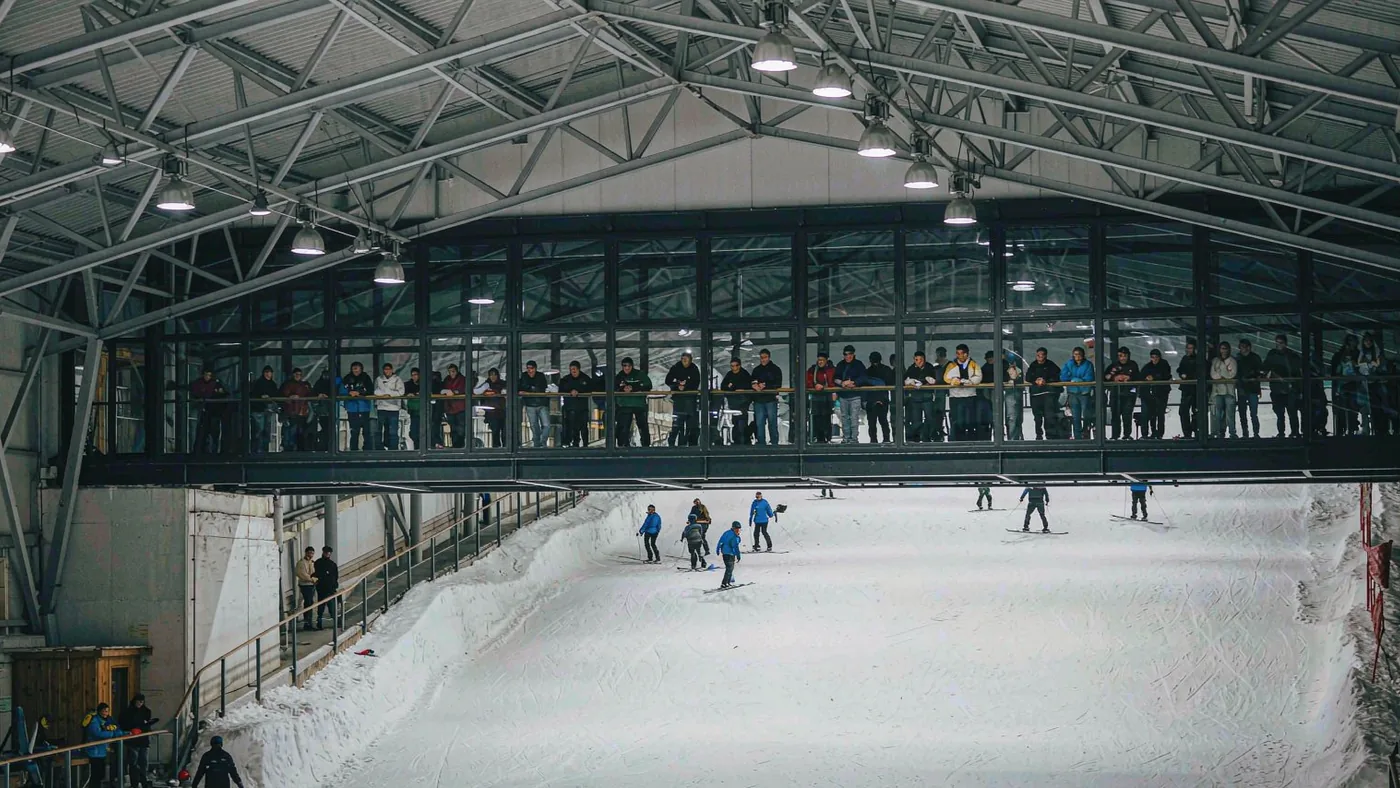
The first time you ride a heavily rockered board on a hard morning, the sensation is genuinely unsettling. You come out of the lift station at La Plagne onto a firm, refrozen piste, tip the board over to start a turn, and instead of the edge biting and the board tracking round, the nose slides sideways for a moment before anything happens. Then you adjust, sit back slightly, and suddenly it turns easily and feels relaxed.
Nothing is broken. You have just met a rocker-dominant profile on exactly the snow it likes least.
Camber affects grip, float, pop and how forgiving a board is when you make a mistake — more than flex in most cases, and far more than the graphics.
What camber actually does
Camber describes the curve of the base between the tip and the tail when the board is sitting on a flat surface with no weight on it.
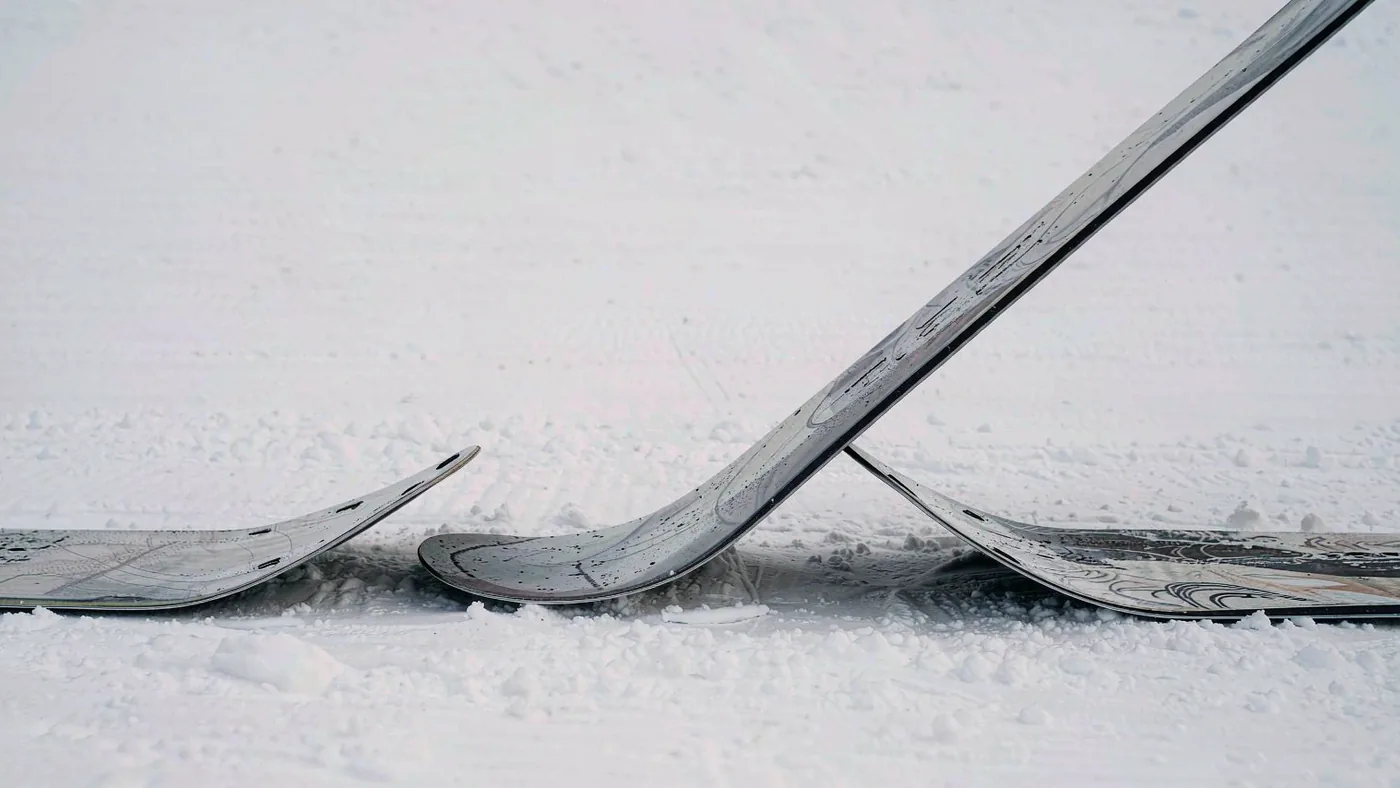
If the middle of the board arches up so that only the tip and tail touch the ground, that is traditional camber. Press down on the middle and the board flattens, storing energy like a compressed spring. Release it and the board pushes back, which is where pop comes from, and the tip and tail press into the snow, which is where edge grip comes from. Camber is the profile for holding an edge on hardpack and for getting a clean, powerful turn out of a board.
If the middle of the board curves downwards so that the contact points sit closer to your feet, that is rocker, or reverse camber. Now the tip and tail sit up off the snow. The board is loose and floaty in soft snow, because the nose rides up rather than diving, and it is very hard to catch an edge while it is flat. What you lose is grip. On genuinely icy pistes, rocker simply has less edge in contact with the snow.
Flat, as the name suggests, is neither. The base is flat between the feet, which sits between the two extremes and behaves predictably, with less pop than camber and less float than rocker.
The profiles you will actually be offered
Traditional camber. Arch underfoot, contact at the tip and tail. Best grip, best pop, most demanding. Still the profile of choice for riders who care about carving and for aggressive piste riding.
Flat. Predictable and forgiving, with a loose feel in the tip and tail. Common on entry-level and playful boards because it makes learning easier without giving away all the grip.
Rocker or reverse camber. Float and forgiveness, at the cost of edge hold. Rare on its own these days outside very soft-snow shapes.
Hybrid camber, often called camrock. Camber between the feet with rocker before the tip and tail. This is the most common all-mountain profile, and for good reason: you keep the grip underfoot, which is where you need it, and you gain a looser, less catchy tip that floats in soft snow.
Rocker-dominant hybrids. Rocker through the middle with small camber sections near the contact points. Floaty and catch-free, quick to turn, weaker on genuinely firm snow.
3D base shapes. Some boards lift the base edges slightly towards the tip and tail so the board is less likely to catch when it is flat or spinning. It works, and it costs a little bite on hard snow.
How they compare
| Profile | Grip on hardpack | Float in soft snow | Forgiveness | Pop and press | Suits |
|---|---|---|---|---|---|
| Traditional camber | Excellent | Poor | Low | High | Confident riders who ride fast on firm pistes |
| Flat | Fair | Fair | Good | Moderate | Beginners and playful riders wanting predictability |
| Rocker | Poor | Excellent | Very good | Low | Dedicated soft-snow and jib-focused riding |
| Hybrid camber (camrock) | Very good | Good | Good | High | One board for everything, most European riders |
| Rocker-dominant hybrid | Fair | Very good | Very good | Moderate | Loose, surfy riding and mixed soft conditions |
| 3D base with raised edges | Good | Fair | Very good | Moderate | Riders learning park and wanting a catch-free feel |
Editorial description of published profile designs, last checked 28 September 2026. Grip and float ratings describe how the geometry behaves in principle; the specific board, its flex and its edge technology all change the outcome.
Two boards that both say "hybrid" and feel nothing alike
This is the part that trips people up. Hybrid camber is not a single design. It is a family of designs, and the details matter more than the label.
How deep the camber is. A shallow camber section feels closer to flat. A deep one is close to traditional camber in grip and pop.
How far the rocker extends. The longer the rockered section, the looser and more floaty the board, and the less edge you have in a firm turn.
Where the transition sits. If the rocker starts early, close to the bindings, the board feels loose underfoot. If it starts late, near the tip, you keep an engaged edge through most of the turn. Add edge technology on top of that — serrated or wavy edge contact, lifted base edges, extra contact points underfoot — and two boards with the same camber description can end up behaving completely differently.
So do not buy on the profile label alone. Read what the manufacturer says the profile is for, and ride a demo board before committing if you can.
Matching the profile to where you ride
Most riders in the UK and northern Europe are riding scraped, artificial and refrozen pistes for the majority of their days, with one or two soft days a season. That points clearly at camber underfoot. Hybrid camber with a modest rocker in the tips is the sensible default: you get the grip you need for the first run down at 8:45 on a firm morning and the looser nose that makes the odd powder day more fun.
If you are heading somewhere that reliably gets deep snow, a rocker-dominant or 3D-base soft-snow shape starts to make sense. If you spend your week in the park, flat or a soft hybrid will be easier to press and spin. The mistake to avoid is buying the profile that suits the holiday you take once every three years rather than the riding you do every season.
How to check a profile before you buy
Sit the board on a smooth, flat floor and look along the base from the tail with your eye near floor level. If the middle arches up and only the ends touch, that is camber. If the ends lift and the middle rests, that is rocker. If it lies flat, it is flat.
Then press the middle down with one hand and watch the tip and tail. A board with a lot of camber will flatten slowly and push back. A board with rocker in the tips will not move much at all. That push-back is the pop you feel out of a turn, and the quickest way to compare two boards in a shop.
Verdict
If you ride one week a year on gentle terrain with a hired board, this level of detail is not going to change your holiday — hire something mid-range with hybrid camber and spend the week working on your turns. Profile matters most to riders buying their own board, and to anyone choosing between two boards that look otherwise similar.
Frequently asked questions
Is camber or rocker better for beginners?
Rocker and flat profiles are more forgiving because the raised tip and tail make the board harder to catch. Camber grips better but punishes poor technique. A hybrid profile, with camber underfoot and rocker in the tips, gives a beginner most of the forgiveness with enough grip to learn proper turns.
Why does my rockered board slide on icy pistes?
Because rocker lifts the tip and tail clear of the snow, so less edge is in contact when you need it most. On hard, refrozen piste, a rocker-dominant board will drift before it bites. The fix is technique — stay more centred, be smoother with your edges and avoid forcing the turn — rather than an equipment fault.
Can I ride a camber board in powder?
Yes, but it takes effort. Camber wants to plane flat rather than lift the nose, so you have to shift weight back and stay on top of the board. Hybrid profiles exist precisely to fix this: they keep the grip of camber under your feet and the float of rocker in the tip.
Does camber make a board stiffer?
Not directly — flex and profile are separate. But camber makes a board feel more aggressive because it stores and returns energy, so a cambered board of the same measured flex feels livelier and more demanding than a rockered one.
Is a flat profile good for park riding?
It is a reasonable middle ground. Flat boards are predictable on rails and boxes and easier to press than camber, without the loose feeling of a heavily rockered deck. Riders who want maximum pressability go softer and more rockered; riders who want speed and stability go for camber.
Where to go next
If you have settled on a profile, the snowboard size chart works out your length from your weight and boot size. The short version of this article is rocker vs camber, and if you are choosing between shapes rather than profiles, see all-mountain vs freestyle boards.
Building a first setup? Start with the first setup guide and the budget guide. More buying advice sits in the buying-guides archive.