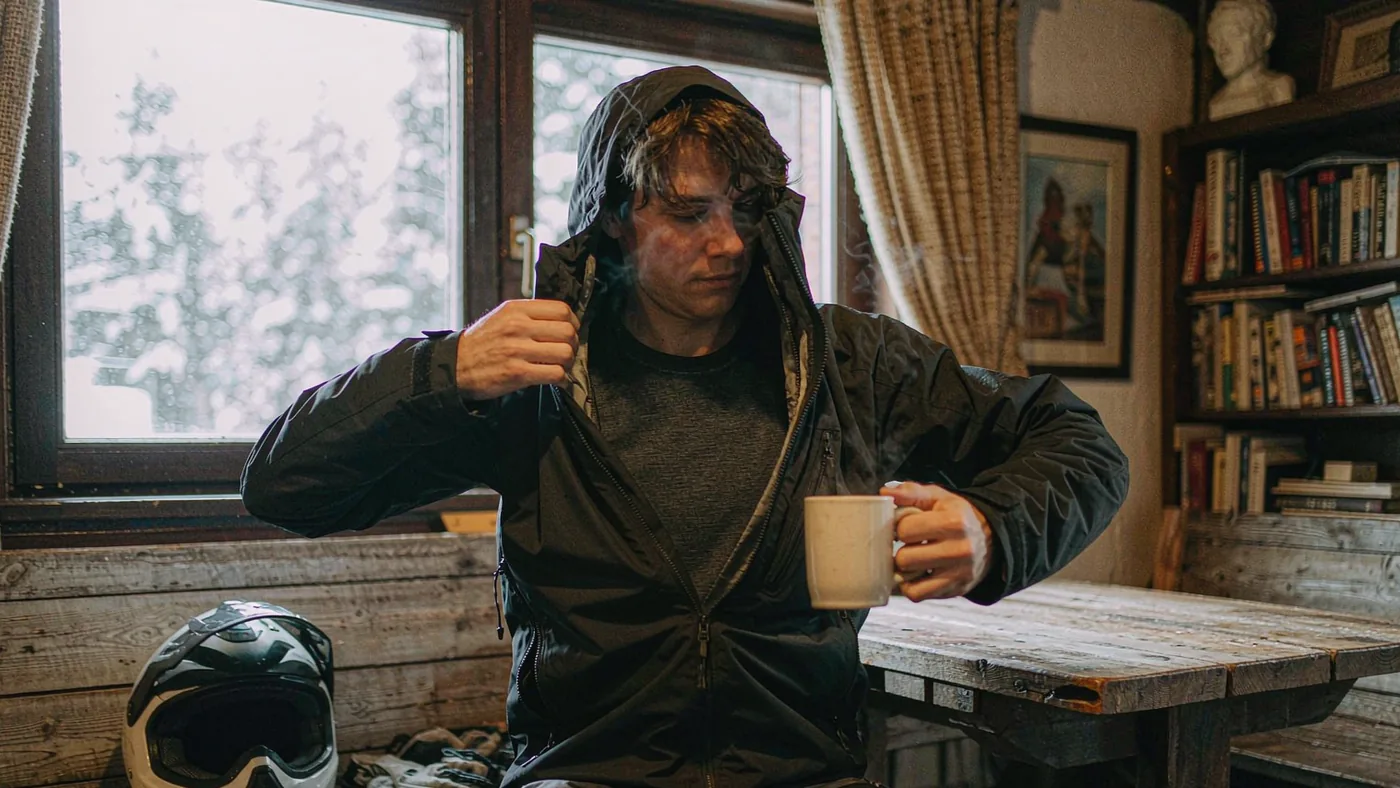
By Wednesday of a week in Les Arcs, the drying room in the basement of a chalet tells you everything. The cotton T-shirts are still heavy and cold. The cheap polyester tops have taken on a smell that no overnight airing will fix. The merino ones are hanging there dry and ready, and the people wearing them are the ones who are not shivering on the first chair of the morning.
That is the whole argument for spending real money on what is, after your socks, the cheapest item in your bag. A base layer is not a fashion layer. Nobody sees it except at lunch when you unzip. It has one job, and if it fails at that job you spend the afternoon cold and slightly damp, which in a February wind is not a small thing.
What a base layer actually has to do
Three jobs, in order of importance.
Move sweat away from your skin. You will sweat, whether you notice or not, because riding a lift for twelve minutes in a jacket is warm work. If that moisture stays against your skin, the ride down is cold.
Stay warm when it is damp. This is the difference between merino and everything else. Wool keeps insulating even when it has absorbed moisture. Most synthetics do not.
Not stink. Two weeks in the Alps, one or two low-temperature washes available, and a synthetic top that has been worn three days running is a commitment to a particular kind of unpopularity in a shared apartment.
Cotton fails all three. It holds water, it goes cold against the skin and it never dries overnight.
Merino or synthetic?
This is the decision that matters, and it is not really about the brand.
Merino is warm when damp, comfortable against the skin and genuinely odour-resistant for days. The trade-offs are real: it costs considerably more than a synthetic top of the same weight, it dries more slowly, and it wants a cool wash with no fabric softener. Treat it badly and it will shrink or develop holes.
Synthetic is cheaper, dries in a couple of hours over a radiator and is the better choice if you sweat heavily. What it cannot do is stay pleasant after three days of use. Odour-control treatments help for a while and then stop helping.
If you ride one week a year, either works. If you ride consecutive days, or you are going somewhere with limited washing, merino earns its price.
The picks
Merino does the one thing synthetics struggle with: it stays comfortable when you sweat and then sit still on a lift. Worth the money if you ride multiple days in a row.
Best for
- Multi-day trips
- Riders who get cold when stationary
Worth skipping if
- Tight budgets
- Riders who want the fastest possible drying
- Fabric
- 200gsm merino wool
- Fit
- Slim
- Intended use
- Base layer
Strengths
- Warm when damp
- Does not pong after day three
Trade-offs
- More expensive than synthetic
- Needs careful washing
Specifications reflect published manufacturer information, last checked 2026-09-28. We have not laboratory-tested this product; the assessment above is editorial, based on the published design and the rider profile it targets. How we review gear.
A heavier merino layer for genuinely cold conditions. Too warm for spring, ideal for a January week in Austria.
Best for
- Cold-weather riding
- Riders who feel the cold on the lift
Worth skipping if
- Spring conditions
- Warm runs
- Fabric
- 250gsm merino wool
- Fit
- Slim
- Intended use
- Base layer
Strengths
- Very warm for its thickness
- Comfortable against the skin
Trade-offs
- Too warm for mild days
- Premium price
Specifications reflect published manufacturer information, last checked 2026-09-28. We have not laboratory-tested this product; the assessment above is editorial, based on the published design and the rider profile it targets. How we review gear.
The synthetic option for riders who want fast drying and a lower price than merino. It will smell sooner on a long trip.
Best for
- Fast drying
- Riders on a budget
Worth skipping if
- Long trips without washing
- Riders who hate synthetic feel
- Fabric
- Synthetic blend
- Fit
- Slim
- Intended use
- Base layer
Strengths
- Dries very fast
- Cheaper than merino
Trade-offs
- Needs washing more often
- Less comfortable when damp than merino
Specifications reflect published manufacturer information, last checked 2026-09-28. We have not laboratory-tested this product; the assessment above is editorial, based on the published design and the rider profile it targets. How we review gear.
The gap between the first two is weight, not quality. A 200gsm merino layer is the right answer for a normal Alpine winter, including the odd mild spring-like afternoon. The 250gsm layer is what you want for a January week in Austria or anywhere the lift queue is long and the wind is coming across the ridge. Buying the heavy one for a single mild week is a common and expensive mistake.
How they compare
| Base layer | Fabric and weight | Warmth when damp | Drying speed | Odour resistance | Suits |
|---|---|---|---|---|---|
| Icebreaker 200 Oasis | 200gsm merino wool | High | Moderate | Very good | Most riders, most weeks |
| Smartwool Classic Thermal 250 | 250gsm merino wool | Very high | Slow | Very good | Deep winter and riders who feel the cold |
| Odlo Performance Light | Lightweight synthetic blend | Low | Fast | Fair | Spring days, heavy sweaters and tight budgets |
Specifications reflect published manufacturer information, last checked 28 September 2026. Warmth and drying comments are editorial judgements about the fabric type, not lab measurements.
The mistakes worth avoiding
The most common one is overdressing. Most riders who complain about being cold are wearing too much, sweating on the way up and then chilling on the way down. A merino base layer, a light mid-layer and a proper shell will handle a normal Alpine winter. If you need a fourth layer you are probably standing still too much, not underdressed at the core.
The second mistake is fit. Snug is right; tight is not. A base layer needs to touch the skin to move moisture at all, so a baggy top that bunches under the arms does nothing useful. It should also be long enough to stay tucked into your trousers when you bend to strap in — a short-cut top that rides up leaves a strip of bare back that will find the one cold gap in your jacket.
Third, the zip. A half-zip or full-zip collar gives you a vent you can open on the lift and close before the run. It sounds trivial. On a warm afternoon it is the difference between comfortable and soaked.
Finally, buy two. One to wear, one clean. Rotating two decent layers through a week is a far better use of money than buying one very expensive layer and wearing it four days straight.
Verdict
If you ride a single week a year and have access to a washing machine, a cheaper synthetic layer will do the job. Merino is worth the premium for anyone riding consecutive days, anyone who gets cold when stationary on a lift, and anyone who would rather carry two tops than four.
A base layer is the one part of your kit where the cheap option is genuinely fine for some riders and genuinely wrong for others. Be honest about how many days you ride and how much washing you will realistically do. The rest follows from that.
Frequently asked questions
Can I just wear a normal cotton T-shirt under my jacket?
No, and this is the one hard rule. Cotton absorbs sweat and holds it against your skin, then chills you on the first lift ride. It also dries slowly, so a damp T-shirt stays damp all day. Almost any purpose-built base layer is better, including the cheapest synthetic one.
Is merino wool worth the extra money?
It depends on how you ride. Merino stays warm when damp and resists odour for several days, which matters on a week-long trip with limited washing. If you ride one or two days in a season and wash your kit each night, a synthetic layer will serve you just as well for less money.
How many base layers should I take for a week?
Two is the sensible minimum and three is comfortable. That lets you wear one while another dries, and it gives you a spare if a radiator fails or you get soaked in wet Scottish snow. Do not take one and hope.
Should a base layer be tight or loose?
It should be snug enough to sit against your skin without restricting movement, and long enough to stay tucked in when you bend over to strap in. Loose fabric does not wick moisture, and a short cut leaves a cold gap at the base of your back.
Do I still need a mid-layer if I wear a warm base layer?
Often, yes, though it can be a thin one. The base layer manages moisture and provides a light layer of insulation. The mid-layer is what you add or remove as the day warms up, which is why a zip-neck fleece or light synthetic jacket is more useful than a very heavy base layer.
Where to go next
If your layering is sorted but your outer shell is not, start with the best snowboard jackets for British winters. Cold hands follow the same logic as a cold core, so the gloves and mitts round-up covers what to look for there.
For everything else you need in the bag before a trip, see the pre-trip checklist, and if this is your first season the first season guide explains how the whole kit fits together. More outerwear advice sits on the outerwear archive.