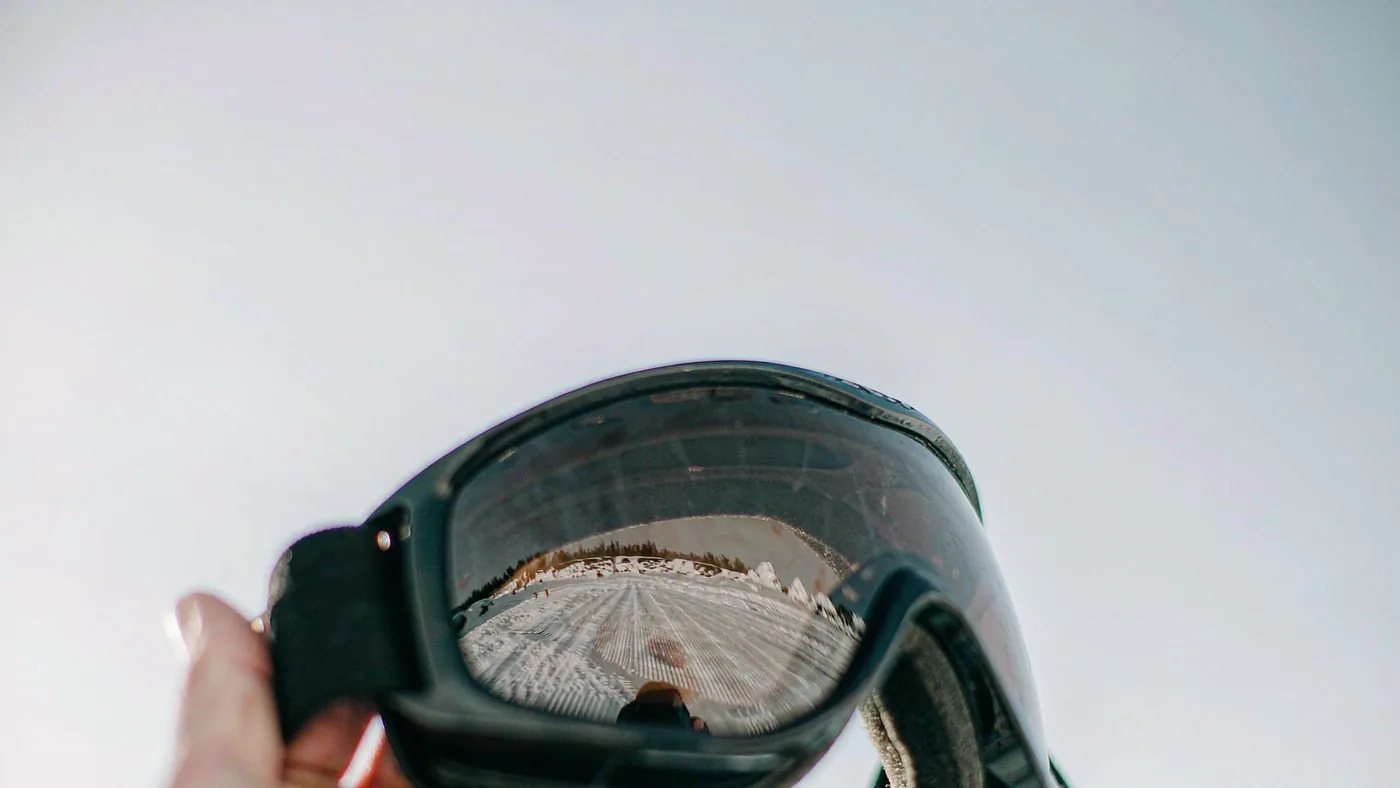
There is a moment in every goggle purchase when the price stops buying protection and starts buying optics. Below a certain point, you are paying for something that keeps the snow and the wind off your eyes. Above it, the goggle already does that, and the money is going into the lens, the seal and the mechanism that lets you change the lens without taking your gloves off. This article is about that second band: the bracket where a sensible rider stops, and the decisions that matter inside it.
The mistake riders make here is spending their whole budget on the frame. A mid-range goggle with the right lens will beat the most expensive goggle on the shelf with the wrong one, every single time, because visibility is a lens property. A mirror finish that looks superb on a shop wall is actively unhelpful on a grey afternoon, and no amount of money spent on the frame will compensate.
So the question is not which goggle is best. It is whether your money should go into a better lens, a faster swap or a second lens — and those three answers point at different products.
What a mid-range budget actually buys
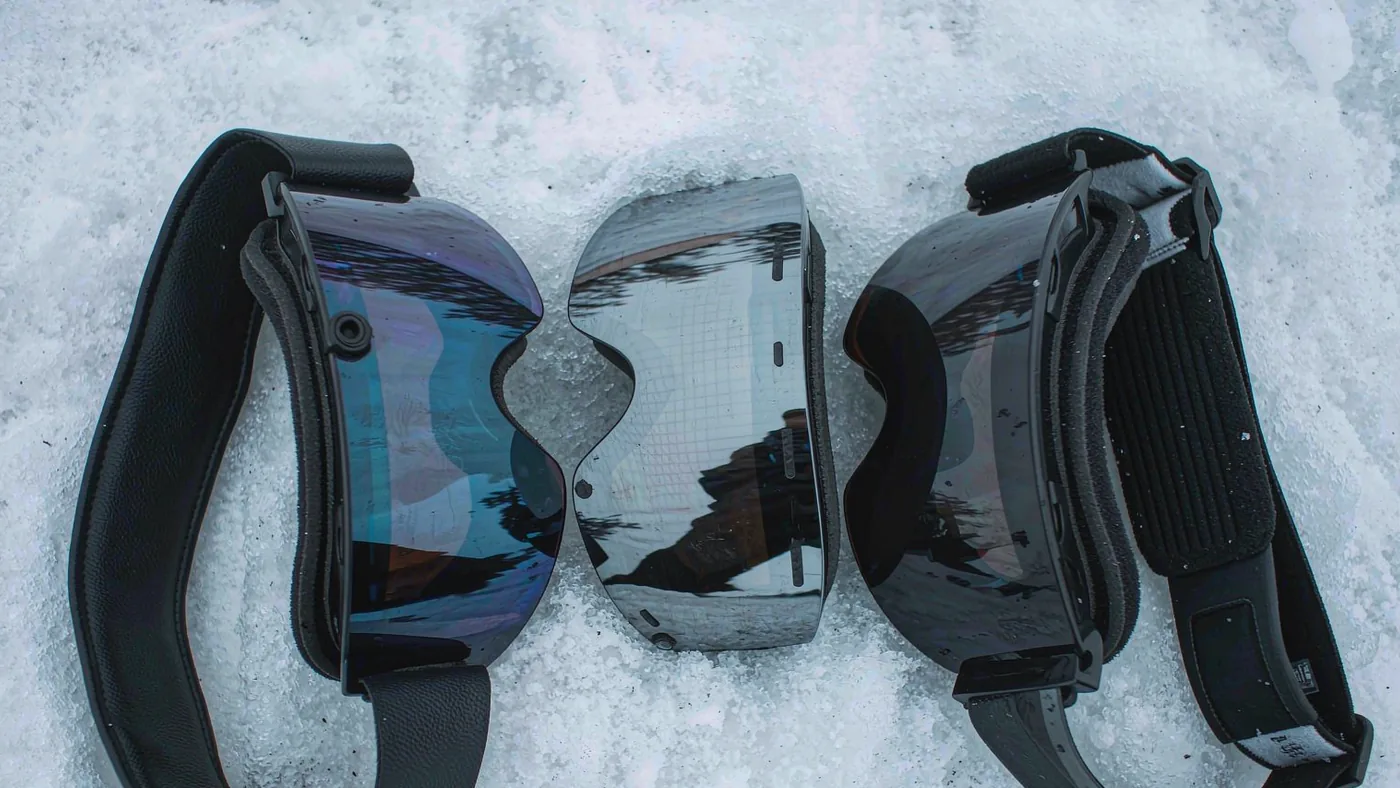
A proper double lens. Cheap goggles use a single lens, which fogs on the inside and stays fogged because there is nothing to insulate the warm inner surface from the cold outer one. A double lens with a sealed air gap is the most important feature in the category.
Lens geometry that suits your face. Cylindrical lenses curve in one axis and sit flatter against the face, which gives a slightly narrower, taller view and marginally more distortion at the edges. Toric and spherical lenses curve in two axes and wrap the face more closely, for a broader, more natural field of view. Neither is a defect, but a cylindrical lens asks more of the frame's fit.
Anti-fog treatment and venting. The inner lens carries a coating that absorbs and releases moisture, and the frame vents at the top and bottom to create airflow. Both are defeated by the same two things: touching the inner lens with a glove, or wearing the goggle low so the top vents are covered by the helmet.
A swap mechanism you will actually use, and foam that seals. Magnetic systems let you change lenses in seconds with your gloves on; clip systems are slower. If you own two lenses and change them twice a day, the mechanism is worth real money. Look too for multi-layer face foam and a frame that follows the shape of a face rather than a flat piece of plastic with foam glued on, because a poor seal lets cold air in at the cheeks.
The picks
A dependable goggle with a broad field of view. Swap lenses for the flat-light days and it will handle almost any European weather.
Best for
- Riders dealing with changeable Alpine light
- Glasses wearers wanting an OTG-friendly fit
Worth skipping if
- Riders wanting a single lens that does everything
- Tiny faces
- Lens
- Interchangeable cylindrical
- Fit
- Medium, OTG compatible
- Intended use
- All-mountain
Strengths
- Large field of view without looking oversized
- Lens changes are quick with cold hands
- Works well over glasses
Trade-offs
- Cylindrical lens shows slightly more distortion at the edges
- Spare lenses add cost
Specifications reflect published manufacturer information, last checked 2026-09-28. We have not laboratory-tested this product; the assessment above is editorial, based on the published design and the rider profile it targets. How we review gear.
The magnetic swap is genuinely fast, which matters more than it sounds when the light changes mid-run. Expensive, and worth it if you ride flat light often.
Best for
- Riders who change lenses often
- Flat-light conditions in the Alps and Scotland
Worth skipping if
- Riders who leave one lens in all season
- Budget builds
- Lens
- Magnetic interchangeable spherical
- Fit
- Medium, OTG compatible
- Intended use
- All-mountain
Strengths
- Fastest lens swap of the options here
- Clear optics across the whole field
- Two lenses covers most conditions
Trade-offs
- Premium price
- Magnetic system needs care when packed in a bag
Specifications reflect published manufacturer information, last checked 2026-09-28. We have not laboratory-tested this product; the assessment above is editorial, based on the published design and the rider profile it targets. How we review gear.
How they compare
| Goggle | Lens type | Lens swap | Spare lenses | Fit | Best suited to | Main trade-off |
|---|---|---|---|---|---|---|
| Oakley Line Miner M | Interchangeable cylindrical | Manual swap | Bought separately | Medium, OTG compatible | Changeable Alpine light and glasses wearers | Slight edge distortion, and spare lenses add cost |
| Smith I/O MAG | Magnetic interchangeable spherical | Magnetic, the quickest here | Two lenses cover most conditions | Medium, OTG compatible | Riders who change lenses as the light changes | The top of this bracket, and magnets need care when packed |
Lens shape, fit and swap descriptions are drawn from published manufacturer specifications, last checked 28 September 2026. Field of view and ease of use are editorial judgements from the frame geometry, not measured results.
The second lens question
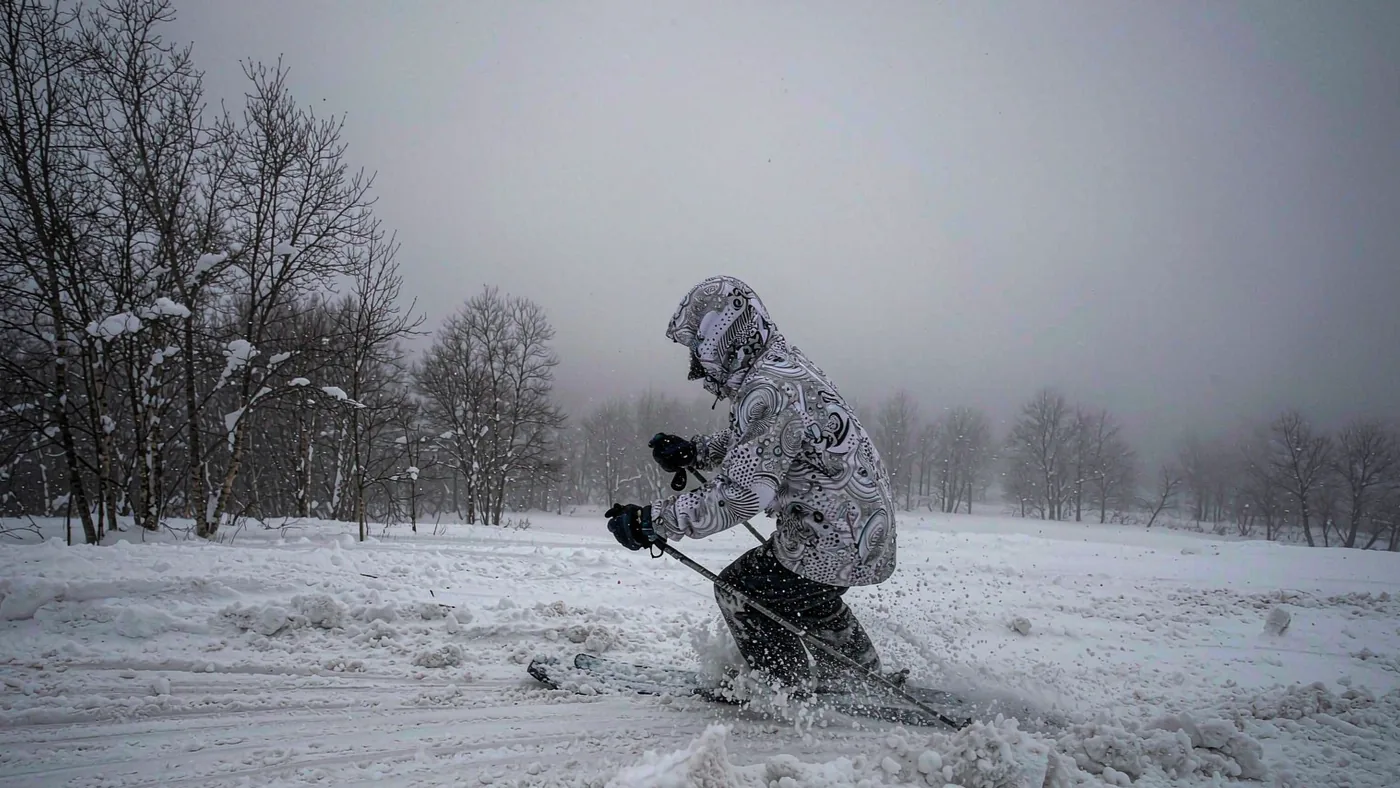
This is where the money in this bracket is most often spent badly. Riders buy the most impressive frame they can afford and then ride all winter with one lens, usually a dark mirrored one, because that is what looked best on the shelf. Then the light goes flat in the afternoon and the mountain turns into a white sheet with no horizon.
For most European riders, a second lens in a contrast tint for overcast weather is worth more than any upgrade to the frame. You do not have to buy it with the goggle, though a model that ships with two lenses usually works out better than buying them separately, and you do not need a premium goggle to benefit from it.
Real flat light is more common in the Alps than most people expect, and in Scotland it is the default for weeks at a time. A dark mirrored lens has a place on a glacier in April. It is the wrong lens for eleven o'clock on a cloudy January morning, and no frame in the world fixes that.
Fit, helmets and the gap
A goggle is only as good as its seal, and the seal depends on the helmet above it.
The top edge of the goggle frame should sit just under the helmet rim, so the frame's top vents are exposed to the air. If the helmet's brim pushes the frame down onto your nose, the top vents close, warm air from your face cannot escape upward, and the lens fogs within minutes. This is why the same goggle can be excellent for one rider and useless for another — it is a pair of shapes, not a product fault.
Look for a helmet listed as goggle compatible, or better, take your helmet when you try goggles on. A small gap between the helmet rim and the goggle's top edge is normal and harmless, as long as the strap holds the frame against your face. Some riders match brands to keep the geometry consistent, which is a reasonable shortcut.
Two more fit details worth checking. The strap should adjust wide enough to sit over a helmet without pulling the frame away from your cheeks, and the foam should sit on skin rather than on a hat — a beanie under the goggle leaves a gap at the sides that lets air in.
When to spend more, and when to stop
The step above this bracket buys better optical coatings, marginally lighter frames, more refined swap systems and a greater choice of lenses. It does not buy a fundamentally different experience. If you ride ten days a year, stop at the best lens you can afford in a frame that fits, with a second lens for grey weather.
The step below buys a single lens, a slower swap and foam that flattens sooner. That is a reasonable first goggle for a dry indoor slope, but it will cost you on a wet afternoon in the Alps.
Verdict
If you ride one week a year and you keep a single lens in the goggle from December to April, a magnetic swap mechanism is money you will never recover, and the most valuable thing you can own is a good contrast lens that you leave in all week. Riders on a genuinely tight budget should buy the cheapest goggle with a proper double lens and put the rest of the money into a helmet that fits them, because a good seal beats a good frame.
Frequently asked questions
How much should I spend on snowboard goggles?
Enough to get a proper double lens, a decent anti-fog coating and foam that seals against your face. Above that point, money buys optics, lighter frames and faster lens swaps rather than more protection. If you ride more than a fortnight a year, spend the extra on a second contrast lens rather than on a fancier frame.
Are expensive goggles worth it?
They are worth it if you ride often enough to notice better lens quality and you change lenses through the day. They are not worth it if you ride one week a year with one lens. The tint and the fit change what you can see; the price mostly changes how pleasant the frame is to own.
Can I wear my goggles over prescription glasses?
Yes, if the goggle is listed as OTG compatible with enough depth for the arms of your glasses. Two layers of optics fog more easily, so ventilation matters more, and check the fit with your glasses on rather than trusting the label.
How do I stop my goggles fogging in the afternoon?
Wear them high on your face with the top frame just under the helmet rim, push them onto your helmet when you stop rather than leaving them over your face, and never wipe the inner lens with a glove.
Do I need a spare lens?
If you ride Europe through the winter, one spare contrast lens for overcast days is the most useful accessory you can own. Real flat light is common in the Alps and constant in Scotland, and a dark mirrored lens makes it worse rather than better.
Where to go next
Choosing the right tint is a subject of its own, and the goggle lens tints explained guide covers VLT percentages and which lens to own if you only own one. If your problem is fogging rather than visibility, start with how to stop goggles fogging.
Goggles and helmets have to work as a pair, so read the best snowboard helmets round-up, and the helmet buying guide behind it explains fit and rotational protection. The wider picture on low-contrast days sits in the best goggles for flat light guide, and more outerwear advice is in outerwear.