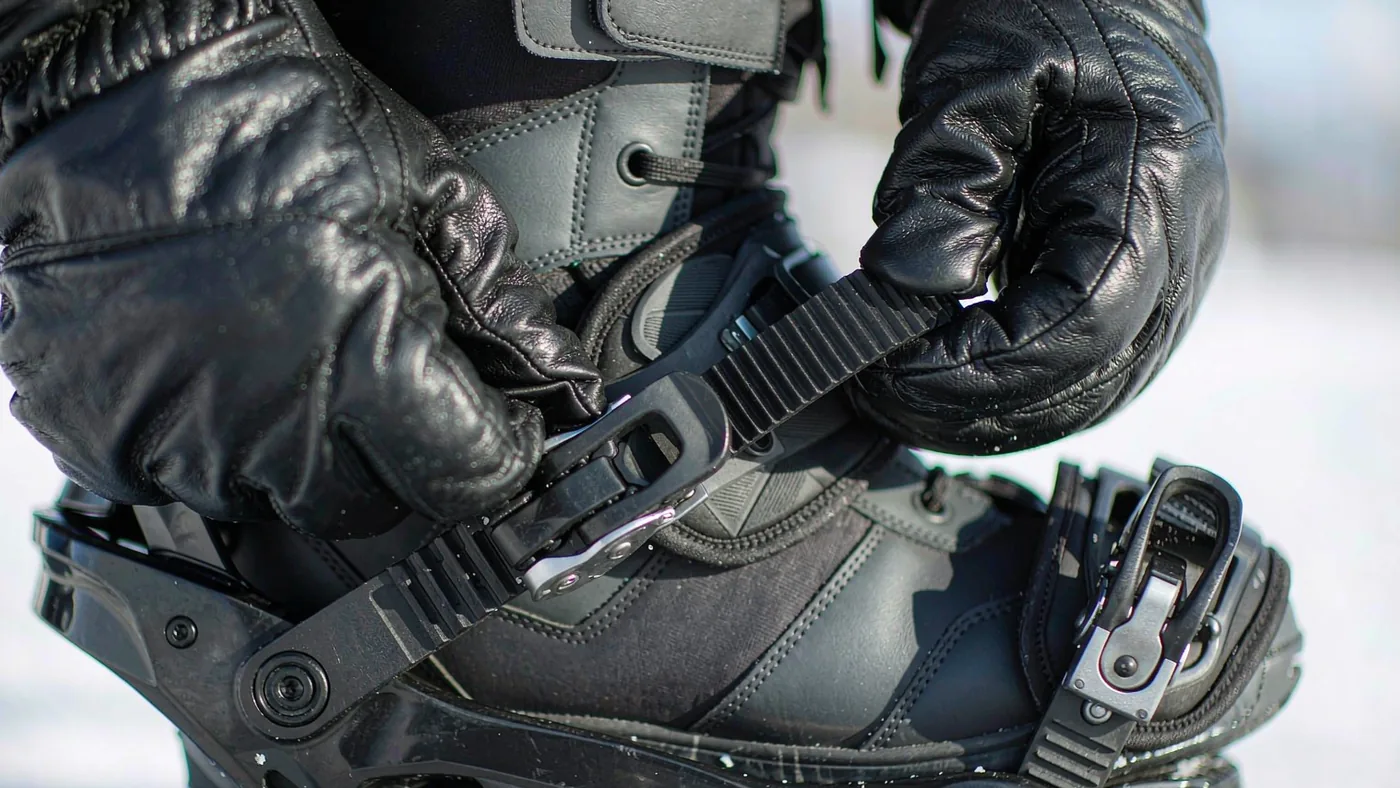
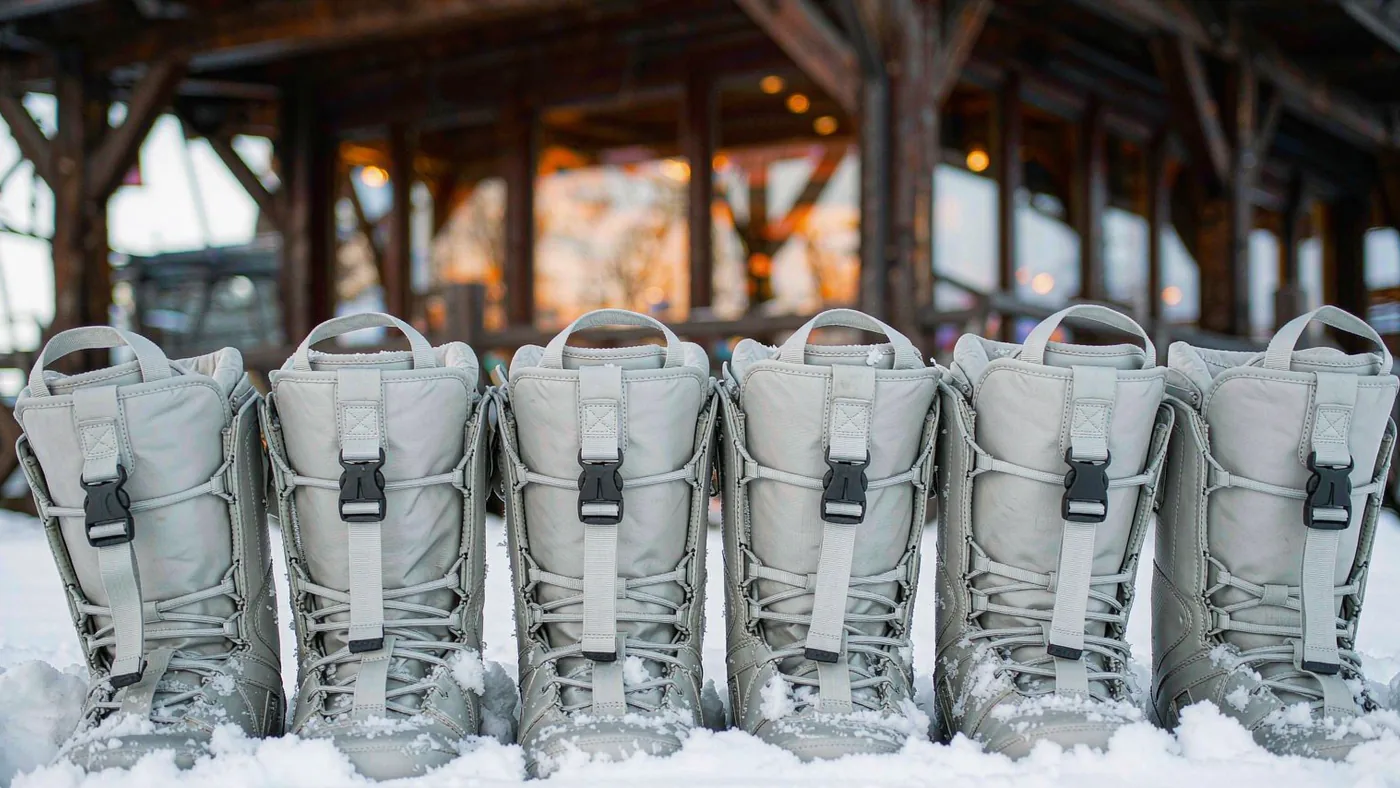
Halfway down the long blue into Cervinia, you notice it again. On every toe-side turn, just as the board comes round, your back heel lifts a few millimetres inside the boot. It is not enough to hurt. It is just enough that the pressure arrives at the edge a fraction late, and the turn finishes slightly further down the hill than you intended. Your boots are comfortable, warm and the right length. They are simply the wrong shape for your foot.
Riders with narrow feet are told to buy a smaller size, or to wear thicker socks, or to add an extra insole. All three are ways of adding volume to a boot that fundamentally does not want to hold you. Thicker socks compress, insoles push your foot up rather than wrapping it, and a smaller size moves the pressure to your toes without solving the lift.
What you need is a lower-volume shell, and a heel pocket that actually closes around the back of your foot.
Why heel lift is worse than tightness
Beginners often assume that the tightness belongs at the front and the room at the back. It is the other way round.
Your heel has to be pinned. If it lifts, two things happen at once. The first is control: every edge change starts with a small delay while your foot moves into position inside the boot, so the board responds late and vaguely. The second is comfort: on each turn, the heel slides up and back down, and over a week of that you get blisters and thickened skin at the back of the ankle.
A slightly snug forefoot is far more tolerable than a loose heel. If you can only fix one of the two, fix the heel.
The other thing to understand is volume, which is different from width. Volume describes how much total space there is inside the boot. You can be average width and low volume, with a thin foot and a low instep, and end up swimming in a boot that is technically the right length and width. Low-volume boots and low-volume liners address that problem directly.
The picks
A lower-volume boot that actually holds a narrow foot. If you have been swimming in standard boots, the support difference is immediate.
Best for
- Narrow-footed riders
- Riders with low insteps
Worth skipping if
- Wide or high-volume feet
- Riders needing maximum warmth for extreme cold
- Flex bias
- Medium
- Lacing
- Traditional laces
- Intended terrain
- All-mountain
Strengths
- Proper heel hold for narrow feet
- Firm enough to drive a stiffer board
- Straightforward to replace laces
Trade-offs
- Too tight for high-volume feet
- Not the warmest boot in the range
Specifications reflect published manufacturer information, last checked 2026-09-28. We have not laboratory-tested this product; the assessment above is editorial, based on the published design and the rider profile it targets. How we review gear.
A lower-volume boot that grips a narrow foot properly. If standard boots leave your heel lifting, this is the shape to try.
Best for
- Narrow and low-volume feet
- Riders with heel-lift problems
Worth skipping if
- Wide or high-volume feet
- Flex bias
- Medium
- Lacing
- Traditional laces
- Intended terrain
- All-mountain
Strengths
- Proper heel hold for narrow feet
- Supportive for a mid-flex boot
Trade-offs
- Too tight for high-volume feet
- Limited size availability at times
Specifications reflect published manufacturer information, last checked 2026-09-28. We have not laboratory-tested this product; the assessment above is editorial, based on the published design and the rider profile it targets. How we review gear.
A supportive boot that will still be worth wearing once you can ride properly. Good if you only want to buy boots once.
Best for
- Improving riders who want support
- Riders with an average-width foot
Worth skipping if
- Absolute beginners
- Riders wanting maximum softness
- Flex bias
- Medium-stiff
- Lacing
- Quick-pull lacing
- Intended terrain
- All-mountain
Strengths
- Supportive without being brutal
- Lasts several seasons
Trade-offs
- Firmer than a beginner wants
- Costs more than an entry boot
Specifications reflect published manufacturer information, last checked 2026-09-28. We have not laboratory-tested this product; the assessment above is editorial, based on the published design and the rider profile it targets. How we review gear.
How they compare
| Boot | Volume | Flex | Lacing | Best suited to | Main trade-off |
|---|---|---|---|---|---|
| Nitro Venture | Low | Medium | Traditional laces | Narrow feet and low insteps | Not the warmest boot in its class |
| Ride Lasso | Low | Medium | Traditional laces | Narrow feet with a persistent heel-lift problem | Too tight for high-volume feet |
| K2 Maysis | Average with a firm, supportive shell | Medium-stiff | Dual-zone quick-pull | Narrow-ish feet wanting more support | Not a true low-volume last, and firmer than a beginner wants |
Volume and flex notes are editorial judgements based on published manufacturer specifications, last checked 28 September 2026.
Fit checks that matter more than the size label
Every brand numbers its sizes slightly differently, and a 42 from one is a 43 from another once the liner packs down. Ignore the number as a guide to fit and use these checks instead.
Put the boot on with a thin sock, the sort you will actually ride in. Stand up straight with your weight even. Your toes should touch the front of the liner lightly. Now crouch into a riding stance, knees bent and shins forward. Your toes should just come clear. That is the correct length, regardless of what the label says.
Next, press the boot flat against the floor with your hand on the toe and try to lift your heel. Anything more than a few millimetres means the boot is too much volume for you, and no lacing system will fix it. A firm heel pocket is doing more work than any strap.
Then flex forward for a full minute and stand still in the boot for another five. Cold shells stiffen, so a boot that is borderline stiff in a warm shop will feel harder on the first chairlift of the morning. If you are not sure, err slightly softer than you think you need.
When you have found a model that fits, check current price before the season starts rather than during it. Low-volume boots are made in smaller numbers than the mainstream fits, and the sizes that go first are always the ones at either end of the range, which is exactly where narrow-footed riders tend to sit.
Verdict
If your feet are narrow, the Nitro Venture and the Ride Lasso are the two boots here built to hold you, and they should be your first two tries. The Lasso is the better pick if heel lift is the specific problem you are trying to solve; the Venture is the better pick if your instep is low. Do not buy the K2 Maysis hoping it will do the work of a low-volume boot — it is an average-width shell with a firm flex, so it will be better than a badly chosen wide boot but it will not pin a genuinely narrow foot, and it is stiffer than most riders at this stage want.
Frequently asked questions
Can I make a normal boot fit a narrow foot with thicker socks?
No, and it usually makes things worse. Thicker socks compress under load, so the volume disappears as you ride and the heel starts lifting again. Choose the boot that fits in a thin riding sock, and keep the thick socks for the walk to the bus.
Is a low-volume boot less warm?
Generally a little, because there is less liner between your foot and the shell. The difference is smaller than most people expect, and it is easily offset by a decent sock and a boot that fits. A loose boot is a cold boot anyway, because circulation is the main thing keeping your feet warm.
Should narrow-footed riders size down?
Sizing down is a blunt instrument. It can close up the heel, but it also shortens the boot, and your toes end up jammed. Try a lower-volume shell in your normal size first. Sizing down is the last resort, not the first move.
Do insoles help with heel lift?
A firmer aftermarket insole can raise your heel into the pocket and reduce movement, and it is a cheap experiment. But if the lift is more than a few millimetres, an insole is treating the symptom. The shell is the wrong volume and no insert will change that.
How long before a new boot stops changing shape?
Liner packing takes roughly five to ten riding days, and the biggest change happens in the first three. That is why a new boot should feel snug to the point of slightly firm in the shop. If it feels loose on day one, it will be unwearable by day ten.
Where to go next
The same fitting logic applies at the other end of the scale — read the wide feet boot round-up if your toes are the problem rather than your heel. Beginners should start with the best boots for beginners and then decide how much support to buy in stiff vs soft snowboard boots.
Once the boots are right, the binding sizes guide makes sure your bindings fit them properly, and the binding setup guide covers stance and angles. More kit advice sits in bindings and boots.