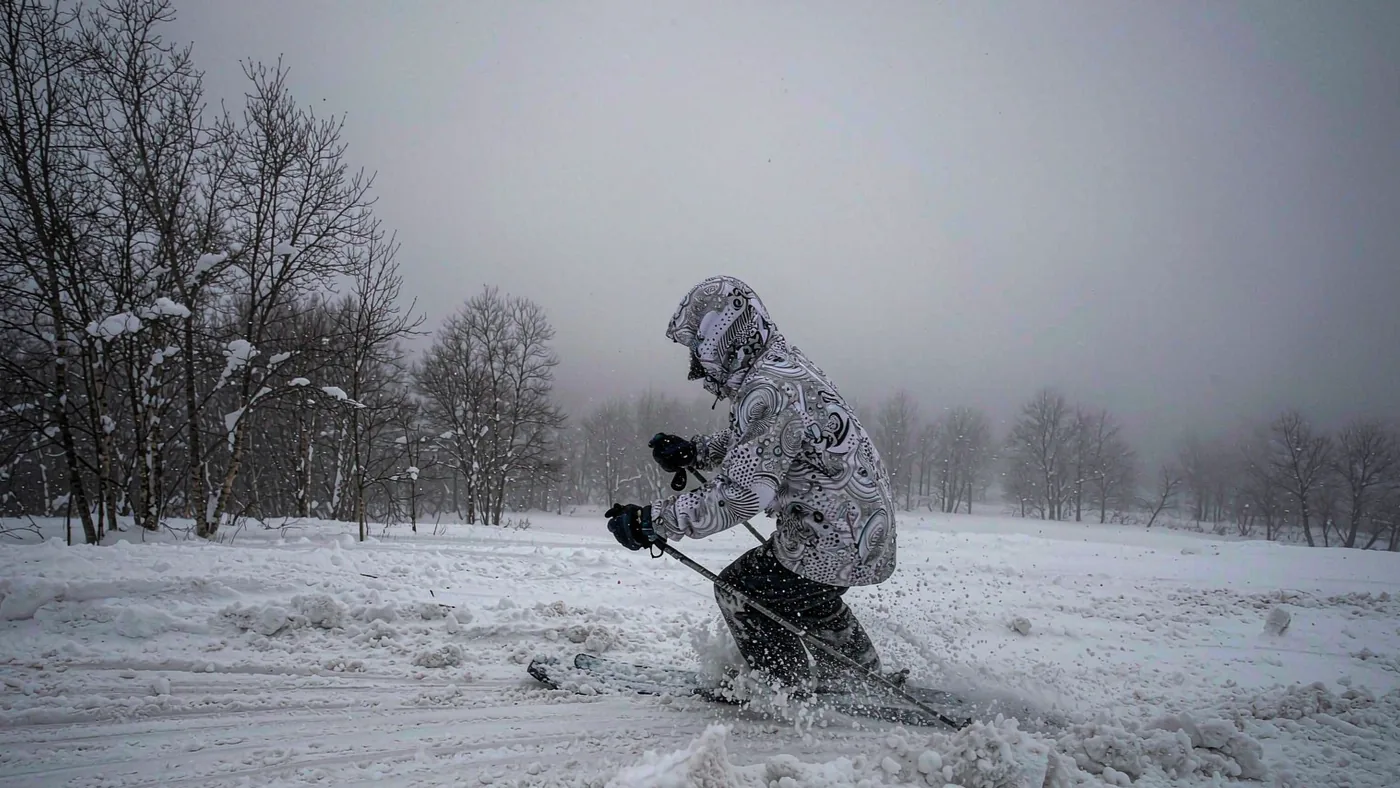
You are on the Ptarmigan at Cairngorm, halfway up, and the weather has decided to be difficult. There is no rain exactly, just a fine, relentless wetness that is somewhere between drizzle and sleet and is coming at you sideways. The snow underfoot is heavy and grey and sticks to your base. By the time you reach the top your jacket is beaded with water and starting to feel cold against your shoulders, and you still have the ride down and four more laps before lunch.
That is the condition a British snowboard jacket has to handle, and it is not the same as the condition an Alpine jacket is designed for. Alpine marketing is built around cold, dry powder and blue sky. British riding is built around wet snow, low cloud, high humidity and a lot of sitting still on a lift while the wind finds every gap in your layers.
Buying for the wrong climate is the most common jacket mistake I see in UK riders. They buy an insulated jacket designed for minus fifteen in Val Thorens, discover it is a sauna on a wet two-degree day in the Lecht, and spend the rest of the season wet from the inside instead of the outside.
What British conditions actually demand
Four things matter more here than anywhere else.
Waterproofing that survives sustained wet. Not a light shower, but three hours of wet snow melting on your shoulders. This is the single biggest differentiator between a jacket that works in Scotland and one that does not.
Breathability, because humidity is high. When the air is already damp and close to freezing, sweat cannot evaporate as easily, and a jacket that cannot move moisture turns into a plastic bag. Breathability matters as much as waterproofing here, and most riders underrate it.
A hood that works with a helmet and stays up in wind. Low cloud and driving wetness mean the hood is on for most of the day. A hood that flaps loose or will not clear a helmet will spend the season annoying you.
Room to layer. British temperatures swing hard. The same day can have wet snow at the base and a cold wind at the top. A jacket that only works with one mid-layer underneath is a jacket you will be uncomfortable in by two o'clock.
Waterproofing numbers and what they hide
Jackets are sold with two numbers: a waterproof rating in millimetres and a breathability rating in grams. Both are laboratory tests and neither tells you exactly how a jacket will behave on a wet Cairngorm day.
Three things matter more than the numbers. The first is whether the fabric has a membrane rather than a coating, because a membrane keeps working as it wears while a coating fades. The second is taped seams, which is where water gets in on almost every jacket that leaks. The third is whether the face fabric can be reproofed, because a durable water repellent finish wears off and can be restored.
That is the practical version of the numbers. A jacket with a reputable membrane, fully taped seams and a fabric you can re-wax will outperform a jacket with a higher headline rating and none of those things. Treat the ratings as a filter for the obvious non-starters, not as a ranking.
The picks
A genuine waterproof shell rather than a fashion jacket. Built for the wet, heavy snow you actually get in Scotland and the lower Alps.
Best for
- UK and Scottish riding
- Riders who ride in the rain
Worth skipping if
- Riders who run hot inside a warm jacket
- Waterproofing
- GORE-TEX membrane
- Insulation
- Shell, no insulation
- Hood
- Helmet compatible
Strengths
- Keeps out genuinely wet snow
- Layers well over a mid-layer
Trade-offs
- Shell only, so you need to layer properly
- Premium price
Specifications reflect published manufacturer information, last checked 2026-09-28. We have not laboratory-tested this product; the assessment above is editorial, based on the published design and the rider profile it targets. How we review gear.
An insulated jacket that keeps you warm sitting on a chairlift in January without needing three layers underneath.
Best for
- Cold conditions in the Alps and Scandinavia
- Riders who feel the cold
Worth skipping if
- Spring riding
- Riders who overheat easily
- Waterproofing
- Recycled waterproof membrane
- Insulation
- Synthetic, light
- Hood
- Helmet compatible
Strengths
- Warm without bulk
- Responsible materials
Trade-offs
- Too warm for spring
- Bulkier than a shell
Specifications reflect published manufacturer information, last checked 2026-09-28. We have not laboratory-tested this product; the assessment above is editorial, based on the published design and the rider profile it targets. How we review gear.
A solid, unfussy jacket at a price that leaves budget for boots. Not the most technical fabric, but it does the job in a normal European winter.
Best for
- Riders on a budget
- Resort riding in normal conditions
Worth skipping if
- Serious wet-weather riding
- Backcountry
- Waterproofing
- Coated waterproof fabric
- Insulation
- Light synthetic
- Hood
- Adjustable
Strengths
- Good value
- Warm enough for most resort days
Trade-offs
- Coating needs reproofing over time
- Not built for sustained rain
Specifications reflect published manufacturer information, last checked 2026-09-28. We have not laboratory-tested this product; the assessment above is editorial, based on the published design and the rider profile it targets. How we review gear.
How they compare
| Jacket | Type | Waterproofing | Warmth | Best suited to | Main trade-off |
|---|---|---|---|---|---|
| Volcom L GORE-TEX | Uninsulated shell | GORE-TEX membrane with taped seams | None of its own | Scottish riding, wet snow, riding in the rain | You have to layer properly underneath |
| Picture Organic | Lightly insulated | Recycled membrane | Light synthetic insulation | Cold Alpine and Nordic days, riders who feel the cold | Too warm for spring and for wet mild days |
| DC Command | Lightly insulated | Coated water-resistant fabric | Light synthetic insulation | Normal resort days on a budget | Coating needs reproofing and will not handle sustained rain |
Waterproofing and warmth descriptions are editorial judgements based on published manufacturer specifications, last checked 28 September 2026.
Shell or insulated for UK riding
This is the decision that causes more regret than any other.
An uninsulated shell is the right answer for most British riding. You wear a base layer and a mid-layer underneath and you can add or remove the mid-layer as the day changes. On a wet, mild, two-degree day at Nevis Range, a shell over a base layer is comfortable where an insulated jacket is unbearable. The catch is that a shell gives you no warmth of its own, so if you turn up in December with only a thin base layer you will be cold on the lift.
An insulated jacket is the right answer if you feel the cold, if most of your riding is in genuinely cold conditions, or if you want the simplicity of one jacket and one base layer. It is the better choice for a January week in Norway, and for a rider who does not want to think about layering. The catch is that it has one setting, and you cannot turn it off.
There is a middle option worth considering if you ride in Britain and the Alps: a shell plus two mid-layers, one light and one thick. That combination covers a wider range of conditions than any single jacket, and it costs about the same as buying an expensive insulated jacket outright.
Timing matters more with jackets than with almost anything else in the kit. Winter stock is heavily reduced at the end of the season, so check current price in March or April on the jacket you want and you will often find the same money buys a genuinely better shell than it would in November.
Verdict
If you ride in Scotland, at indoor slopes, or anywhere that gets wet snow, the Volcom L GORE-TEX is the jacket that handles it, provided you commit to layering underneath it. If you feel the cold and want one jacket that just works on a cold January day, the Picture Organic is the more comfortable purchase. Do not buy the DC Command if you ride a lot of wet, low-altitude snow — the coating is fine for a normal resort day but it will not hold up to sustained rain, and you will be reproofing it constantly and still getting damp shoulders.
Frequently asked questions
Is a shell jacket warm enough for Scottish riding?
Yes, if you layer it properly. A shell over a decent base layer and a mid-layer is warmer and more adaptable than most insulated jackets, and you can drop the mid-layer when the weather turns mild and wet. The mistake is wearing a shell with only a thin T-shirt underneath and blaming the jacket.
How often does a jacket need reproofing?
A durable water repellent finish typically needs refreshing at least once a season on a jacket that gets regular use, and more often if you ride in wet snow. You can tell when it is due because the fabric starts to soak up water and feel heavy rather than beading. Wash it as the manufacturer instructs and then reproof it.
Does a higher waterproof rating always mean a better jacket?
No. Ratings come from a laboratory test and they do not account for seam quality, fabric durability or how the finish ages. A jacket with a proven membrane, taped seams and a reproofable face fabric will generally outperform one with a higher headline rating and a coating.
Do I need a helmet-compatible hood?
If you wear a helmet, yes. In low cloud and driving wetness the hood is up for most of the day, and a hood that will not fit over a helmet leaves you choosing between a wet head and a wet face. Most modern snowboard jackets now list this, and it is worth confirming before you buy.
Can I wear a snowboard jacket for hill walking in the UK?
Yes, particularly a shell. A waterproof, breathable shell is the same garment whether you are on a board or on foot, and a British winter jacket often does double duty. An insulated snowboard jacket is usually too warm for walking uphill, which is the main reason a shell is the more flexible buy.
Where to go next
Jackets only work if the rest of the layering does — read the best base layers for snowboarding to get the first layer right. The best snowboard gloves and mitts round-up covers the other part of you that gets wet and cold, and the goggles for flat light guide deals with low cloud you cannot see through.
If you are kitting out for a first season, the first setup guide and the pre-trip checklist put everything in order. More outerwear advice sits in outerwear.