Your third run of the morning on a hard, wind-scoured piste above Andorra, and something is not working. You are pushing into the toes of your boots to hold the edge, the board is responding a fraction late, and by the time it bites you have already lost the turn. Nothing is wrong with the board. The problem is that the boots are soft enough that most of your effort is going into bending them rather than into the edge.
Boot flex is the least discussed and most consequential choice in a setup. Boards get the reviews and bindings get the arguments, but boots are the only part of the kit that touches you, and their stiffness decides how much of what you do reaches the snow.
The verdict up front
Buy soft boots if you are a beginner, an occasional rider, or someone who values comfort and easy walking over precision. Buy stiffer boots if you ride fast, ride a stiffer board, or are heavy enough that a soft boot folds under you. Buy the flex that matches your board and your speed — not the flex that matches the rider you hope to be in three years.
What flex actually changes
A snowboard boot is a lever. When you push your shin forward, the boot transmits that movement through the binding highback and into the board's edge. A stiffer boot transmits more of it, more directly and sooner. A softer boot absorbs a chunk of the input on the way, which is why it can feel vague when you ask a lot of it and forgiving when you do not.
Four practical consequences follow.
Response time. Stiffer boots feel immediate. You move, the edge responds. Soft boots introduce a delay that is barely noticeable at walking pace and very noticeable at speed.
Support when you are tired. By day four your ankles and calves are not what they were on day one. A stiff boot holds you up and lets you keep riding properly. A soft boot lets you collapse into the back seat.
Comfort and break-in. Soft boots are comfortable sooner, walk easily and are pleasant in a lift queue. Stiff boots can be painful for the first few days unless the liner is heat-mouldable and moulded properly.
How they age. Soft boots pack out faster, and a boot that felt supportive in November can feel like a slipper by March. Stiff boots hold their shape longer, which often makes them cheaper per season.
| Soft flex | Medium flex | Stiff flex | |
|---|---|---|---|
| Response | Delayed, forgiving | Balanced | Immediate, direct |
| Comfort out of the box | Very high | High | Variable, better after moulding |
| Support when tired | Low | Moderate | High |
| Suits a stiff board | Poorly | Well | Well |
| Suits a soft board | Well | Well | Overkill, feels dead |
| Walking and lift queues | Easy | Fine | Awkward |
| How it ages | Packs out quickly | Moderate | Holds shape longest |
| Typical rider | Beginner, occasional, park | Most all-mountain riders | Fast, aggressive, heavy riders |
Editorial description of how flex behaves in use. Actual feel varies with liner, lacing system and how well the boot fits your foot.
The picks
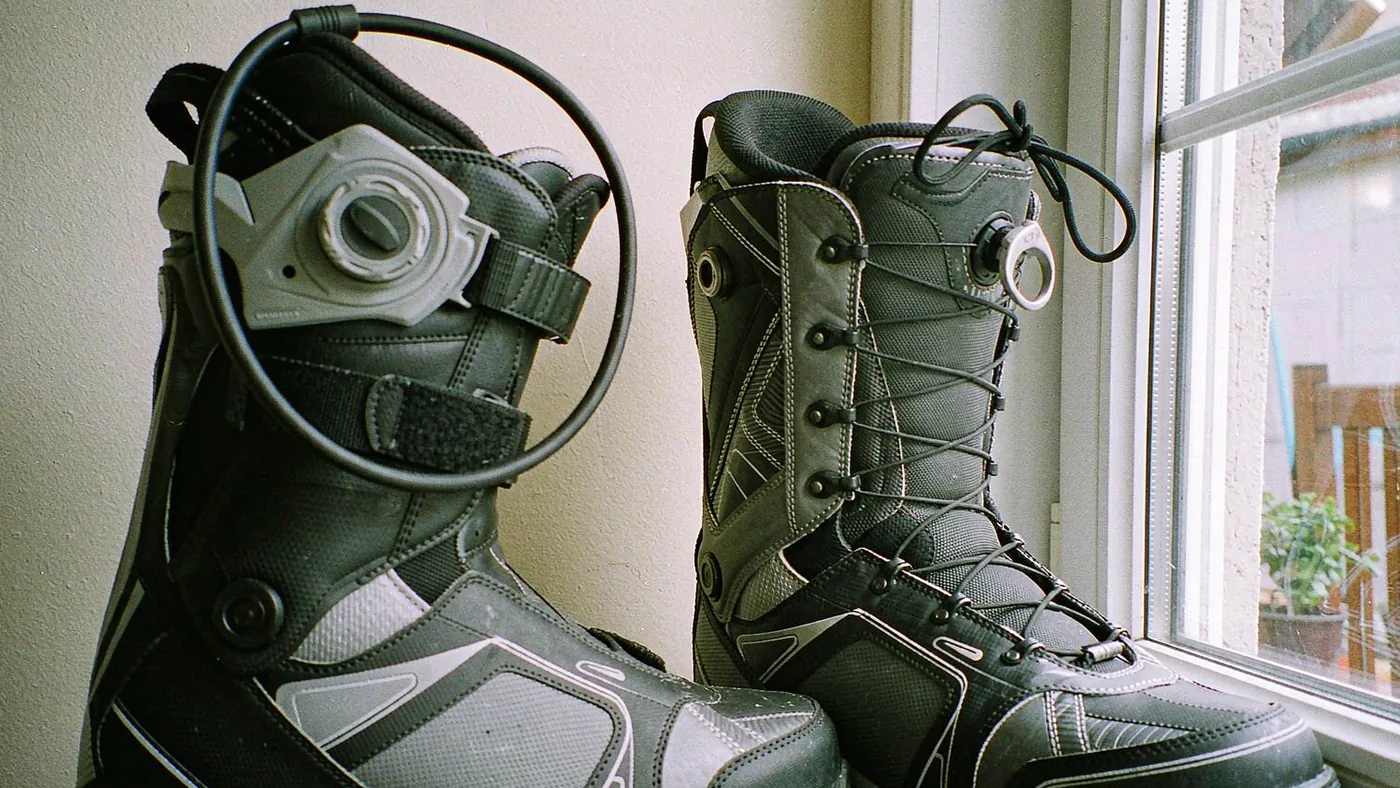
Soft, comfortable and cheap to replace. Exactly what a beginner needs, because the wrong boot will ruin your first season faster than the wrong board.
Best for
- First-time buyers
- Riders who want a comfortable, forgiving boot
Worth skipping if
- Advanced riders wanting a stiff, supportive boot
- Tourers
- Flex bias
- Soft
- Lacing
- Traditional laces
- Intended terrain
- All-mountain
Strengths
- Comfortable out of the box
- Cheap and easy to repair
- Laces do not need special parts
Trade-offs
- Soft flex limits support at speed
- Less durable across multiple hard seasons
Specifications reflect published manufacturer information, last checked 2026-09-28. We have not laboratory-tested this product; the assessment above is editorial, based on the published design and the rider profile it targets. How we review gear.
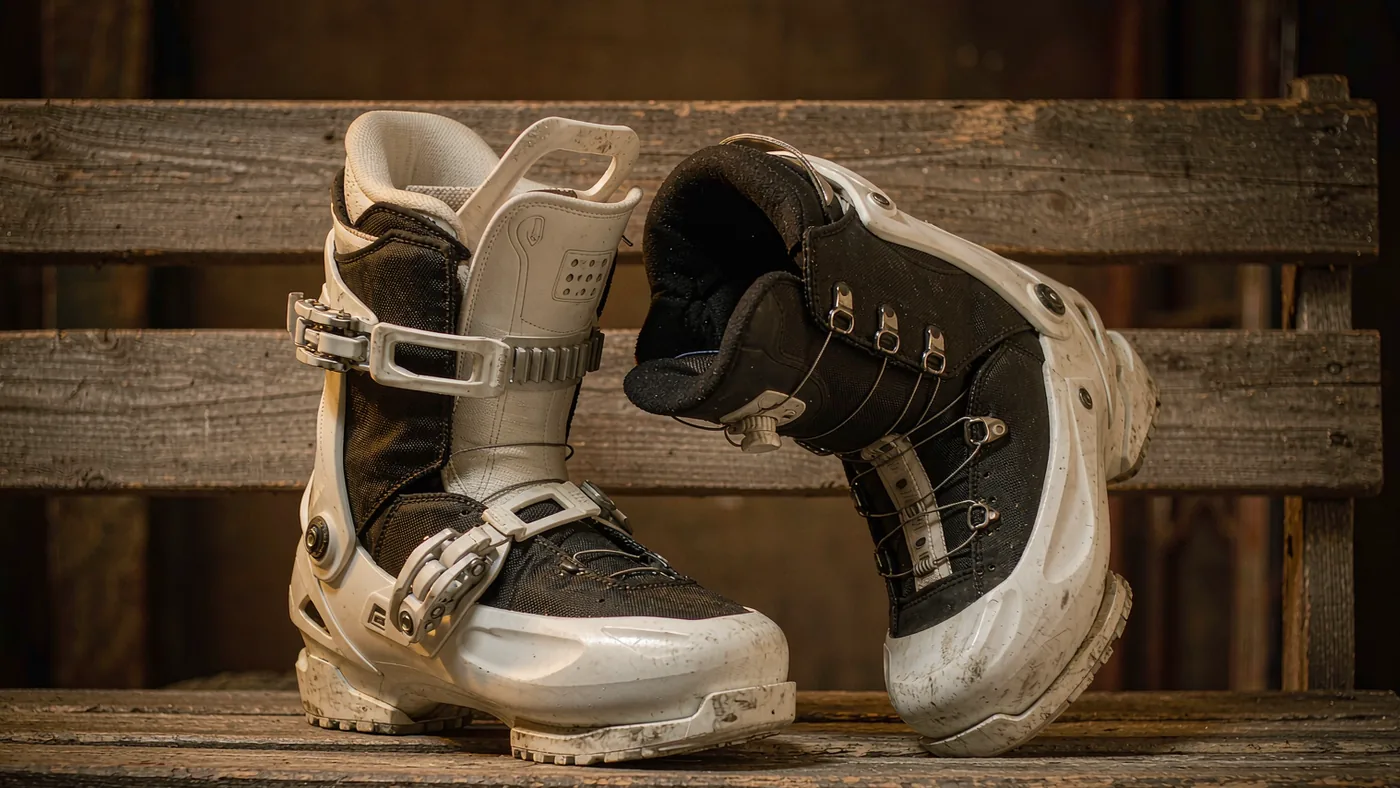
A supportive boot that will still be worth wearing once you can ride properly. Good if you only want to buy boots once.
Best for
- Improving riders who want support
- Riders with an average-width foot
Worth skipping if
- Absolute beginners
- Riders wanting maximum softness
- Flex bias
- Medium-stiff
- Lacing
- Quick-pull lacing
- Intended terrain
- All-mountain
Strengths
- Supportive without being brutal
- Lasts several seasons
Trade-offs
- Firmer than a beginner wants
- Costs more than an entry boot
Specifications reflect published manufacturer information, last checked 2026-09-28. We have not laboratory-tested this product; the assessment above is editorial, based on the published design and the rider profile it targets. How we review gear.
Why fit beats flex every time
One thing matters more than stiffness, and it is whether the boot fits. The reason is heel hold: if your heel lifts when you push your shin forward, the boot is absorbing your input before flex even comes into it, and a stiff boot simply gives you a more efficient way of putting force in the wrong place. Get the shell size right, with toes just brushing the front when you stand and pulling back when you flex, then choose the flex. Boots that are slightly too big are the most common error in the whole category.
Winner by scenario
| Scenario | Which flex wins | Why |
|---|---|---|
| First season, learning on gentle slopes | Soft | Comfort and forgiveness matter more than precision |
| Riding a stiff all-mountain or freeride board | Stiff | A soft boot cannot drive a stiff board properly |
| Two weeks a year, mixed pistes | Medium | The least compromised answer for most riders |
| Riding fast on hard European pistes | Stiff to medium-stiff | Support is what stops the boot collapsing under load |
| Park laps, butters and presses | Soft to medium-soft | You want the boot to absorb movement rather than fight it |
| Heavy rider above roughly 90kg | Stiff | Soft boots fold and lose all support under more weight |
| Long days with tired legs by Thursday | Stiff | A supportive boot keeps you riding properly when you are fatigued |
| Riders with sensitive feet or circulation problems | Soft | Comfort out of the box matters more than response |
Editorial guidance based on how flex behaves in use, not on measured stiffness testing.
Which should you buy
If you are learning, buy a soft or medium-soft boot and put the money you saved into getting the fit right — a heat-mouldable liner, a proper footbed and a shop that will measure your feet. You will progress faster in a comfortable soft boot than in an uncomfortable stiff one.
If you can already link turns confidently and you are riding a medium or stiff board, buy the stiffer boot — particularly if you are heavy, ride fast, or have found that your current boots feel like slippers halfway through a trip.
Do not buy the Burton Moto if you ride fast, weigh a lot, or are pairing boots with a stiff all-mountain deck — the soft shell will collapse under load and you will feel like you have no edge at all. Do not buy the K2 Maysis as a first boot if you are an absolute beginner, or if your feet are wide or high-volume, because a firm boot that does not fit will be painful and slow your progress rather than support it.
Frequently asked questions
Can soft boots be used with a stiff board?
They can be, but the setup will feel mismatched. A stiff board takes more force to bend, and a soft boot cannot deliver it specifically enough. The result is a board that feels lifeless and unresponsive, and a rider who blames the board for a problem that lives in the boots.
How long do snowboard boots last?
For a rider doing two or three weeks a year, expect several seasons before the shell and liner soften noticeably. For someone riding thirty or more days a season, two seasons is realistic before a soft boot packs out and loses support. Stiffer boots generally hold their shape for longer.
Should boots hurt when they are new?
They should feel snug, not painful. Firm pressure across the top of the foot or the front of the shin that does not ease after a few days usually means the boot is the wrong shape for your foot, not that it needs breaking in. Heat-mouldable liners remove much of the early discomfort if they are fitted properly.
Does the lacing system matter for flex?
It matters for how evenly the boot tightens rather than how stiff it is. Traditional laces give fine control and are easy to repair anywhere. Quick-pull systems tighten faster with gloves and distribute tension more evenly. Neither changes the underlying flex of the shell.
Where to go next
Start with the fit guides — boots for wide feet, boots for narrow feet and boots for beginners — because fit matters more than flex. Then read snowboard binding sizes explained so that the binding matches the boot you have chosen.
If you are still putting the setup together, how to choose your first setup and how much should you spend cover the rest. Browse more comparisons or the bindings and boots section.