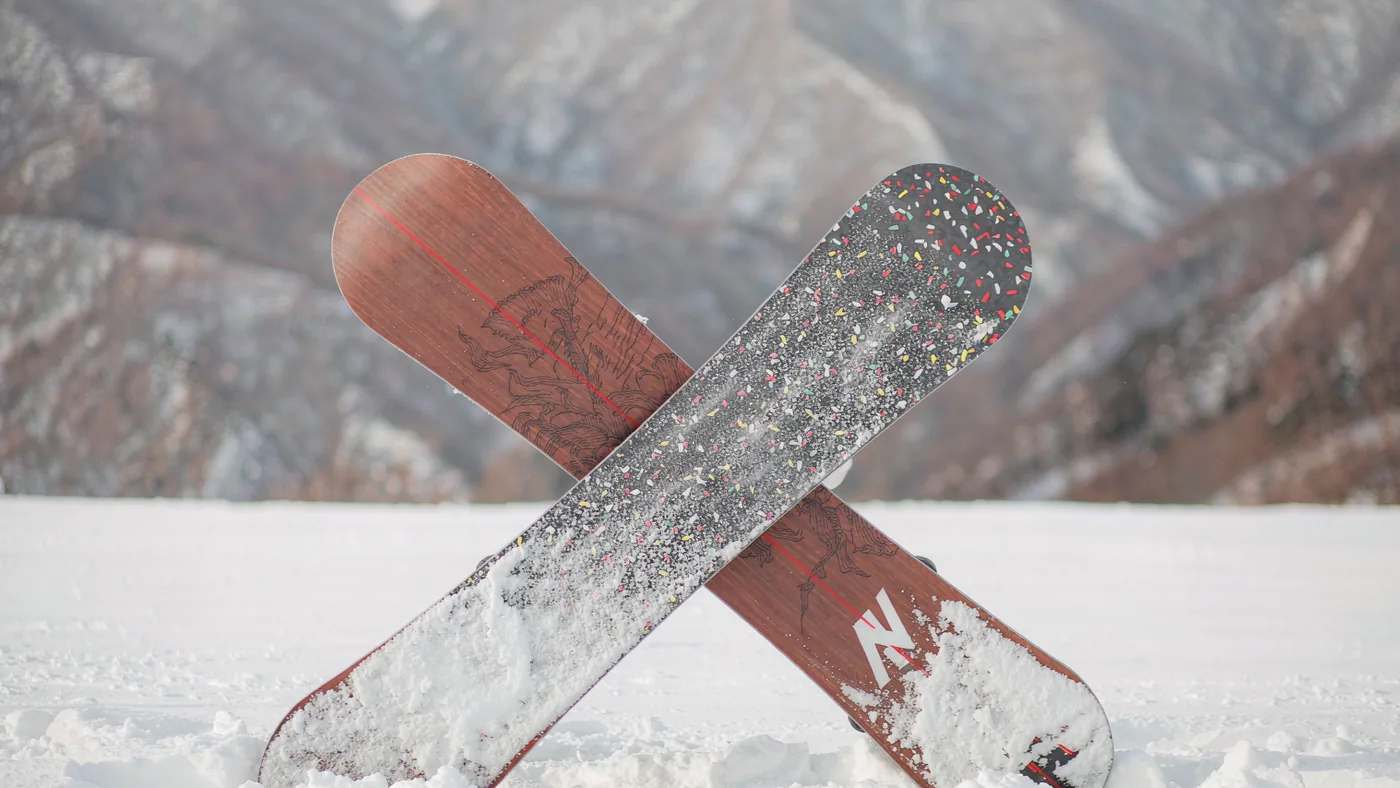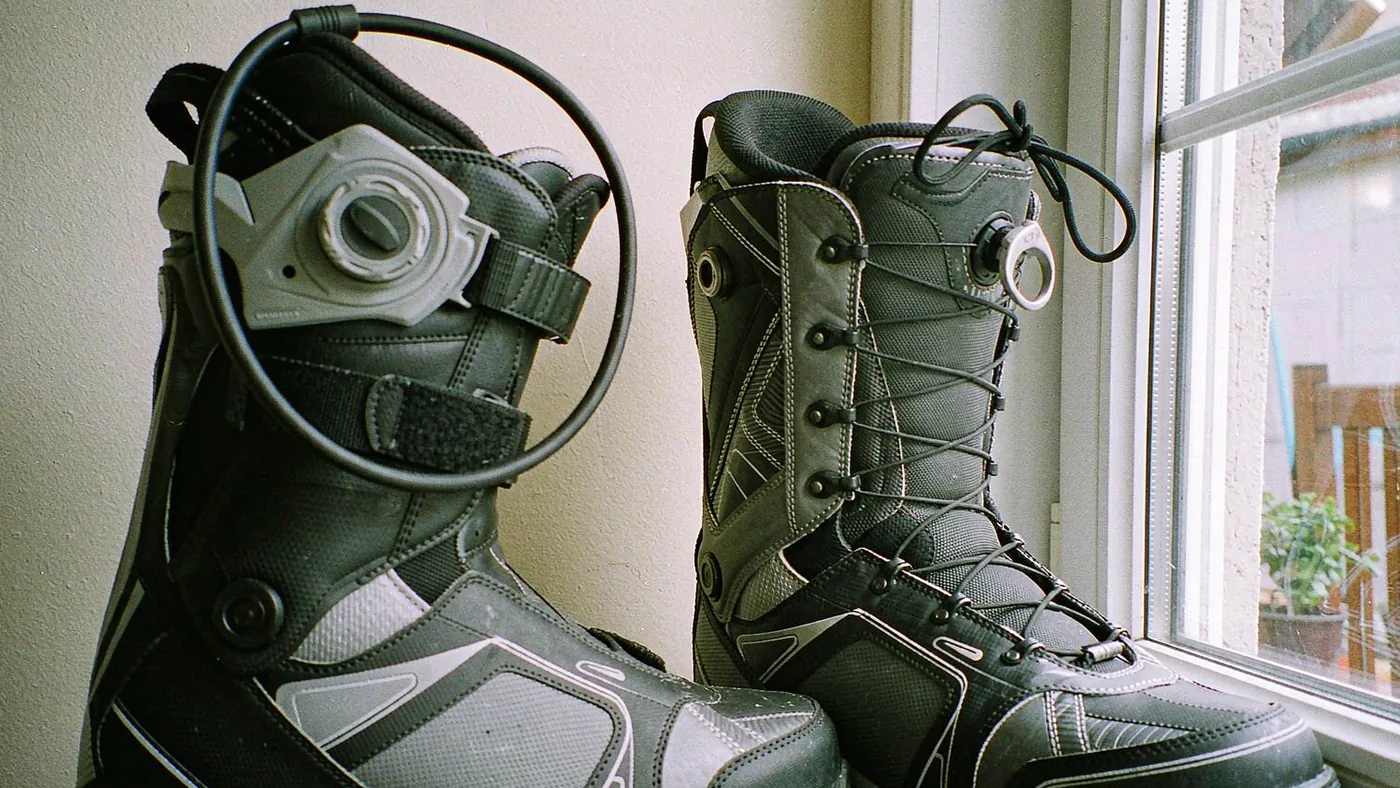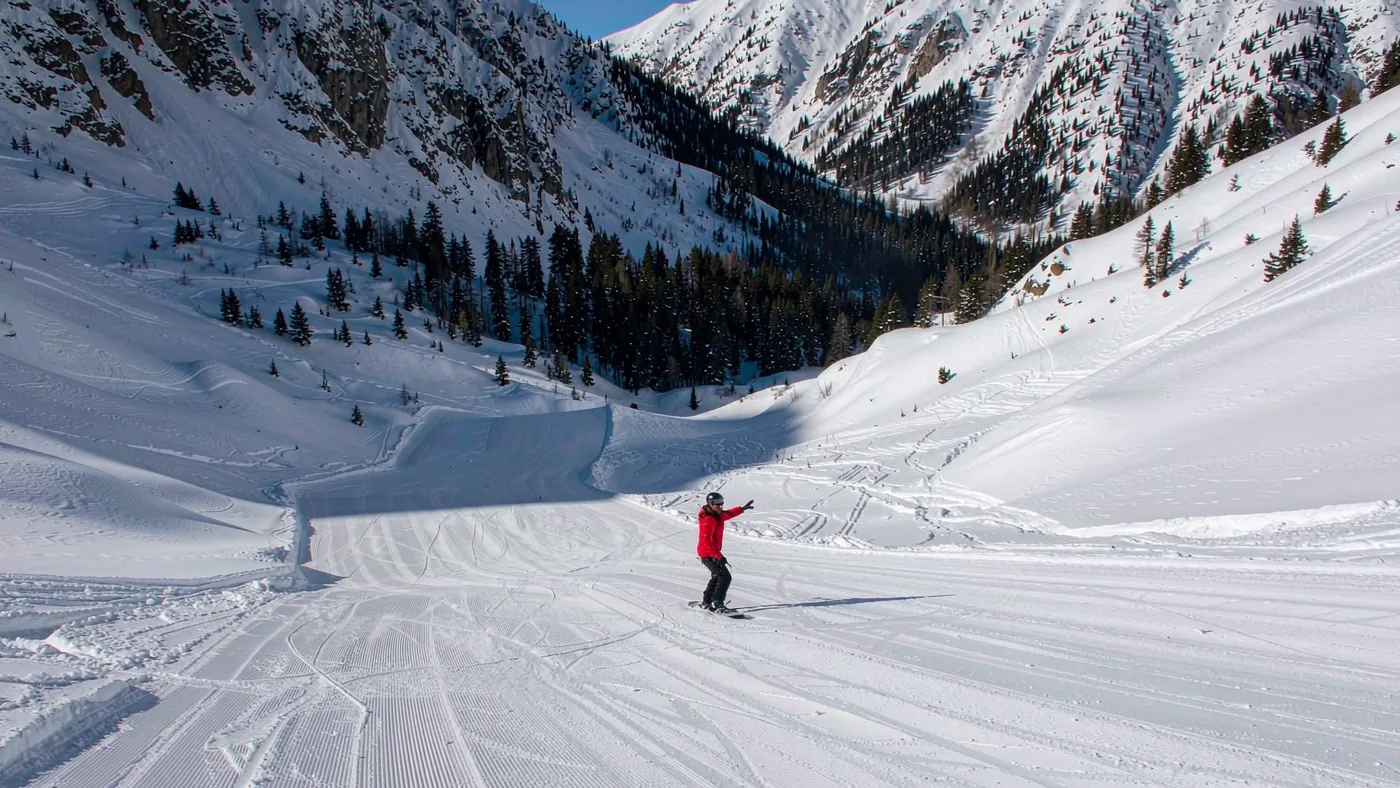
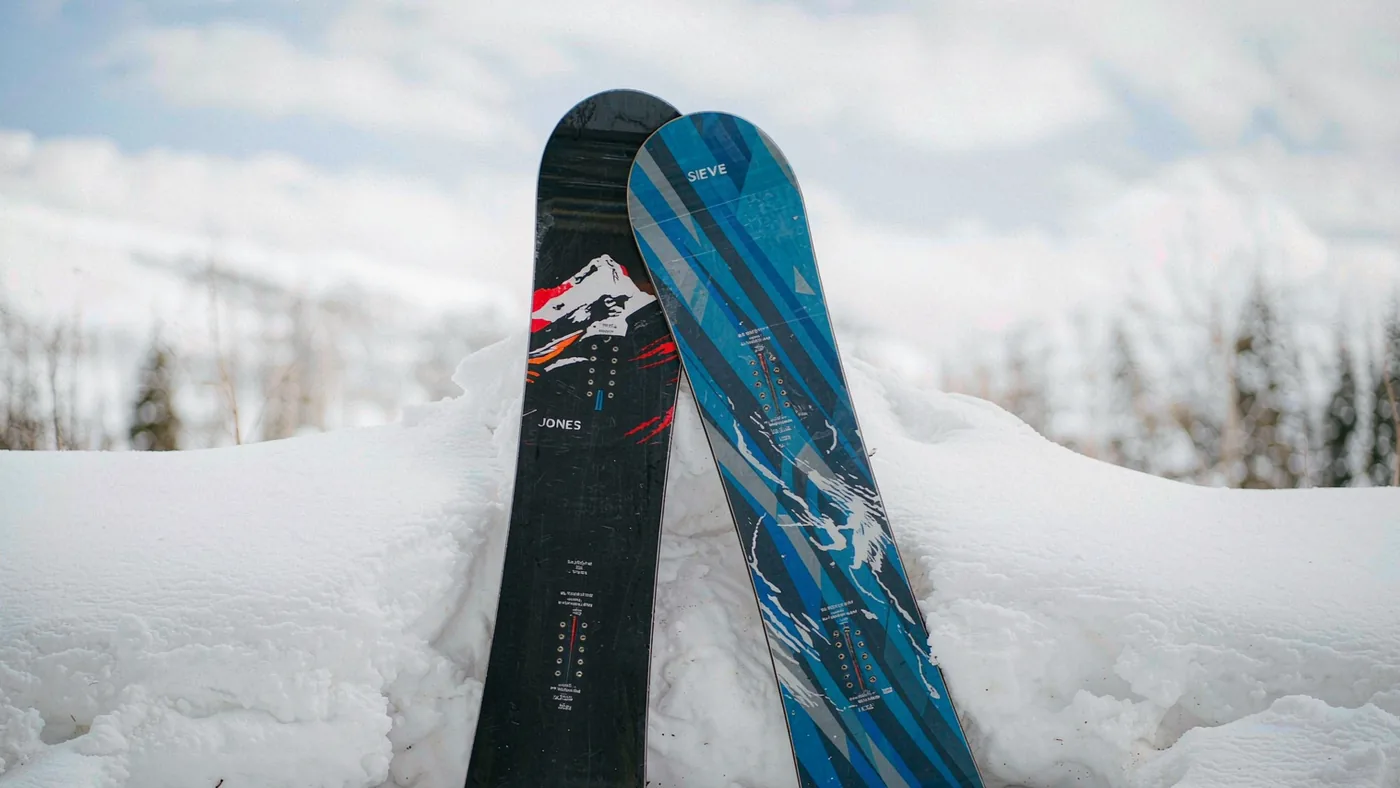
In a shop in Chamonix on a wet afternoon in December, a rider who weighs a bit over sixty kilos stands on two boards in her socks. The first is a 152 in the unisex range, flex described as medium. The second is a women's-specific 149 and feels, underfoot, like a different sport — she can press the middle with two fingers. The person behind the counter says the second one is the women's version, as though that were the whole explanation.
It is about a fifth of the explanation. The rest is weight range, waist width, insert positions and, sometimes, nothing at all. A board is a spring that has to bend under your weight and an outline that has to be wide enough for your boots. Where it sits in the range and what it is called are separate questions, and the second one is marketing.
What actually differs
The weight range the flex is tuned for. The real difference and the only one that reliably matters. Flex is meaningless in the abstract: a medium flex is medium relative to a rider of a certain weight. A deck tuned for fifty to seventy kilos is a different spring from one tuned for eighty to a hundred, even when both say medium. A lighter rider on the heavier board cannot load the camber, cannot press the tail, and feels every lump of hard snow through the base.
Waist width against boot length. Women's-specific boards are usually narrower, which suits shorter feet. Narrow is not automatically better — it depends on your boot — but a board that is too wide makes edge-to-edge transitions slow and vague.
Stance options and insert spread. The inserts on a women's board are often placed closer together, which lets a shorter rider use a comfortable stance rather than the narrowest setting on a unisex deck. This matters more than most buyers expect, particularly under about 1.65m.
Sometimes the core and the outline. Manufacturers do vary core material, sidecut and outline between ranges, and a women's-specific deck is often designed from the ground up rather than scaled down. When that is the case, the difference in ride is much bigger than a length change would suggest. Sometimes the only difference is the top sheet.
The picks
Built around a lighter rider's weight range rather than scaled down from a men's deck. Grips well and floats better than its width suggests.
Best for
- Intermediate and advanced women riders
- Riders who want one board for piste and soft snow
Worth skipping if
- Absolute beginners
- Dedicated park riders
- Profile
- Hybrid camber
- Shape
- Directional twin
- Flex bias
- Medium
- Intended terrain
- All-mountain
Strengths
- Sized and flexed properly for lighter riders
- Confident edge hold on hardpack
- Genuinely fun in soft snow
Trade-offs
- Premium price
- Not the deck for a dedicated park rider
Specifications reflect published manufacturer information, last checked 2026-09-28. We have not laboratory-tested this product; the assessment above is editorial, based on the published design and the rider profile it targets. How we review gear.
Playful enough for park laps, stable enough to ride everywhere else. A good pick if you want one board and you are not sure what you will end up loving.
Best for
- Women riders who split time between park and piste
- Riders stepping up from a first board
Worth skipping if
- Riders wanting a stiff freeride deck
- Purely deep-powder riders
- Profile
- Hybrid camber
- Shape
- True twin
- Flex bias
- Medium-soft
- Intended terrain
- All-mountain freestyle
Strengths
- Fun without being a one-trick park board
- Smoothes out choppy snow reasonably well
- Good step up from a first deck
Trade-offs
- Not stiff enough for hard charging
- Graphics are divisive
Specifications reflect published manufacturer information, last checked 2026-09-28. We have not laboratory-tested this product; the assessment above is editorial, based on the published design and the rider profile it targets. How we review gear.
How they compare
| Variable | Women's-specific deck | Smaller unisex deck | Matters when | Does not matter when |
|---|---|---|---|---|
| Flex tuning | Tuned for a lighter weight range | Tuned for a heavier rider at every length | Almost always | You are heavier than the women's range allows |
| Waist width | Usually narrower | Usually wider for the same length | Your boots are small and edge-to-edge is sluggish | Your boots are large, or you ride soft snow |
| Stance range | Inserts sit closer together | Wider reference stance | You are under about 1.65m | You are tall or already ride a wide stance |
| Core and outline | Sometimes redesigned, sometimes rescaled | Designed once and scaled | The deck was built from the ground up | The only change is length and graphic |
| Size run | Fewer lengths, but the right ones | Longer lengths available | You want a specific length in the middle | The length you need exists in both |
Published specifications, last checked 28 September 2026. Judgements about how each variable affects the ride are editorial, and every board differs — read the individual specification before you buy.
When a smaller unisex board is the better buy
When you are at the top of the women's weight range. Most women's ranges top out well below the heaviest riders, and a board at the very top of its range feels soft and vague under a heavy rider at speed. If you weigh more than the upper figure for a women's deck in your length, buy the unisex board and accept the wider waist.
When your boots are large. A narrow waist plus a size 42 boot is boot drag, an invisible performance problem that riders blame on technique for years. If your boot length demands a certain waist width, shop on the number rather than the wall.
When the deck you want only exists in the unisex range. Ranges are not equal. If the shape and flex you need is only available in a unisex model, a shorter length of it may be the better board for you than a women's-specific deck that does not do what you want.
When the women's-specific deck is the better buy
When you are lighter than average and ride firm pistes. This is the clearest case. A rider of around fifty-five to sixty-five kilos on a medium-flex unisex deck will struggle to load it, and the board will feel like a plank on hard snow. A deck designed around that weight range bends when you push it, which is the whole point.
When the geometry has genuinely been redesigned. The Jones Dream Weaver is built around a lighter rider's weight range rather than scaled down from a men's deck, and it holds an edge on hardpack while floating better than its width suggests. The CAPiTA Birds of a Feather takes another approach: a medium-soft true twin aimed at riders splitting time between park and piste, and a good step up from a first board.
When the stance geometry fits you. If you are shorter than about 1.65m and have been riding a unisex board on its narrowest insert setting, a closer stance range will make a real difference to how much control you have over the edge.
The decision rule: weight and boot length, not gender
Step one. Find your weight in kilos and your boot length in millimetres. Boot length, not shoe size — a size 42 is not a fixed length across brands, and it is the length that decides whether you drag.
Step two. Look up the manufacturer's weight range for the length you are considering, in both the women's and unisex ranges. Inside the range, the board will flex under you. At the top of it, the board feels soft; at the bottom, unforgiving.
Step three. Check the waist width against your boot length. As a working convention, boots shorter than about 285mm are usually comfortable on a waist of around 245mm to 250mm, and boots above 300mm want a wider or volume-shifted shape.
Step four. Check the insert spread against your natural stance. If the widest comfortable setting forces your knees apart, the board is not for you, whichever wall it came from.
Verdict
If you weigh more than the top of the weight range for the length you need, or your boots are long enough to drag on a narrow waist, do not buy a women's-specific board simply because it is the lighter option — you will get a deck that folds under you at speed and a permanent boot-drag problem. If you are a lighter rider on firm pistes, do not buy a medium-flex unisex deck on the grounds that it will last longer; a board you cannot load is a board you cannot learn on.
Frequently asked questions
Are women's snowboards just smaller men's boards?
Sometimes, and sometimes not. Some ranges are genuinely designed around a lighter weight range with their own core, sidecut and inserts. Others are a shorter version of a unisex shape with a different graphic. You cannot tell which from the label, so check the weight range and waist width for the specific length.
Can a man ride a women's snowboard?
Yes, if the weight range and waist width suit him. A lighter male rider on a board tuned for a lighter rider will ride better than the same person on a board he cannot flex. What matters is falling inside the weight range for the length, and whether the waist suits your boots.
What waist width do I need for my boots?
Measure boot length in millimetres rather than trusting the size on the box. As a convention, boots under about 285mm usually work on a waist of about 245mm to 250mm, and boots above about 300mm generally want a wider or volume-shifted shape. Binding angles change the answer, since flatter angles push the boot over the edge.
Does the flex number compare across brands?
No. Flex ratings are marketing shorthand and are not standardised, so one brand's medium is another brand's soft. Compare boards instead on the published weight range for each length, and on how much force it takes to press the middle by hand in a shop.
Is a women's board better for a lighter rider on hardpack?
Usually yes, if the weight range matches. The grip advantage does not come from the shape being narrower; it comes from being able to load the camber with your own weight. A board that bends under you presses its edge into the snow, and one that does not cannot, whatever its profile.
Where to go next
The women's board round-up takes the same question product by product, and the waist width guide works out the number your boots actually need. Buying a whole setup? Get the boot size right with the boot size guide before anything else.
Riders deciding between two shapes rather than two ranges should read true twin vs directional, and more of this kind of comparison sits in the comparisons archive.