The first firm morning of the season is where it usually shows up. The snow is hard and fast, you tip the board over further than you have all year, and instead of a smooth carve the edge lifts, the tail slides out and you are suddenly sitting down wondering what happened. Nothing is wrong with your technique or the tune. Your boot touched the snow before the edge did, and it levered the board off its line.
Boot drag is the most common invisible problem in snowboarding. It does not appear in a photograph, it has nothing to do with your weight or ability, and it gets worse as you improve, because better riders lean the board over further. The fix is a wider board or steeper binding angles, and both cost you something.
Measure boot length, not boot size
Waist width only has one job: to leave enough room for your boots while still letting the board roll from edge to edge. The relevant measurement is therefore the length of your boot, not the size on the box.
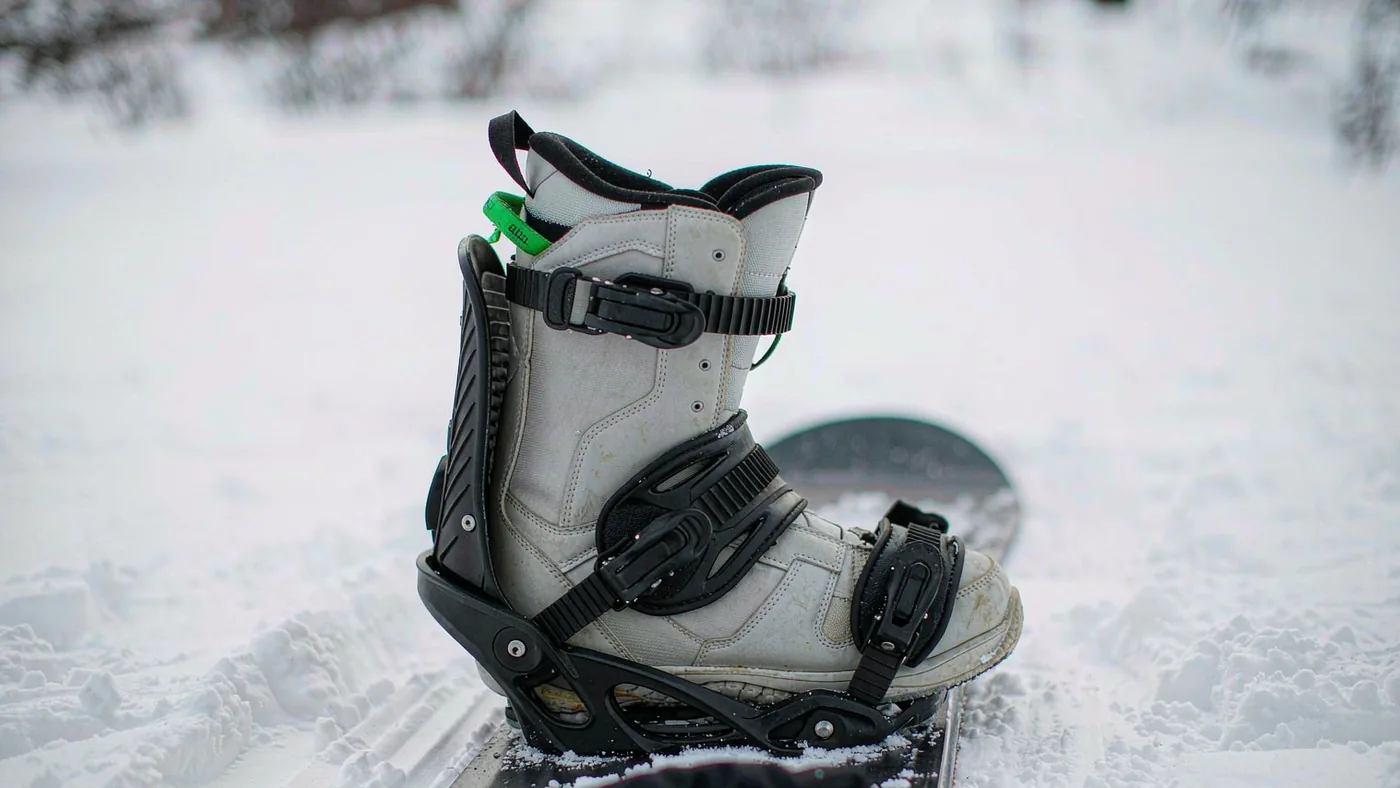
Measure it directly. Stand the boot on the floor with its heel against a wall, and measure from the wall to the front of the sole — the plastic shell, not the liner. That figure, usually between about 280 mm and 330 mm for adult boots, is what you compare against a board's waist. Manufacturers sometimes print it on the shell or the box, which saves you the tape measure.
Two gaps explain most bad purchases. Boot sizes lie about length: two UK 10 boots from different brands can be a centimetre apart in sole length. And the boot's footprint grows with the binding, because the straps, heelcup and toe ramp all sit outside the shell, so a bulky boot in a chunky binding hangs further past the edge than the bare boot suggests.
How much waist width you need
The numbers below are editorial starting points, not laws, and they assume a normal stance and a boot that fits properly.
| Boot sole length | Typical boot size | Minimum waist, relaxed stance | Minimum waist, duck stance | What happens if you ignore it |
|---|---|---|---|---|
| Up to 290 mm | UK 7 and under | 240 mm | 238 mm | Little effect; the boot is short relative to most boards |
| Around 300 mm | UK 9 | 248 mm | 246 mm | Toe or heel touches down on the hardest snow |
| 305 mm | UK 10 | 252 mm | 250 mm | Regular contact in hard carves; the edge feels vague |
| 310–315 mm | UK 11 | 255 mm | 253 mm | Frequent drag, particularly at speed |
| 320 mm | UK 12 | 260 mm | 258 mm | Drag on most hard turns and on steep traverses |
| 325 mm and above | UK 13 and above | 265 mm and above | 263 mm and above | Severe drag, a control problem rather than a cosmetic one |
Editorial guidance based on published board geometry and standard boot proportions, last checked 28 September 2026. Sole lengths vary by brand and model, so measure your own boot, and treat a board's own sizing notes as the authority.
A centimetre or so of overhang at each end is normal and useful — it gives you leverage. Two centimetres or more, or any overhang you can feel touching down in a carved turn, is a problem.
Why binding angles change the answer
A binding sits across the board, but your boot sits along it. That difference is why rotating your bindings changes your overhang without changing a single component.
A duck stance shortens the boot's footprint across the board. Rotating both feet outwards brings the length of the boot closer to the length of the board, so the toe and heel move inboard. For a rider with moderately long boots, a few degrees is often enough.
A forward, positive stance increases it. Both feet rotated towards the nose puts the boot more across the board, which increases overhang at the back foot in particular. Carving riders who move to a positive stance often need a wider board to go with it.
The cost of fixing it with angles is feel. Steeper angles change how your knees track and how the board initiates a turn, and very steep angles are uncomfortable for riders with tight hips. That trade-off is covered in binding angles explained.
The picks
Three boards that solve boot overhang in different ways — one short and wide, one a wide twin, and one built for heavier riders who need both width and stiffness.
A short, wide, volume-shifted deck that rides like a much longer board but turns far quicker. The best option here if you fly with one board and want it to handle everything.
Best for
- Riders who want one travel board for all conditions
- Bigger-footed riders who need a wide waist
Worth skipping if
- Riders who want a traditional-feeling camber deck
- Dedicated park riders
- Profile
- Rocker-dominant hybrid
- Shape
- Tapered directional, volume shifted
- Flex bias
- Medium
- Intended terrain
- All-mountain / powder
Strengths
- Very short, very quick in tight terrain
- Floats far better than its length suggests
- One of the best single-board travel choices
Trade-offs
- Smaller-footed riders may find the waist too wide
- Not a carving-focused deck
Specifications reflect published manufacturer information, last checked 2026-09-28. We have not laboratory-tested this product; the assessment above is editorial, based on the published design and the rider profile it targets. How we review gear.
A wider twin built for riders who need more surface area underfoot without going up a length.
Best for
- Heavier riders wanting a twin
- Riders with big feet
Worth skipping if
- Light riders
- Riders wanting a soft park feel
- Profile
- Hybrid camber
- Shape
- True twin
- Flex bias
- Medium-stiff
- Intended terrain
- All-mountain freestyle
Strengths
- Real solution for big-footed riders
- Stable at speed
Trade-offs
- Wide waist needs effort from a light rider
- Not designed for deep powder
Specifications reflect published manufacturer information, last checked 2026-09-28. We have not laboratory-tested this product; the assessment above is editorial, based on the published design and the rider profile it targets. How we review gear.
A big-rider deck in the proper sense: wider, stiffer and built for a heavier load, not just a longer version of a standard board.
Best for
- Riders over roughly 95kg
- Tall riders who need a wider stance and waist
Worth skipping if
- Average-weight riders
- Anyone wanting a soft, playful feel
- Profile
- Hybrid camber with traction edge tech
- Shape
- Directional twin
- Flex bias
- Stiff
- Intended terrain
- All-mountain
Strengths
- Actually sized for heavier riders
- Stable at speed
- Excellent grip on firm pistes
Trade-offs
- Far too stiff for a lighter or improving rider
- Heavier to carry on the lift
Specifications reflect published manufacturer information, last checked 2026-09-28. We have not laboratory-tested this product; the assessment above is editorial, based on the published design and the rider profile it targets. How we review gear.
How they compare
| Board | Shape and profile | Flex bias | Waist character | Who it suits | Who should avoid it | Main compromise |
|---|---|---|---|---|---|---|
| Ride Warpig | Tapered directional, volume shifted, rocker-dominant hybrid | Medium | Very wide for its short length | Riders with bigger feet wanting one travel board for everything | Riders wanting a traditional cambered feel, and dedicated park riders | Smaller-footed riders may find the waist too wide, and it is not a carving deck |
| YES Greats | True twin, hybrid camber | Medium-stiff | Wider than a standard twin of the same length | Heavier riders and big-footed riders who want a twin | Light riders, and anyone wanting a soft park feel | The wide waist takes effort from a light rider, and it is not designed for deep powder |
| Lib Tech Skunk Ape | Directional twin, hybrid camber with traction edge technology | Stiff | Wide, and sized for a heavier load | Riders over roughly 95 kg, and tall riders needing a wider stance and waist | Average-weight riders, and anyone wanting a soft, playful feel | Far too stiff for a lighter or improving rider, and heavier to carry |
Published specifications, last checked 28 September 2026. Flex and suitability are editorial judgements about how each board is designed, not laboratory measurements.
The three fixes, and what each costs
A wider board. The straightforward answer, and the one that solves it permanently. The cost is money and a slight loss of edge-to-edge speed, because a wide board takes marginally more effort to roll from edge to edge. For a rider with large boots, it is the right trade.
A volume-shifted or short-wide board. These get their surface area from width and thickness rather than length, so you ride them shorter than a conventional deck while keeping the float. That solves width and travel in one purchase, at the cost of a less traditional feel.
Steeper binding angles. Free, immediate and reversible. It works best for a rider with moderate overhang and no knee complaints. It will not fix two centimetres of boot hanging past each edge, and it changes how the board feels underfoot.
Narrower boots in the same length. Some boots are built on a narrower last, and a boot that is the same length but lower in volume can reduce overhang by a few millimetres. For riders with wide feet this is not an option, which is why the wide-foot boot round-up exists.
Verdict
If your boots are under 295 mm in sole length and you ride a moderate duck stance, a wide board will feel slow and unwieldy and you will spend the season wishing you had the standard width. Small-footed riders should also avoid volume-shifted decks, where the extra width is the whole point of the design and buys them nothing. Fix a small amount of overhang with angles first, and only buy width when the overhang is real.
Frequently asked questions
How much boot overhang is acceptable?
About a centimetre at each end is normal and gives useful leverage. Two centimetres or more is a control problem, and overhang you can feel touching down in a carved turn is too much regardless of the measurement. Check it by standing on the board and looking from the tail.
Do I need a wide snowboard with UK size 11 boots?
Usually, yes. A UK 11 boot is typically 310–315 mm long, which calls for a waist around 255 mm or more in a relaxed stance. A standard-width board of that length is usually narrower than that, which is why mid-wide and wide options exist.
Can binding angles really fix toe drag?
They help with a marginal problem. Rotating towards a duck stance brings the boot's length closer to the board's length and reduces overhang for free. If more than about two centimetres of boot is hanging over the edge, angles will not fix it and a wider board will.
Is a wider board harder to ride?
Slightly harder to roll from edge to edge, and no harder to ride in a straight line. The effect is most noticeable at low speed and in tight trees, and least noticeable for a heavier rider, who gets more support from the extra width than they lose in transition speed.
Where to go next
If the numbers point to a wider board, the volume-shifted round-up covers the short-wide category properly, and the heavy riders guide deals with the combination of width and stiffness. Individual verdicts sit in the Warpig review and the Skunk Ape review.
Before you buy, check the size chart for the length that goes with your weight, because width and length decisions are made together.