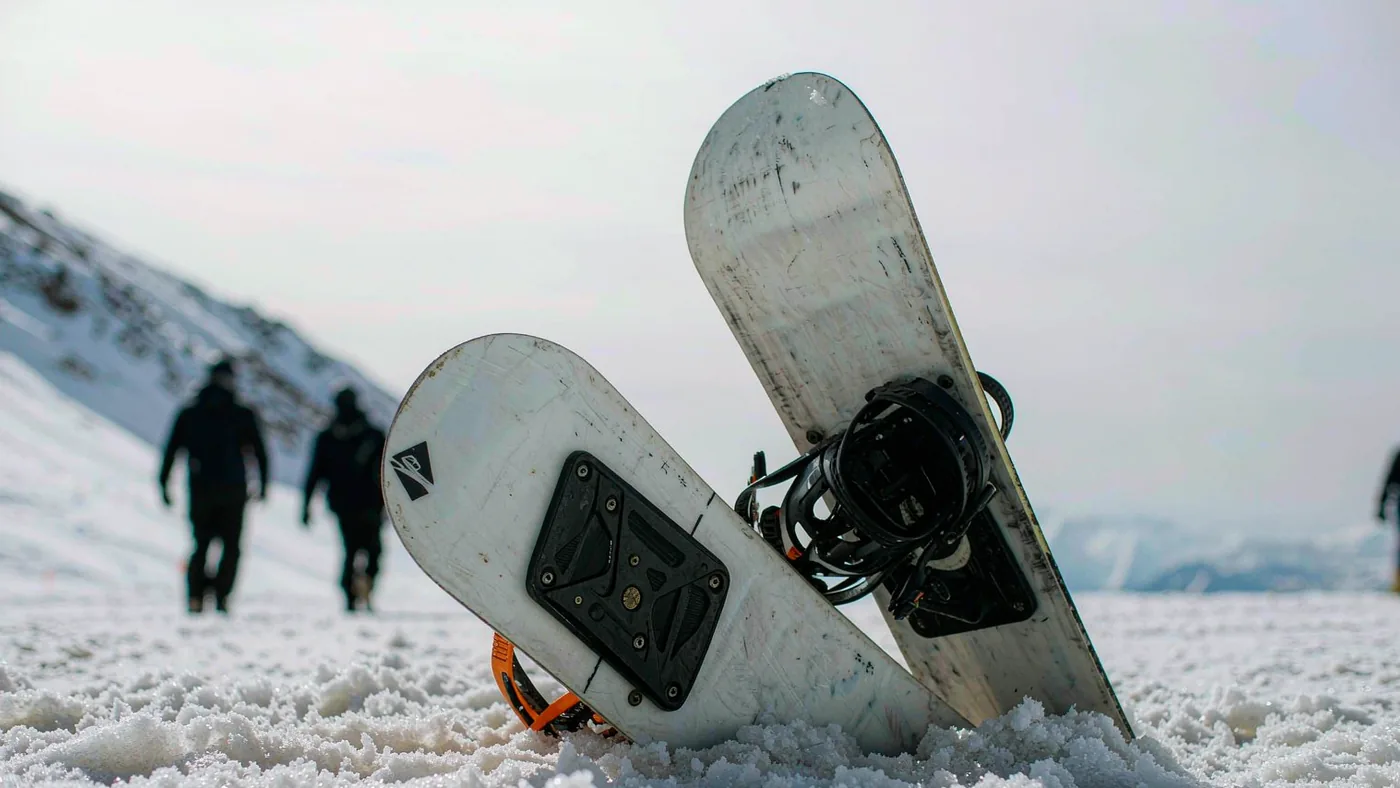
Two boards leaning against the same shop wall, and the shorter one is the one built for a heavier rider. A 148 next to a 158, the smaller deck visibly fatter through the middle, and the assistant explaining that you would ride the short one at your normal weight. It looks like a mistake. It is not, and the maths behind it is worth understanding before you spend anything.
The idea is surface area rather than length. A board floats and supports you in proportion to how much area sits under your weight, and area comes from length multiplied by width. Make the board wider and you can shorten it without losing the support — which buys you a shorter, quicker-turning board that still keeps you on top of soft snow. That is volume shift in one paragraph.
The reason it matters beyond powder is feet. If you wear a UK size 11 boot or larger, you have almost certainly been riding a board that is too narrow for you, and the two conventional fixes are both unsatisfying: ride a longer board, which turns like a bus, or ride huge binding angles, which wrecks your knees. A wider waist solves it directly, without either compromise.
How the sizing actually works
You go down, not up. Typically four to eight centimetres shorter than your conventional length, and the manufacturer's weight range for that short length is the number that decides. A rider who normally rides a 158 will often be on a 151 or 152 in a volume-shifted shape, and the weight band for that length will include them.
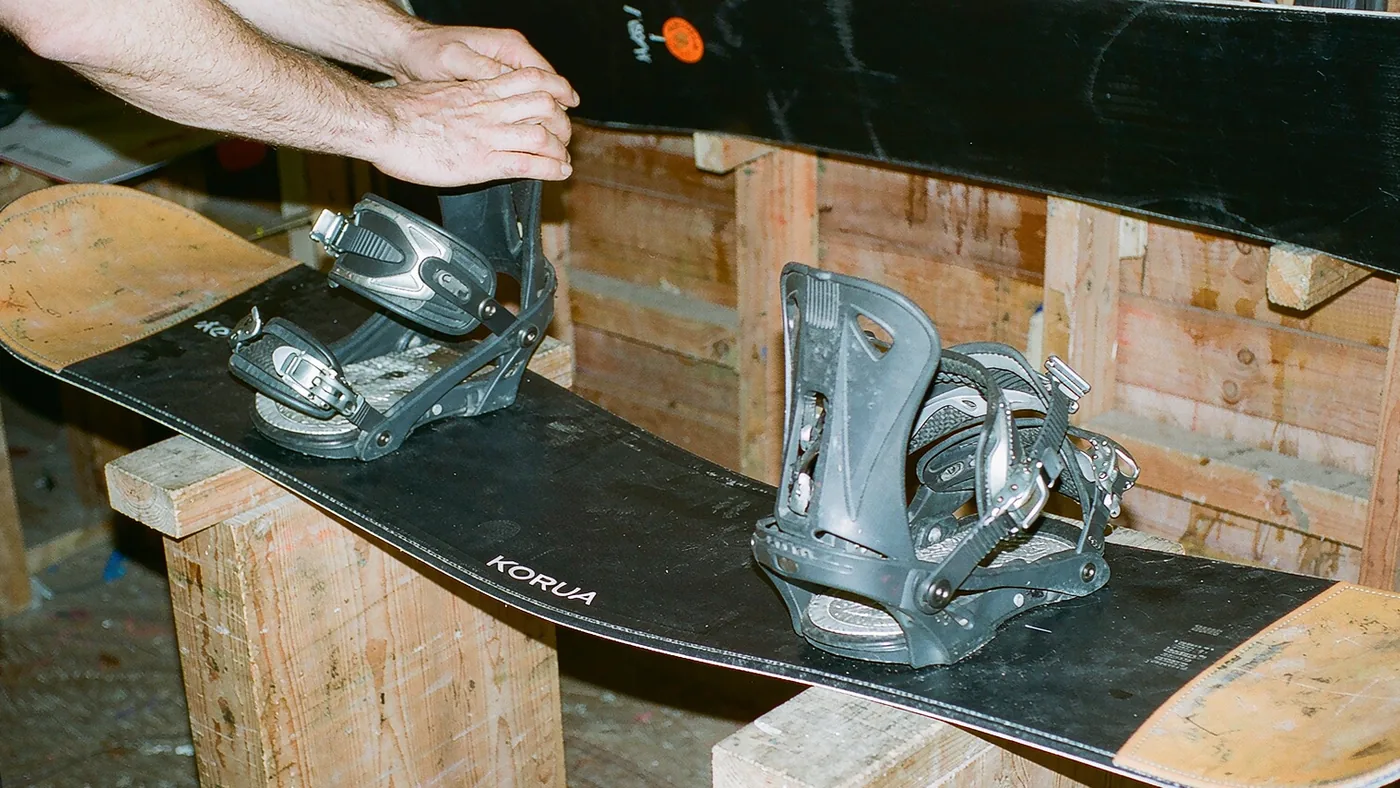
The waist goes up. A board of this type might run several millimetres to a centimetre wider at the waist than a conventional deck of the same nominal length. That is where the extra area comes from, and it is also what lets a big boot sit on the board instead of hanging over the edge.
The reference stance moves. Volume-shifted decks often have a narrower stance than the length suggests, because everything is compressed. If you normally ride a wide stance, check the insert positions before you buy rather than assuming you can set it where you like.
Do not size it like your old board. This is where people go wrong. Buying the same length you always ride defeats the entire point: you end up with too much board underfoot, a sluggish feel through the turn, and a deck that is harder to manage than the one it replaced.
The picks
A short, wide, volume-shifted deck that rides like a much longer board but turns far quicker. The best option here if you fly with one board and want it to handle everything.
Best for
- Riders who want one travel board for all conditions
- Bigger-footed riders who need a wide waist
Worth skipping if
- Riders who want a traditional-feeling camber deck
- Dedicated park riders
- Profile
- Rocker-dominant hybrid
- Shape
- Tapered directional, volume shifted
- Flex bias
- Medium
- Intended terrain
- All-mountain / powder
Strengths
- Very short, very quick in tight terrain
- Floats far better than its length suggests
- One of the best single-board travel choices
Trade-offs
- Smaller-footed riders may find the waist too wide
- Not a carving-focused deck
Specifications reflect published manufacturer information, last checked 2026-09-28. We have not laboratory-tested this product; the assessment above is editorial, based on the published design and the rider profile it targets. How we review gear.
A wider twin built for riders who need more surface area underfoot without going up a length.
Best for
- Heavier riders wanting a twin
- Riders with big feet
Worth skipping if
- Light riders
- Riders wanting a soft park feel
- Profile
- Hybrid camber
- Shape
- True twin
- Flex bias
- Medium-stiff
- Intended terrain
- All-mountain freestyle
Strengths
- Real solution for big-footed riders
- Stable at speed
Trade-offs
- Wide waist needs effort from a light rider
- Not designed for deep powder
Specifications reflect published manufacturer information, last checked 2026-09-28. We have not laboratory-tested this product; the assessment above is editorial, based on the published design and the rider profile it targets. How we review gear.
A big-rider deck in the proper sense: wider, stiffer and built for a heavier load, not just a longer version of a standard board.
Best for
- Riders over roughly 95kg
- Tall riders who need a wider stance and waist
Worth skipping if
- Average-weight riders
- Anyone wanting a soft, playful feel
- Profile
- Hybrid camber with traction edge tech
- Shape
- Directional twin
- Flex bias
- Stiff
- Intended terrain
- All-mountain
Strengths
- Actually sized for heavier riders
- Stable at speed
- Excellent grip on firm pistes
Trade-offs
- Far too stiff for a lighter or improving rider
- Heavier to carry on the lift
Specifications reflect published manufacturer information, last checked 2026-09-28. We have not laboratory-tested this product; the assessment above is editorial, based on the published design and the rider profile it targets. How we review gear.
How they compare
| Board | Approach | Profile | Shape | Flex | Float for its length | Best suited to |
|---|---|---|---|---|---|---|
| Ride Warpig | Volume shifted, ride it short | Rocker-dominant hybrid | Tapered directional | Medium | Very good | Riders who fly with one board |
| YES Greats | Wide twin at a conventional length | Hybrid camber | True twin | Medium-stiff | Fair | Big-footed riders who ride switch |
| Lib Tech Skunk Ape | Big-rider deck, wider and stiffer | Hybrid camber with traction edge tech | Directional twin | Stiff | Fair | Riders over roughly 95kg |
Published specifications, last checked 28 September 2026. Float and stability are editorial judgements about the design, not laboratory measurements.
The compromises nobody mentions
Volume shift is not free. Three costs are real and worth accepting deliberately.
Reduced effective edge. A shorter board has less edge running along the snow, which shows up exactly where you would expect: on hard, steep pistes and in long, committed carves. The Warpig is not a carving-focused deck, and the manufacturer says so. If your week is mostly firm groomers, this is the wrong purchase.
A different feel underfoot. A wide board takes more effort to get from edge to edge, and it feels like more board than it is when you first stand on it. The first run or two on a volume-shifted deck is usually spent recalibrating. Smaller-footed riders feel this most, because they have less leverage over a wide waist.
You have to re-learn your size. Everything you know about your own numbers is now wrong. Your spare board, your second set of bindings, your sense of what a 152 feels like — none of it transfers. That is a genuine inconvenience, not a philosophical one.
Resale is a narrower market. Volume-shifted lengths have a smaller pool of second-hand buyers, so a board like this can be slower to sell on when you are finished with it.
Wide is not the same as volume shifted
Worth separating, because the market blurs it.
A volume-shifted board is designed to be ridden shorter than its nominal length, with the width making up the difference. The Ride Warpig is a clear example.
A wide version of a standard board is simply the same shape with a wider waist, ridden at your usual length. It solves boot drag and does nothing else.
The Lib Tech Skunk Ape is its own third category: a big-rider deck that is wider, stiffer and built for a heavier load rather than being a longer version of a standard board. The YES Greats is closer to a wide twin at a conventional length, which is a real solution for a big-footed rider who wants to ride switch rather than a volume-shift board in the strict sense.
All three answer the same underlying question — how do I get more board under me without turning it into a bus — and they answer it differently. Pick the approach that matches what is actually wrong.
Who should not buy a volume-shifted board
If you have small feet and ride mostly groomed pistes. You gain almost nothing and give up edge hold and quickness edge to edge. A conventional camber deck is simply better for you.
If you carve and care about it. Reduced effective edge and a wide waist are both working against a long, clean carved turn. Nobody buys a Warpig for the trench.
If you ride park. Tapered, directional and wide is the wrong combination for rails and butters. The Warpig's own manufacturer lists dedicated park riders as unsuited.
If you are an average-weight rider looking at the Skunk Ape. It is built for riders over roughly 95kg, and it will be far too stiff for anyone much lighter. Being able to bend the board is not optional.
If you like staying with what you know. Sizing down genuinely changes how you ride. If you want a board that behaves like your last one, buy a conventional all-mountain deck and, if drag is the issue, buy it in the wide version.
Verdict
The Ride Warpig is the best single-board answer here for a rider who travels with one bag and does not know what the snow will do, and the YES Greats is the honest choice for a big-footed rider who wants to stay on a twin. But if your week is almost entirely firm piste and your boots are a normal size, none of these will make you happy — a narrower conventional camber deck will grip better and turn quicker, and you should buy that instead of re-learning your sizing for no benefit.
Frequently asked questions
How much shorter should a volume-shifted snowboard be?
Usually four to eight centimetres shorter than your conventional length, with the manufacturer's weight range for that specific length deciding the final answer. A rider normally on a 158 will often land on a 151 or 152. Riding a volume-shifted deck at your usual length makes it feel like too much board and wastes the design.
What waist width do I need for size 12 boots?
Measure your boot's outer length rather than trusting the size, then aim for enough waist that toe and heel overhang is minimal with the boot in a binding. A rider in UK size 11 or larger is almost always better served by a wide waist than by compensating with steeper binding angles, which load the knees.
Is a volume-shifted board good in powder?
Better than its length suggests, yes. The extra width replaces the surface area lost by shortening, and many volume-shifted shapes also carry a tapered tail and a set-back stance, which both help the nose stay up. It is not the float of a dedicated powder board, but it is far closer than the length implies.
Can I ride a short wide board on hardpack?
You can, but it is the weakest part of the design. A shorter board has less effective edge, so a steep, refrozen piste is where it feels least secure. A volume-shifted deck is usually fine for getting back to the lift, and it is not what you would choose for a week of firm carving.
Why is a wide board harder to turn?
Because you have the same body leverage over a wider platform, so it takes more effort and a little more edge angle to roll it from edge to edge. On a hard surface that shows up as slower transitions. Sizing down helps, because a shorter board swings through the turn more easily than a longer one of the same width.
Where to go next
If boot drag is what brought you here, the snowboard waist width guide works through the measurement properly, and the best snowboards for heavy riders round-up covers the weight side of the same problem. The best powder snowboards guide deals with float.
If you decide a conventional board is the better answer, the best all-mountain snowboards round-up is the place to compare. Everything else sits in the boards archive.