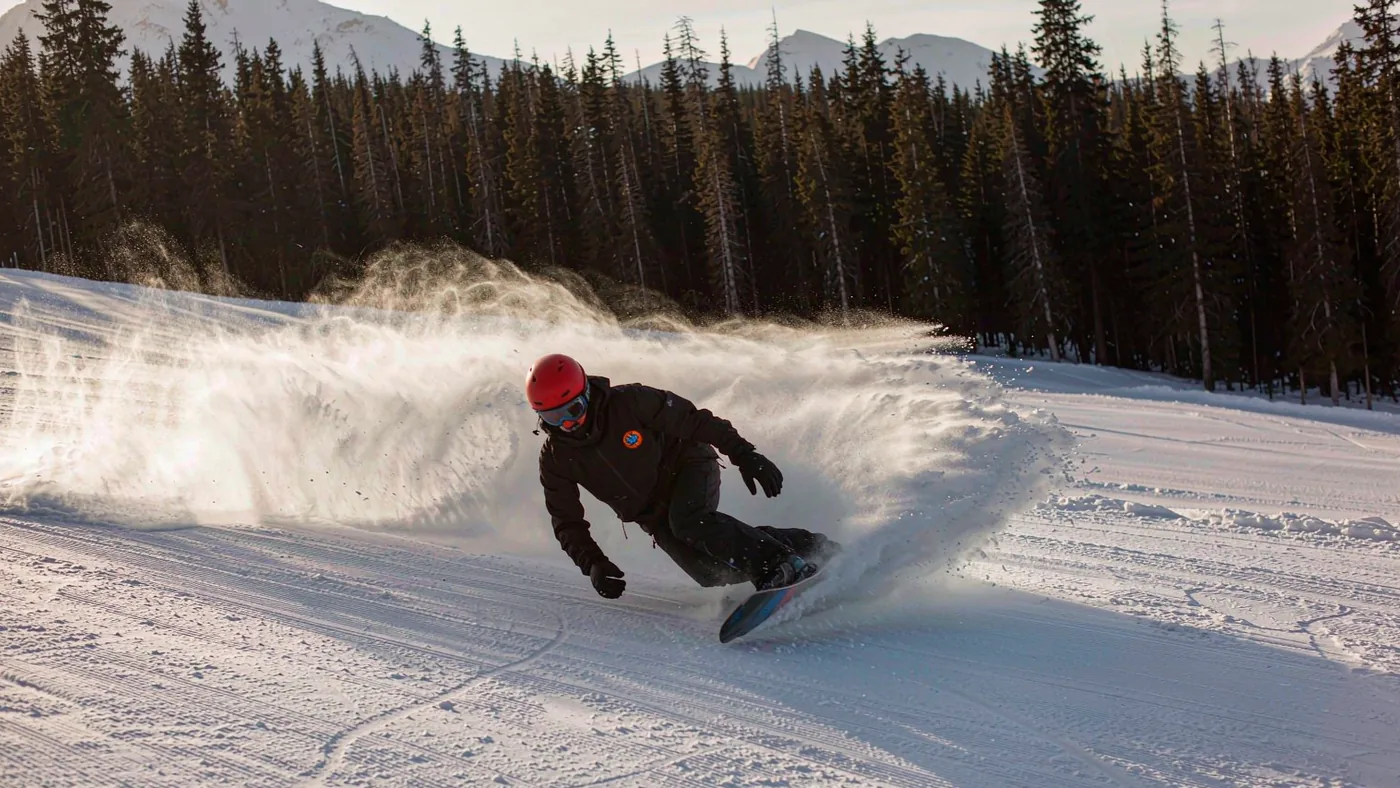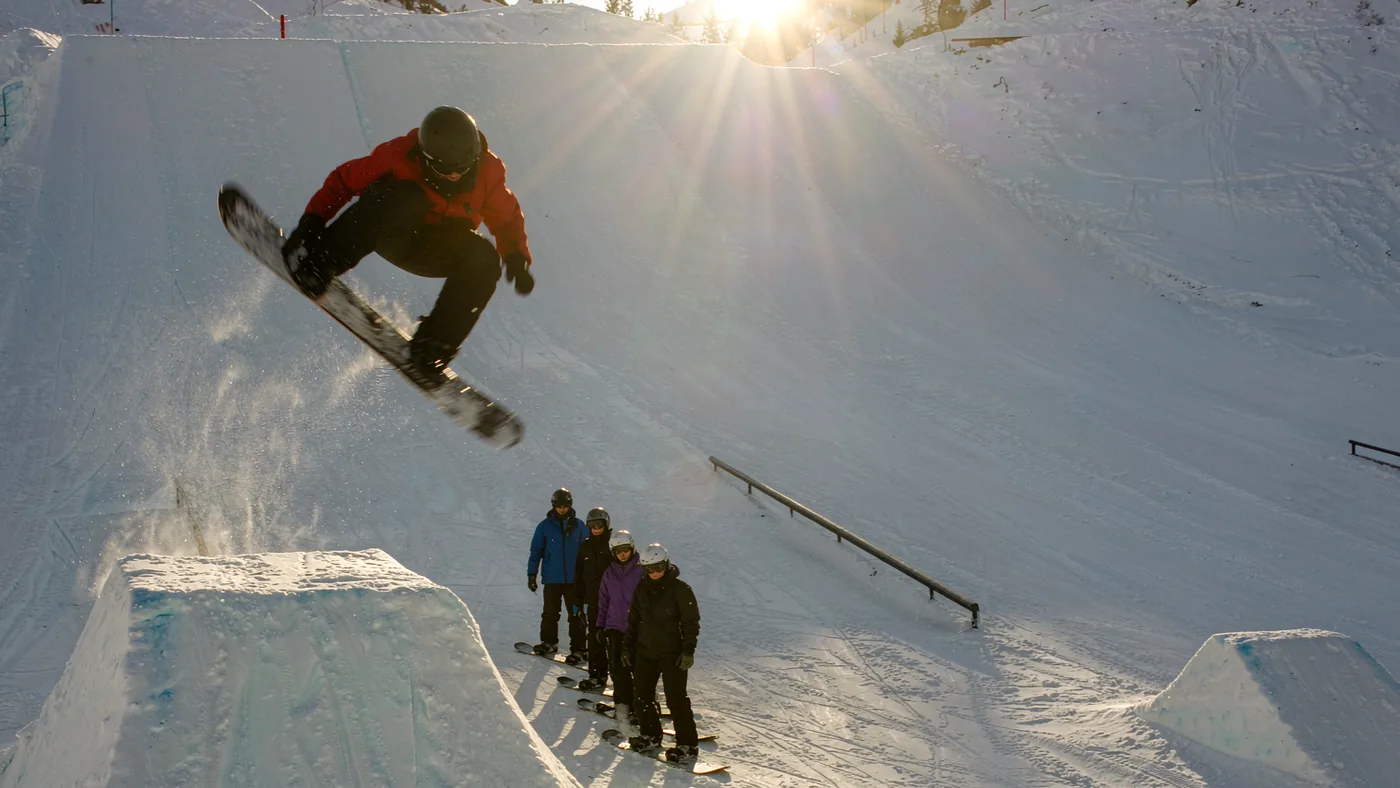
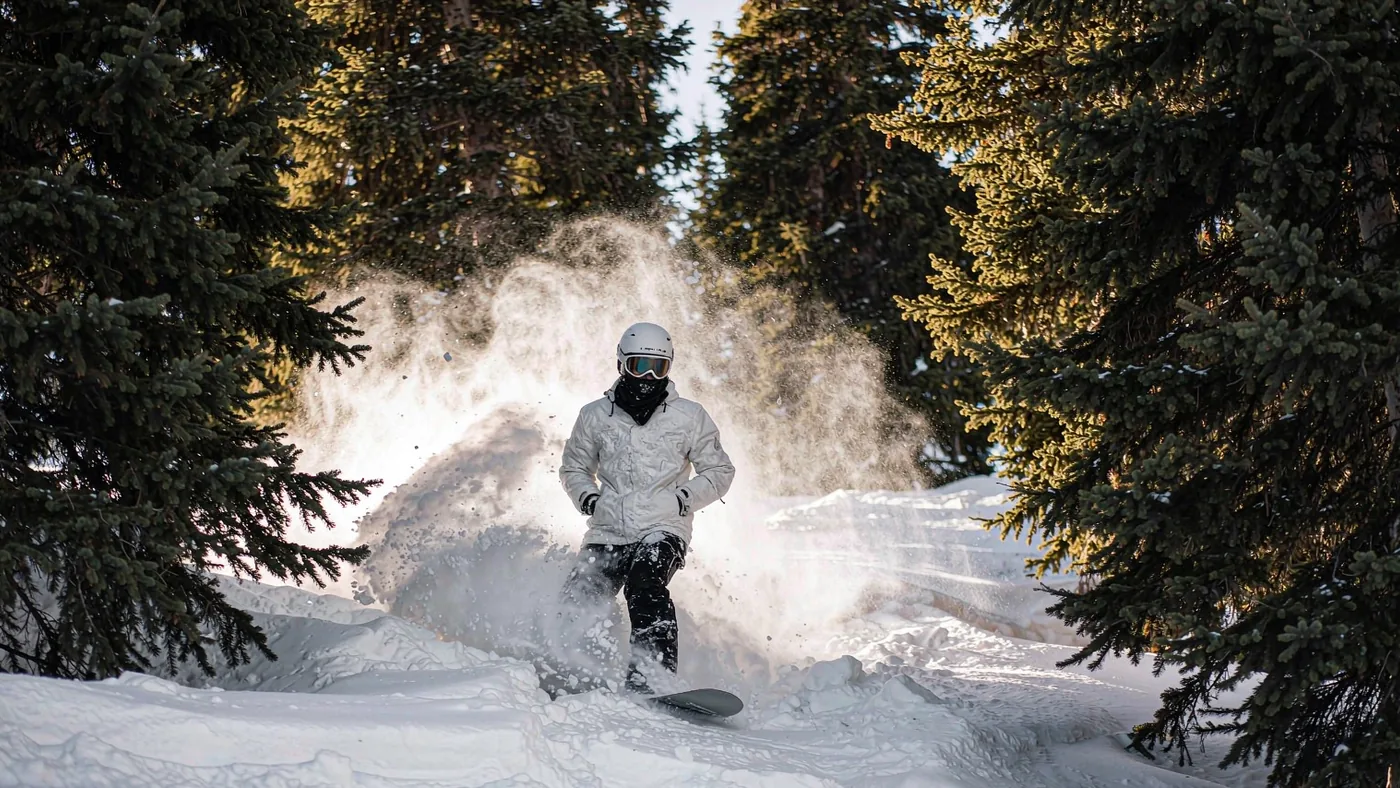
It is 8:20am at the Laax valley station and somewhere between thirty and forty centimetres fell overnight. The queue is already forty people deep, the lifts will be a mess for the first hour, and you have exactly one board with you: a stiff 158cm all-mountain camber deck that you love on the pistes and that will try to bury its nose on every turn today. Behind you in the queue is someone on a short, fat, tapered board who will look like they are surfing.
Those two riders will have wildly different days on the same mountain, and the difference is not skill. It is that float is a design problem, and a conventional all-mountain board solves a different problem entirely.
The honest framing for a European rider, though, is that deep days are rare. If you ride two weeks a season in the Alps, you might get one or two genuine powder mornings a year. That does not mean a powder board is a waste — it means the decision is about whether you are buying a specialist second board, or trying to find one deck that does a decent job of everything.
What a powder board actually does
It puts more surface area under your weight. A wide, short board floats the same rider that a narrow, long board would sink. This is why the modern powder shape has gone shorter and fatter rather than longer.
It shifts the stance back. Setting the bindings back means your weight naturally sits behind the contact point, so the nose stays up and planes instead of diving.
It tapers the tail. A narrower tail sinks slightly, which drops the back of the board and lifts the front. It also makes the board turn more quickly in trees.
It loosens the contact points. Rocker in the nose and a rocker-dominant profile make the board feel surfy rather than locked in. That is exactly what you want in soft snow and exactly what you do not want on a refrozen piste at nine in the morning.
The picks
A short, wide, tapered shape that turns a normal powder day into a good one. It is a specialist, and it is worth owning only if you get real powder days.
Best for
- Riders who get regular deep-snow days
- Anyone adding a powder-specific deck to a quiver
Worth skipping if
- One-board riders
- Anyone riding mostly groomed pistes
- Profile
- Rocker-dominant with camber underfoot
- Shape
- Tapered directional
- Flex bias
- Medium
- Intended terrain
- Freeride / powder
Strengths
- Outstanding float for its length
- Turns quickly in tight trees
- Fast, durable base
Trade-offs
- Poor on hardpack compared with a camber deck
- Only makes sense as a second board
Specifications reflect published manufacturer information, last checked 2026-09-28. We have not laboratory-tested this product; the assessment above is editorial, based on the published design and the rider profile it targets. How we review gear.
A short, wide, volume-shifted deck that rides like a much longer board but turns far quicker. The best option here if you fly with one board and want it to handle everything.
Best for
- Riders who want one travel board for all conditions
- Bigger-footed riders who need a wide waist
Worth skipping if
- Riders who want a traditional-feeling camber deck
- Dedicated park riders
- Profile
- Rocker-dominant hybrid
- Shape
- Tapered directional, volume shifted
- Flex bias
- Medium
- Intended terrain
- All-mountain / powder
Strengths
- Very short, very quick in tight terrain
- Floats far better than its length suggests
- One of the best single-board travel choices
Trade-offs
- Smaller-footed riders may find the waist too wide
- Not a carving-focused deck
Specifications reflect published manufacturer information, last checked 2026-09-28. We have not laboratory-tested this product; the assessment above is editorial, based on the published design and the rider profile it targets. How we review gear.
A stiffer, more aggressive board for riders who want to go fast and ride steep terrain. Poorly suited to anyone still building confidence.
Best for
- Advanced and expert riders
- Steep, technical terrain
Worth skipping if
- Beginners
- Park riders
- Profile
- Hybrid camber with traction edge tech
- Shape
- Directional
- Flex bias
- Stiff
- Intended terrain
- Freeride
Strengths
- Excellent grip and stability
- Holds up to hard charging
Trade-offs
- Very demanding
- Expensive
Specifications reflect published manufacturer information, last checked 2026-09-28. We have not laboratory-tested this product; the assessment above is editorial, based on the published design and the rider profile it targets. How we review gear.
How they compare
| Board | Profile | Shape | Flex | Float | Best for | Main compromise |
|---|---|---|---|---|---|---|
| Jones Hovercraft | Rocker-dominant with camber underfoot | Tapered directional | Medium | Outstanding for its length | Riders who get regular deep days and want a second board | Poor on hardpack compared with a camber deck |
| Ride Warpig | Rocker-dominant hybrid | Tapered directional, volume shifted | Medium | Very good for its length | Riders who fly with one board and want it to handle everything | Wide waist is a lot of board for smaller feet |
| Lib Tech T.Rice Pro | Hybrid camber with traction edge tech | Directional | Stiff | Good, but not a specialist | Advanced riders on steep, technical terrain | Very demanding, and expensive |
Published specifications, last checked 28 September 2026. Float and edge hold are editorial judgements about the design, not laboratory measurements.
Do you actually need a powder board?
Work it out honestly. Count the days in the last three seasons when you rode genuine boot-deep snow. If that number is under five, a dedicated powder board is a lot of money for something that will sit in the garage. If it is fifteen or more, it is one of the best purchases you will make, because the board will turn a good day into a memorable one.
There is a middle path, and it is the one most European riders should take. A volume-shifted board like the Ride Warpig is short enough and wide enough to float far better than its length suggests, while still being entirely usable on a piste. You ride it a size or two shorter than a conventional board and get the surface area back through the width. It is not the float of a dedicated powder shape and it is not the grip of a camber deck, but it does both jobs competently, which is what a one-board quiver requires.
There is also a cheaper version of the same idea: buy a wide all-mountain board, set your bindings back on pow days, and accept that you will work harder. It is a legitimate answer if the budget is tight.
The thing nobody warns you about
Powder boards are worse the day after a storm than the board they replaced. Once the fresh snow is tracked out, chewed up and refrozen overnight, a rocker-dominant tapered shape with a soft nose is far less pleasant than a cambered all-mountain deck. You will feel every hard bump through it, and the grip on a scraped, icy piste will be noticeably reduced.
If you own only one board and you ride in Europe, that is the calculation that matters. A powder specialist makes you happy on two days a season and mildly unhappy on the other twelve. That is not a reason to avoid it — it is a reason to be clear that you are buying a second board, not a replacement.
Verdict
The Jones Hovercraft is not for a rider who owns a single deck and spends most of the week on groomed runs. It is poor on hardpack compared with a camber board, and it only makes sense as a second board for someone who gets real powder days. The Lib Tech T.Rice Pro is the opposite problem: it is a demanding, expensive freeride deck that will punish anyone still building confidence, whatever the snow is doing.
Frequently asked questions
Can I ride a powder board on groomed pistes?
Yes, but it will not be as good as a cambered all-mountain deck. Rocker-dominant profiles with tapered tails feel loose and vague on firm snow, and edge grip is noticeably reduced on ice. It is fine for getting back to the lift; it is not what you would choose for a week of hard piste riding.
Do powder boards need to be ridden longer or shorter?
Shorter than a conventional board, usually by several centimetres. Width and taper are what create the float, so a board that is shorter but much wider can support the same rider while turning far more quickly in trees. Always check the manufacturer's weight range rather than scaling the number from your all-mountain board.
Is a rocker-dominant board good for beginners?
Rocker-dominant shapes are forgiving in soft snow, but they are also loose and vague on piste, and beginners need grip and feedback while learning to control an edge. A beginner is better served by a soft, forgiving all-mountain deck than by a powder specialist. Start with float later, once you can already turn.
How much difference does a powder board really make?
On genuinely deep snow, it is the difference between working for every turn and simply riding. On a tracked-out day it makes almost no difference at all, and on an icy morning it makes you slower than a camber deck would. Judge the purchase by how many deep days you actually get, not how many you would like.
Should I size down for a volume-shifted board?
Yes. A volume-shifted board like the Warpig is designed to be ridden shorter than its nominal length because the extra width replaces the surface area you would otherwise gain from length. Riding it at your usual length defeats the point and makes it feel like too much board underfoot.
Where to go next
If you are adding a powder deck next to something more versatile, start with the best all-mountain snowboards round-up and our guide to all-mountain vs freestyle snowboards for the shape question. Riders heading off-piste regularly should also read the best splitboards guide.
Before a storm-chasing trip, the pre-trip checklist is worth ten minutes, and how to fly with a snowboard covers the airline side. Browse the rest of the boards archive to compare anything else on your shortlist.