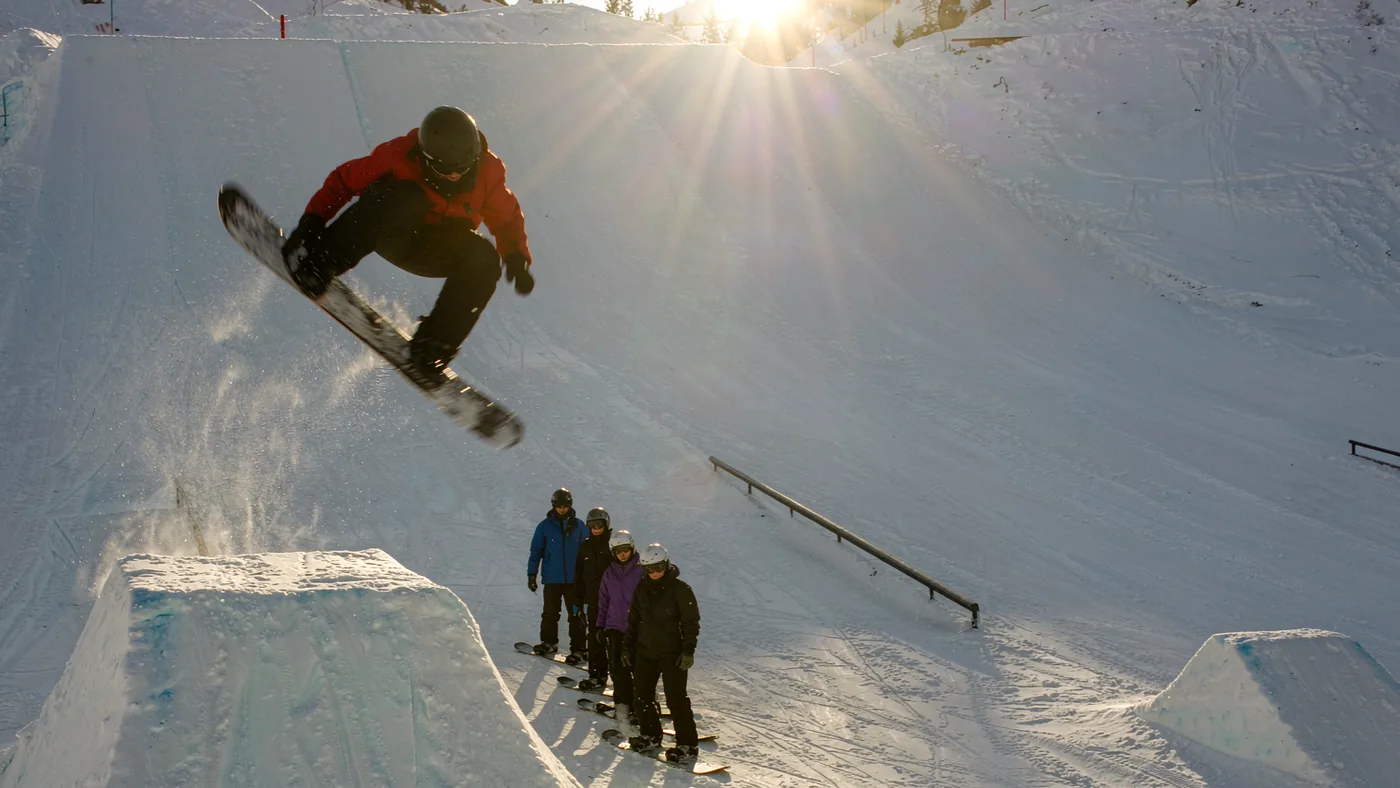
It is Saturday morning at Laax and you are standing at the top of the park line with the whole day in front of you. The lift ticket is paid for, the snow is firm and fast, and you are riding a borrowed board that is 5cm too long, too stiff to press, and genuinely unpleasant on the run back down to the gondola. You have decided that this season you are buying your own park deck, and the budget is fixed.
That run back to the lift is the part most park boards get wrong. Freestyle decks are designed for a specific kind of riding — low speeds, side hits, rails, boxes, butters and landings you can laugh off — and plenty of them are so single-minded about it that they are miserable the moment you point them downhill.
The three boards below all take that problem seriously. Each sits in the accessible end of the freestyle market, and each is designed to be ridden home rather than carried home.
What the budget buys, and what it does not
At this end of the market you are not giving up playfulness. A budget freestyle board is usually every bit as pressable as a premium twin, because a soft flex is cheap to build and the profile that makes a board easy to butter does not require exotic materials.
What you are giving up is in three places. Base speed. A budget deck usually runs an extruded or simple base that needs waxing more often and feels slower across a flat traverse. Damping. Cheaper cores do not absorb chatter as well, so a hard, refrozen morning at 9am feels harsher underfoot. Longevity. A soft board ridden hard for a hundred park days will go flat sooner than a premium deck.
For anyone riding one or two weeks a season plus a handful of indoor sessions, none of those three is a reason to spend twice as much. For a seasonnaire lapping the park five days a week, they might be.
The picks
A pressable, playful freestyle deck that stays stable enough to ride the rest of the mountain on the way back to the lift.
Best for
- Park riders on a budget
- Riders who want one deck for park and side hits
Worth skipping if
- Hard-charging piste riders
- Deep-powder days
- Profile
- Flat-to-rocker
- Shape
- True twin
- Flex bias
- Medium-soft
- Intended terrain
- Freestyle / park
Strengths
- Excellent value in the freestyle category
- Fun at low speeds on rails and boxes
- Stable enough to lap the whole resort
Trade-offs
- Soft flex folds under a heavy rider at speed
- Needs waxing more often than sintered bases
Specifications reflect published manufacturer information, last checked 2026-09-28. We have not laboratory-tested this product; the assessment above is editorial, based on the published design and the rider profile it targets. How we review gear.
The lifted base edges make it unusually hard to catch, which is exactly what you want while learning park basics. It does give up a little grip on ice.
Best for
- Riders learning rails and boxes
- Anyone who wants a confidence-boosting freestyle deck
Worth skipping if
- Icy-morning piste riding
- Riders who want a traditional, locked-in feel
- Profile
- Camrock with raised base edges
- Shape
- True twin
- Flex bias
- Medium-soft
- Intended terrain
- Freestyle
Strengths
- Notably forgiving on landings and flats
- Builds park confidence quickly
- Holds up through a full season of abuse
Trade-offs
- Less bite on genuinely icy slopes
- The 3D base shape takes a lap or two to adjust to
Specifications reflect published manufacturer information, last checked 2026-09-28. We have not laboratory-tested this product; the assessment above is editorial, based on the published design and the rider profile it targets. How we review gear.
A stiffer freestyle board for riders who want a park weapon that does not fold on the way back to the lift.
Best for
- Park riders who ride fast
- Riders who want one board for park and piste
Worth skipping if
- Beginners
- Dedicated powder hunters
- Profile
- Reverse camber with camber underfoot
- Shape
- True twin
- Flex bias
- Medium
- Intended terrain
- Freestyle
Strengths
- Stable at speed for a freestyle board
- Holds up to a full season of park laps
Trade-offs
- Heavier to press than a soft twin
- Not a soft-snow shape
Specifications reflect published manufacturer information, last checked 2026-09-28. We have not laboratory-tested this product; the assessment above is editorial, based on the published design and the rider profile it targets. How we review gear.
How they compare
| Board | Profile | Flex | Edge hold on ice | Best for | Main compromise |
|---|---|---|---|---|---|
| Rome Warden | Flat-to-rocker | Medium-soft | Reasonable | Park laps and side hits on a budget | Soft flex folds under a heavier rider at speed |
| Bataleon Evil Twin | Camrock with raised base edges | Medium-soft | Reduced by design | Learning rails, boxes and landings | Noticeably less bite on genuinely icy slopes |
| CAPiTA Ultrafear | Reverse camber with camber underfoot | Medium | Good for a freestyle deck | Riders who want one board for park and piste | Heavier to press than a dedicated soft twin |
Published specifications, last checked 28 September 2026. Edge hold and pressability are editorial judgements about the design, not laboratory measurements.
The three profiles, in plain terms
The Rome Warden is flat underfoot with rocker towards the tips. That combination is the classic beginner-to-intermediate park shape: it presses easily, it slides on rails without fighting you, and it is stable enough underfoot that you can ride it at moderate speed without it feeling loose. It is the least surprising board here, and that is meant as praise.
The Bataleon Evil Twin uses a different trick entirely. Its base edges are lifted away from the snow, so the contact points sit slightly inside the board. In practice this makes it unusually hard to catch an edge on a flat landing or a badly judged approach, which is exactly the problem most people have when they first start hitting features. The cost is honest and real: on a genuinely icy morning, you have less edge available, and you will feel it.
The CAPiTA Ultrafear sits at the firmer end of this group. Reverse camber between the feet with camber underfoot gives it grip where you need it and a looser feel when you want it, and it is the one here that does not feel like a compromise when you are going fast. Pressing it takes more effort than pressing a softer twin, which is the trade you make.
Do you need a dedicated park board at all?
If you ride a resort where the park is one run out of twenty, a dedicated freestyle deck will frustrate you for the other nineteen. In that case a twin-shaped all-mountain board is the better single purchase, and you should look at that category instead.
Buy dedicated if the park is genuinely where you spend your day, if you ride an indoor slope regularly, or if you can afford a second board. These decks are cheaper than most all-mountain boards, so the second-board route is less expensive than it sounds — and a soft twin in the quiver makes a firm all-mountain deck last longer, because you are not thrashing it on rails.
Verdict
None of these three is the right single purchase for a rider who spends most of the day on groomers. The Warden's soft flex folds under a heavy rider at speed, the Evil Twin gives up edge hold on ice by design, and the Ultrafear is a freestyle board first and everything else second. If you ride mostly piste, buy an all-mountain deck and rent a park board for the odd afternoon.
Frequently asked questions
Can you get a decent freestyle snowboard at this price?
Yes. The profile and the flex that make a board playful are not expensive to produce, so the money you save goes into base speed, damping and durability rather than into the shape. A budget twin will press and butter much like a premium one; it will simply feel harsher in chop and need waxing more often.
Is a soft park board bad for the rest of the mountain?
It is limited rather than bad. A soft flex will feel unsettled when you take it up to speed on a firm piste, and it will not hold an edge the way a camber-dominant all-mountain board does. For lower-speed laps of the whole resort, though, it is perfectly usable and a lot of fun.
Do raised base edges really help beginners in the park?
They help with the specific problem of catching an edge on a flat landing or a slightly off-axis approach, which is where most park injuries happen. What they do not do is teach you to land properly. Expect them to build confidence faster, not to make you a better rider on their own.
Should a park board be ridden the same length as an all-mountain board?
Most riders size a freestyle board shorter than their all-mountain deck, usually by a few centimetres. A shorter board presses more easily, spins faster and is more forgiving on landings. Check the manufacturer's weight range before you drop a size, because going too short on a heavier rider will make the board fold.
How often does a park board need waxing?
More often than an all-mountain board, and more often than most people actually do it. Riding rails and boxes strips wax quickly, and a dry base drags on flat sections and slow snow. A cheap extruded base will need attention several times a season if you ride regularly.
Where to go next
If you are still deciding whether a twin is right for you, all-mountain vs freestyle snowboards sets out the difference in plain terms, and the camber profiles guide explains what flat-to-rocker and reverse camber actually feel like underfoot.
Bindings are half of a park setup — our best snowboard bindings round-up covers the softer, more forgiving options, and how to set up snowboard bindings will get your stance right before your first session. Browse the rest of the boards archive, or start with the best all-mountain snowboards if you would rather own one deck than two.