You are standing in a shop in Milton Keynes in late October with a pair of bindings in your hands. Your boots are UK size 9, the box says medium, and the size chart on the wall says medium covers UK 7 to 10. It looks fine. Then you notice the same bindings in a different colour marked large, on sale, which the chart says covers UK 9 to 12. Both fit on paper. You buy the cheap ones, take them to Tignes in January, and discover on the first morning that the straps sit slightly too far apart and the heelcup is a touch narrow, so the boot never quite settles.
Binding sizing is one of those things that looks simple and is not, mostly because size charts are written around boot sizes while bindings are actually built around boot length. Once you understand that gap, choosing takes about five minutes.
Binding size is boot length, not boot size
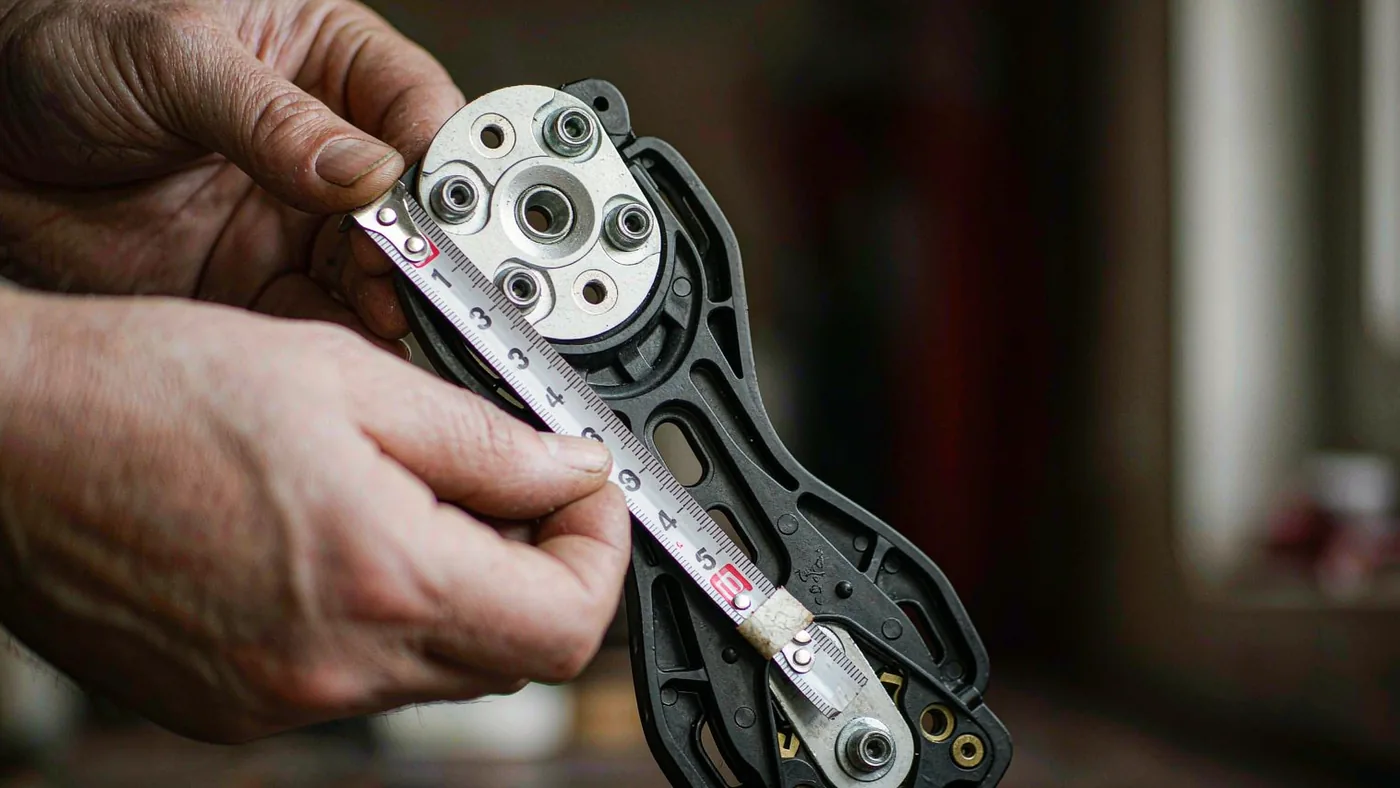
A binding has to grip a boot in two directions: across the width of the baseplate, and front to back between the heelcup and the toe ramp. The width is roughly constant across a brand's size range. The front-to-back distance is what the size is really about.
Boot length varies much more than boot "size" suggests. Different brands build their lasts differently, so a UK 9 in one boot might be 300mm long and a UK 9 in another might be 310mm. Ten millimetres is a comfortable fit difference in a binding.
That is why the same size label can be snug in one boot and loose in another, and why the most reliable approach is to put your actual boots into the actual bindings before you buy, or to check the manufacturer's published boot length range in millimetres against the length of your boot.
If the target binding's chart only gives boot sizes, use it as a first pass and then look for a second opinion: reviews, the brand's own length table, or the shop's fitting bench. If your boot length sits right at the top of a size band, take the size up. The consequences of a binding that is slightly too large are trivial. The consequences of one that is slightly too small are cracked boot shells and jammed ratchets.
Small, medium, large — and why the boundaries move
Most brands split the range into three or four sizes, and the boundaries between them differ from brand to brand and sometimes year to year.
A typical structure is a small covering smaller boots, a medium doing the bulk of the work, a large for bigger lengths, and occasionally an extra-large for the very biggest. Some brands blur the middle with a medium-large. Others publish sizes in letters that map loosely to boot sizes but drift when you compare across seasons.
The practical result is that you cannot assume you are a medium forever, or that you are the same size in every brand. If you change boot brand, re-check your binding size, even if your foot has not changed.
Overhang, angles and the board underneath
Getting the binding size right solves half the problem. The other half is how the boot and binding sit on the board.
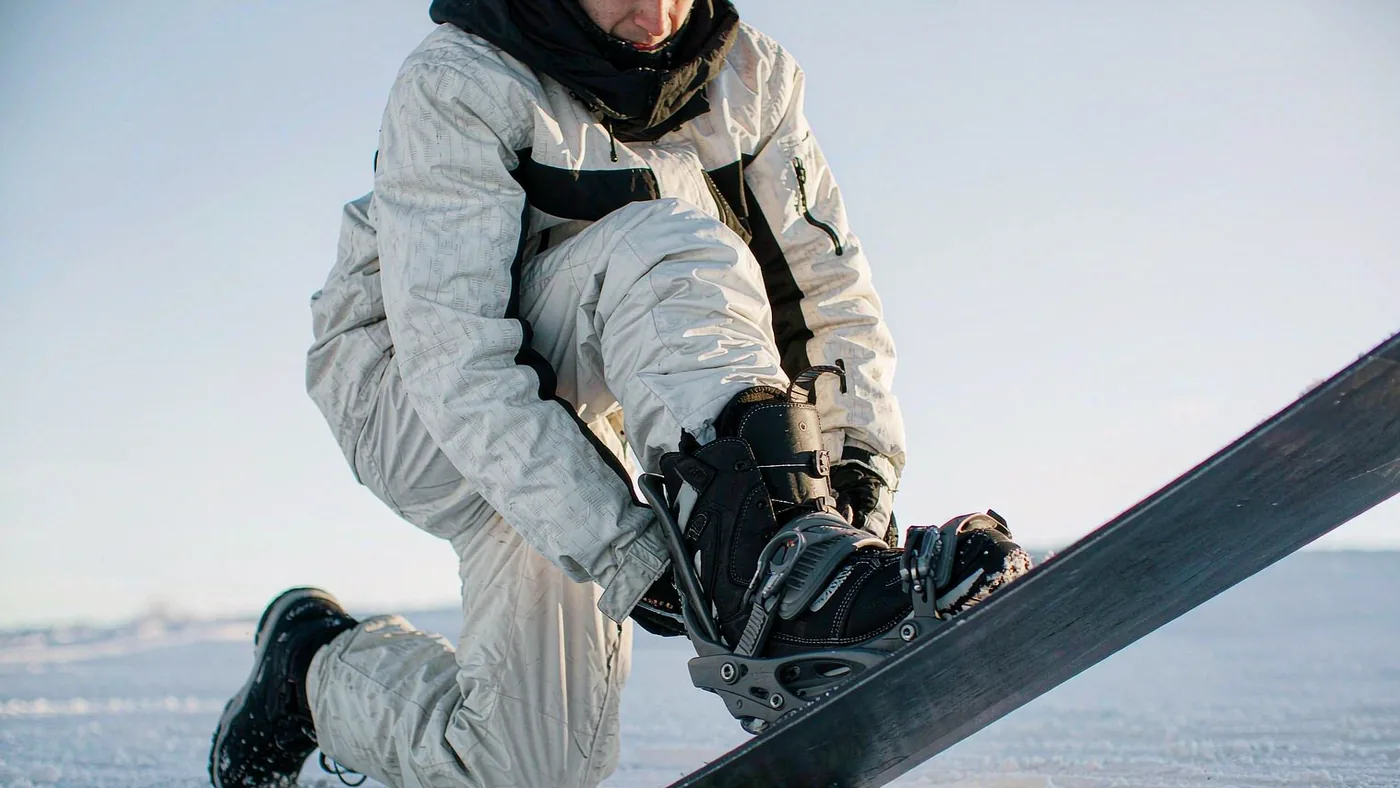
Overhang is the amount your boot sticks out past the edge of the board. Some overhang is normal and useful, because it gives you leverage. Too much, though, and your boot drags on the snow during a hard carve, which can lift the edge and put you on your backside without warning.
You reduce overhang in three ways. Narrower boots in the same length, a wider board, or steeper binding angles. Of the three, the board is usually the expensive one and the angles are the free one.
Angles matter more than most riders think. A binding set at a very shallow angle, close to perpendicular to the board's edge, leaves more boot hanging over the toe and heel. Rotating the binding towards a duck stance moves the length of the boot closer to the board's length, which reduces overhang without changing any hardware. If your boots touch the snow in hard carves and you do not want to buy a board, try adjusting the angles first.
| Situation | What to do | Why |
|---|---|---|
| Boot length sits at the top of a size band | Take the larger binding size | A loose fit is harmless, a tight one damages the boot shell |
| Boots are UK 11 or above | Look for a wide board as well as the right binding size | Binding size alone will not fix overhang |
| You have changed boot brand but not foot | Re-check your binding size | Published boot lengths differ between brands |
| Boot will not sit flat in the binding | Check the size, then the toe ramp adjustment | Toe ramps usually slide forward on most models |
| Boots drag in hard carves | Try steeper binding angles before buying a board | Angles reduce overhang for free |
| Buying for a smaller rider | Use the women's or junior chart specifically | Those ranges are built on their own scales |
A practical checklist rather than a set of measurements. Board and binding geometry varies, so confirm against your own components where you can, last checked 28 September 2026.
Adjust it before you replace it
Modern bindings are more adjustable than the manuals suggest. Before concluding that a binding is the wrong size, check three things.
The toe ramp, sometimes called the gas pedal, usually slides forward and back. Moving it forward shortens the effective length of the binding and can turn a marginal fit into a good one. Most riders never touch it.
The heelcup on many models can be repositioned, which moves the whole binding footprint rather than just the ramp. This is more common on freeride and touring models than on basic park bindings, but it is worth checking.
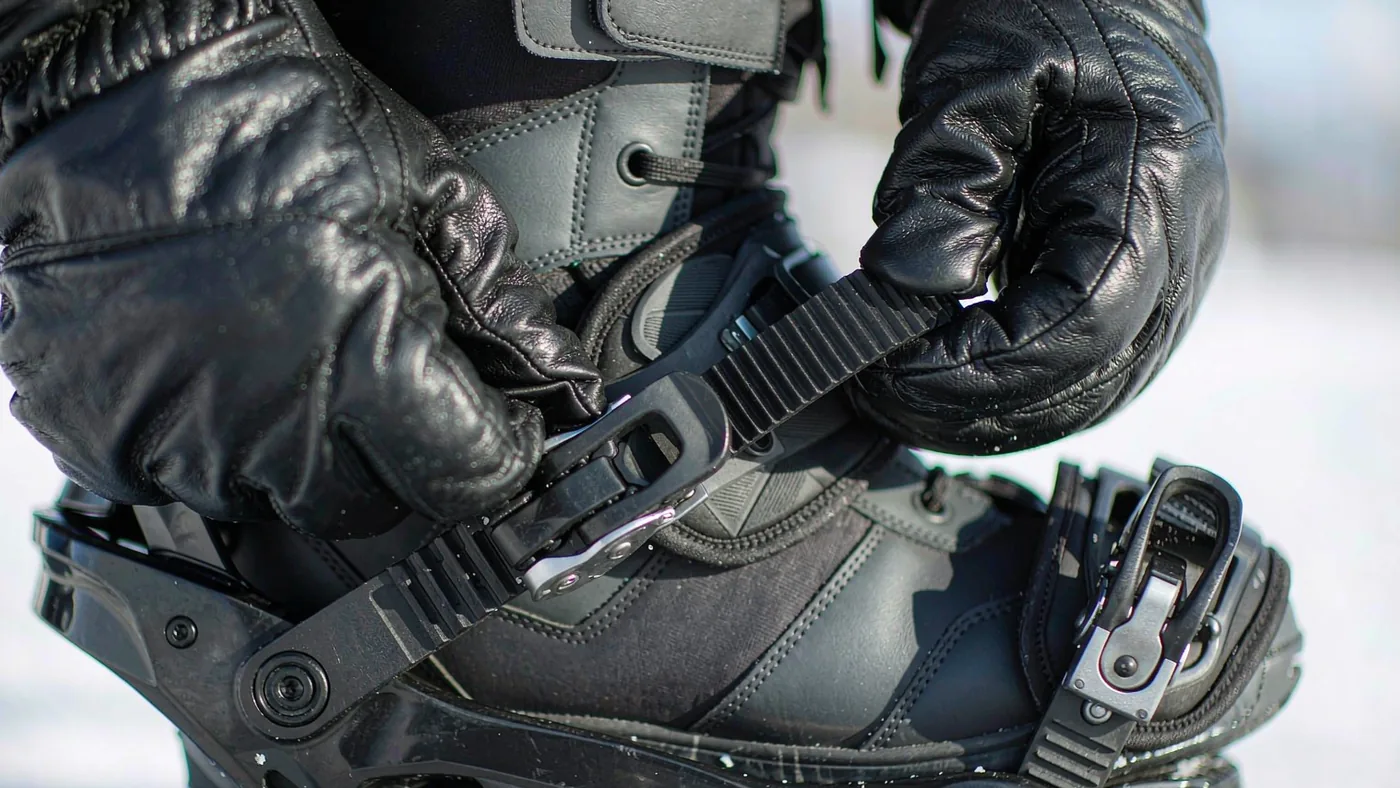
The straps are usually adjustable for length and often for position on the side of the binding. If the strap is landing on the wrong part of your boot rather than over the instep, you can usually move it, and that alone fixes a lot of "this binding feels wrong" complaints.
The bottom line
Binding size is really boot length, so use the millimetre range where the manufacturer publishes one and treat boot-size letters as a rough guide. If you are between sizes, take the larger one. Do not buy a binding size based on the letter you had last time, and do not assume the strap and ramp positions are fixed — most of them adjust, and adjusting is free. This article is a sizing explainer, so if you have not yet chosen a model, work out your size here first and then shop.
Frequently asked questions
Are binding sizes the same as boot sizes?
No. Boot sizes vary by brand and by the shape of the last, while bindings are built around boot length in millimetres. A UK 9 boot from one brand can be nearly a centimetre longer than a UK 9 from another. Use the published length range where you can, and step up a size if you are on the boundary.
What if my boots fit one binding size snugly and the next size up loosely?
Take the larger one, provided the straps still tighten far enough to grip the boot properly. A slightly loose binding is a minor annoyance; a binding that is too small can distort the boot shell, jam the ratchets and damage both components over a season.
Do I need a wide board if I have big boots?
Often, yes, but the binding size is a separate matter. Overhang is caused by boot length and board width, not by a binding being the wrong size. If your boots are UK 11 or above, look at a wide version of the board before you blame the bindings.
Can I use the same bindings on two different boards?
Yes, if both boards use the same mounting system or your bindings include the right discs. Standard insert packs accept almost any binding. Burton boards use the channel, and many bindings ship with channel-compatible hardware, so check before you assume.
How tight should binding straps be?
Tight enough that your boot cannot shift inside the binding, but not so tight that the strap deforms the boot or cuts into your instep. The toe strap should pull the boot back into the heelcup rather than press it down. Adjust with gloves on, because that is how you will be doing it on the hill.
Where to go next
Now that you know your size, the best snowboard bindings round-up covers which model to choose, and the Union Force vs Burton Cartel comparison settles the most common head-to-head. If you would rather skip straps entirely, read the step-on bindings verdict.
Fit starts with the boot, so read stiff vs soft snowboard boots and, for beginners, the best boots for beginners. When everything has arrived, the binding setup guide walks through stance, angles and highbacks.