Two riders come off the same lift on identical boards. One turns the board with a flick of the ankle, the edge engaging at the top of the turn and holding all the way through. The other has to commit early, works harder for the same arc, and by the bottom of the run is standing up straighter with sore shins. The boards are the same. The boots are the same model. The difference is the binding, and more specifically the stiffness of the binding relative to the people standing on it.
Bindings are the interface between your foot and the board, the only component that touches both. Everything you do with your legs passes through them, and how much of that input survives the journey is a decision made by the binding's stiffness and its two structural axes.
The two axes, not one number
When a shop says a binding is firm, they are usually describing two separate qualities at once, and conflating them is where most riders get confused.
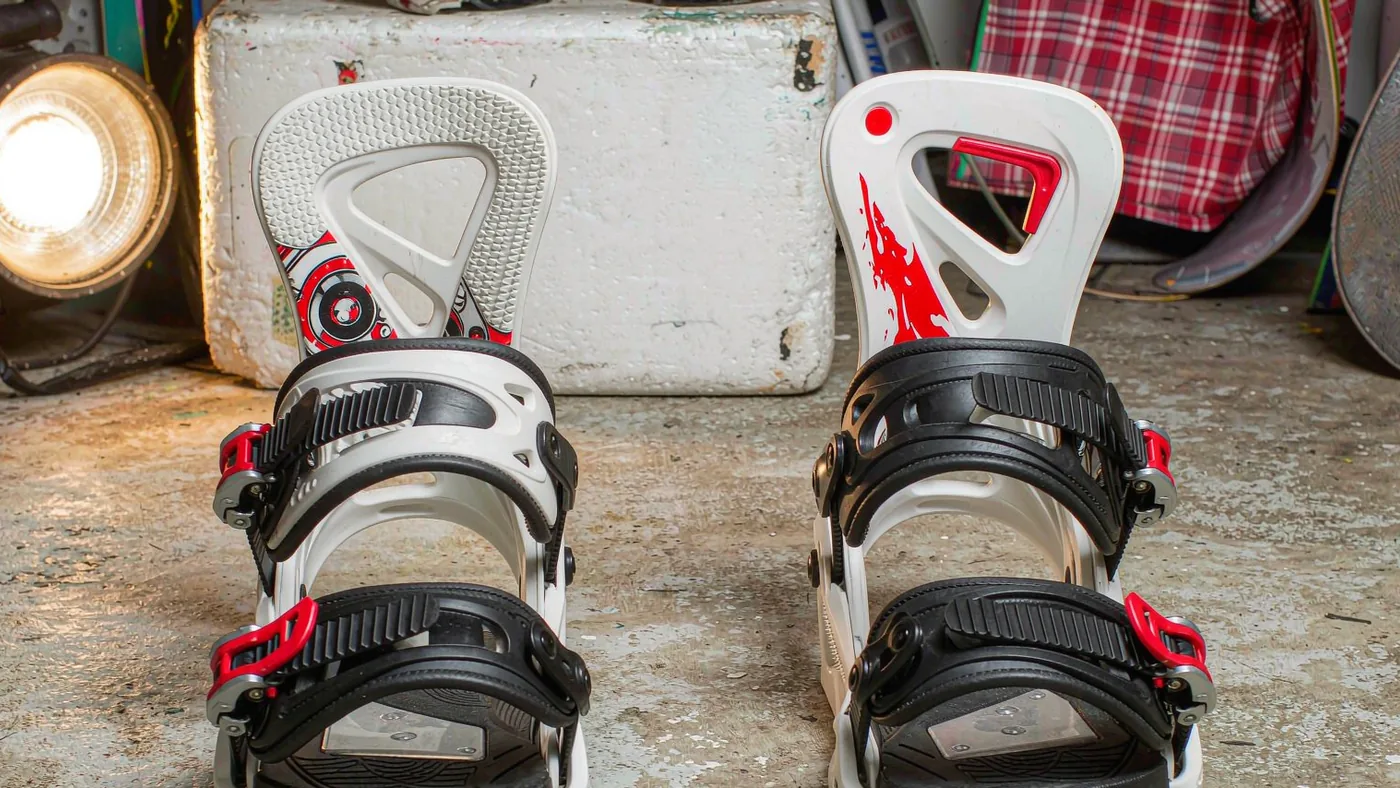
Baseplate and heelcup stiffness. This is the platform. A firm baseplate and metal heelcup transfer pressure to the board almost immediately, which is what gives a binding its direct feel. A softer platform flexes under load, cushioning the ride and slightly delaying the message. It governs how quickly and precisely the board reacts.
Highback stiffness. This is the lever behind your calf, and it decides how much support you get on a toe-side turn. A tall, firm highback gives you something to push against; a soft, low one folds away under a hard toe-side. It governs leverage, particularly at speed and on steep terrain.
You can have a firm platform with a soft highback, and the reverse. That is why two bindings both described as medium can feel completely different, and why the box description is a starting point rather than an answer.
Matching binder to boot and board
The rule that saves the most money: your binding sits between your boot and your board, and it should not be the stiffest or the softest of the three, because then it dominates the setup and the other two stop mattering.
Three consequences follow from that.
A soft boot under a stiff binding is wasted. The binding holds the boot rigid when the boot's whole purpose was to flex and absorb, so the ride becomes harsher without becoming more precise.
A stiff board under a soft binding feels dead. The board needs pressure to load its camber and spring out of a turn. If the binding flexes away before that pressure arrives, the board never gets the input it was designed for, and riders usually blame the board.
A soft board under a stiff binding feels like a fight. Everything the board wants to do — flexing into a turn, pressing in the park, absorbing bumps — the binding resists, and no amount of technique fixes it.
| Board flex | Boot flex | Binding flex that suits | What the setup feels like | Who this rider is |
|---|---|---|---|---|
| Soft, playful | Soft to medium | Soft to medium | Loose, forgiving, easy to press and butter | Park riders and newer riders wanting comfort |
| Medium, all-mountain | Medium | Medium | Balanced, with enough feedback to feel the edge | Most recreational riders doing one or two trips a year |
| Medium-stiff all-mountain | Medium to medium-stiff | Medium to firm | Precise without being punishing on long days | Confident riders covering distance on groomed runs |
| Stiff freeride | Stiff | Firm to stiff | Very direct, very demanding, rewarding at speed | Aggressive riders on hardpack and steep terrain |
| Stiff board, light rider | Any | Softer than the board suggests | Needs a softer binding to let a light rider load the board | Lighter riders on hand-me-down or rented decks |
Flex pairings are editorial judgements drawn from published manufacturer specifications and established rider consensus rather than measured results. Published specifications, last checked 28 September 2026.
Reading the symptoms
Most riders experience a flex mismatch as a board problem, which is why they spend money on the wrong thing. Here is how to identify it.
The board feels dead in the middle of a turn. Almost always a binding flexing away before your input reaches the edge. It is most obvious on a firm morning piste, when the board has the grip to respond but nothing is being asked of it.
The board fights you on bumps and in choppy snow. The opposite problem: a binding too firm for the board or your weight, passing every disturbance through without letting the deck absorb it. It shows up as tired legs by early afternoon.
Your shins ache after a morning. Usually highback-related: too firm for the pressure you put through it, or forward lean set too aggressively. Adjust the lean before you replace the binding.
You cannot hold a toe-side edge on hard snow. A soft highback folding under load, or a highback that does not reach far enough up your calf. This is the symptom that sends heavier riders to firmer bindings.
Three flex points on the spectrum
A firm, direct binding for riders who want every input to reach the edge immediately. Not a forgiving choice.
Best for
- Aggressive piste riders
- Heavier riders
Worth skipping if
- Beginners
- Riders wanting a damped ride
- Flex bias
- Stiff
- Intended terrain
- All-mountain / freeride
- Mounting
- Universal disc
Strengths
- Very direct edge-to-edge response
- Burly construction
Trade-offs
- Transmits chatter
- Unforgiving for lighter riders
Specifications reflect published manufacturer information, last checked 2026-09-28. We have not laboratory-tested this product; the assessment above is editorial, based on the published design and the rider profile it targets. How we review gear.
The default answer when someone asks which all-mountain binding to buy. Strong, simple, and it stays stiff enough to drive a proper board.
Best for
- All-mountain riders doing piste, park and travel
- Riders who want a binding to last several seasons
Worth skipping if
- Riders wanting an ultralight touring setup
- Anyone after a flexy, surfy feel
- Flex bias
- Medium
- Intended terrain
- All-mountain
- Mounting
- Universal disc, most board inserts
Strengths
- Reliable, long-lived and easy to service
- Firm enough for aggressive piste riding
- Straps work well with bulky boots
Trade-offs
- Heavier than premium carbon options
- Not the most playful binding in the park
Specifications reflect published manufacturer information, last checked 2026-09-28. We have not laboratory-tested this product; the assessment above is editorial, based on the published design and the rider profile it targets. How we review gear.
A comfortable, mid-flex binding that suits riders splitting time between park and groomers.
Best for
- All-mountain freestyle riders
- Riders wanting a softer binding
Worth skipping if
- Riders wanting maximum stiffness
- Flex bias
- Medium
- Intended terrain
- All-mountain freestyle
- Mounting
- Universal disc
Strengths
- Comfortable over long days
- Good value in the mid range
Trade-offs
- Less direct than a stiff binding
- Not built for extreme freeride
Specifications reflect published manufacturer information, last checked 2026-09-28. We have not laboratory-tested this product; the assessment above is editorial, based on the published design and the rider profile it targets. How we review gear.
The Nitro Team Binding is the firm end: a stiff, direct binding for aggressive piste riding and heavier riders, with very immediate edge-to-edge response. It also transmits chatter and forgives very little, which is why it is not a beginner's binding.
The Union Force sits in the middle, where most riders belong: a medium flex on a firm platform, all-mountain by description, working across piste, park and travel without excelling at any one of them. Heavier than premium carbon options, and not the most playful binding in the park.
The Rome D.O.D. is the softer, more comfortable end: a medium flex with an all-mountain freestyle bias, comfortable over long days and good value, but less direct than a stiff binding and not built for extreme freeride.
Where money does and does not help
Flex is not a ladder, and paying more does not buy a rung on it. The premium tier buys lighter materials, mostly carbon in the baseplate and highback, which matters to a touring rider or someone logging serious mileage.
What money does buy is hardware quality: ratchets that stay smooth in the cold, straps that do not crack, and a construction simple enough to service with a screwdriver. That is the difference between a binding that lasts five seasons and one that becomes landfill when a strap splits, and it has nothing to do with flex.
Verdict
Do not buy the Nitro Team Binding unless you are a heavier or genuinely aggressive rider who spends the day on groomed pistes — it is firm, direct and unforgiving, and a lighter or still-improving rider will be slower and more tired on it. For a firm platform without the punishment, the Union Force suits a mid-flex all-mountain board. If you want a looser, more playful setup for park laps and soft snow, the Rome D.O.D. is the honest choice, though it gives up directness on hard, fast morning pistes.
Frequently asked questions
Should my binding be stiffer than my board?
Slightly firmer than the board is a reasonable rule for an all-mountain setup, because a binding a little firmer than the deck keeps your input from being absorbed before it reaches the edge. What you want to avoid is a large gap in either direction, because a binding far firmer than the board fights the deck's natural flex, and one far softer feels vague in the middle of a turn.
Does a stiffer binding make a board more responsive?
Up to a point, and then it starts to work against you. A firmer binding transfers more of your input to the edge, which reads as responsiveness on a smooth piste. But if the binding cannot be flexed by the rider on top of it — a common problem under about 65kg — the board cannot load into a turn at all, and it feels dead rather than responsive.
How do I know if my binding is too soft?
The classic sign is a board that feels vague in the middle of a carved turn, particularly on firm morning snow at speed. The edge engages, then seems to lose commitment. If your boots are medium and your board is medium or stiffer, and this happens constantly, the binding is the likeliest culprit.
Can I change binding flex without buying new bindings?
Partially. Forward lean, highback rotation and strap position change how a binding feels without changing its underlying stiffness. More forward lean makes a binding feel firmer and more supportive on toe-side; less makes the ride more relaxed. Those adjustments are free, so make them before spending money on a replacement.
Do I need a softer binding if I am light?
Usually, yes. Flex descriptions are written for an average adult rider, so a rider well below average weight will experience a medium binding as firm. If you weigh around 60kg and ride at a moderate pace, going one step softer than the recommendation for your board will let you actually load the board and will make the setup feel more alive.
Where to go next
If you are choosing between specific models rather than flex bands, the best snowboard bindings round-up covers the category, and the Union Force vs Burton Cartel comparison settles the most common shortlist.
Before you order, check the fit with the binding sizes guide, then read the binding setup guide and the binding angles guide so stance and lean are right from the first run.