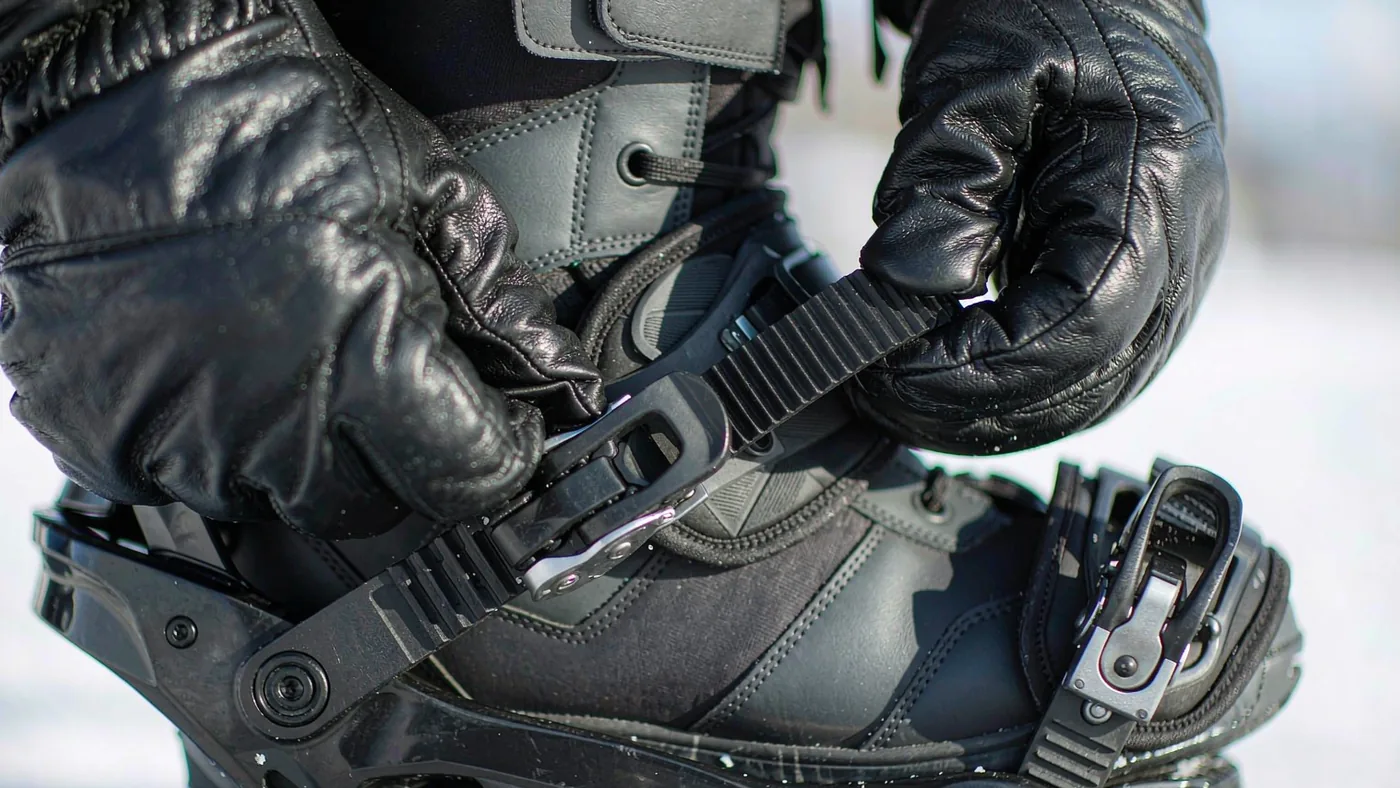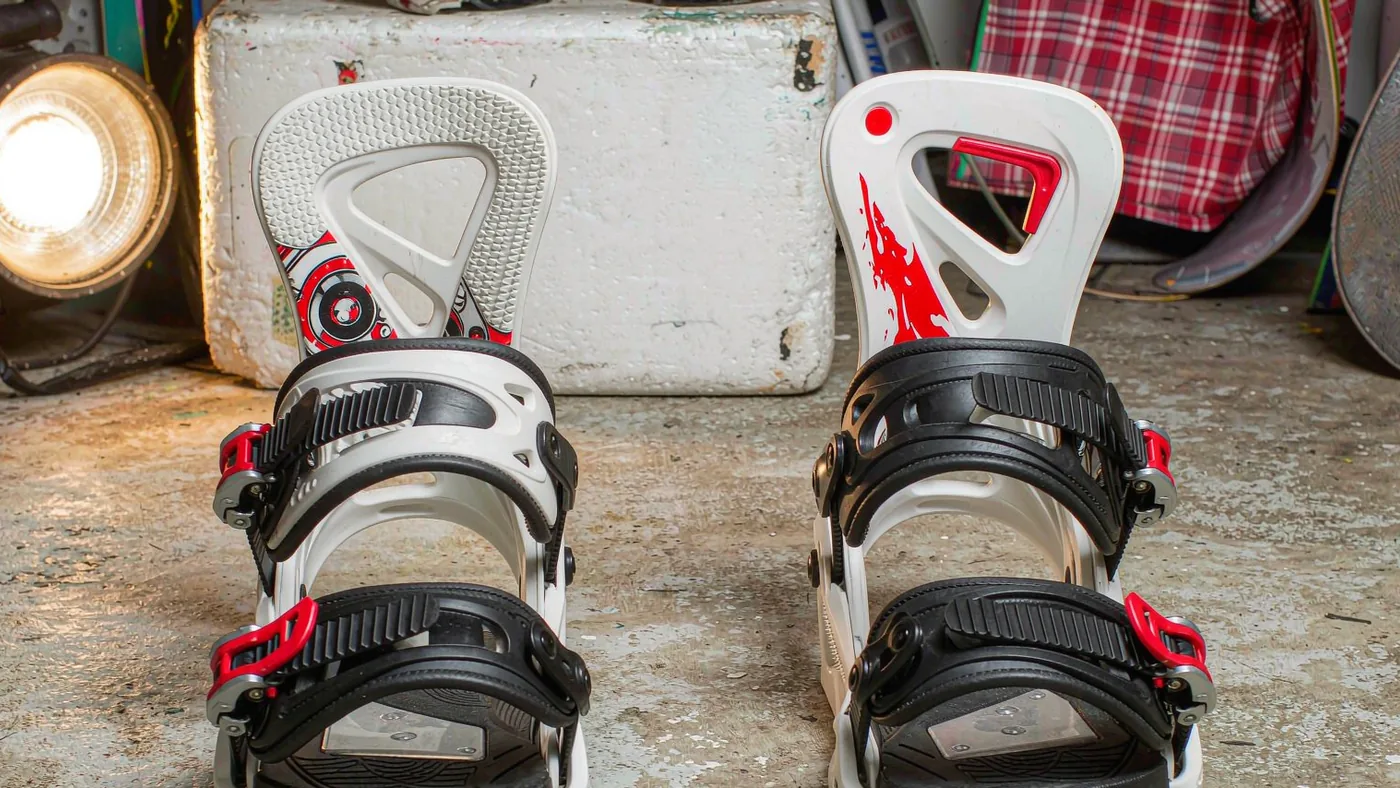
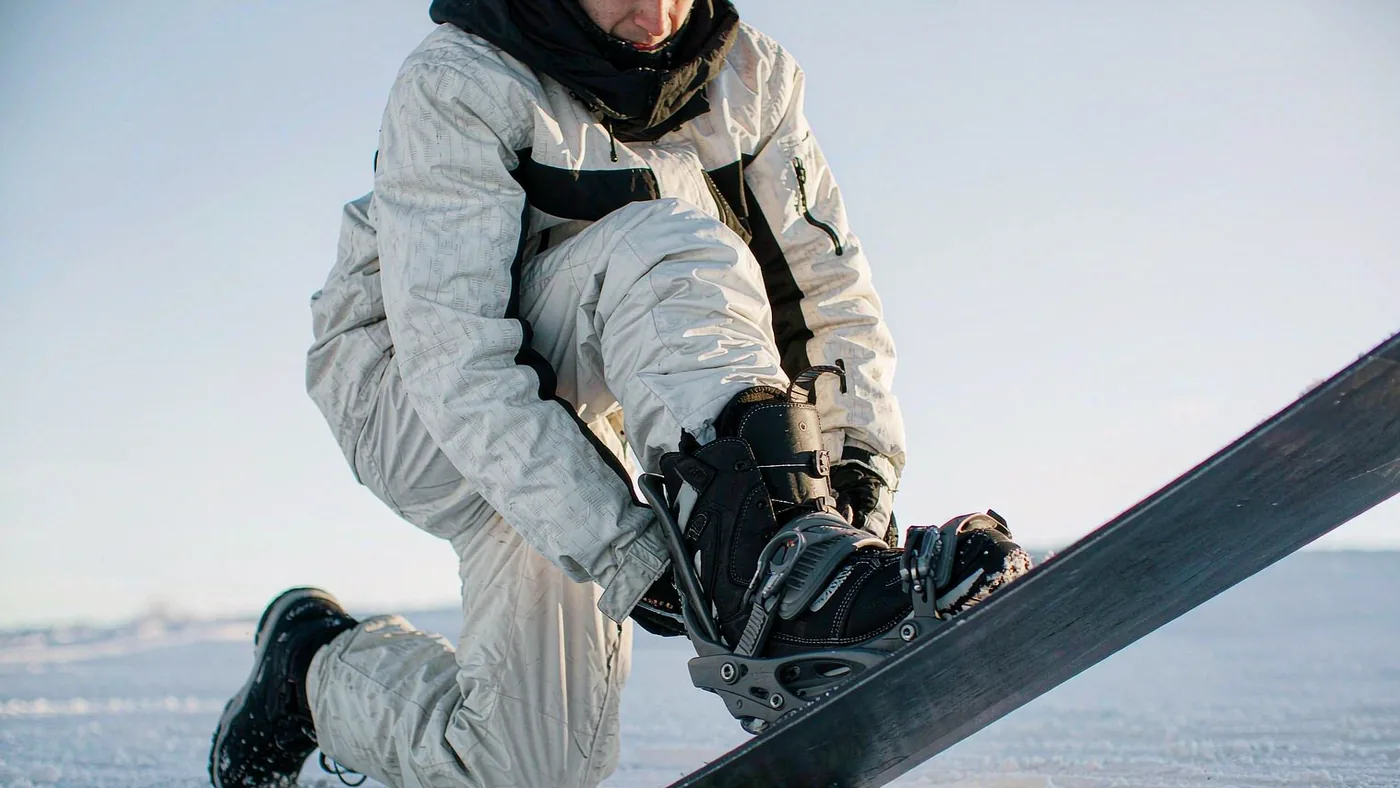
The lift is one of those old two-seaters in Les Arcs that stops every ninety seconds, so you spend the ride leaning forward with your board dangling off one foot, watching the queue build behind you. At the top, your mates are already strapped in and gone. You sit down in the snow, clear the ice out of your ratchets with a glove, get the first strap tight, pull the second one over, stand up, and by the time you are moving they are four turns ahead.
If that is your day, every day, the question of whether step-ons are worth it stops being a gear question and becomes a time question. Five minutes of faffing per run, fifteen runs a day, seven days. That is a lot of your holiday spent bent over with wet gloves.
But step-ons are not a free upgrade, and the riders who get the worst deal from them are the ones who buy on the promise without understanding what they are giving up.
The short answer
For a rider who straps in and out more than a dozen times a day, has back or hip trouble, or rides with skiers who will not wait, step-ons are worth it. The convenience is real and it does not fade with familiarity.
For a rider who takes one trip a year, keeps their setup for five seasons, or likes swapping boots between bindings and boards, the extra cost and the ecosystem lock-in generally outweigh the benefit. A well-set-up strap binding takes about twenty seconds once you have a routine, and it will outlast the novelty of clicking in.
If you are genuinely between the two, the deciding factor is almost never the binding. It is your boots. Step-ons only work with compatible boots, and if that boot does not fit your foot properly, no amount of convenience will make up for it.
What step-ons actually fix
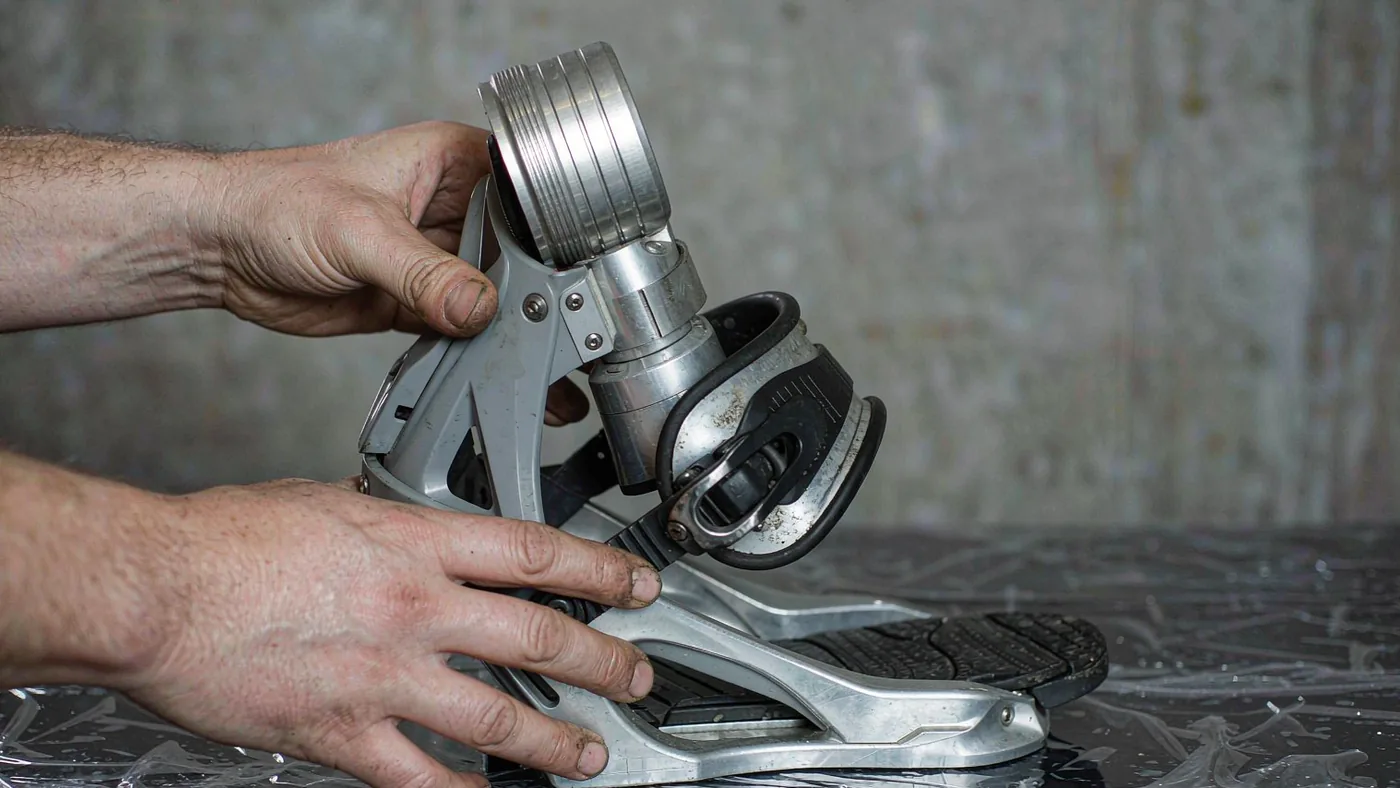
The mechanism is simple. Instead of straps clamping over the boot, connection points engage the boot directly, at the heel and the toe, and you press down and step in.
What that changes in practice is not really the strapping-in time. It is the standing-up time. Strapping in means sitting down, which means getting a wet backside, and then getting up again with a board on your feet. Riders with dodgy knees or a bad back will tell you the standing up is worse than the strapping. Step-ons remove it entirely.
There is a second, less discussed benefit for riders on flatter terrain. On long traverses and cat tracks where you have to unstrap and skate, or step out to walk a section, being able to clip back in without sitting down keeps a group moving. If you ride with skiers, that matters more than you think.
The catches nobody mentions
You are buying into one boot brand. This is the big one. Step-on bindings require boots with the matching connection points. That means the boot you can use is limited to a subset of one manufacturer's range, or at best a small number of licensed partners. If your feet are awkward, or the only boot that has ever fitted you properly comes from a different brand, step-ons may not be an option at all.
Snow in the mechanism. Ice and packed snow in the connection points will stop you clicking in cleanly. You have to knock the boot clear, which takes a moment, and on a wet British or Nordic day it takes more than a moment. It is a smaller annoyance than strapping in, but it is not the zero-effort procedure the marketing suggests.
You cannot easily mix and match. Borrowing a mate's board, hiring a spare setup, or running two boards with one pair of bindings all get more complicated. Strap bindings are universal. Step-ons are not.
The feel is different, not worse. There is more material between your boot and the baseplate, and the engagement is at specific points rather than distributed across a strap. Some riders notice a slightly less damped feel on hard, chattered snow. It is a matter of preference, and it is not something to take on faith from anyone, including this article.
There is also a budgeting point worth making. Because you usually have to buy compatible boots at the same time, the real comparison is the combined cost, not the binding on its own. Check current price on both before you decide, and compare that total against a strap binding plus a boot you already own.
Winner by scenario
| Scenario | Better choice | Why |
|---|---|---|
| Fifteen plus runs a day with lots of unstrapping | Step-on | The cumulative time saving is the whole point |
| Back or hip problems, or trouble getting up off the snow | Step-on | Removes the sit-down and stand-up cycle entirely |
| Riding mostly with skiers on flat traverses | Step-on | Faster to re-engage and keeps the group moving |
| One trip a year, setup kept for years | Strap binding | Cheaper, universal, and nothing to go wrong |
| Awkward feet where only one boot brand fits | Strap binding | Step-on compatible boots may not fit you at all |
| Two boards shared with one pair of bindings | Strap binding | Universally mountable and transferable |
| Park laps with lots of hiking | Strap binding | Lighter, and the mechanism is not built for it |
The two credible options
If bending down to strap in is the part of snowboarding you dislike most, this solves it properly. The cost is that boots and bindings must be bought as a matched pair.
Best for
- Riders who strap in and out many times a day
- Anyone with back or hip problems
Worth skipping if
- Riders wanting to mix and match boots freely
- Anyone on the tightest possible budget
- Flex bias
- Medium-stiff
- Intended terrain
- All-mountain
- Compatibility
- Requires step-on compatible boots
Strengths
- Genuinely fast in and out, every run
- Feels secure once you trust it
- Great on and off the lift
Trade-offs
- Locks you into one brand's boot ecosystem
- Snow packing in the mechanism needs clearing
Specifications reflect published manufacturer information, last checked 2026-09-28. We have not laboratory-tested this product; the assessment above is editorial, based on the published design and the rider profile it targets. How we review gear.
The main credible alternative in the step-in category. It reduces the days lost to fumbling with straps without tying you to one boot brand.
Best for
- Riders who hate strapping in
- Zipper and access lifts
Worth skipping if
- Riders wanting the simplest possible setup
- Budget builds
- Flex bias
- Medium
- Intended terrain
- All-mountain
- Compatibility
- Requires step-in compatible boots
Strengths
- Fast in and out
- Broad boot compatibility relative to rivals
Trade-offs
- Mechanism needs clearing of snow
- Fewer boot options than strap bindings
Specifications reflect published manufacturer information, last checked 2026-09-28. We have not laboratory-tested this product; the assessment above is editorial, based on the published design and the rider profile it targets. How we review gear.
Verdict
If you ride a lot of laps with a lot of unstrapping, the Burton Step On is the reference option in this category and worth the cost over a strap binding. The Nitro Phantom is the better pick if you want a step-in system without being tied so tightly to one boot line. Do not buy either if you ride one week a year, if you keep your kit for five seasons, or if your feet have ever rejected a boot brand — the money is better spent on boots that fit and a binding that accepts them, and you will never recoup the difference in saved seconds.
Frequently asked questions
Are step-on bindings as secure as strap bindings?
Yes, in the sense that the connection is designed to hold under normal riding loads and the systems are established products with years of use behind them. The feeling is different, because engagement happens at defined points rather than across a strap, and some riders take a run or two to trust it. That is a confidence adjustment rather than a safety one.
Can I use step-on bindings with my existing boots?
Almost certainly not. Step-on systems need boots built with the matching connection points. If you already own boots you like, you would have to replace them as well as buying the bindings, which changes the maths considerably. Always check compatibility of your specific boot model before buying.
Do step-ons work in powder?
They work, but powder changes the calculus. In deep snow you fall more often and sit in the snow more often, and ice and snow packed into the mechanism means you clear it before clicking in. The advantage over straps is smaller in powder than it is on hardpack.
Why are step-on setups more expensive than strap bindings?
Two reasons. The mechanism itself costs more to produce, and you are usually buying boots and bindings together because the boots need to be compatible. A strap binding lets you keep a boot you already own, which is often the cheaper path by a wide margin.
Are step-ons good for beginners?
They are convenient for beginners in the same way they are convenient for anyone, but a beginner's problems are rarely strapping in. A beginner benefits more from boots that fit and a soft, forgiving setup. If money is limited, spend it on the boot and take a lesson instead.
Where to go next
If you have decided against step-ons, the best snowboard bindings round-up covers the strap alternatives, and the Union Force vs Burton Cartel comparison picks between the two most common choices. Make sure you order the right size with the binding sizes guide.
Whatever you buy, the boot has to fit. Start with the best boots for beginners if you are new, and read stiff vs soft snowboard boots to work out how much support you want.