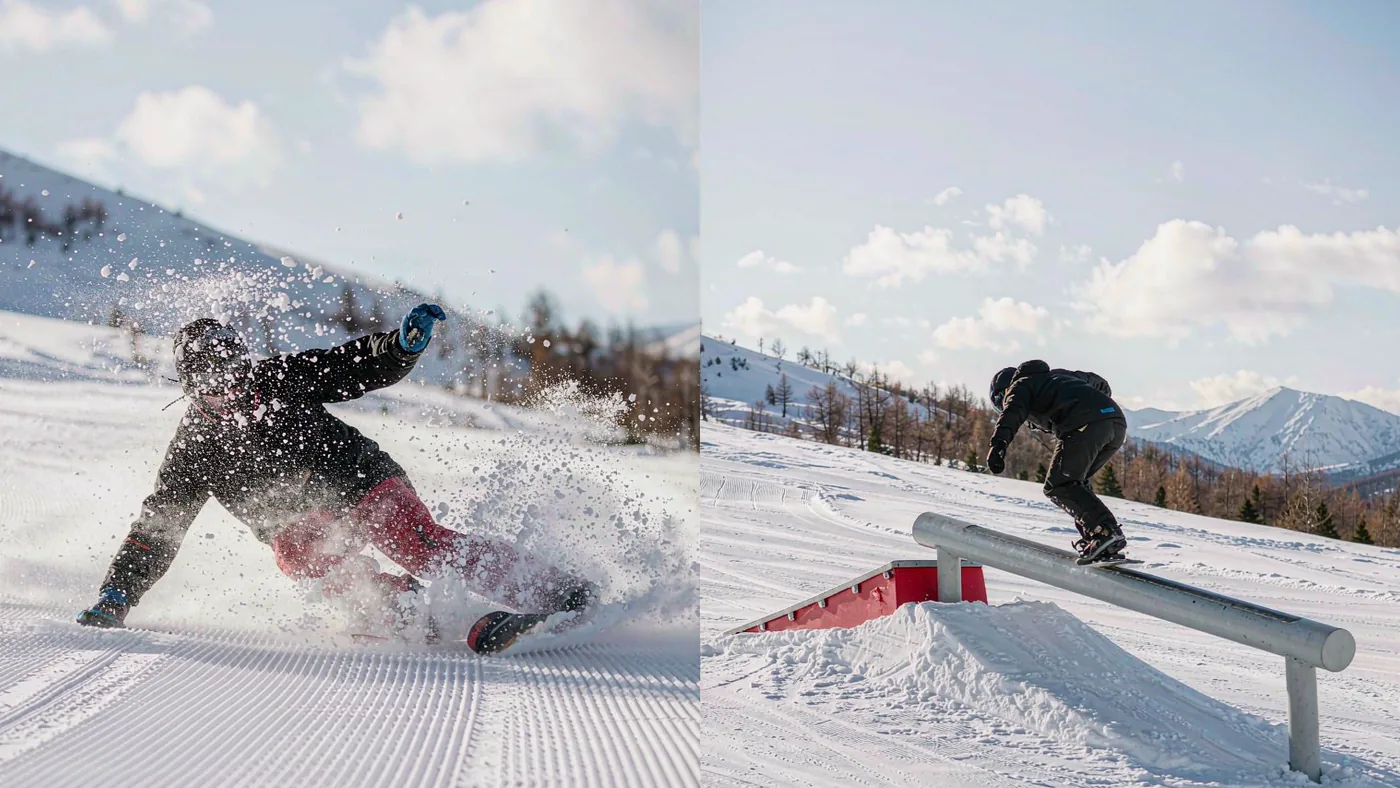
You are standing at the top of a red run at Les Deux Alpes on the third morning of the trip, and the piste below is the worst kind of hard — refrozen overnight, polished by wind, with patches of loose sugar on top. Your friend has already dropped into the park on the left, lapping the same three kickers. You want to get down the red without your board chattering into a skid.
The verdict up front
If you ride groomed pistes more than half the time, want to go fast, and ride switch only occasionally, buy all-mountain. If the park, side hits and presses are the reason you go, buy freestyle. If you genuinely do both every day, look for the in-between — a medium-flex twin with a hybrid profile.
What actually separates them
Three things, and only three that you should care about.
Profile. All-mountain boards put camber under and between your feet, because camber is what presses the edge into hard snow. Freestyle boards flatten or reverse the middle, which loosens the contact points and makes the board easy to press and forgiving on landings. The lifted centre that feels wonderful on a rail is exactly the part that stops gripping when you try to hold a fast turn on ice.
Flex. All-mountain decks run medium to stiff, because stiffness is what lets the board push back against a hard turn at speed without folding. Freestyle decks run soft to medium-soft, because you need the board to bend into a butter and absorb a heavy landing rather than buck you off.
Shape. All-mountain boards are typically directional twins — a twin outline with a small setback and a slightly stiffer tail. Freestyle boards are true twins, symmetric end to end, so riding switch feels identical to riding forwards.
The picks
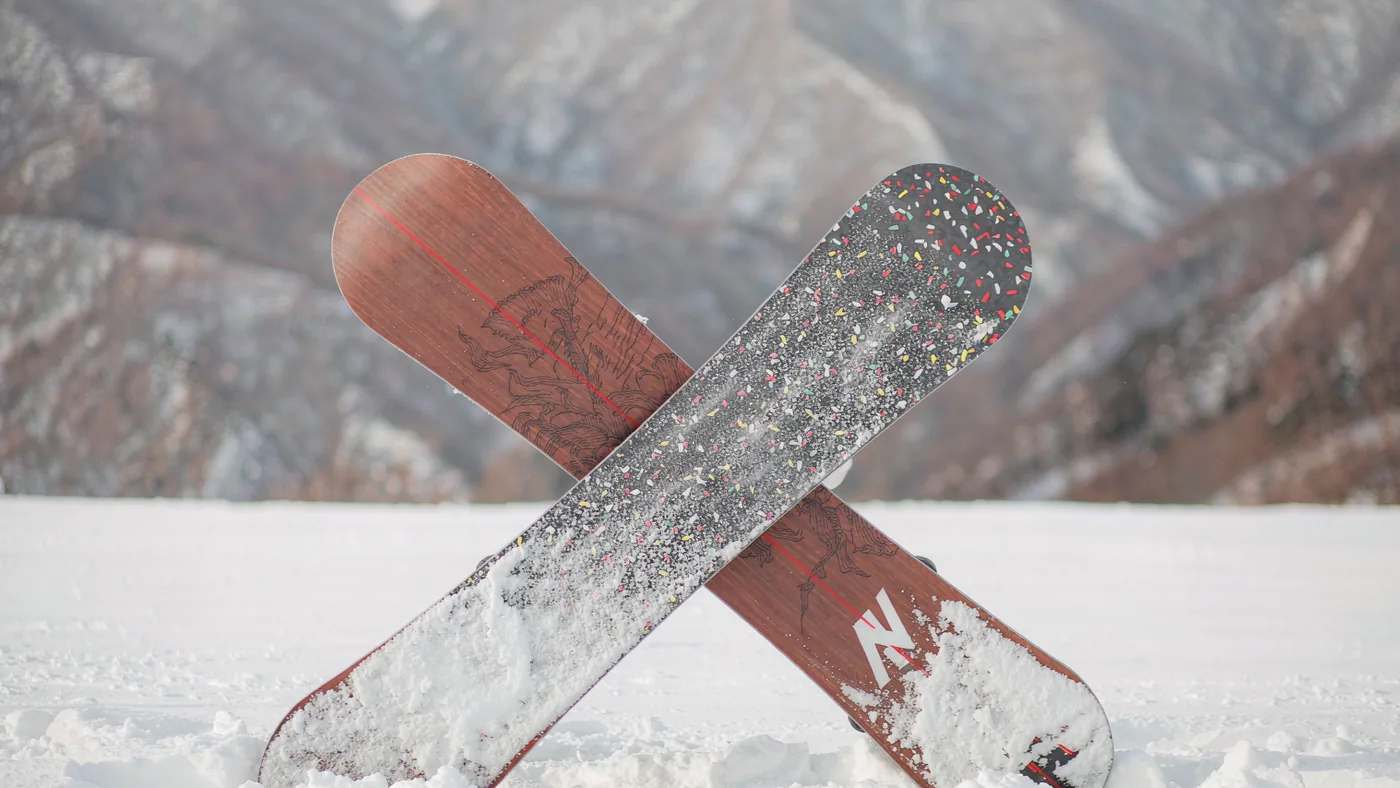
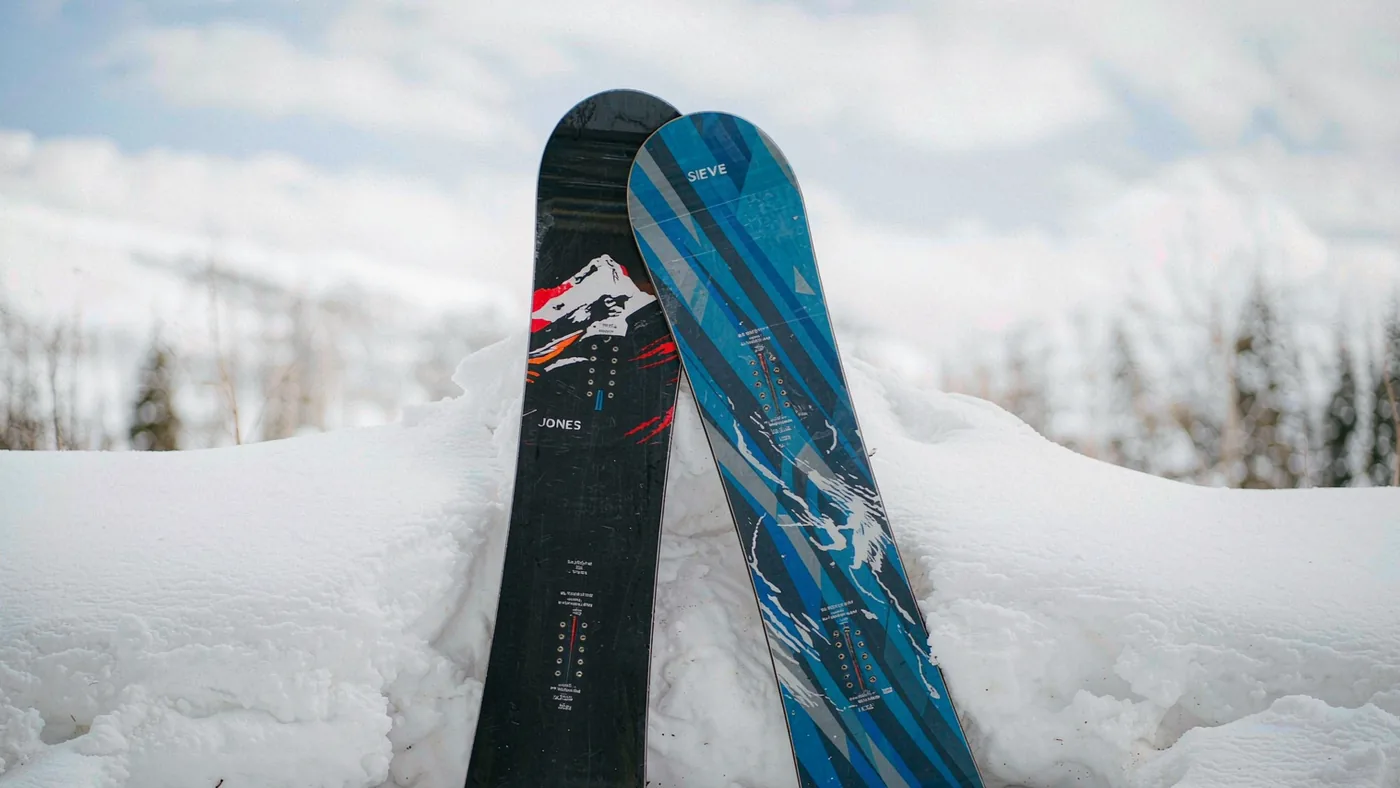
A stiff, fast all-mountain deck for riders who treat groomers like a race course. It rewards commitment and punishes hesitation.
Best for
- Confident intermediate and advanced riders
- Heavier riders who flex boards easily
Worth skipping if
- Beginners
- Park-focused riders
- Profile
- Traditional camber
- Shape
- Directional twin
- Flex bias
- Stiff
- Intended terrain
- All-mountain / freeride
Strengths
- Excellent stability at speed
- Holds up on hard, refrozen slopes
- Wide sizes suit bigger riders properly
Trade-offs
- Demanding for lighter riders
- Little forgiveness for sloppy technique
Specifications reflect published manufacturer information, last checked 2026-09-28. We have not laboratory-tested this product; the assessment above is editorial, based on the published design and the rider profile it targets. How we review gear.
A pressable, playful freestyle deck that stays stable enough to ride the rest of the mountain on the way back to the lift.
Best for
- Park riders on a budget
- Riders who want one deck for park and side hits
Worth skipping if
- Hard-charging piste riders
- Deep-powder days
- Profile
- Flat-to-rocker
- Shape
- True twin
- Flex bias
- Medium-soft
- Intended terrain
- Freestyle / park
Strengths
- Excellent value in the freestyle category
- Fun at low speeds on rails and boxes
- Stable enough to lap the whole resort
Trade-offs
- Soft flex folds under a heavy rider at speed
- Needs waxing more often than sintered bases
Specifications reflect published manufacturer information, last checked 2026-09-28. We have not laboratory-tested this product; the assessment above is editorial, based on the published design and the rider profile it targets. How we review gear.
How they compare
| Nitro Team | Rome Warden | |
|---|---|---|
| Profile | Traditional camber | Flat-to-rocker |
| Shape | Directional twin | True twin |
| Flex bias | Stiff | Medium-soft |
| Strength | Stability and edge hold at speed | Presses, jibs and switch riding |
| Weakness | Demanding and unforgiving for a lighter rider | Folds under a heavy rider at speed |
| Edge hold on hardpack | Excellent | Adequate |
| Performance in the park | Limited | Excellent |
| Best suited to | Confident riders who ride fast on groomed snow | Park riders who still lap the whole resort |
Published specifications, last checked 28 September 2026. Edge hold and park performance are editorial judgements about the design, not lab measurements.
There is a genuine middle ground that neither of these two occupies. The CAPiTA Mercury is a directional twin with a hybrid profile and a medium flex — grip from a twin without the stiffness that makes a dedicated all-mountain deck intimidating. If the honest answer is "a bit of both, but mostly piste", that is the shape to look at.
Winner by scenario
| Scenario | Which wins | Why |
|---|---|---|
| Icy morning red run, riding fast | All-mountain | Camber underfoot and a stiff flex are what keep the edge engaged |
| Three hours of park laps and side hits | Freestyle | A loosened centre and soft flex make presses and landings forgiving |
| Riding switch down a full run | Freestyle | A true twin loads and releases identically in both directions |
| A week of mixed piste with occasional park | All-mountain | You will spend more hours on groomed snow than you think |
| Learning rails, boxes and first 180s | Freestyle | Falls are the point of the lesson, and a softer deck hurts less |
| Lapping the resort with friends of mixed ability | All-mountain | Stability at a wide range of speeds matters more than playfulness |
| Riding mostly soft snow and sidecountry | All-mountain with hybrid tips | Rockered tips float; the camber zone still grips the return traverse |
| A rider who is heavy for their boot size | All-mountain | A soft freestyle deck will fold underneath them |
Editorial guidance based on how each design is built and what it is intended for.
What people get wrong when choosing
The most common mistake is buying a freestyle board because soft and friendly sounds easier, then finding it nervous at the speed a normal resort day runs at. Beginners on hard European pistes often find a soft true twin harder to ride than a medium all-mountain deck, because loose tips do not help when the problem is ice.
The second mistake is carrying your old length across when you change category. All-mountain and freestyle boards size differently in practice, and a volume-shifted freestyle deck may be shorter again. Start from the manufacturer's weight range, not from the number you used to ride.
Which should you buy
Buy all-mountain if you ride one trip a year and it is mostly groomed pistes, if you want to go fast without fighting the board, or if you are heavier than average for your height. The trade-off is that park days will feel like work.
Buy freestyle if the park is the point of your season, if you are learning butters, presses and spinning, or if you ride a lot of switch. That rider wants a true twin, a soft-to-medium flex and a profile with a loosened centre, and should accept that fast, icy piste days will not be its best day.
If that still sounds like two halves of your own riding, do not buy either extreme. Buy the compromise, and budget for boots that fit — boot fit affects a medium-flex twin more than the last few per cent of board design ever will.
Do not buy the Rome Warden if your days are mostly fast groomed pistes or you are a heavy rider who likes to push — the soft flex will fold under you exactly when you need support. Do not buy the Nitro Team if you are a beginner or a lighter rider, or if your season is mostly rails and butters, because a stiff cambered deck punishes hesitant technique and will slow your progress rather than accelerate it.
Frequently asked questions
Can you ride park on an all-mountain board?
Yes, and many riders do. A medium-flex all-mountain twin will handle small jumps, side hits and the occasional box without complaint. What it will not do is press easily, absorb a heavy landing comfortably, or feel symmetrical enough for serious switch progression. It is a fair compromise rather than a good park board.
Can you ride fast on a freestyle board?
Within limits. A soft true twin will hold up to moderate speed on decent snow, but the loosened centre and softer flex mean it will feel unsettled on hard, chattery pistes at speed. If you enjoy going fast on groomed snow, a freestyle deck is the wrong tool.
Does a true twin really matter if I do not ride switch?
Less than the industry suggests. If you never ride switch, a directional twin with a small setback will give you better float and a stronger tail for almost no cost. The symmetry of a true twin earns its place when you actually spend time riding the other way round.
Which is better for a beginner?
Neither extreme. A beginner is best served by a forgiving, softer board with lifted tips rather than a stiff cambered all-mountain deck or a park-specific twin. Soft flex and loose contact points are what stop the edge catching while you are still learning to control your edges at all.
Where to go next
Still deciding? The camber profiles guide explains what each profile does underfoot, and the all-mountain round-up covers the best of that category in detail. If freestyle is your answer, the freestyle boards under £400 guide covers the value end of the market.
For the rest of the setup, start with how to choose your first setup and the snowboard size chart. You can also browse more comparisons or the boards section.