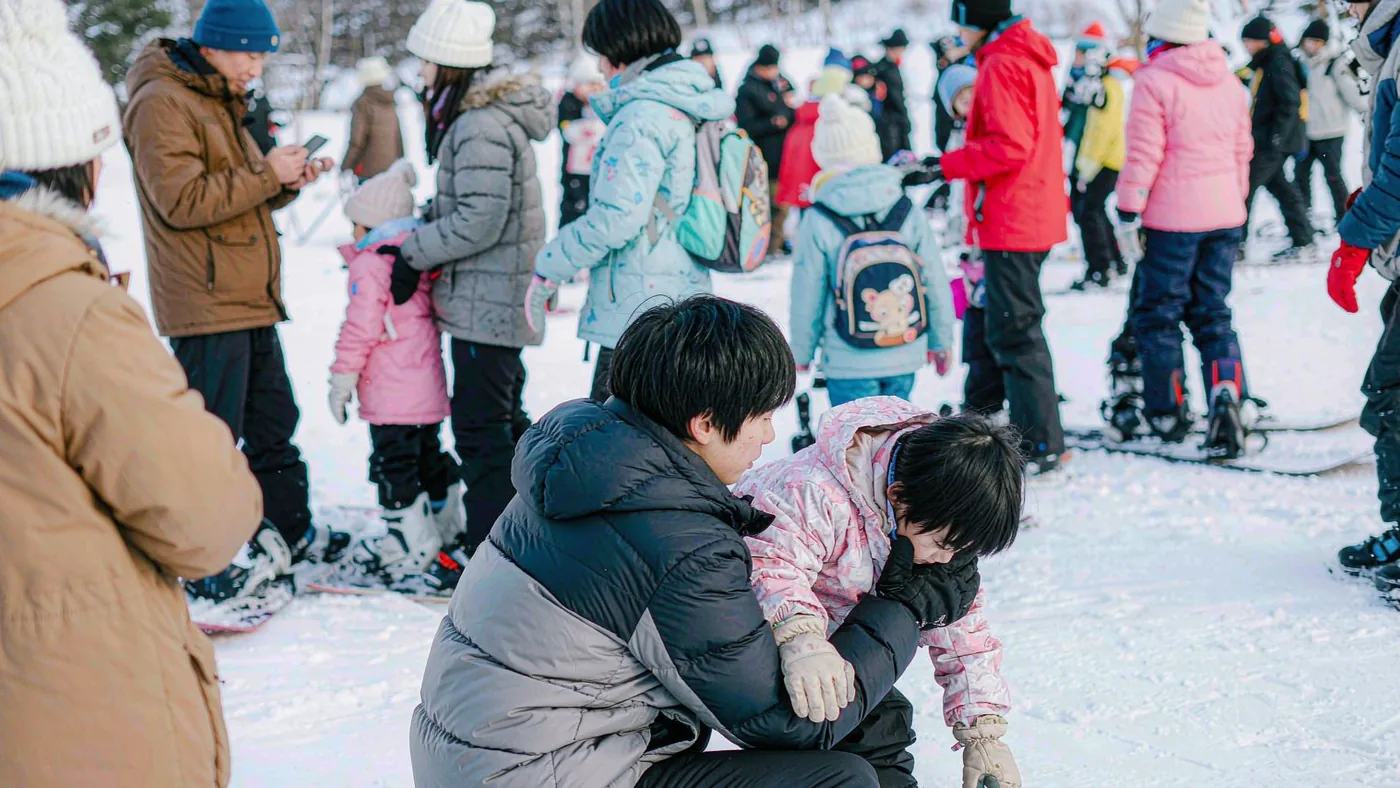
It is the second week of January and you are in a hire shop in La Clusaz with a nine-year-old, a set of forms, and a queue of families behind you. You came in intending to hire, on the sensible grounds that she will grow out of anything you buy within eighteen months. But the hire boots are clearly a size too big, the board is longer than anything she has ridden, and you are starting to wonder whether buying would be simpler.
It is a genuinely difficult call, and the answer is not the same for every family.
Buy or hire, by age and frequency
The deciding variable is not your child's age but how many days they will ride this season and how fast they are growing. Most children between roughly six and twelve grow a boot size every year and a half, and their weight changes faster than their height for much of that period, so a board bought in December may be the wrong length by the following December even if it has been ridden six times.
The counter-argument is fit. Hire fleets are built to survive, not to fit a particular child, and a badly fitting boot is the single most common reason a child has a bad week and refuses to go again. If your child rides more than about ten days a season, or if you have found that hire boots consistently fit badly, buying boots while continuing to hire a board is the highest-value compromise.
| Your situation | Recommendation | Reason |
|---|---|---|
| One trip a season, three to six days | Hire everything | Growth makes ownership poor value at this volume |
| Two or more trips, ten days plus | Buy boots, hire a board | Boot fit makes the biggest difference to enjoyment |
| Riding regularly at an indoor slope | Buy boots and a used board | Frequency justifies ownership; used protects the money |
| Child with wide or narrow feet | Buy boots | Hire fleets rarely carry enough width options |
Editorial guidance on buying versus hiring children's snowboard kit. Exact costs are not quoted because hire and retail pricing changes frequently and varies by resort.
Sizing a board for a growing child
The old rule — board to the chin — is unreliable for adults and worse for children, because children of the same height can differ hugely in weight. Size from weight first, then check the length against the child's boot size and strength.
As a rough starting point for a first board, look for something between chest and chin height, then check it against the manufacturer's published weight range. A child at the top of the range for a given length can bend the board and ride it properly; one at the bottom will struggle to turn it.
The temptation parents find hardest to resist is buying a longer board to grow into. Do not. A board that is too long for a light rider is harder to turn and harder to control speed on, so the child has a worse time while the extra length sits unused. Shorter is friendlier, and the only real cost is a little float on soft snow, which matters very little to a child on groomed pistes.
Boot fit on small feet
Boot fit is where children's kit most often goes wrong, and it is worth a proper fitting even if everything else is hired.
The shell should be sized so that when the child stands with their toes just touching the front, the heel is still locked down. Then have them flex forward — knees over toes — and their toes should pull back slightly. If their toes are jammed when flexed, the boot is too short. If their heel lifts at all, the boot is too big or the wrong shape, and no amount of tightening will fix it.
Never buy a boot with room to grow, because a boot that is a size too large causes heel lift, which means blisters, cold feet and no edge control. Buy the size that fits now. For width, children's feet vary as much as adults': if there is pressure across the forefoot, try a wider model or a different brand rather than going up a size, which makes the real problem worse.
Safety for small riders
Helmets are not optional for children, and are worth buying rather than hiring because a helmet should fit the individual head: snug, level, with the front edge just above the eyebrows and the strap tight enough that it does not move when they shake their heads. Replace any helmet that has taken a hard impact, even with no visible damage. Wrist protection and impact shorts are worth considering too, since the instinct to put an arm out behind them is strongest in young, light riders.
Set the rules before the first lift: no riding without a helmet, nothing above their ability without an adult, and no trees or off-piste without someone who knows the area. Agree a meeting point in case you are separated, and pick the resort for the child — short lifts, gentle nursery areas and dedicated children's zones make the first week far easier than long, steep runs.
What actually makes a child enjoy it
Children rarely care about the equipment once it fits. What decides whether they want to go again is whether they spent the day moving or standing around, whether they were warm, and whether their feet hurt. So keep days short, stop for hot chocolate often, book a lesson with other children of the same age rather than a private one with an adult, and keep the goals modest — a child who has ridden the same easy run fifteen times and enjoyed it has had a better day than one dragged down a red run in tears.
If your child rides fewer than about ten days a season, is under seven, or has not yet asked to go back a second time, do not buy a board and bindings. Growth makes the resale value poor and the timing awkward. Buy boots and a helmet if the fit demands it, hire the rest, and revisit the decision next winter when you know whether the interest has lasted.
Frequently asked questions
What size snowboard does my child need?
Start from weight and the manufacturer's published weight range rather than height. As a rough guide for a first board, something between chest and chin height works for many children, but a light child may need shorter and a heavy child longer. Err on the shorter side, because an oversized board is hard to turn and slows progress.
Should I buy boots slightly big so my child can grow into them?
No. A boot that is too large causes heel lift, which leads to blisters, cold feet and no edge control, and it will ruin the week. Buy the size that fits properly now, accept that it will be replaced within a season or two, and consider a used pair in good condition if the budget is tight.
At what age can a child start snowboarding?
Most ski schools prefer seven or eight as a minimum, mainly because snowboarding involves a lot of falling and requires the strength to get up repeatedly. Some children are ready at six, particularly if they skateboard or surf. Skiing is usually the easier introduction for younger children and many switch later.
Are wrist guards worth it for children?
Yes, particularly for young or lightweight riders. The reflex to put an arm out behind you when you fall backwards is very strong, and wrist injuries are among the most common snowboarding injuries for children. Wrist guards and impact shorts are cheap compared with a ruined holiday.
Where to go next
For the basics of learning, read snowboard vs skis for beginners and first season snowboarding. If you are putting together your own setup too, how to choose your first setup and the snowboard size chart cover the sizing questions parents ask most.
For the trip itself, the pre-trip checklist and how to fly with a snowboard handle the logistics. You can also browse the advice section or the buying guides.