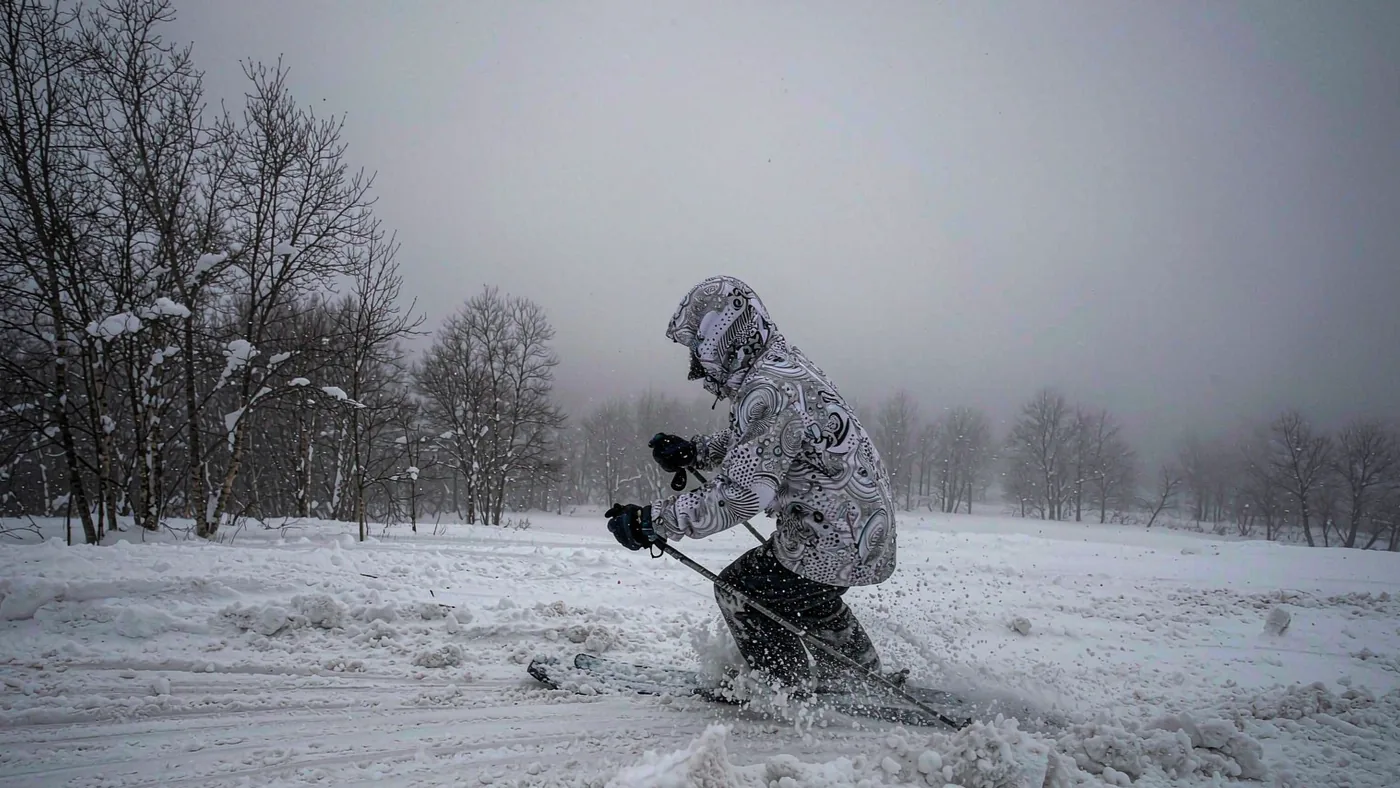
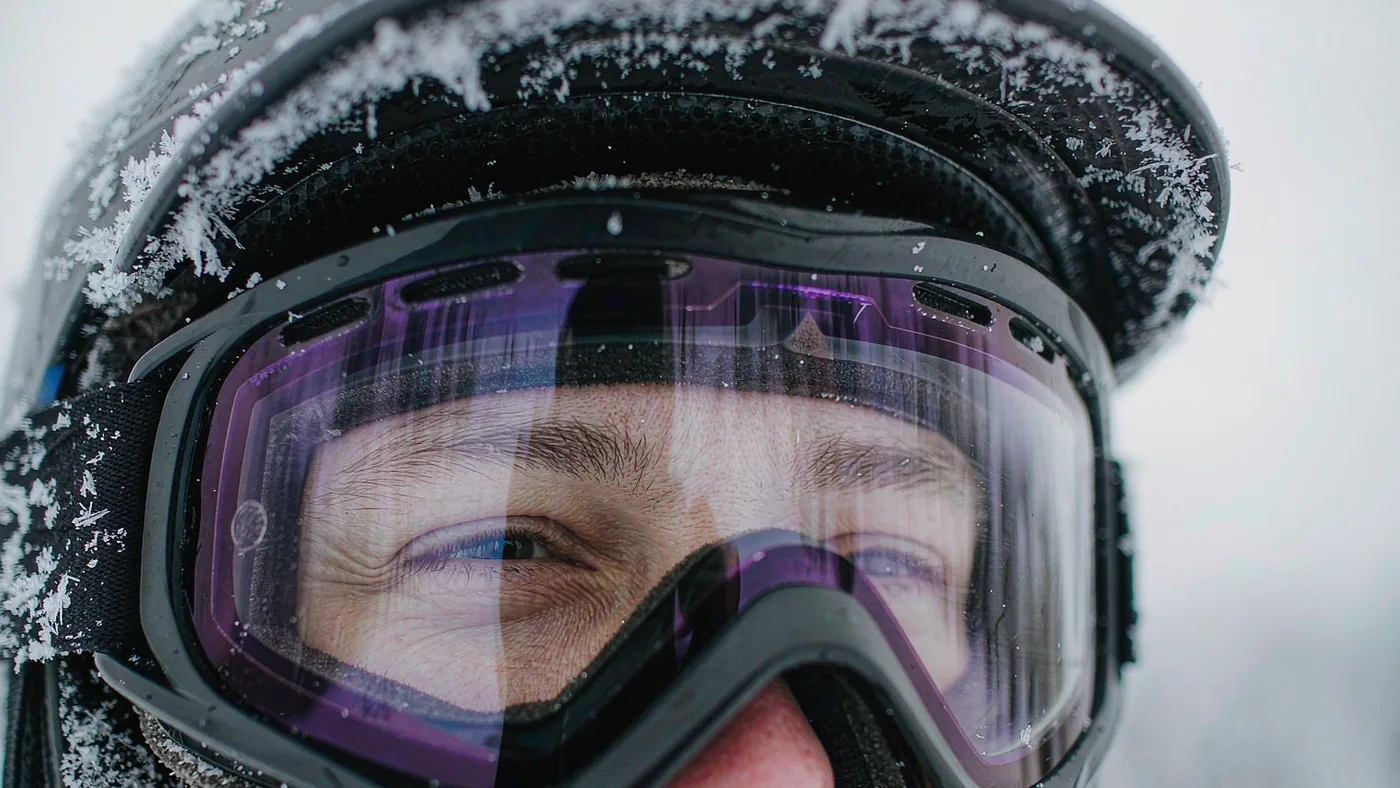
Coming down out of the Theodul pass towards Cervinia, the cloud closes in and the world loses its edges. The sky and the snow become the same shade of white, the piste markers vanish into it, and the only thing telling you where the ground is happens to be the feeling in your knees. You know the snow is not smooth. You can hear it. You just cannot see where the lumps are, so you ride the whole pitch at half the speed you would normally take it, guessing.
That is flat light, and every rider who spends a season in Europe meets it. In Scotland it is the default state of the mountain for weeks at a time. In the Alps it arrives out of nowhere in the afternoon and can last until the lifts close.
The good news is that flat light is one of the conditions where equipment makes a genuinely large difference. The bad news is that most riders are wearing the wrong lens for it, and the wrong lens can make the problem worse rather than better.
Why flat light defeats the wrong lens
Contrast is what lets your eye read terrain. On a normal sunny day there is plenty of it: shadows, texture, the difference between packed snow and loose snow. In flat light that contrast collapses, and the surfaces become nearly the same brightness. Your eye stops being able to tell the difference between a smooth patch and a metre of soft crud.
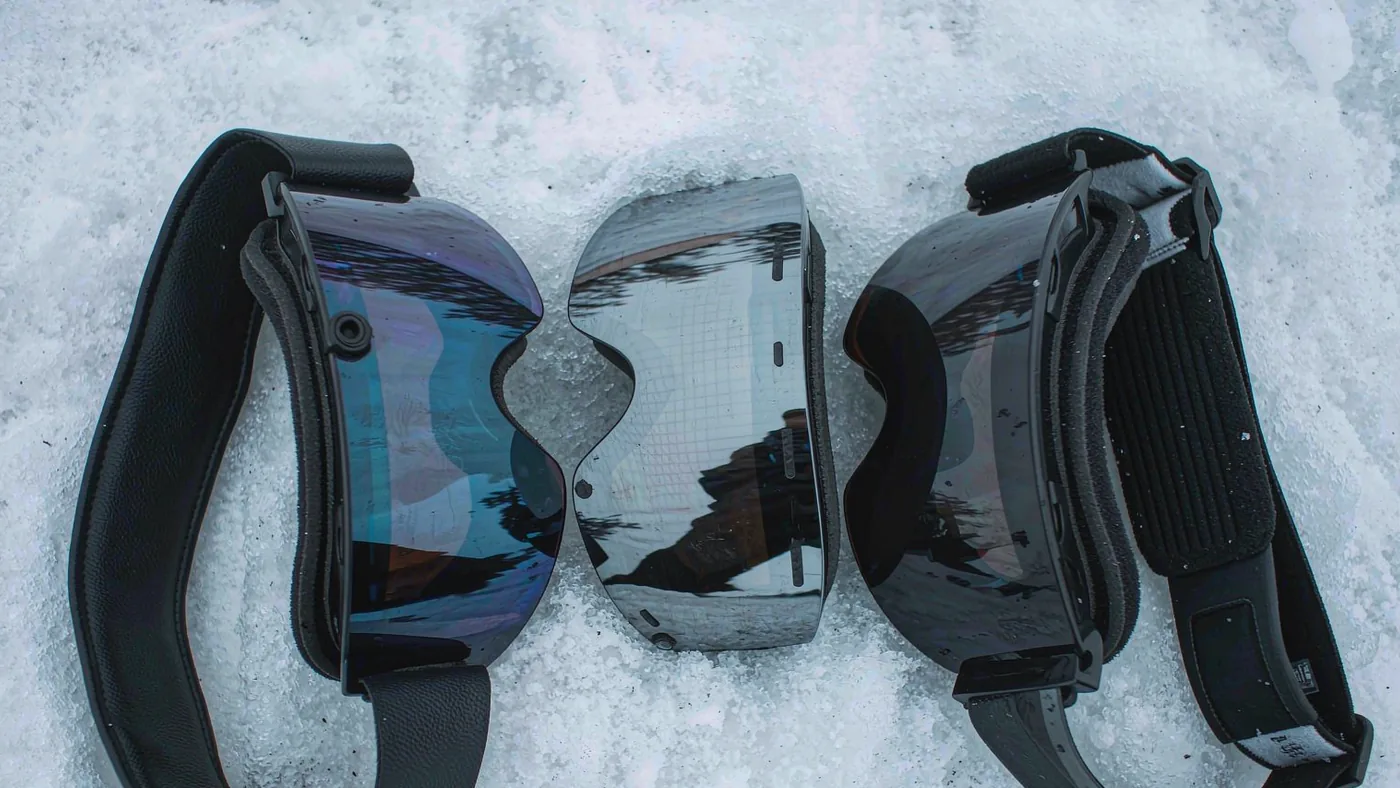
A dark, heavily mirrored lens makes this worse. It reduces the amount of light reaching your eye without doing anything to restore contrast, so everything just becomes dimmer and equally grey. That is the classic mistake: riders buy a dark mirrored lens because it looks good in the shop, ride it all season, and wonder why they cannot see on the one afternoon when it matters.
The opposite problem also exists. A completely clear lens lets in a lot of light but does nothing to separate the tones, so you get a bright, flat, featureless view. The goal is a lens that passes a decent amount of light and adds contrast, usually with a rose, amber or copper tint that works on the wavelengths where snow and shadow differ most.
What to look for in the spec
A contrast tint for low light. Most brands sell a lens specifically for overcast conditions, often described as storm, low-light or flat-light. If you ride Europe regularly, this should be the lens you keep in the goggle most of the winter, not the spare.
A second lens for bluebird days. A dark mirrored lens is genuinely the right choice in strong spring sun on a glacier. Buy a goggle that comes with both if you can, or at least one that supports lens swaps.
Fast lens changes. This is where the category has moved most. Magnetic systems let you swap in seconds without taking your gloves off. When the cloud rolls in at 2pm and your spare lens is in the pack, a thirty-second swap actually happens. A ten-minute faff does not.
A shape that does not fog. Vents, anti-fog coatings and a good seal against the face all matter more in flat light, because that is when riders stop and stand still, and standing still in damp air is exactly how goggles fog.
One budgeting habit worth adopting: check current price on the spare lens as well as the goggle. Some models ship with both a low-light and a sunny lens, others make you buy the second one separately, and that difference can matter more than the difference in the frame itself.
The picks
The magnetic swap is genuinely fast, which matters more than it sounds when the light changes mid-run. Expensive, and worth it if you ride flat light often.
Best for
- Riders who change lenses often
- Flat-light conditions in the Alps and Scotland
Worth skipping if
- Riders who leave one lens in all season
- Budget builds
- Lens
- Magnetic interchangeable spherical
- Fit
- Medium, OTG compatible
- Intended use
- All-mountain
Strengths
- Fastest lens swap of the options here
- Clear optics across the whole field
- Two lenses covers most conditions
Trade-offs
- Premium price
- Magnetic system needs care when packed in a bag
Specifications reflect published manufacturer information, last checked 2026-09-28. We have not laboratory-tested this product; the assessment above is editorial, based on the published design and the rider profile it targets. How we review gear.
A large, toric-lens goggle with excellent peripheral vision and a magnetic lens swap. One of the best options for flat light and fog.
Best for
- Flat-light riding
- Glasses wearers
Worth skipping if
- Small faces
- Tight budgets
- Lens
- Toric, magnetic interchange
- Fit
- Large, OTG compatible
- Intended use
- All-mountain
Strengths
- Outstanding field of view
- Excellent in flat light
- Fast lens changes
Trade-offs
- Very expensive
- Can overwhelm a small face
Specifications reflect published manufacturer information, last checked 2026-09-28. We have not laboratory-tested this product; the assessment above is editorial, based on the published design and the rider profile it targets. How we review gear.
A dependable goggle with a broad field of view. Swap lenses for the flat-light days and it will handle almost any European weather.
Best for
- Riders dealing with changeable Alpine light
- Glasses wearers wanting an OTG-friendly fit
Worth skipping if
- Riders wanting a single lens that does everything
- Tiny faces
- Lens
- Interchangeable cylindrical
- Fit
- Medium, OTG compatible
- Intended use
- All-mountain
Strengths
- Large field of view without looking oversized
- Lens changes are quick with cold hands
- Works well over glasses
Trade-offs
- Cylindrical lens shows slightly more distortion at the edges
- Spare lenses add cost
Specifications reflect published manufacturer information, last checked 2026-09-28. We have not laboratory-tested this product; the assessment above is editorial, based on the published design and the rider profile it targets. How we review gear.
How they compare
| Goggle | Lens shape | Lens change | Field of view | Best suited to | Main trade-off |
|---|---|---|---|---|---|
| Smith I/O MAG | Spherical | Magnetic | Wide | Riders who swap lenses often through the day | Premium price, and the magnets need care when packed |
| Anon M4 | Toric | Magnetic | Very wide | Flat light and riders who wear glasses | Expensive, and it can overwhelm a small face |
| Oakley Line Miner M | Cylindrical | Interchangeable | Wide | Changeable Alpine light and glasses wearers | Slight edge distortion, and spare lenses cost extra |
Lens shape and fit descriptions are drawn from published manufacturer specifications, last checked 28 September 2026. Field of view is an editorial judgement from the frame geometry.
Fogging, helmets and the fit details
Fogging ruins more flat-light days than lens choice does, and it is almost always a fit problem rather than a goggle problem.
Warm, damp air from your face has to escape upwards through the top vents. If your goggles sit too low on your nose, or your helmet pushes the frame down, that escape route closes and the lens fogs within minutes. This is why the same goggle can be flawless on one rider and useless on another.
Three things fix it. Wear the goggle higher on your face so the top of the frame sits just under the helmet rim. Check that your helmet and goggle brands are reasonably compatible in shape, because a deep helmet brim can funnel air straight into the vents. And when you stop, push the goggle up onto your helmet rather than leaving it over your face, so the inside does not have time to load up with moisture.
The other flat-light detail that nobody mentions is brightness of the frame itself. A light-coloured frame and strap reflects less heat and looks less obtrusive, and in a full whiteout a pale frame gives your eye a reference point. It is a small thing, and it helps.
Verdict
If you ride in Europe and the light changes through the day, the Smith I/O MAG is the most practical goggle here because the lens swap is quick enough that you will actually do it. If your priority is seeing as much of the mountain as possible in bad light and you wear glasses, the Anon M4 has the widest view. Do not buy the Anon M4 if you have a small face or a tight budget — it is a large frame and it will swamp a narrow face, and do not buy the Oakley Line Miner M expecting its cylindrical lens to match the edge-to-edge clarity of the other two, because it will not.
Frequently asked questions
What lens should I use in flat light?
A rose, amber or copper contrast tint with a fairly high light transmission, sold by most brands as a storm or low-light lens. Avoid dark mirrored lenses, which cut light without restoring contrast. If you ride Europe through the winter, treat the low-light lens as your default and the mirrored one as the spare.
Are mirrored lenses useless, then?
Not at all. A dark mirrored lens is the right choice in bright spring sun, particularly on a glacier where the light is intense and reflected off the snow. The mistake is wearing one every day out of habit, then struggling on the one afternoon of low cloud that turns a nice run into a blind one.
Do expensive goggles see better in flat light?
Price mostly buys lens technology, frame quality and the swap mechanism rather than raw visibility. A mid-priced goggle with the right contrast lens will beat an expensive one with the wrong lens every single time. Get the tint right first, then spend on the mechanism.
Should I buy goggles that fit over my glasses?
If you need prescription glasses on the mountain, yes, and check the fit specifically rather than assuming. Two layers of optics fog more easily, so ventilation and a helmet that does not push the frame down matter more than usual. Some riders find contact lenses the simpler answer for flat-light days.
Why do my goggles fog only when I stop?
Because stopping removes the airflow that was clearing the inside. Cooling air from outside meets warm, damp air from your face and the moisture condenses. Push the goggle up onto your helmet when you stop, and make sure the top vents are not blocked by the frame sitting too low.
Where to go next
Goggles and helmets have to work together — read the snowboard helmet buying guide to understand MIPS, fit and venting before you pair them up. The best snowboard gloves and mitts round-up covers the rest of what you wear on a cold, low-cloud day, and the best snowboard jackets for UK winters deals with the wet side of the same weather.
If you are still putting a kit together, the pre-trip checklist is a sensible place to start, and more outerwear advice sits in outerwear.