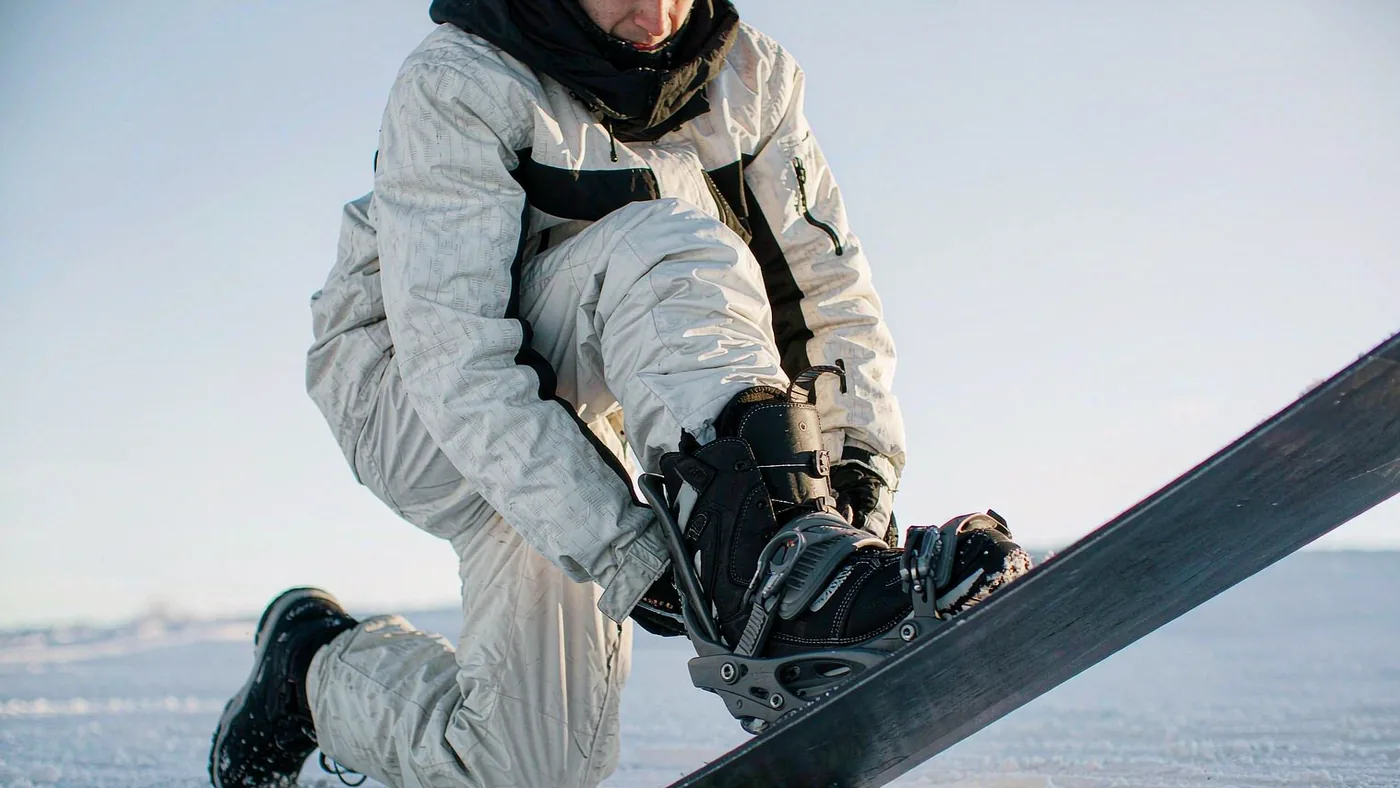
By ten past nine on the first morning of a beginner week in Alpe d'Huez, the ski school group has been standing on the snow for twenty minutes while the instructor explains how to put a board on. Everyone is smiling. By half past ten, two people in the group of eight are sitting down on the piste, and neither of them is sitting because they fell over. They are sitting because their shins hurt, their heels are lifting, and every time they try to stand up sideways the boot digs into the front of their ankle.
Nobody warned them that the boots would be the thing that decided how the morning went. They spent the autumn reading about boards.
Boots are the least glamorous purchase in snowboarding and the one that changes the most. A beginner on a hire board with well-fitting boots will progress faster than a beginner on a good board with painful ones. If you only spend money in one place this season, spend it here.
The mistake almost every beginner makes
The instinct is to buy a boot that is firm and supportive, on the theory that more support means more control. That is the wrong priority for a beginner, and it is the single most common error I see.
You cannot hold an edge reliably yet. What you need is mileage, meaning hours of sliding on easy slopes while your body learns what a turn feels like. That only happens if you are comfortable. A soft, forgiving boot that lets you stand up straight and stay out until lunch will teach you more than a stiff boot that has you back at the chalet by eleven.
The second mistake is buying too big. Beginners often size up half a size for comfort, and end up with a boot where the heel lifts on every toe-side turn. That lift is what causes the toe-bang, the black toenails and, eventually, the bad habit of leaning back to compensate.
What to look for and what to ignore
Flex. Go soft to medium. Something you can bend forward with your hand without much effort. As a rough guide, if the boot resists you in the shop it will resist you all week.
Heel hold. The most important fit quality. Lace up, put the boot flat on the floor and try to lift your heel. If it moves more than a few millimetres the boot is wrong, however cheap it is.
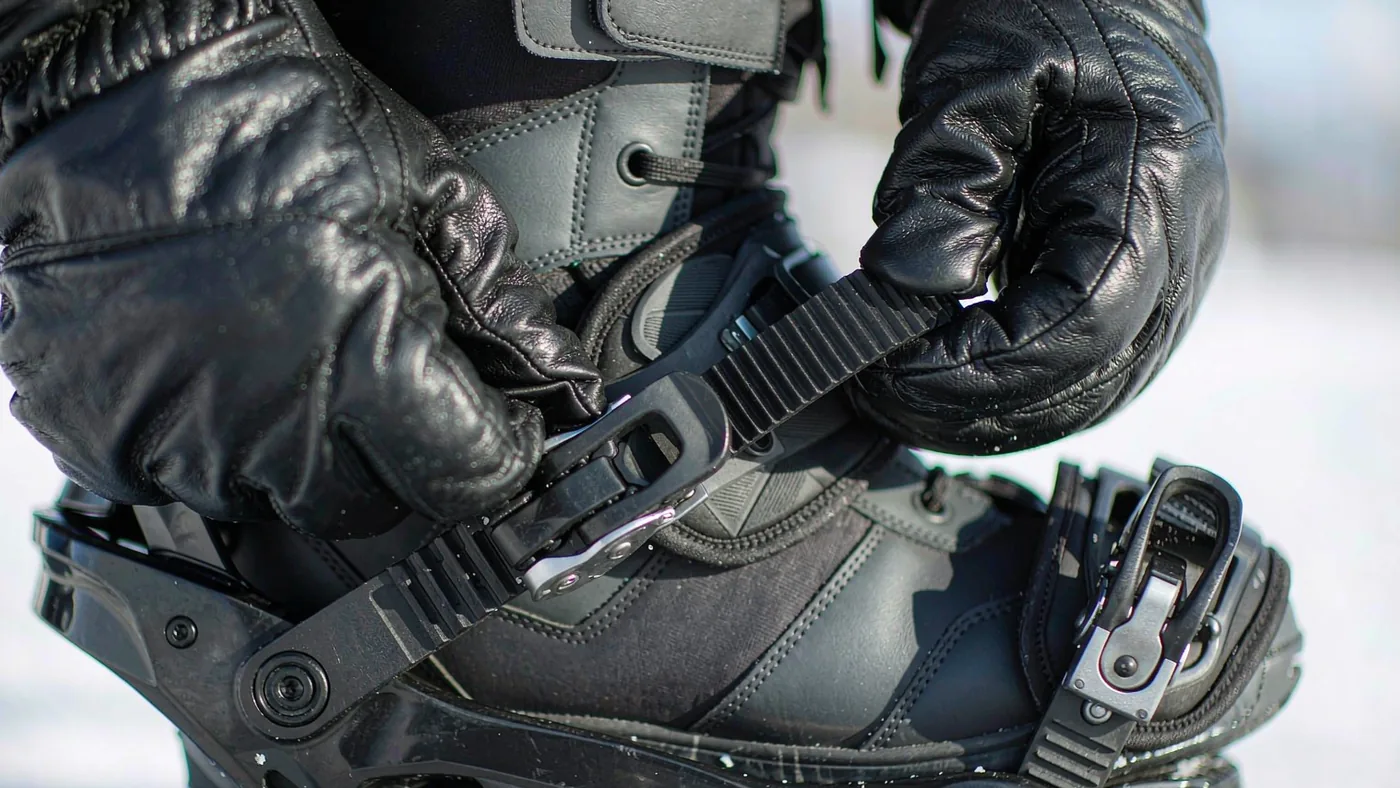
Lacing. Traditional laces are cheap to replace and work when nothing else does. Quick-pull systems are faster with cold hands but harder to repair on a trip. Neither is a dealbreaker at this level.
Numbers on the box. Ignore almost all of them. Insulation ratings, flex indices and "performance" tiers are marketing. Warmth, fit and a forgiving forward flex are the whole job.
The picks
Soft, comfortable and cheap to replace. Exactly what a beginner needs, because the wrong boot will ruin your first season faster than the wrong board.
Best for
- First-time buyers
- Riders who want a comfortable, forgiving boot
Worth skipping if
- Advanced riders wanting a stiff, supportive boot
- Tourers
- Flex bias
- Soft
- Lacing
- Traditional laces
- Intended terrain
- All-mountain
Strengths
- Comfortable out of the box
- Cheap and easy to repair
- Laces do not need special parts
Trade-offs
- Soft flex limits support at speed
- Less durable across multiple hard seasons
Specifications reflect published manufacturer information, last checked 2026-09-28. We have not laboratory-tested this product; the assessment above is editorial, based on the published design and the rider profile it targets. How we review gear.
Soft, warm and cheap. The right boot if you are learning and want comfort over precision.
Best for
- Beginners and early intermediates
- Riders with sensitive feet
Worth skipping if
- Advanced riders needing support
- Flex bias
- Soft
- Lacing
- Traditional laces
- Intended terrain
- All-mountain
Strengths
- Very forgiving
- Warm for the price
Trade-offs
- Limited support at speed
- Wears faster with heavy use
Specifications reflect published manufacturer information, last checked 2026-09-28. We have not laboratory-tested this product; the assessment above is editorial, based on the published design and the rider profile it targets. How we review gear.
A well-rounded mid-flex boot that suits most riders. Good comfort out of the box and enough support for piste riding.
Best for
- Most riders
- Riders wanting one boot for everything
Worth skipping if
- Riders with very narrow feet
- Extreme freeride
- Flex bias
- Medium
- Lacing
- Quick-pull lacing
- Intended terrain
- All-mountain
Strengths
- Comfortable quickly
- Versatile flex
- Easy to tighten with gloves
Trade-offs
- Average-width last only
- Laces harder to field-repair
Specifications reflect published manufacturer information, last checked 2026-09-28. We have not laboratory-tested this product; the assessment above is editorial, based on the published design and the rider profile it targets. How we review gear.
How they compare
| Boot | Flex | Lacing | Best suited to | Main trade-off |
|---|---|---|---|---|
| Burton Moto | Soft | Traditional laces | First-time buyers wanting comfort | Soft flex limits support once you speed up |
| ThirtyTwo Session | Soft | Traditional laces | Beginners and early intermediates with sensitive feet | Wears faster under heavy use |
| Salomon Dialogue | Medium | Quick-pull | Riders who want to keep one boot for several seasons | Average-width last only, and laces are harder to field-repair |
Flex and fit notes are editorial judgements based on published manufacturer specifications, last checked 28 September 2026.
Should you hire boots for the first week?
There is a good argument for it, and a good argument against.
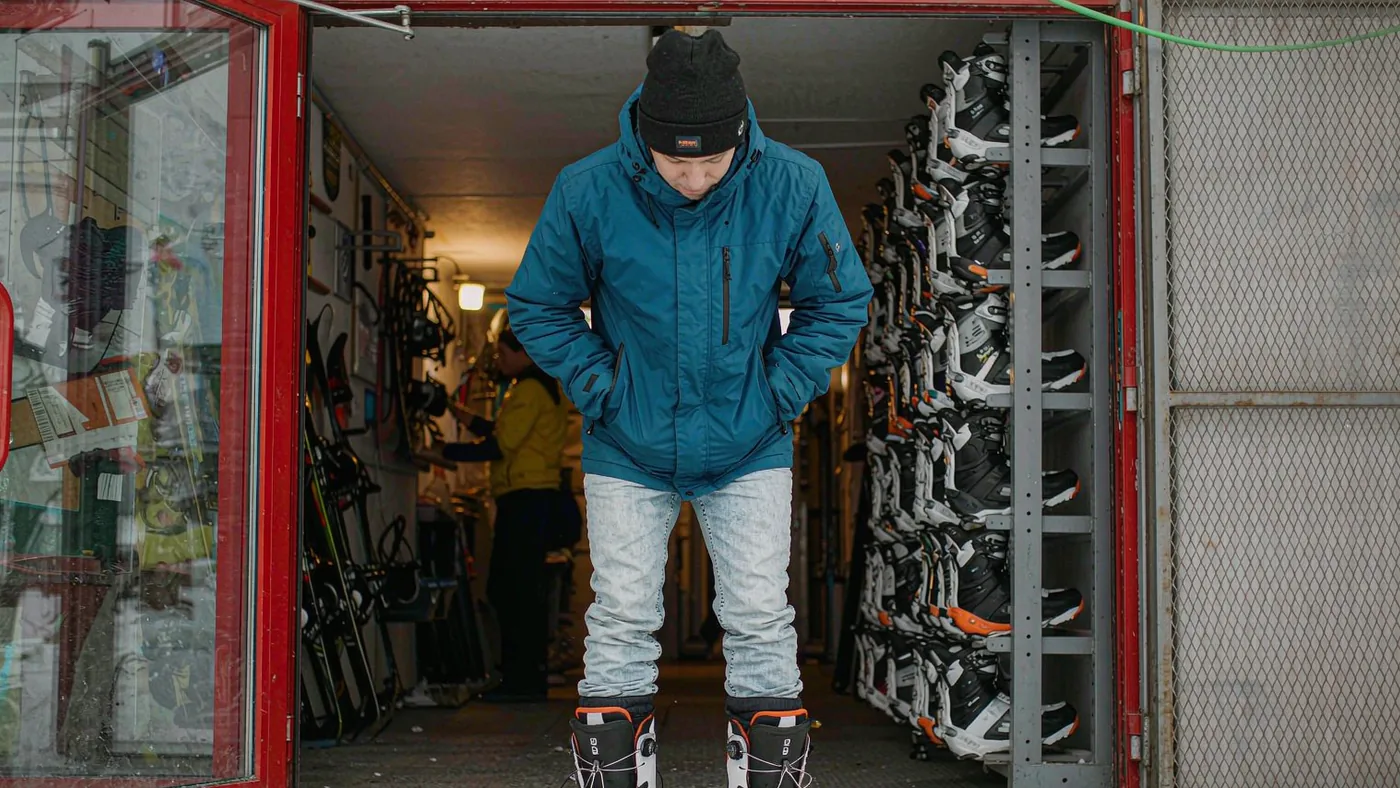
Hiring is sensible if you are not sure you will keep snowboarding, if you are riding one week and then deciding, or if your feet are still growing. Hire boots are usually soft, warm and forgiving, which is exactly what a first week needs, and they cost a fraction of buying.
Buying is sensible if you already know you will ride again next season, because you will spend your first week in boots that actually fit your feet rather than whatever was left in the hire rack at ten in the morning. Fit is the difference between two hours a day and five.
A middle route that works well: hire for the first trip, then buy at the end of the season when last year's models are reduced and you know what your foot likes. Check current price at the end of the season rather than the start.
Verdict
The Burton Moto is the safest first purchase in this category and suits the vast majority of beginners, with the ThirtyTwo Session a close second if you feel the cold or want the softest possible feel. Buy the Salomon Dialogue if you already know you will ride every season and want one boot to last. Do not buy any of these if you are already linking turns at speed or riding a stiff board — a soft beginner boot will fold underneath you and feel vague on edge, and you will be shopping again by Christmas.
Frequently asked questions
How tight should beginner snowboard boots be?
Snug in the heel and midfoot, with your toes touching the front when you stand up straight and just clear of it when you crouch into a riding stance. That toe contact is what keeps your heel locked down. It should be firm rather than painful, and it should feel the same in both feet.
Should I buy my own boots before my first trip?
If you know you will ride at least a second week, yes. Rental boots are built to survive hundreds of different feet and rarely fit anyone perfectly. If you are still deciding whether you enjoy snowboarding, hire for the first trip and put the money towards a lesson instead.
Are soft boots bad for learning?
The opposite. Soft boots are more forgiving of the weight shifts you will make while you are learning, and they keep you comfortable enough to stay out longer. Stiff boots make more sense once you can hold an edge and want to drive a board hard.
Do beginner boots need to be waterproof?
All snowboard boots are water-resistant to some degree and none of them are waterproof in the way a rubber boot is, because they have to breathe. What matters more is keeping snow out of the top, which is why your trousers go over the boot rather than inside it.
How often should I replace beginner boots?
If you buy soft beginner boots and then ride twenty days a season, expect two to three seasons before the shell packs out and the support disappears. If you ride a week a year, a well-made soft boot will last considerably longer than that.
Where to go next
Once the boots are sorted, the next decision is support — read stiff vs soft snowboard boots to see where you should land. If your feet are unusually shaped, go straight to boots for wide feet or boots for narrow feet instead of guessing.
Then look at the best snowboards for beginners and the first setup guide before you spend anything else. The pre-trip checklist covers what to pack for that first week.