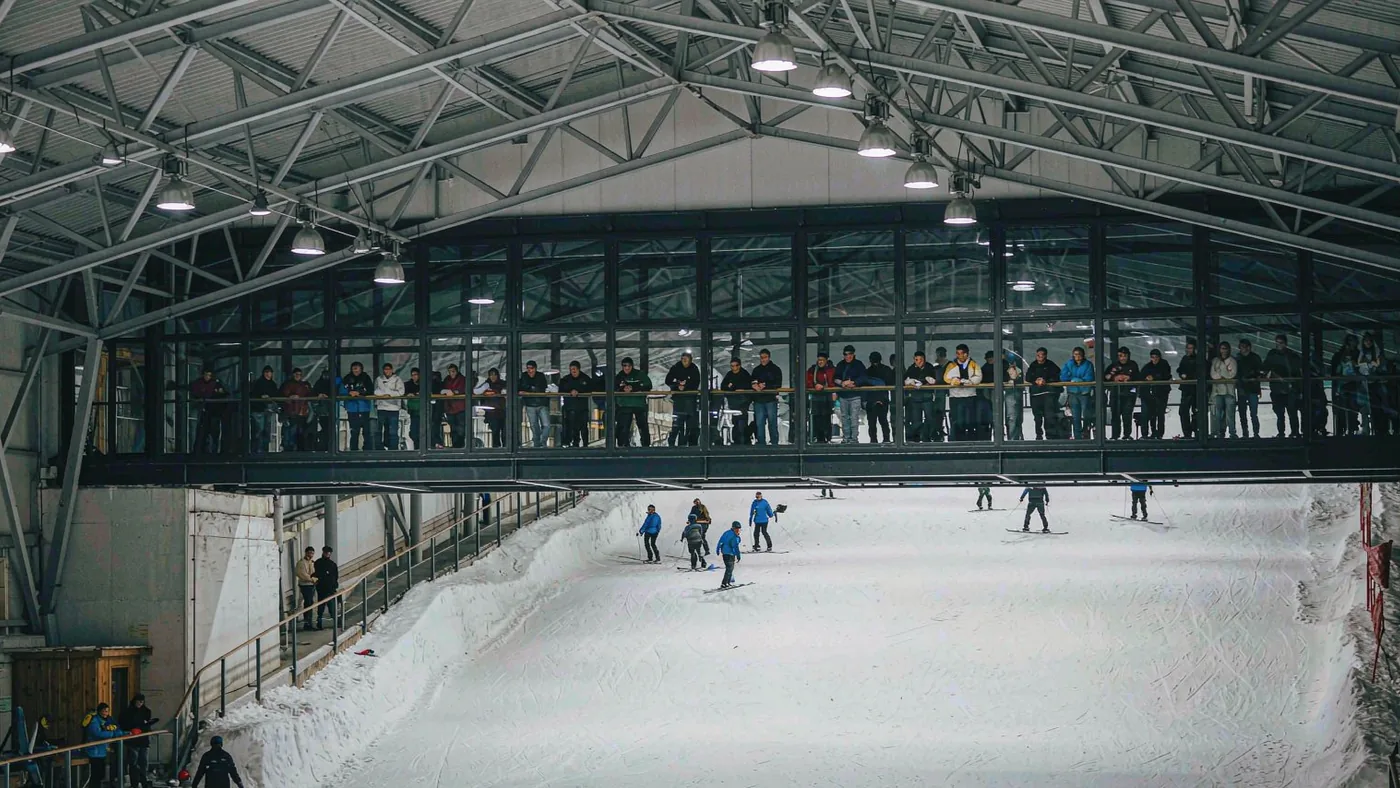
It is a Wednesday evening at the dry slope in Halifax, the matting is wet and quick, and the board you have been riding belongs to the centre. It has a hire sticker from 2011, edges that have been filed so many times they have almost disappeared, and a base that has not seen wax since the last time someone else owned it. You are ready to stop paying per session and buy your own board, and the number you have in mind starts with a two, not a five.
That is a reasonable place to start. What most riders get wrong is not the budget — it is what they expect a budget board to do. A board bought at this end of the market, with the right expectations, will give you several good seasons. The same board bought expecting premium performance will feel disappointing by week two, because it is not designed to do the things a premium board does.
The boards below are the three I would shortlist at this price. Each one has a clear job, and each one gives something up to hit the number.
What you give up, and what you do not
The good news first: nothing about a budget board stops you learning, progressing or enjoying a week in the Alps. Profile shapes and flex patterns are cheap to manufacture, so a budget deck can have exactly the same geometry as a much more expensive one.
What you give up is concentrated in four places. The base. Cheaper boards usually run an extruded or simple base, which is slower across flats and cat tracks and needs waxing more often than a sintered one. The core. Less expensive woods and simpler layups damp chatter less well, so hard, refrozen morning pistes feel more transmitted and less smooth underfoot. Weight. Budget boards are typically heavier for the same length. Durability. A soft core ridden hard every week will go flat sooner, and cheaper topsheets mark up quickly.
For two weeks a season plus a handful of dry slope sessions, none of those four changes much. For a seasonnaire riding five days a week, they matter.
The picks
One of the few genuinely budget decks that does not feel disposable. Good enough to keep riding after your first season ends.
Best for
- Beginners who want something to grow into
- Riders adding a second, cheaper board to a quiver
Worth skipping if
- Aggressive riders
- Anyone wanting meaningful float in powder
- Profile
- Hybrid camber
- Shape
- Directional twin
- Flex bias
- Soft to medium
- Intended terrain
- All-mountain
Strengths
- Punches well above its price
- Versatile enough to keep after the first season
- Straightforward to tune and repair
Trade-offs
- Soft flex gets unsettled at speed
- Not a powder shape
Specifications reflect published manufacturer information, last checked 2026-09-28. We have not laboratory-tested this product; the assessment above is editorial, based on the published design and the rider profile it targets. How we review gear.
A pressable, playful freestyle deck that stays stable enough to ride the rest of the mountain on the way back to the lift.
Best for
- Park riders on a budget
- Riders who want one deck for park and side hits
Worth skipping if
- Hard-charging piste riders
- Deep-powder days
- Profile
- Flat-to-rocker
- Shape
- True twin
- Flex bias
- Medium-soft
- Intended terrain
- Freestyle / park
Strengths
- Excellent value in the freestyle category
- Fun at low speeds on rails and boxes
- Stable enough to lap the whole resort
Trade-offs
- Soft flex folds under a heavy rider at speed
- Needs waxing more often than sintered bases
Specifications reflect published manufacturer information, last checked 2026-09-28. We have not laboratory-tested this product; the assessment above is editorial, based on the published design and the rider profile it targets. How we review gear.
Cheapest board here that still behaves predictably. If you are only going to ride one week a year, buying this and spending the rest on boots is the sensible trade.
Best for
- First-time buyers on a strict budget
- Families kitting out several riders at once
Worth skipping if
- Riders who will ride more than a couple of weeks a season
- Anyone wanting to progress into freestyle
- Profile
- Rocker between feet, camber underfoot at contact points
- Shape
- Directional
- Flex bias
- Soft to medium
- Intended terrain
- Beginner all-mountain
Strengths
- Very low entry price
- Extruded base survives being left unwaxed
- Easy to resell at the end of a season
Trade-offs
- Slow base compared with sintered alternatives
- Limited ceiling as your riding improves
Specifications reflect published manufacturer information, last checked 2026-09-28. We have not laboratory-tested this product; the assessment above is editorial, based on the published design and the rider profile it targets. How we review gear.
How they compare
| Board | Profile | Flex | Shape | Best for | Main compromise |
|---|---|---|---|---|---|
| K2 Standard | Hybrid camber | Soft to medium | Directional twin | Beginners who want something to grow into | Soft flex becomes unsettled at speed |
| Rome Warden | Flat-to-rocker | Medium-soft | True twin | Park riders and anyone wanting a playful deck | Soft flex folds under a heavy rider, and the base needs frequent waxing |
| Rossignol Evos | Rocker between feet, camber at contact points | Soft to medium | Directional | First-time buyers and families kitting out several riders | Slow base, and a limited ceiling as you improve |
Published specifications, last checked 28 September 2026. Flex and suitability are editorial judgements about the design, not laboratory measurements.
Where the money actually goes at this price
It helps to know what you are paying for, so you can judge whether the saving is in the right place.
Money spent on a decent profile and a sensible shape is money well spent, and all three boards here get that right. Money saved on the base is the least painful saving for a recreational rider, because you will notice a slower base for maybe fifty metres a run and forget about it. Money saved on the core is more noticeable, especially on firm mornings. Money saved on the finishing — the topsheet, the factory tune, the quality of the factory wax — is the most annoying, because a badly tuned board out of the box will feel bad for reasons that have nothing to do with the design.
One genuinely useful piece of advice: whichever of these you buy, get it waxed properly before your first trip and check that the edges are sharp. A budget board with a good tune rides better than a premium board that has been sitting dry in a shop for two years. If you are not confident doing it yourself, snowboard waxing and tuning at home covers the basics, and most shops will do it for a small fee.
The other way to stretch this budget is to buy used. A two-season-old premium deck often costs the same as a new budget one and will out-ride it. The risk is not knowing what to look for, so read new vs used snowboard before you go shopping.
Where not to save
Do not save on boots. Boots are the single largest influence on how a snowboard feels, and a cheap boot that does not fit properly will ruin the best board in this article. If the total budget is fixed, buy a cheaper board and better boots rather than the reverse.
Do not save on the binding's ratchets either. A budget binding with straps that freeze and slip will cost you more in frustration than the money you saved, and a strap that will not close high up a mountain is a genuine safety problem.
And do not buy a board two sizes outside your weight range just because it is discounted. A bargain that is the wrong size is not a bargain. Check the manufacturer's weight range for each length before anything else.
Verdict
None of these three is the right board for a rider who gets out thirty or more days a year. Budget bases slow down, budget cores lose their pop sooner, and all three will feel limited once your riding is good enough to notice. Step up to an all-mountain board instead and keep these as the answer for a second, cheaper deck.
Frequently asked questions
Is a cheap snowboard a false economy?
Not if you ride a handful of weeks a year. A budget board with a decent profile will do everything a beginner or intermediate rider needs, and the money saved is better spent on boots that fit. It becomes a false economy when a rider is on snow every week and the core goes flat within two seasons.
What should I check before buying a budget board?
Four things: the weight range for the length you are looking at, the waist width against your boots, whether the board is available in a wide version if you need one, and whether it has been stored flat and dry rather than leaning on its tail in a shop window for a season.
Is an extruded base really that bad?
It is slower and needs waxing more often, but it is also more forgiving of neglect and cheaper to repair. For a rider doing two weeks a year, an extruded base is a reasonable trade. It also tolerates being left unwaxed over a summer better than a race-grade sintered base does.
Should I buy a used premium board instead?
Possibly, and it is often the better buy if you know what to inspect. Look for clean edges without rounded or rusted sections, no lifting or cracking around the tip and tail, and a base without deep gouges that reach the core. A well-kept two-season-old premium board usually out-rides a new budget one.
How long should a budget snowboard last?
With two or three weeks of riding a year, expect four to six seasons before the flex genuinely changes. The base will need waxing regularly and the edges will need attention, and those two jobs are what keep a budget board feeling decent for that long. Neglect them and it will feel flat well before then.
Where to go next
Sizing is the one decision that matters more than the price — the snowboard size chart explains how to work from weight, and how much should you spend on a snowboard setup breaks a total budget down across board, boots and bindings.
If you are still building a first setup, how to choose your first snowboard setup and our boots for beginners guide are the natural next reads. Best places to buy snowboards in the UK covers where to shop, and the best snowboards for beginners round-up is worth a look if this is your first season.