It is the second week of October and you are sitting on a kitchen chair with a phone in one hand, looking at two listings for the same board. One is in Innsbruck, photographed on a balcony described as "ridden two seasons, some scratches on the base". The other is new, in your size, in a shop two hours away. The difference in money would pay for your lift pass and a decent pair of boots.
The verdict up front
For a first or second board, and for anyone riding one or two weeks a year, a well-chosen used board is the better use of money — the saving goes into boots, which will change your riding far more than a newer deck will. For bindings and boots, buy new.
What a used board can and cannot save you
Boards are simple objects and the failure modes are predictable. Scratches, burrs and a dull surface are normal and cheap to fix: a shop can stone the base and sharpen the edges so the board rides close to how it did when new.
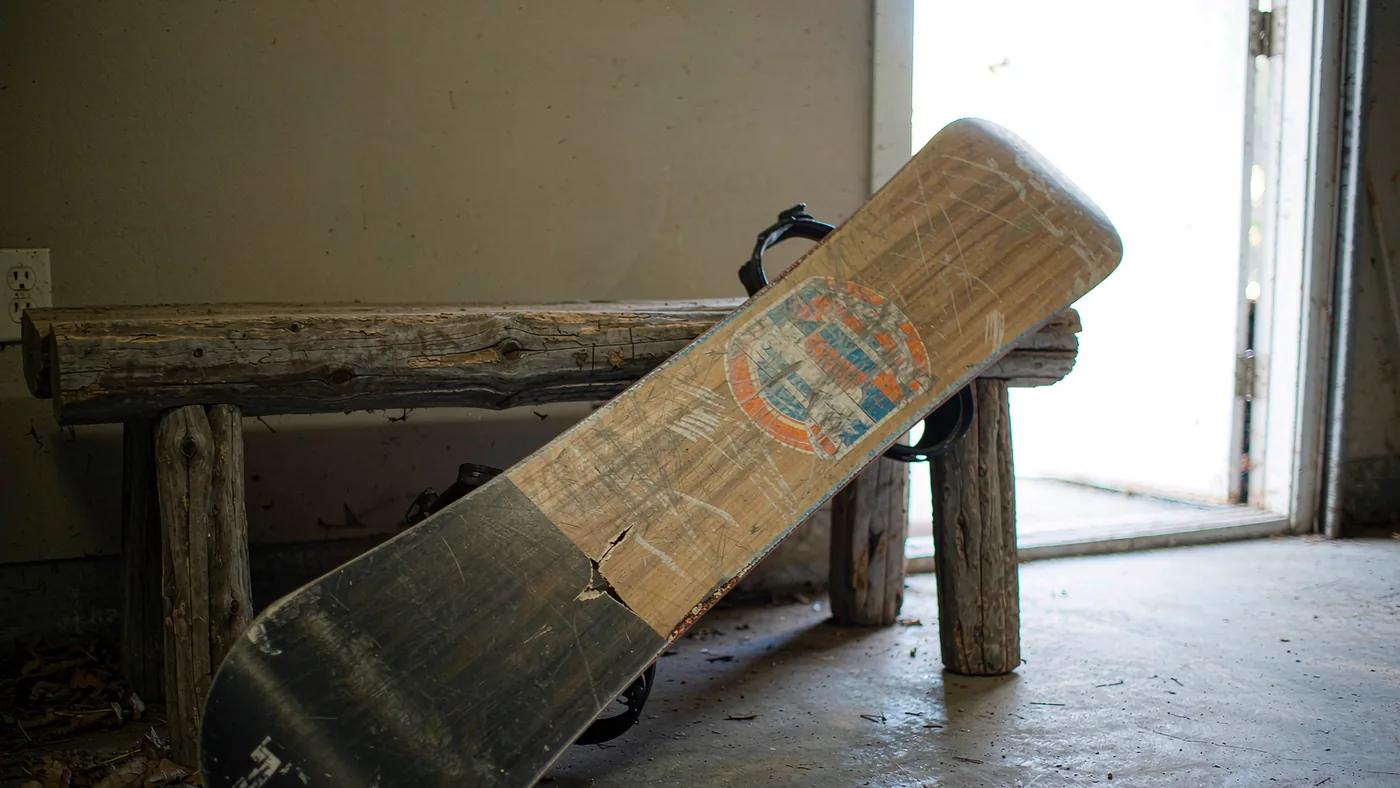
The expensive failures are different. A delaminated board — where the base or top sheet separates from the core — cannot be reliably repaired, at home or often in a shop. A cracked edge, a bent board or a core that has taken on water will never come back. Water ingress is the sneaky one: a board left wet over summer can rot invisibly and only reveal itself as a dead, soggy feel on snow.
| Fault | How serious | Fixable at home | Effect on value |
|---|---|---|---|
| Light base scratches | Normal wear | Yes, with wax and a scraper | Negligible |
| Deep base gouges | Moderate | Sometimes, with p-tex | Small reduction |
| Cracked or missing edge section | Serious | No | Walk away |
| Delamination around the edge or inserts | Serious | No | Walk away |
| Rusted, loose or pulled inserts | Serious | No | Walk away |
| Board left wet over summer | Hidden | No | Walk away |
Editorial guidance on common second-hand board faults and how they affect usability. Always inspect in person before paying.
How to inspect a used board
Assume nothing from the photographs: sellers photograph the top sheet because that is where the graphics live, and it tells you the least. Lay the board base-up on a flat floor and look along it from the tail — a board that rocks in the middle or has a twisted nose is a problem. Rest a straight edge along the base and check for a symmetrical arch back to the tips. Run a fingernail along the edge, where small burrs are fine but a section that moves under pressure is not. Check the seam around every insert, since that is where delamination starts, and press the base with your thumb: a crisp tap is healthy, a spongy spot means the layers have separated.
Where used wins, and where it does not
Beginners and occasional riders benefit most. A beginner board is outgrown within a season or two — not because it breaks but because the rider gets better — so buying new means paying full price for something you will sell in eighteen months. Riders adding a second or third board win too: a powder or travel deck that comes out six days a year does not wear out fast.
Boots and bindings are the two places used kit does not make sense. Liners pack out and mould to the previous owner's foot, so a used boot is soft, cold and unstable, and bindings wear at the ratchets, straps and baseplates, where a failure is a safety problem rather than an inconvenience. Buy those new.
Winner by scenario
| Your situation | New or used | Why |
|---|---|---|
| Absolute beginner, first board | Used | You will outgrow it in a season or two, and the saving buys boots |
| Riding one week a year | Used | Low mileage means the board will outlast your interest in it |
| Adding a powder or travel board | Used | Used occasionally, so wear is minimal |
| Buying boots | New | Liners pack out and mould to the previous owner's foot |
| Buying bindings | New | Worn ratchets and straps are a safety issue, not a saving |
| Riding 40 or more days a season | New | You will use the design life and want the warranty |
| Second board for hard piste charging | New | You need to know the edge and base are sound |
| No chance to inspect in person | New | You cannot verify what you cannot see |
Editorial guidance on when the trade-off favours each option. Used prices are not stated here because they vary constantly with season, size and condition.
Which should you buy
Decide in this order. Boots first, bought new from a shop where someone can measure your feet — see the boots for wide feet and narrow feet guides. Bindings second, also new, using the best snowboard bindings round-up as a starting point. Board last, and this is where a used deck makes sense.
Set a ceiling for the used board and be prepared to walk away from two or three before you find a good one. A seller who will not let you inspect the base, or who is vague about the repaired edge in the photograph, is not worth the journey. If you reach the end of the season having ridden more than you expected, that is the moment to buy new.
Anyone shopping for boots or bindings should not buy second-hand, however good the listing looks. Worn liners and tired ratchets are the two places where saving money quietly costs you safety and comfort. Nor should you buy used if you cannot inspect the board in person or return it, or if you are a heavier rider who will put the deck under real load from day one.
Frequently asked questions
How old is too old for a used snowboard?
Age matters less than condition. A well-stored board from several seasons ago can still be perfectly sound, while a board that spent one summer in a wet bag may be ruined. Inspect the base, edges, inserts and the bond between the layers, and treat visible delamination or insert damage as a reason to walk away regardless of the year.
Should I buy used boots?
No, in almost all cases. Boot liners mould to the shape of the original owner's foot and pack out with use, so a used boot is likely to be soft, cold and unstable. If the budget is tight, buy the previous season's model new on clearance instead of a used pair at the same money.
Is it worth buying an ex-demo or ex-rental board?
Sometimes, with care. Ex-rental boards have often had a hard life on the edges and bases, and ex-demo boards have been ridden by many different people. Both can be sound, but they need a careful inspection and usually a full service before their first outing with you.
What should I check first on a used board?
The base. Ask the seller to photograph the board base-up in daylight, then look at the edges and the insert area in person. Scratches are normal, delamination is not. Then run a straight edge along the base and press the surface with your thumb to feel for soft or hollow spots.
Where to go next
If you are building a setup from scratch, start with how to choose your first setup and how much should you spend. If the budget is the main constraint, see the budget boards under £300 and freestyle boards under £400 round-ups.
Once you own the board, snowboard care, waxing and storage explains how to make it last, and our guide to buying in the UK covers where to shop. Browse more comparisons or head to the buying guides section.