A rider pulls up next to you at the top of a red into La Thuile and flexes his board with one hand while he waits. He is on his third season, rides about twenty days a year, mostly piste with the occasional park lap, and he has narrowed his new binding choice to two: the Union Force and the Burton Cartel. He has read everything he can find, and every review says the same thing, which is that both are excellent. He wants to know which one is his.
That is a reasonable question, and it has a real answer. Both bindings are well made, both are aimed at the same rider on paper, and both will work on almost any board in the shop. The difference is how they feel underfoot, and once you know which side of that difference you prefer, the choice stops being difficult.
The short answer
Buy the Union Force if you want the most direct connection to the edge your money can buy in this tier, and you like to feel exactly what the board is doing. It is the firmer, crisper option, it is simple, and it is the binding I would recommend to a confident rider who spends most of the day on hard pistes.
Buy the Burton Cartel if you want the same all-mountain role with more cushioning underneath you, and if the sound of a slightly softer, damper ride appeals. It is the more comfortable of the two over a full day on refrozen snow, and it gives up a small amount of directness to get there.
If you have sore knees, ride a lot of chopped-up slush in the afternoon, or simply dislike a harsh ride, the Cartel is the better match. If you want to feel every contour and you ride a stiff board aggressively, the Force is the better match. That is genuinely the whole decision.
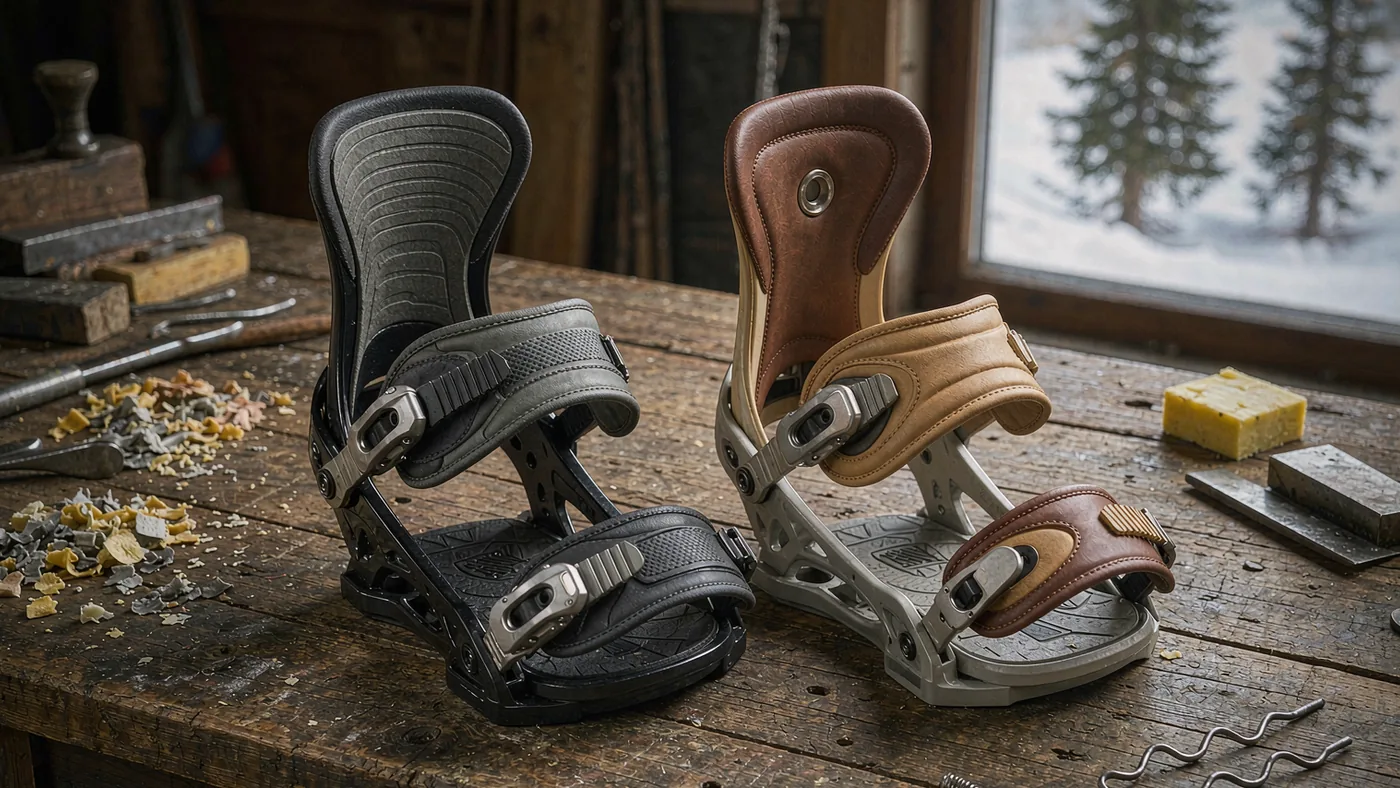
Union Force: the firmer, more direct option
The default answer when someone asks which all-mountain binding to buy. Strong, simple, and it stays stiff enough to drive a proper board.
Best for
- All-mountain riders doing piste, park and travel
- Riders who want a binding to last several seasons
Worth skipping if
- Riders wanting an ultralight touring setup
- Anyone after a flexy, surfy feel
- Flex bias
- Medium
- Intended terrain
- All-mountain
- Mounting
- Universal disc, most board inserts
Strengths
- Reliable, long-lived and easy to service
- Firm enough for aggressive piste riding
- Straps work well with bulky boots
Trade-offs
- Heavier than premium carbon options
- Not the most playful binding in the park
Specifications reflect published manufacturer information, last checked 2026-09-28. We have not laboratory-tested this product; the assessment above is editorial, based on the published design and the rider profile it targets. How we review gear.
The Force is the default answer for a reason. The aluminium heelcup keeps it stiff without making it heavy, the ratchets stay smooth in cold weather, and the construction is straightforward enough to service with basic tools. It has been the reference point in the mid-stiff all-mountain category for years.
Underfoot, that firmness reads as immediacy. Push into the edge and the board answers. On hard Alpine pistes in the morning, before the surface softens, that directness is worth a lot, and it is why riders who treat groomers as a slalom course tend to end up here.
The trade-off is the other half of the same quality. Everything the board feels comes back up through the binding, and on refrozen crud that includes a fair amount of chatter. It is also less playful in the park than a softer binding, and it can feel like slightly more binding than you need if you weigh under about 70kg and ride at a relaxed pace.
Burton Cartel: the damped, comfortable option
A softer-edged, more forgiving ride than the Union Force. If you want the mountain to feel slightly less harsh underfoot, this is the one.
Best for
- Riders who prefer a damped ride
- Joint pain on hard European pistes
Worth skipping if
- Budget builds
- Riders wanting the stiffest possible response
- Flex bias
- Medium-soft
- Intended terrain
- All-mountain
- Mounting
- Channel and standard discs
Strengths
- Noticeably smoother on icy, chattered snow
- Comfortable straps, even over thicker boots
- Fits a very wide range of boards
Trade-offs
- Slightly less direct than a stiffer binding
- Priced above the cheapest competitor options
Specifications reflect published manufacturer information, last checked 2026-09-28. We have not laboratory-tested this product; the assessment above is editorial, based on the published design and the rider profile it targets. How we review gear.
The Cartel takes the opposite approach. A cushioned baseplate filters out the high-frequency chatter that comes up off scraped pistes, and the strap geometry is comfortable, including over thicker boots and wider feet. If you have ever finished a day at two in the afternoon because your knees and shins have had enough, this is the binding category to look at.
The mounting is worth noting. The Cartel works with both the channel and standard insert patterns, so it will follow you onto a Burton board or anything else without needing new hardware. That kind of flexibility is more useful than it sounds to riders who swap boards.
The trade-off is a slightly less direct feel than the Force. On a very firm, very fast piste you can sense that a fraction of your input is going into the binding rather than the edge. For most riders that is imperceptible. For a heavy rider on a stiff board asking for maximum precision, it is the reason to choose the other one.
Winner by scenario
| Scenario | Better choice | Why |
|---|---|---|
| Fast, aggressive piste riding on hardpack | Union Force | The firmer connection puts more of your input into the edge |
| Sore knees or shins after a full day | Burton Cartel | The cushioned baseplate filters out chatter |
| Chopped, slushy afternoons at low altitude | Burton Cartel | The damper ride stays calmer in tracked-out snow |
| Riders over roughly 90kg | Union Force | The firmer flex holds up under more load |
| Riders under roughly 70kg | Burton Cartel | The softer feel is easier to flex and less tiring |
| One board with a channel and another with standard inserts | Burton Cartel | Ships with hardware for both mounting systems |
| Park laps as a significant part of the day | Burton Cartel | More forgiving and more playful underfoot |
The scenarios above are editorial judgements based on published manufacturer specifications and the design of each binding, last checked 28 September 2026. Rider weights are approximate guides, not thresholds.
Which should you buy
If you can only take one thing from this comparison, take this: the two bindings are not better and worse, they are firmer and softer. Decide which of those you want, and you have decided.
There is a tiebreaker that has nothing to do with ride quality. The Force is the easier binding to live with long term, because it uses standard hardware and simple construction that any shop can service. The Cartel's advantage is its mounting flexibility, which matters if you own boards from more than one brand. Both sit in broadly the same band, so check current price on the day you buy rather than working from last season's number.
And a warning about both. Neither binding will fix a setup that is wrong elsewhere. If your boots are too soft, or the wrong size, or the board is a stiff freeride deck and you weigh 65kg, no binding choice will rescue the ride. Sort the boots first, then the bindings, then the board.
Verdict
For a confident rider who spends most of the day on hard pistes and wants the crispest possible connection, the Union Force is the better buy. For a rider whose knees and shins complain, who rides a lot of chopped snow, or who weighs less than about 70kg, the Burton Cartel is the better buy and there is no shame in it. Do not buy the Union Force on the assumption that stiffer equals better — if you are light, still improving, or ride mostly park, it will feel harsh and unhelpful, and you will be faster on the Cartel.
Frequently asked questions
Is the Union Force stiffer than the Burton Cartel?
Yes. Published flex descriptions put the Force at medium and the Cartel at medium-soft, and that gap is noticeable underfoot. The Force is the firmer, more direct binding; the Cartel is the damper, more forgiving one. Both are described as all-mountain by their manufacturers.
Can I use the Burton Cartel on a non-Burton board?
Yes. It ships with hardware for both the channel and standard insert patterns, so it mounts to almost anything. That is one of its practical advantages over a binding that only works with one system, and it matters if you swap boards or plan to.
Which binding is better for a heavier rider?
The Union Force, generally. A heavier rider puts more load through the binding and will flex a softer one more than intended, which reduces its support. If you are over roughly 90kg and ride with any aggression, the firmer option will hold up better over a long day.
Do I need to match my binding brand to my board brand?
Almost never. The Union Force uses a universal disc that fits standard insert packs, and the Cartel handles both channel and standard. Brand matching is only a genuine constraint with proprietary systems, and even then most brands offer a compatible option.
Would a cheaper binding do the same job?
For a rider doing one or two weeks a year at a moderate pace, a mid-range binding from either brand's range would be perfectly adequate. The money in this tier buys durability in the hardware, smoother ratchets and a firmer platform. If you ride rarely, that difference is smaller than the price gap suggests.
Where to go next
Still deciding between the two, or wondering whether to skip straps altogether? The step-on bindings verdict covers that question properly, and the best snowboard bindings round-up includes the wider alternatives.
Before you order, check the size with the binding sizes guide, then read the binding setup guide so the stance and angles are right from the first run. Boots decide half of this decision, so see the best boots for beginners and stiff vs soft snowboard boots if you have not bought those yet.