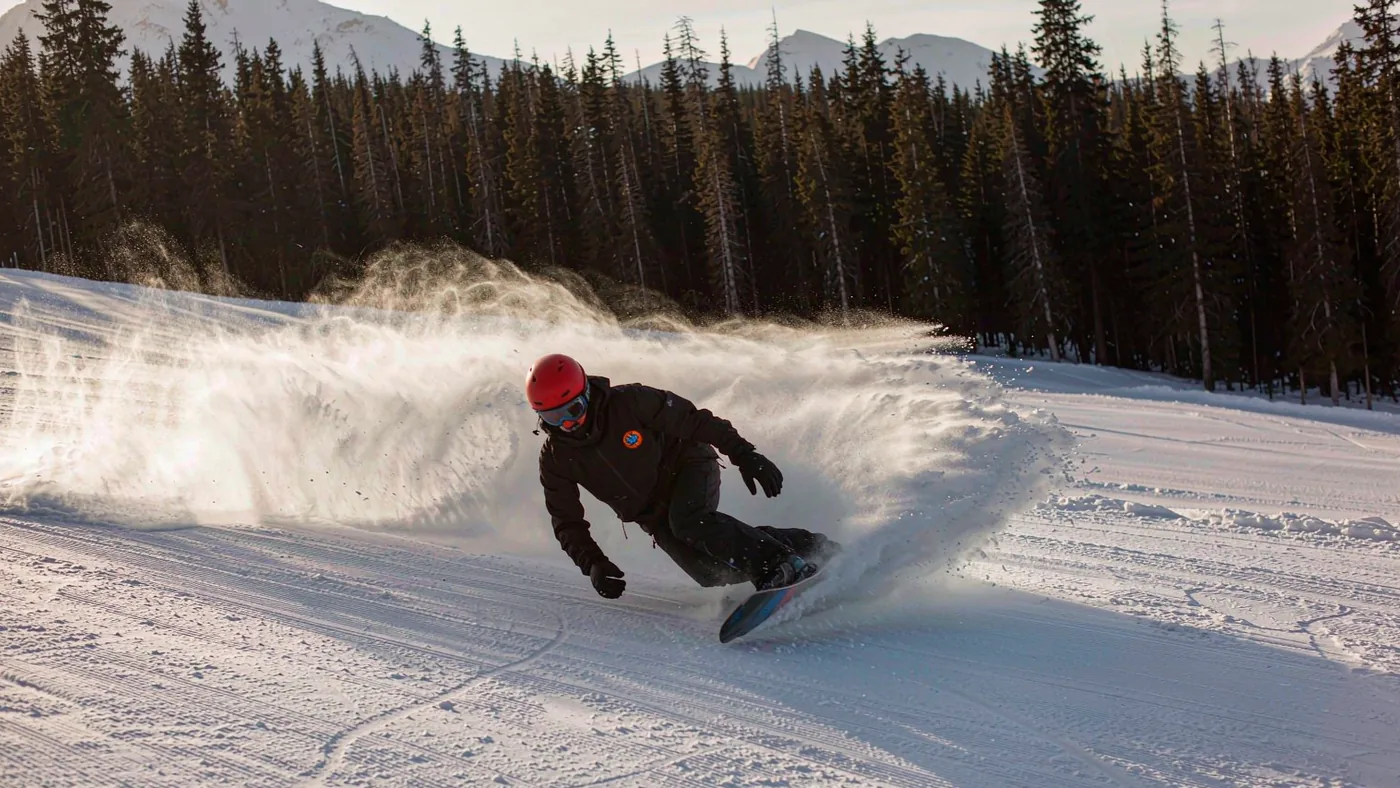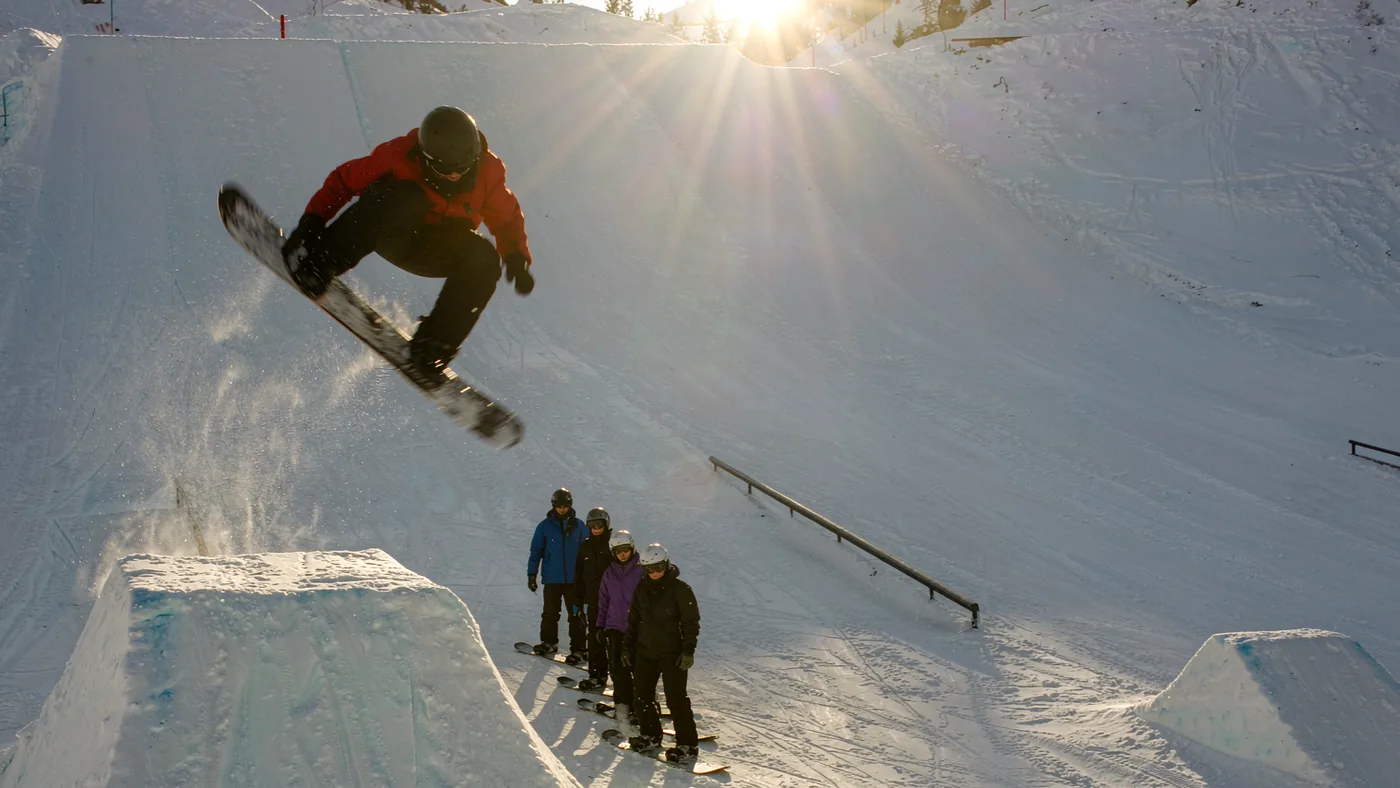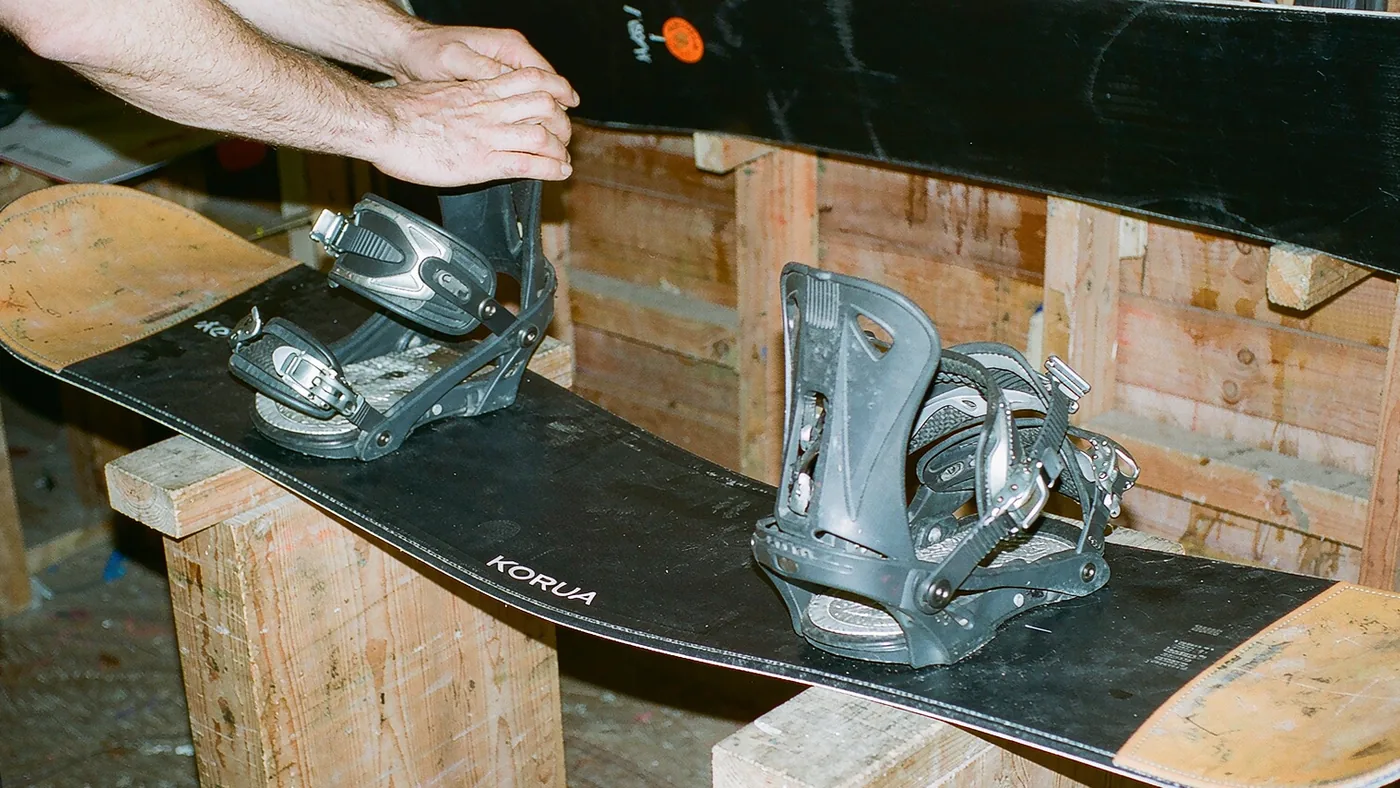
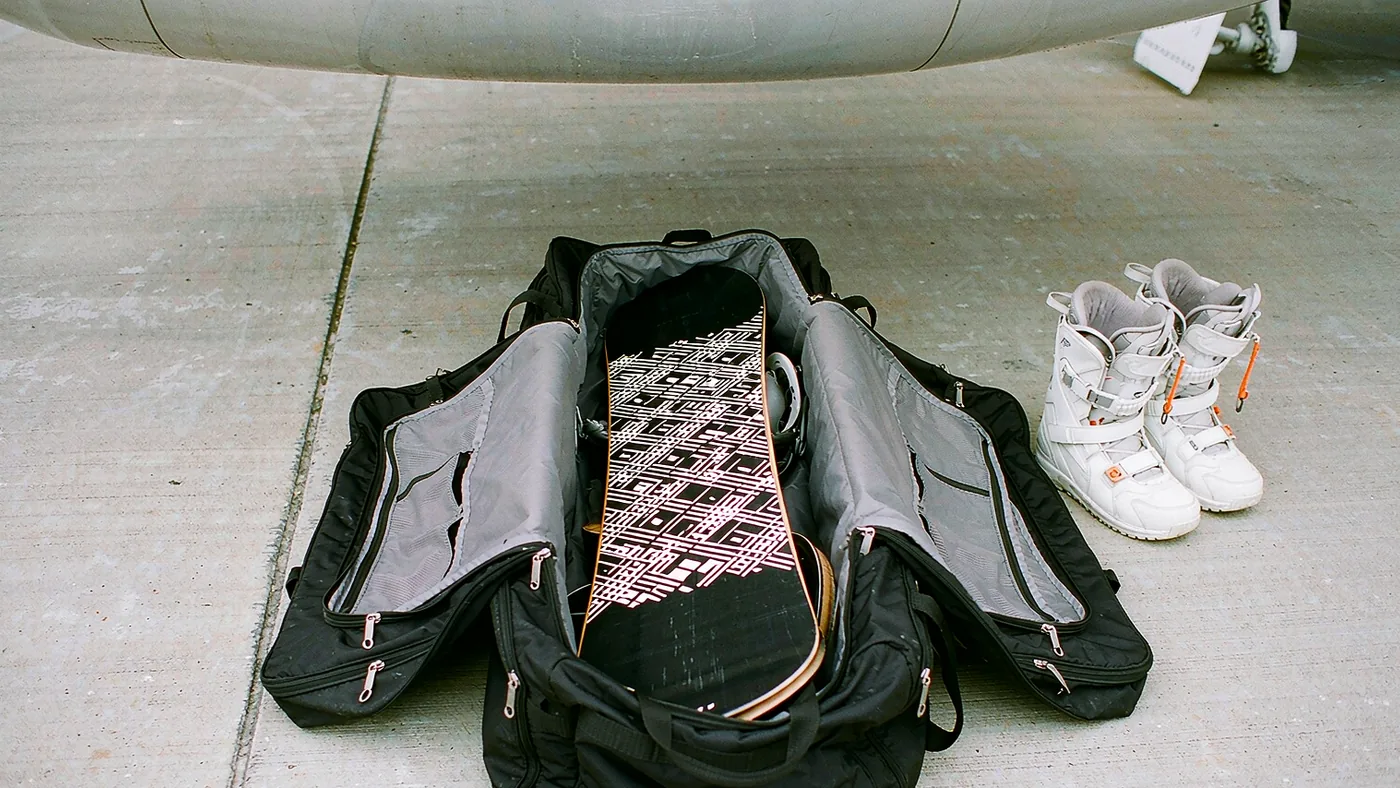
The bag is the problem. One board bag is going in the hold, there is a week booked in a resort you have never visited, and the forecast ten days out is a coin toss between a metre of snow and a week of grey refrozen piste. You are not taking two boards. You are taking one, and whichever you choose will be wrong for some part of the trip.
That is the honest brief the Ride Warpig was designed against, and it is why it has become one of the most recommended single-board travel decks. It is short, it is wide, and it is volume shifted — meaning it is meant to be ridden several centimetres shorter than your usual length, with the extra width providing the surface area the length would otherwise give you. The result floats far better than a board of that length has any right to, turns more quickly than a board of that width should, and packs into a bag that an airline will not argue about.
It is a genuinely clever shape. It also gives up two things that matter, and neither is a small print item.
Specifications
| Specification | Detail |
|---|---|
| Profile | Rocker-dominant hybrid |
| Shape | Tapered directional, volume shifted |
| Flex bias | Medium |
| Intended terrain | All-mountain and powder |
| Sizing approach | Ride it several centimetres shorter than a conventional board |
| Best suited to | Riders who fly with one board, and big-footed riders needing a wide waist |
Published specifications, last checked 28 September 2026. Confirm current specification and sizing on the brand's own product pages before buying.
What the design does well
Float that does not match its length. The width does most of the work here, and the tapered directional shape with a set-back stance and a rocker-dominant profile adds to it. A short Warpig keeps a rider on top of soft snow far better than the length suggests, which is precisely what you want on a trip where you could get thirty centimetres on Tuesday and nothing else all week.
Quickness in tight terrain. A short board turns in a small space, and the taper helps the tail release out of the turn. In trees, in a narrow couloir entrance, or in tracked-out afternoon crud, the Warpig changes direction faster than a conventional all-mountain deck of equivalent support.
The big-footed rider's answer. This is the benefit that gets least attention and matters most to the people who need it. A wide waist lets a UK size 11 or larger boot sit on the board instead of hanging off both ends. That eliminates drag on hard turns, which is a genuine performance and safety problem rather than a cosmetic one — and it does it without forcing you into steeper binding angles that load the knees.
One board that covers a trip. For a rider with a single bag, this is the argument. It is competent on piste, genuinely good in soft snow, quick in trees, and it does not require you to guess what the week will bring.
It handles the day after a storm. A pure powder shape is miserable once the snow is tracked and refrozen. The Warpig is not a powder specialist — it is an all-mountain deck that floats well — so it stays usable when the fresh snow is gone.
What it gives up
Top-end stability. Short boards are less settled at speed, and the Warpig is no exception. On a long, fast groomed run with a firm surface, a longer conventional deck will feel more planted and more confident underfoot. If your riding is about laying a deep carve down a wide piste, this is not the board for it.
The traditional camber feel. The profile is rocker-dominant, which is what makes the board surf and forgive. It is also what makes the edge feel vaguer on refrozen snow than a camber deck would. Riders who like the locked-in, springy sensation of camber underfoot will find this looser and less communicative.
Edginess at the size you are used to. The single most common mistake with this board is buying it at your normal length. Done that way, it feels like too much board underfoot: sluggish, wide and awkward. The sizing is not a suggestion.
It is not a carving deck. Its own manufacturer says so. The waist is wide and the effective edge is short, and neither helps a long, clean carved turn.
Smaller-footed riders may find the waist too much. The width that solves drag for a big boot asks more effort from a rider with a small one, because they have less leverage to roll the board edge to edge.
Who it is not for
It is not for dedicated park riders. Tapered, directional, rocker-dominant and wide is close to the opposite of what a rail and butter board wants to be. There is no version of this that makes sense for a park-focused rider.
It is not for riders who want a traditional camber feel. If you like the snappy, locked-in quality of camber under your feet, this will feel vague and loose to you, especially on hard snow.
It is not for a fast, piste-focused rider. Top-end stability is the clearest compromise here, and a rider whose week is long groomed runs at speed will be happier on a longer camber deck.
It is not for smaller-footed riders who ride mostly groomers. You get the width penalty and you need none of the width benefit.
It is not for anyone unwilling to re-learn their size. If you cannot bring yourself to ride several centimetres shorter than usual, this board will disappoint you, and the disappointment will be your fault rather than the board's.
A short, wide, volume-shifted deck that rides like a much longer board but turns far quicker. The best option here if you fly with one board and want it to handle everything.
Best for
- Riders who want one travel board for all conditions
- Bigger-footed riders who need a wide waist
Worth skipping if
- Riders who want a traditional-feeling camber deck
- Dedicated park riders
- Profile
- Rocker-dominant hybrid
- Shape
- Tapered directional, volume shifted
- Flex bias
- Medium
- Intended terrain
- All-mountain / powder
Strengths
- Very short, very quick in tight terrain
- Floats far better than its length suggests
- One of the best single-board travel choices
Trade-offs
- Smaller-footed riders may find the waist too wide
- Not a carving-focused deck
Specifications reflect published manufacturer information, last checked 2026-09-28. We have not laboratory-tested this product; the assessment above is editorial, based on the published design and the rider profile it targets. How we review gear.
Verdict
The Warpig is the best single-board answer for a rider who flies with one bag, cannot predict the snow and wears a boot of around UK size 11 or larger — for them it solves three problems at once. But if your week is built around fast carving on firm pistes and your boots are average, buy a longer camber deck instead. You would be taking on the width penalty and the reduced stability in exchange for float you will rarely use.
Frequently asked questions
What size Ride Warpig should I buy?
Several centimetres shorter than your conventional length, and the manufacturer's weight range for that shorter length is the number that decides. Riding it at your usual length is the most common mistake and makes the board feel sluggish and like too much board underfoot. Do not scale the number from your old deck.
Is the Ride Warpig good for big feet?
Yes, and that is one of its strongest arguments. A wide waist lets a UK size 11 or larger boot sit properly on the board rather than overhanging at the toe and heel, which removes drag on hard turns without needing steeper binding angles. Measure your boot's outer length rather than trusting the size alone.
Can the Warpig handle icy pistes?
It will get you down, but it is the weakest part of the design. The profile is rocker-dominant and the effective edge is short, so a refrozen morning feels vague compared with a camber deck. Keep the edges sharp and accept that hard, steep pistes are not where it shines.
How much speed does a short wide board give up?
Noticeably at the top end. A short board with less effective edge is less settled on a long, fast groomed run than a longer conventional deck, and that is the clearest performance compromise with the Warpig. It is quick and fun; it is not a board for chasing a speed record down a wide piste.
Is the Warpig worth it if I only ride pistes?
Usually not. The benefits — float, quick turning in tight terrain and a wide waist for big boots — mostly matter off-piste or to riders with larger feet. If you ride groomers on a two-week holiday with average-size boots, a conventional all-mountain camber deck will grip better and turn more precisely.
Where to go next
If the sizing logic is new to you, the volume-shifted snowboards guide explains the maths properly, and the snowboard waist width guide covers boot drag. For the trip itself, the how to fly with a snowboard piece deals with the airline side of a one-bag holiday.
If you decide a conventional deck suits you better, the best all-mountain snowboards round-up is the place to compare, and the best powder snowboards guide covers the dedicated float option. More in the boards archive.