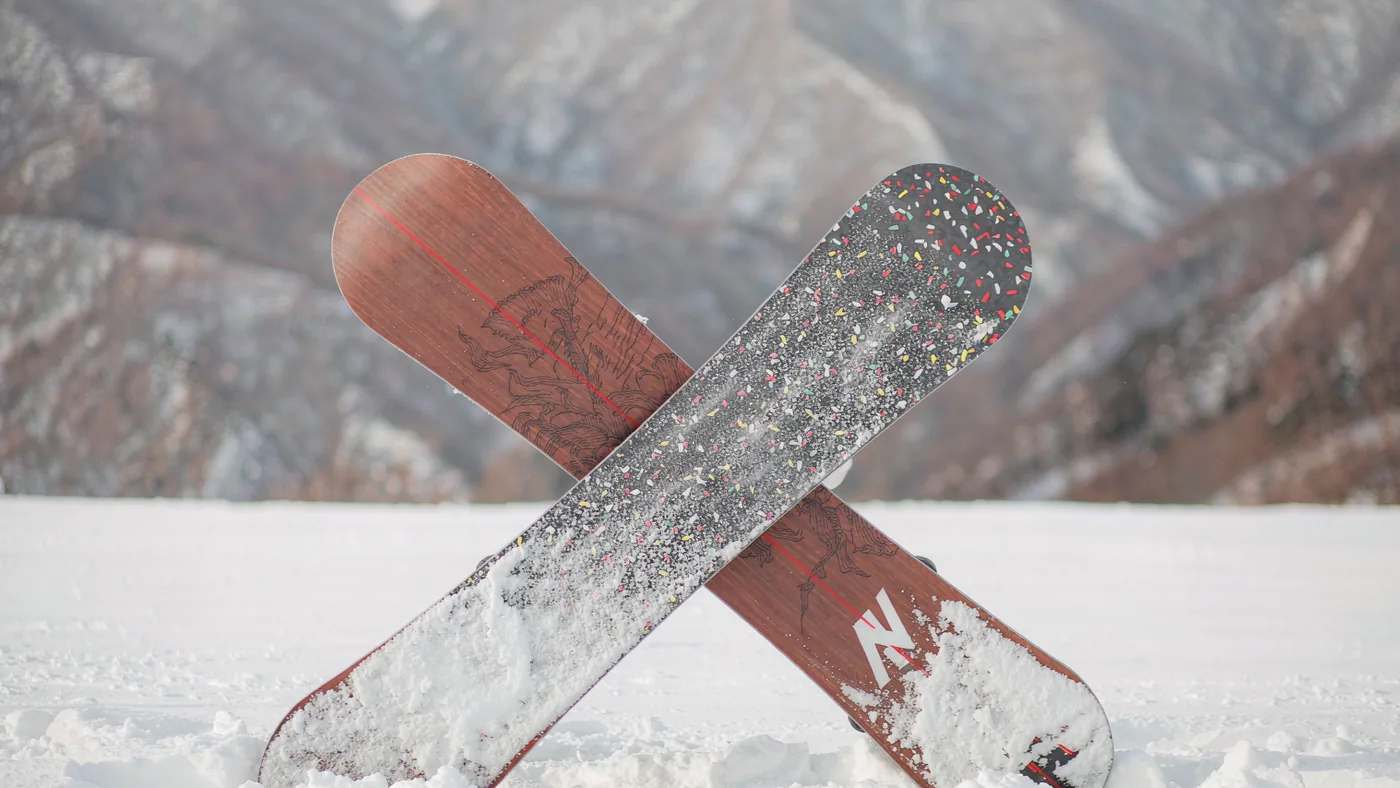
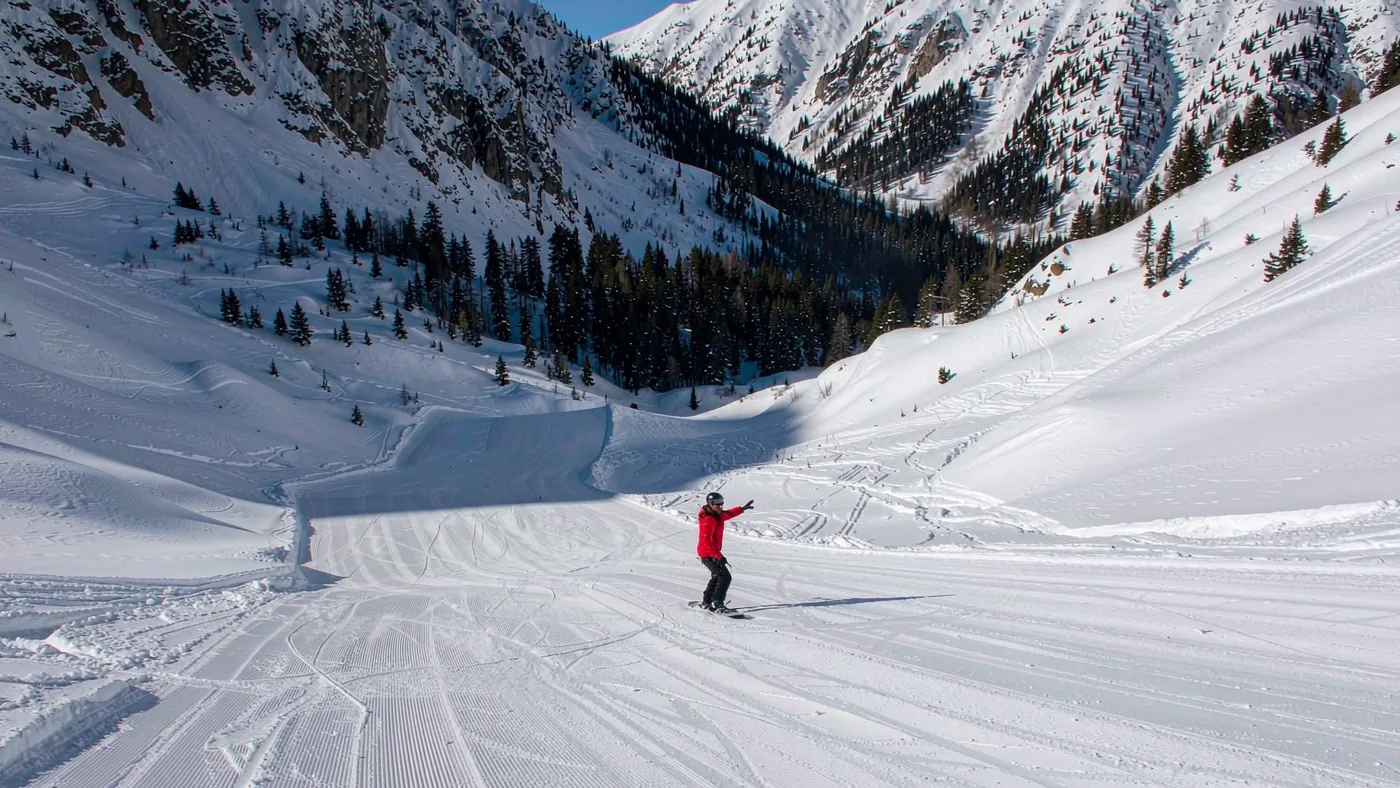
You are standing on a wide open face at the top of an itinerary run in Les Arcs, and the groomed piste is a thin white line far below. The first few metres are wind-scoured and firm, and the traverse across to the good snow is narrow and demands an edge. Your all-mountain twin, pleasant all week, starts to feel like it is thinking about something else. The rider ahead of you tracks across on a stiff directional deck without apparent effort and drops in.
That moment is real, and it is why freeride boards exist. It is not a reason for most riders to buy one. A freeride deck is a tool built for steep, firm, untracked terrain and for riders heavy and skilled enough to load it. If that describes a handful of days in your season, an all-mountain board is not a compromise — it is simply the better board for you. Crossing the line costs you softness, forgiveness, park manners and low-speed comfort, and most riders discover they did not want to pay that bill.
What actually matters
Flex. Freeride decks are stiff, sometimes very stiff. Stiffness lets a board push back against a hard turn at speed instead of folding, and it also makes every error legible. A stiff deck tells you immediately when your weight is in the wrong place, which is useful for a strong rider and miserable for a hesitant one. All-mountain boards run medium.
Taper and setback. Freeride shapes are directional, with a narrower tail and a stance moved back. That sinks the tail and lifts the nose, which is why they float and track a long traverse. The cost is switch riding and anything that assumes symmetry. An all-mountain directional twin keeps a symmetric outline with a small setback.
Effective edge. Freeride boards carry a longer effective edge, meaning more edge in contact through the turn. That is where the grip on wind-scoured firm snow comes from. It is also why these boards can feel like they are steering you when you are tired, and why they demand commitment at low speed.
The profile underfoot. The Lib Tech T.Rice Pro pairs a stiff directional shape with hybrid camber and a traction edge technology along the contact points, because the point is holding an edge on the surface that makes everything else skitter. The manufacturer is explicit that it is poorly suited to anyone still building confidence.
The picks
A true do-everything deck. It has enough camber to grip and enough rocker in the tips to stay relaxed when the snow gets soft.
Best for
- Riders splitting time between piste, park and side hits
- Anyone wanting a single-board quiver
Worth skipping if
- Dedicated deep-powder days
- Absolute beginners
- Profile
- Hybrid camber (camber between feet, rocker in tips)
- Shape
- Directional twin
- Flex bias
- Medium
- Intended terrain
- All-mountain / freestyle
Strengths
- Genuinely versatile across conditions
- Forgiving enough to progress on
- Works as a travel board when you fly with one deck
Trade-offs
- Not the float of a dedicated powder shape
- Top sheet scratches fairly easily on rails
Specifications reflect published manufacturer information, last checked 2026-09-28. We have not laboratory-tested this product; the assessment above is editorial, based on the published design and the rider profile it targets. How we review gear.
A stiffer, more aggressive board for riders who want to go fast and ride steep terrain. Poorly suited to anyone still building confidence.
Best for
- Advanced and expert riders
- Steep, technical terrain
Worth skipping if
- Beginners
- Park riders
- Profile
- Hybrid camber with traction edge tech
- Shape
- Directional
- Flex bias
- Stiff
- Intended terrain
- Freeride
Strengths
- Excellent grip and stability
- Holds up to hard charging
Trade-offs
- Very demanding
- Expensive
Specifications reflect published manufacturer information, last checked 2026-09-28. We have not laboratory-tested this product; the assessment above is editorial, based on the published design and the rider profile it targets. How we review gear.
How they compare
| Attribute | CAPiTA Mercury | Lib Tech T.Rice Pro | What it changes | Which rider needs it |
|---|---|---|---|---|
| Intended terrain | All-mountain and freestyle | Freeride | Where the board is happiest and where it fights you | Riders on steep firm terrain more than a few days a season |
| Flex bias | Medium | Stiff | How much the board bends, and how honest the feedback is | Riders heavy enough to load a stiff deck |
| Shape | Directional twin | Directional | Switch riding, and how the tail finishes a turn | Riders who ride switch more than occasionally |
| Profile | Hybrid camber, camber between the feet | Hybrid camber with traction edge technology | Grip on firm snow and float in soft snow | Seasons with genuine ice and genuine powder |
| Turn feel | Relaxed, forgiving, easy to initiate | Committed, powerful, demanding | How much input a turn takes and how early you commit | Confident riders who ride fast on hard snow |
Published specifications, last checked 28 September 2026. Judgements about turn feel, forgiveness and who each board suits are editorial assessments of the design, not the results of measured testing.
What crossing the line costs you
Slow-speed comfort. A stiff directional deck is not pleasant on a gentle run with a beginner in the group. It wants speed and edge angle, and without them it feels like a plank. If your holidays include low-speed laps with family, this is the cost that annoys you most.
Butters, presses and park. Freeride boards do not want to be bent into a nose press, and many have no business near a rail. Any park lap will feel like the wrong tool within an hour.
Switch riding. Taper and setback mean the board goes backwards like a board that was not designed to go backwards. Manageable, but never symmetric.
Effort on firm piste at moderate speed. The grip advantage only pays off once you are leaning on the edge properly. Ridden gently, a freeride deck gives you the stiffness without the benefit.
The weight question, which nobody asks
A freeride deck is a spring calibrated for a rider. If you are not heavy enough to load it, you will not get the grip or the pop the design promises, and you will spend the day being steered rather than steering.
Riders of around ninety-five kilos and up often find a stiff freeride deck easier than a medium all-mountain board, because they can finally bend it. Riders of around seventy kilos and below usually find the same deck exhausting, particularly in a length they were sold because it looked right on a chart. The question is not whether you are good enough for a freeride board; it is whether your weight, in your chosen length, sits inside the published range.
Three questions before you cross the line
What did you ride most last season? If the honest answer is groomed pistes at moderate speed, a medium-flex all-mountain deck with a hybrid profile is the correct purchase. The CAPiTA Mercury is a fair representation: grip from a camber zone underfoot, rocker in the tips for soft days, and a shape that still works in the park.
Do you ride switch, press, or lap the park at all? If yes to any of those, freeride is the wrong direction. Keep an all-mountain twin and hire a stiff deck for the day you need one.
Are you going to ride it, or own it? A freeride board bought for a trip you take every three years is an expensive ornament. Hiring one for that trip costs less and leaves you with the right board for the other fifty weeks.
Verdict
If you are an improving intermediate, if your season is mostly groomed pistes, if you ride park or switch at all, or if you weigh considerably less than the board's published weight range, do not buy a freeride board — it will be demanding, unforgiving and slow to turn exactly where you spend your time, and it will slow your progress rather than accelerate it. Buy the all-mountain deck now, hire the freeride shape when you need it, and buy one when your riding rather than your ambitions demands it.
Frequently asked questions
Is a freeride board just a stiffer all-mountain board?
No. Freeride boards are stiffer, but they also carry taper, setback and a longer effective edge, and those shape changes matter as much as the flex. A stiff all-mountain twin is still a twin, and still a better switch and park board than a purpose-built freeride shape.
Can you ride a freeride board on groomed pistes?
Yes, and that is where its grip and stability are most obvious. What you lose is low-speed comfort and forgiveness. A freeride deck ridden slowly gives you the stiffness without the benefit, which is why riders on a mixed-ability holiday often find it tiring by the afternoon.
How heavy do you need to be for a freeride board?
Heavy enough to sit inside the manufacturer's weight range for the length you buy. A very stiff deck under a lighter rider will not bend, so it will not press its edge into the snow or return any pop. Check the range for your specific length before assuming more stiffness means more performance.
Is an all-mountain board good enough for steeps?
For most riders, yes. A medium-flex directional twin with a camber zone underfoot holds an edge on firm steep terrain if the edge is sharp and the rider commits. What it lacks is the last degree of grip on wind-scoured faces and the float of a tapered outline in deep snow.
What is the difference between freeride and powder boards?
Freeride covers steep, firm and variable terrain and prioritises edge hold and stability at speed. Powder boards prioritise float above almost everything and are usually more rockered, wider and shorter. A tapered directional freeride shape sits between the two, which is why it suits riders who get both.
Where to go next
Our freeride round-up compares the decks built for steep, firm terrain, and the all-mountain case covers the category most riders actually belong in. Still deciding between shapes rather than categories? Read true twin vs directional.
Riders chasing soft snow should look at how to ride powder for the first time, and anyone whose season includes refrozen piste should read how to ride ice and hardpack before blaming the board.