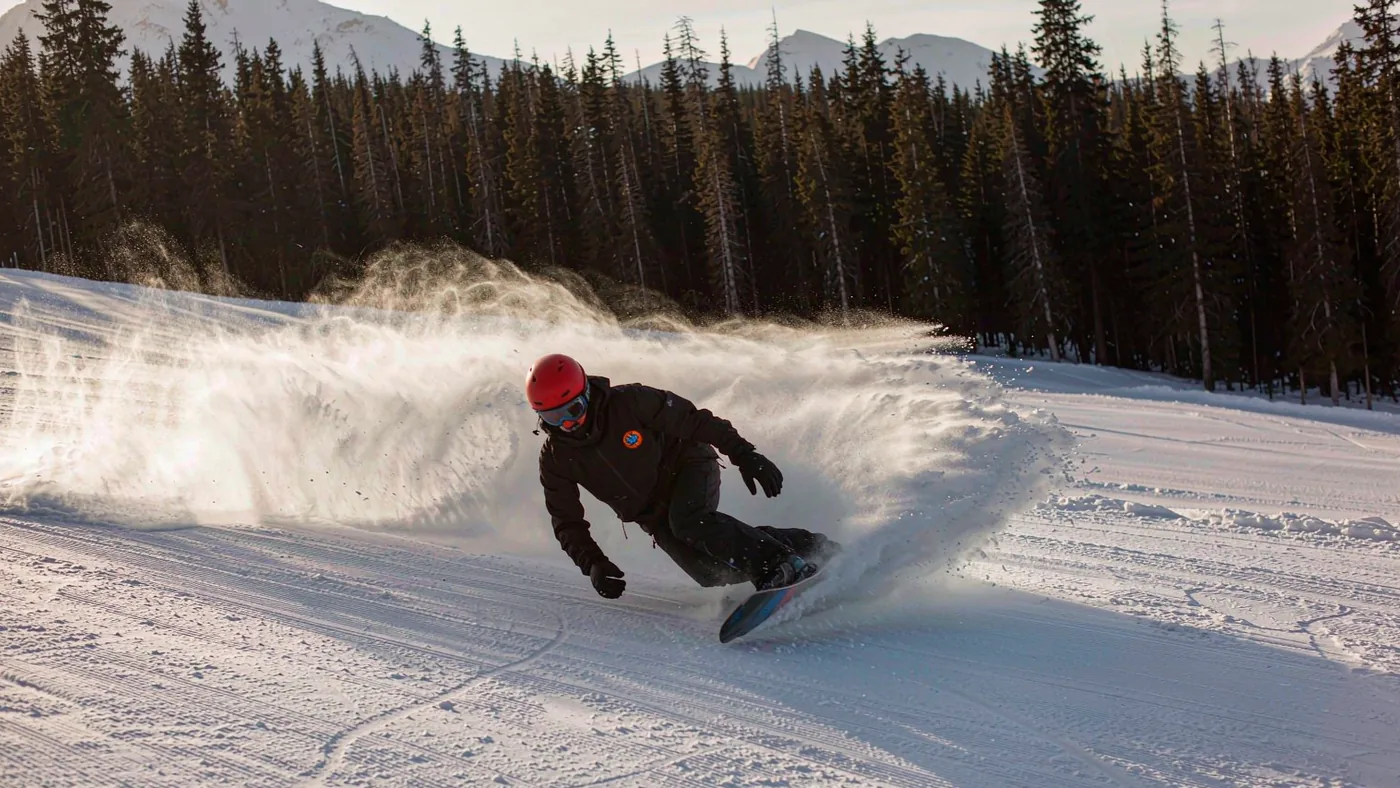
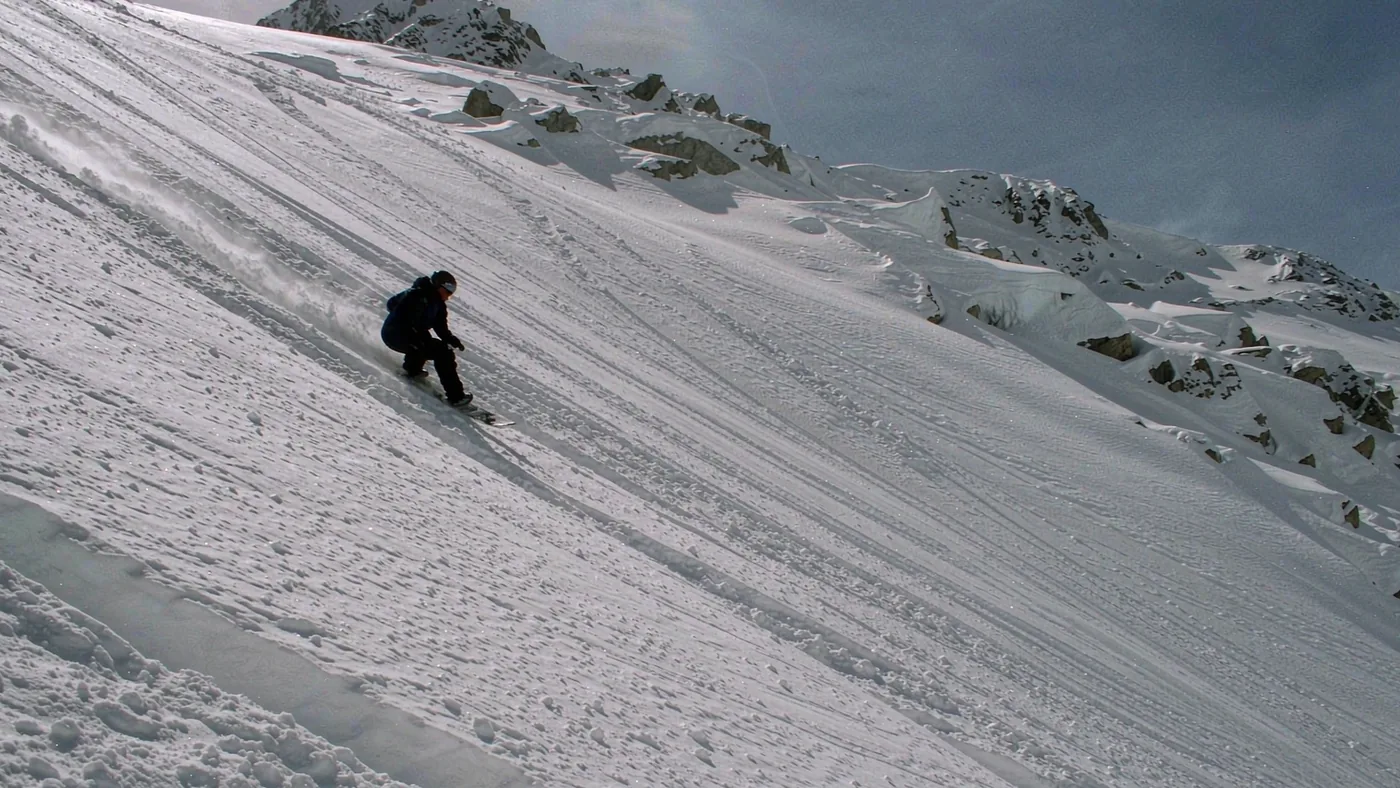
The last run before lunch above the treeline is where a good all-mountain board quietly stops being enough. The snow is windpacked, chalky and half refrozen, the pitch is somewhere past thirty degrees, and the line is a long traverse broken by two or three turns you have to commit to. The board chatters. The tail washes out on the exit. The traverse stops being a rest and becomes a survival exercise.
If that is a run you have ridden, and the board was what let you down rather than your legs, this is your category. If it is not, keep reading anyway, because freeride is the most over-bought label in snowboarding. It is not a synonym for "good at everything" and it is not a badge for being advanced. It describes stiff, directional decks designed around steep, firm, committing terrain — and a rider who genuinely wants to go down that terrain fast.
The honest position, stated up front: a large share of riders who think they need a freeride board actually need a better-tuned all-mountain board, or they need to admit that they ride groomers for twelve days and powder for two. For the rider who has truly out-ridden their all-mountain deck on a wind-scoured descent, though, the difference is not subtle and it is not marketing.
What actually makes a freeride board
Flex. Freeride boards are stiff, and the stiffness is not there to look serious. A stiff deck resists being folded by the load a fast, committed turn puts through it, which is what keeps the whole running length of the edge engaged when the snow is hard. The cost is real: a stiff board will not forgive a lazy weight shift, it will not butter without a fight, and it feels wooden at walking pace.
Effective edge. The edge that actually touches the snow — from the widest point of the nose to the widest point of the tail — is what grips. Freeride shapes run a long effective edge relative to their total length, so more of the board works through a turn instead of hanging in the air between contact points. On a scraped piste this is the most noticeable single difference between a freeride deck and a soft park twin.
Setback and taper. Bindings set back towards the tail put your weight behind the front contact point, so the nose rides high without you leaning back consciously. A tapered tail — narrower than the nose — lets the rear settle slightly, which lifts the nose further and releases the board out of a turn faster in tight terrain. Both features are directional, and both explain why a freeride board rides badly backwards.
Profile. Most freeride decks are camber-dominant, because camber is what presses the contact points into firm snow. Where brands differ is in the small print: edge serrations, a slightly raised nose, a longer sidecut radius. Those details matter, but they matter less than flex and effective edge.
The picks
A stiffer, more aggressive board for riders who want to go fast and ride steep terrain. Poorly suited to anyone still building confidence.
Best for
- Advanced and expert riders
- Steep, technical terrain
Worth skipping if
- Beginners
- Park riders
- Profile
- Hybrid camber with traction edge tech
- Shape
- Directional
- Flex bias
- Stiff
- Intended terrain
- Freeride
Strengths
- Excellent grip and stability
- Holds up to hard charging
Trade-offs
- Very demanding
- Expensive
Specifications reflect published manufacturer information, last checked 2026-09-28. We have not laboratory-tested this product; the assessment above is editorial, based on the published design and the rider profile it targets. How we review gear.
A short, wide, tapered shape that turns a normal powder day into a good one. It is a specialist, and it is worth owning only if you get real powder days.
Best for
- Riders who get regular deep-snow days
- Anyone adding a powder-specific deck to a quiver
Worth skipping if
- One-board riders
- Anyone riding mostly groomed pistes
- Profile
- Rocker-dominant with camber underfoot
- Shape
- Tapered directional
- Flex bias
- Medium
- Intended terrain
- Freeride / powder
Strengths
- Outstanding float for its length
- Turns quickly in tight trees
- Fast, durable base
Trade-offs
- Poor on hardpack compared with a camber deck
- Only makes sense as a second board
Specifications reflect published manufacturer information, last checked 2026-09-28. We have not laboratory-tested this product; the assessment above is editorial, based on the published design and the rider profile it targets. How we review gear.
A stiff, fast all-mountain deck for riders who treat groomers like a race course. It rewards commitment and punishes hesitation.
Best for
- Confident intermediate and advanced riders
- Heavier riders who flex boards easily
Worth skipping if
- Beginners
- Park-focused riders
- Profile
- Traditional camber
- Shape
- Directional twin
- Flex bias
- Stiff
- Intended terrain
- All-mountain / freeride
Strengths
- Excellent stability at speed
- Holds up on hard, refrozen slopes
- Wide sizes suit bigger riders properly
Trade-offs
- Demanding for lighter riders
- Little forgiveness for sloppy technique
Specifications reflect published manufacturer information, last checked 2026-09-28. We have not laboratory-tested this product; the assessment above is editorial, based on the published design and the rider profile it targets. How we review gear.
The board most other all-mountain decks are judged against. Predictable, grippy on hardpack, and it stays composed when you push it harder than you meant to.
Best for
- Riders who want one board for the whole mountain
- Improvers moving up from a beginner deck
- Anyone riding a lot of European hardpack
Worth skipping if
- Park riders who want a soft, pressable twin
- Riders on a tight budget
- Profile
- Traditional camber
- Shape
- Directional twin
- Flex bias
- Medium-stiff
- Intended terrain
- All-mountain
Strengths
- Very predictable edge-to-edge behaviour
- Holds an edge on scraped European pistes
- Wide size run including wider waist options
Trade-offs
- Camber profile punishes lazy technique in powder
- Priced at the premium end for what it is
Specifications reflect published manufacturer information, last checked 2026-09-28. We have not laboratory-tested this product; the assessment above is editorial, based on the published design and the rider profile it targets. How we review gear.
How they compare
| Board | Profile | Shape | Flex | Grip on firm snow | Float in powder | Best suited to |
|---|---|---|---|---|---|---|
| Lib Tech T.Rice Pro | Hybrid camber with traction edge tech | Directional | Stiff | Excellent | Good | Advanced riders on steep, technical lines |
| Jones Hovercraft | Rocker-dominant with camber underfoot | Tapered directional | Medium | Poor | Outstanding for its length | Riders who get regular deep days |
| Nitro Team | Traditional camber | Directional twin | Stiff | Excellent | Fair | Heavier riders who flex boards easily |
| Burton Custom Camber | Traditional camber | Directional twin | Medium-stiff | Excellent | Fair | Confident riders who want one board for everything |
Published specifications, last checked 28 September 2026. Grip and float are editorial judgements about the design, not laboratory measurements.
What the money actually buys
Freeride decks sit at the top of the board market, and it is worth knowing what the extra spend is attached to. Three things, mainly.
A lighter core and a faster base. Both are genuine engineering, and both matter most to the rider who puts in serious vertical. A faster base is the one you will notice as a recreational rider, because it saves you on long traverses and cat tracks — the exact places where a cheaper board humiliates you in front of friends.
A more demanding construction. Torsional stiffness costs money to build consistently, and it is what makes a stiff deck track rather than twist under load. You are paying for predictability at speed rather than for a feature you can see on a spec sheet.
Wider size runs. Freeride boards that come in a proper spread of lengths and waist widths cost more to produce. For a heavier or bigger-footed rider this is not a small thing — it is often the only reason to buy in this category at all.
None of that changes the fundamentals. If you ride two weeks a year and your edge is blunt, the money is better spent on a full tune and a pair of boots that fit.
When a freeride board is the wrong answer
If your problem is edge hold on ice, and not terrain. A camber-dominant all-mountain board with a sharp edge and a sensible side bevel will grip a refrozen piste perfectly well. Stiffness helps at speed on steep terrain; it does nothing for a blunt edge, and a blunt edge is the actual cause of most complaints about "icy pistes".
If your powder days are rare. The Jones Hovercraft is the best float here, and it is also the worst deck here on hardpack. It only makes sense as a second board for a rider who gets real deep days. Buying it as your only board because you had one great morning in February is an expensive way to make the other twelve days worse.
If you are still building confidence. The Lib Tech T.Rice Pro and the Nitro Team both punish hesitation. A rider who has not yet learned to hold a committed edge on a firm piste will spend the season fighting the board instead of learning from it.
If you ride switch and care about it. Three of the four boards above are directional in some form. Riding back to the lift on a freeride shape is fine; spending a park session on one is not.
Verdict
The Lib Tech T.Rice Pro is the sharpest tool here for steep, technical lines, and the Jones Hovercraft is the best float — but neither is the right purchase for a rider with one board and a mostly-piste season. Buy the Burton Custom Camber instead, get your edges properly tuned, and put the difference towards boots that fit. Come back to this category when you have out-ridden a well-tuned all-mountain deck, not before.
Frequently asked questions
Is a freeride board the same as an all-mountain board?
No, and the difference is directional. A freeride deck is stiffer, has more effective edge, a setback stance and usually a tapered tail, all of which trade switch riding and low-speed forgiveness for grip and stability at speed. An all-mountain board like the Burton Custom Camber keeps a broad weight range in mind and stays usable in every direction.
How much stiffer is a freeride snowboard?
Expect it to sit one or two steps above the middle of a brand's own flex scale rather than at the top. The Nitro Team and the Lib Tech T.Rice Pro are both rated stiff by their manufacturers, which in practice means a rider of roughly 80kg and up will load them properly. Lighter riders usually cannot flex them at all.
Can I ride a freeride board in the park?
You can ride anything anywhere, but a stiff directional deck is the wrong tool. It will not press, it will not butter, and it lands switch badly. If park laps are part of your week, an all-mountain freestyle twin such as the Jones Mountain Twin covers both sides of the resort far better.
Do I need a freeride board for European hardpack?
Usually not. Hardpack rewards camber under the feet, a long effective edge and a sharp edge with a sensible bevel — all of which a good all-mountain camber deck provides. Stiffness helps at high speed on steep, firm terrain. It does not compensate for a blunt edge at any speed.
How long should a freeride snowboard be?
Longer than your all-mountain length, but the manufacturer's weight range is the number that matters, not a rule based on height. A heavier rider on a shorter freeride deck will fold it; a lighter rider on a long one will never bend it. Check the weight band for the exact length you are considering.
Where to go next
If you are weighing a freeride deck against the rest of your quiver, read the all-mountain vs freeride comparison first, then the best all-mountain snowboards round-up for the sensible alternative. Riders chasing deep days should start with the best powder snowboards guide.
If your actual frustration is grip rather than terrain, the how to ride ice and hardpack piece deals with technique and tuning before spending. Everything else on the shortlist lives in the boards archive.