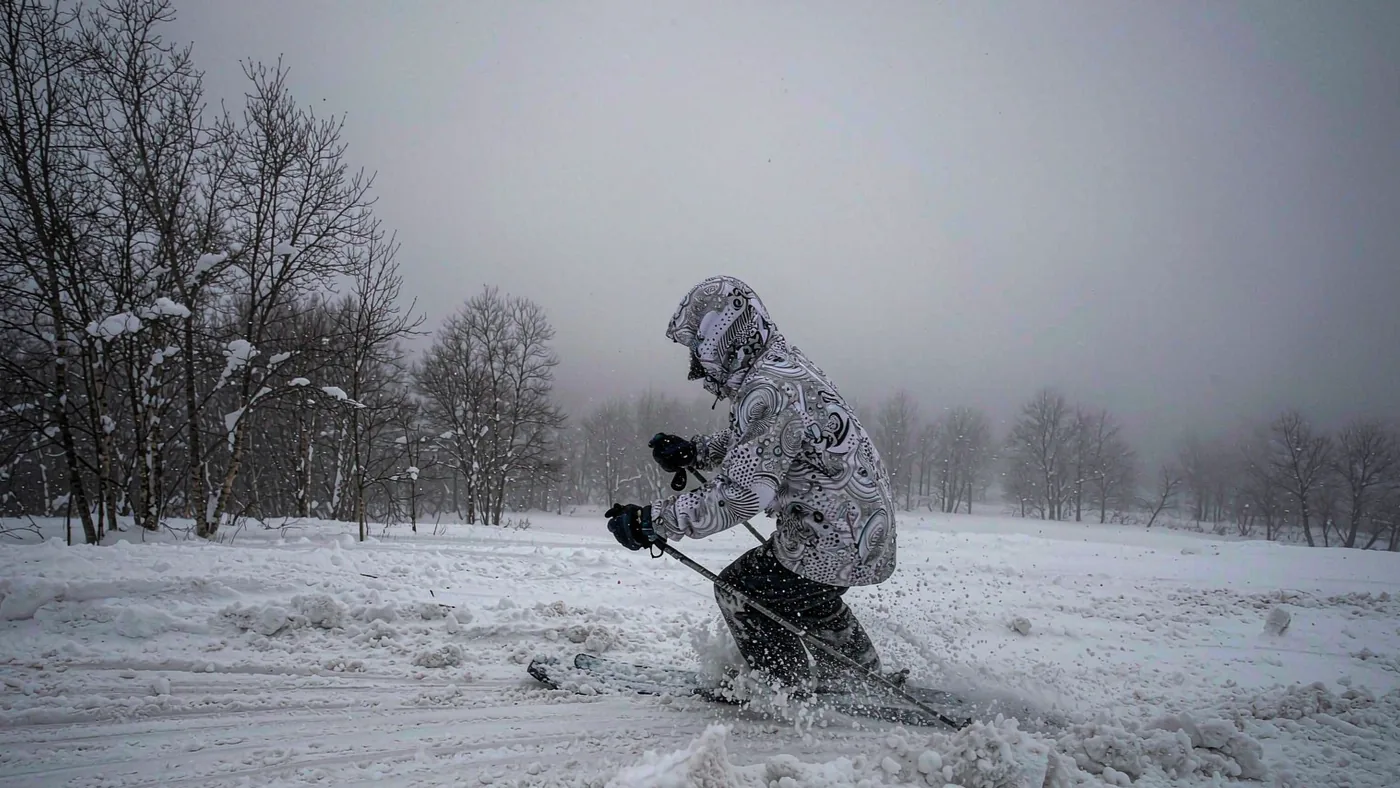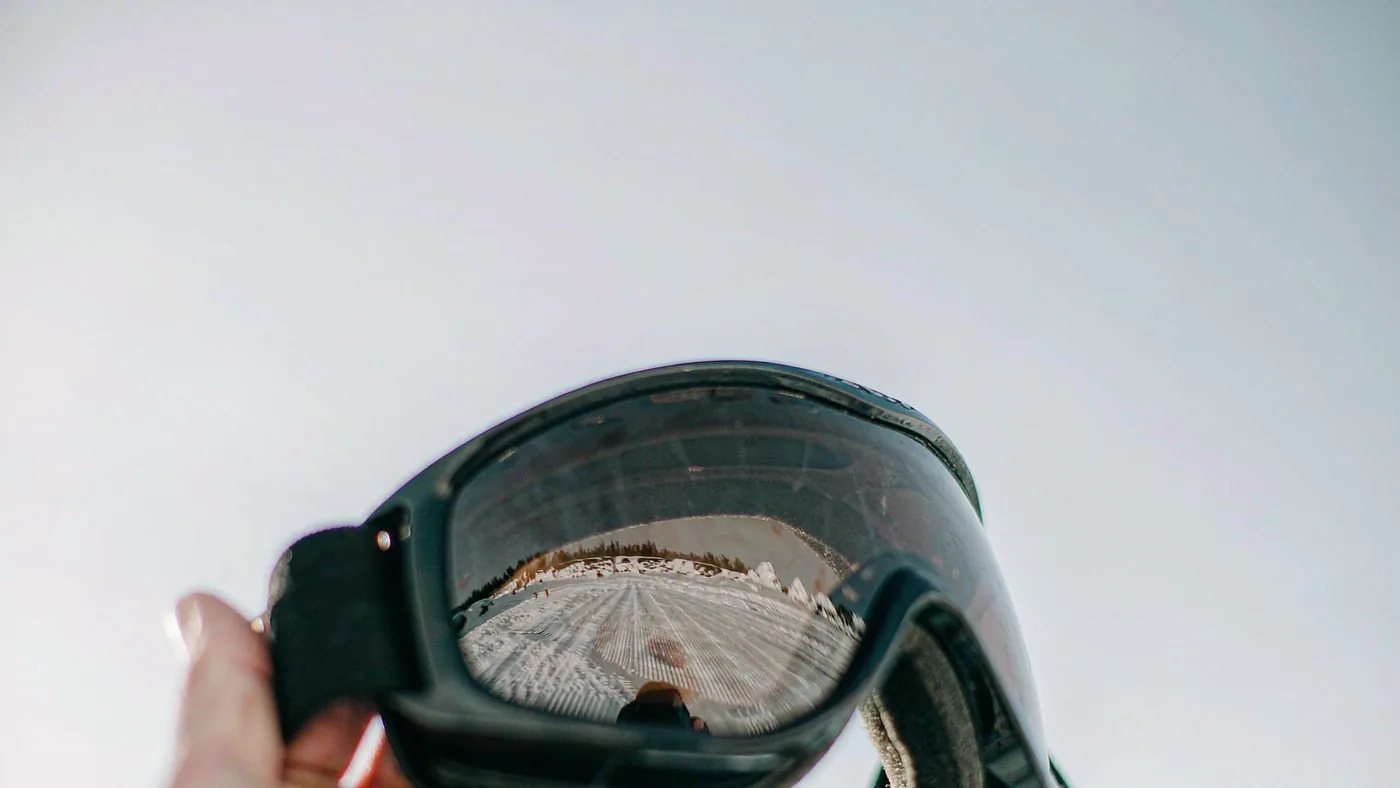
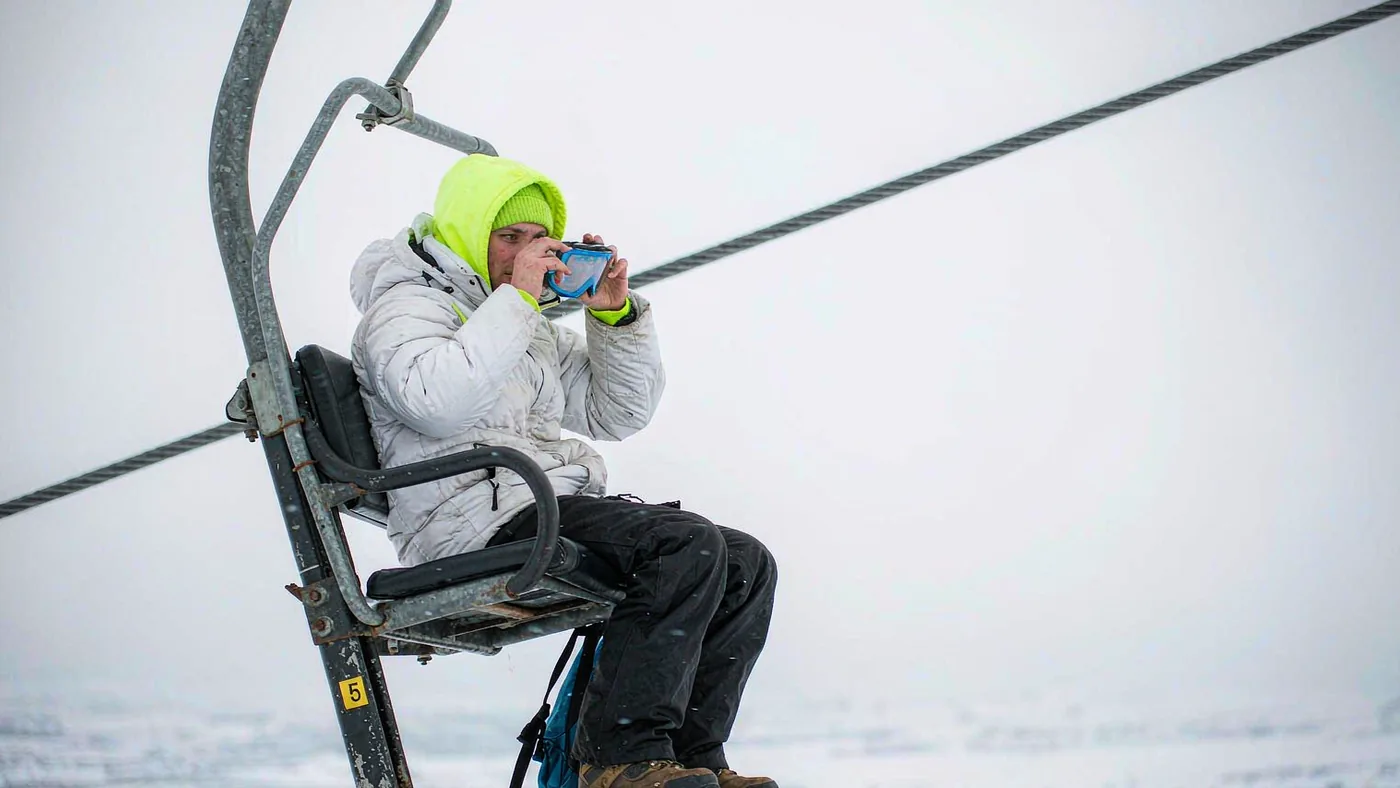
You get off the lift, skate the flat, and by the time you reach the top of the run the view has gone soft at the edges. A minute later it is a grey smear and you are pulling the goggles away from your face with a soggy glove, which makes it worse, and by the bottom you have decided your goggles are rubbish and started looking at replacements online that evening.
Almost every rider goes through this, and almost every rider gets the diagnosis wrong. Fogging is not a defect in the goggle. It is the visible result of warm, wet air meeting a cold surface, and the moisture that condenses on the inside of your lens came from your own face. What you can change is where that air goes, how much of it there is, and whether the goggle has a route to get rid of it.
What is actually happening
The air inside your goggles is warm and humid, because it has just come out of your lungs and off your skin. The inside of the lens is cold, because it is next to the outside air. Warm moist air against a cold surface condenses. That is the whole mechanism, and it explains everything else: fogging happens after you stop moving, it happens in cold, damp weather, and it happens worst when the goggle has no way to vent the warm air upward.
An anti-fog coating on the inner lens slows this down by absorbing moisture and releasing it later. It cannot prevent it, and it is permanently damaged by wiping. A double lens with a sealed air gap insulates the inner surface from the outer one, which is why every decent goggle has one.
The fixes, ranked
1. Wear the goggle on your face, not on your hat. This is the fix that solves the majority of cases. The top of the frame should sit just under the helmet or hat rim with its upper vents exposed. If the frame sits low on your nose, or your hat pushes it down, the top vents are covered, the warm air has nowhere to go and the lens fogs within minutes. Push the goggle higher and the problem usually disappears on the next run.
2. Get the warm air away from the goggle's bottom edge. A neck gaiter or balaclava pulled up over your nose is comfortable and it is also a chimney. Your breath goes straight up the inside of the goggle and condenses. Tuck the top of the gaiter under the bottom edge of the frame rather than over it, or use a mask with an exhaust valve that routes breath downward.
3. Never touch the inner lens. The anti-fog coating is a film, and a glove wipes it off permanently. A wet glove also puts water directly onto the surface you are trying to keep dry. If you must clear the inside, let it air dry, or blot with the soft bag the goggle came in — never rub.
4. Dry the goggle properly overnight. Damp foam fogs the lens from the inside before you have even put the goggle on. Take it out of the bag, open it up and leave it somewhere airy at room temperature. Keep it away from radiators, drying rooms and hair dryers, which can soften adhesives and distort a lens.
5. Stop putting a damp goggle in a warm pocket. An inside jacket pocket is warm and full of your body's moisture, which is the exact recipe you are trying to avoid. If you take the goggle off at lunch, hang it on a chairlift bar or the outside of your pack, anywhere with a bit of airflow.
6. Change how you breathe in deep cold. Breathing out through your nose reduces the volume of warm moist air that reaches the goggle, and turning your head slightly to the side on the lift helps the plume escape. Over a long cold ride, breathing out downward rather than into a hot cloud in front of your face makes a difference.
7. Carry a dry spare lens. If you own a goggle with a fast swap, a dry spare is a reset button for the worst day of the trip. It does nothing about the cause, but on a wet Scottish afternoon it will save the afternoon.
Diagnosing your own fogging
| What you notice | Most likely cause | What to do | How much it helps |
|---|---|---|---|
| Fogs within a minute or two of putting it on | Frame sitting too low, top vents covered | Raise the goggle, check the helmet does not push it down | Solves most cases |
| Fogs on the lift, clears when you ride | Breath going up inside the frame | Tuck the gaiter under the frame edge | Large |
| Fogs only after stopping | No airflow once you stop moving | Push the goggle up onto the helmet when you stop | Moderate to large |
| Fogs after lunch only | Damp goggle stored in a warm pocket | Hang it, air it, do not pocket it | Large, and easy to fix |
| Fogging from the inside, permanently smeared | Inner lens has been wiped | Replace the lens if the coating is gone | No fix short of replacement |
Causes and fixes are editorial judgements drawn from established practice rather than controlled measurements, last checked 28 September 2026. Individual goggles and faces vary more than any table can capture.
The picks
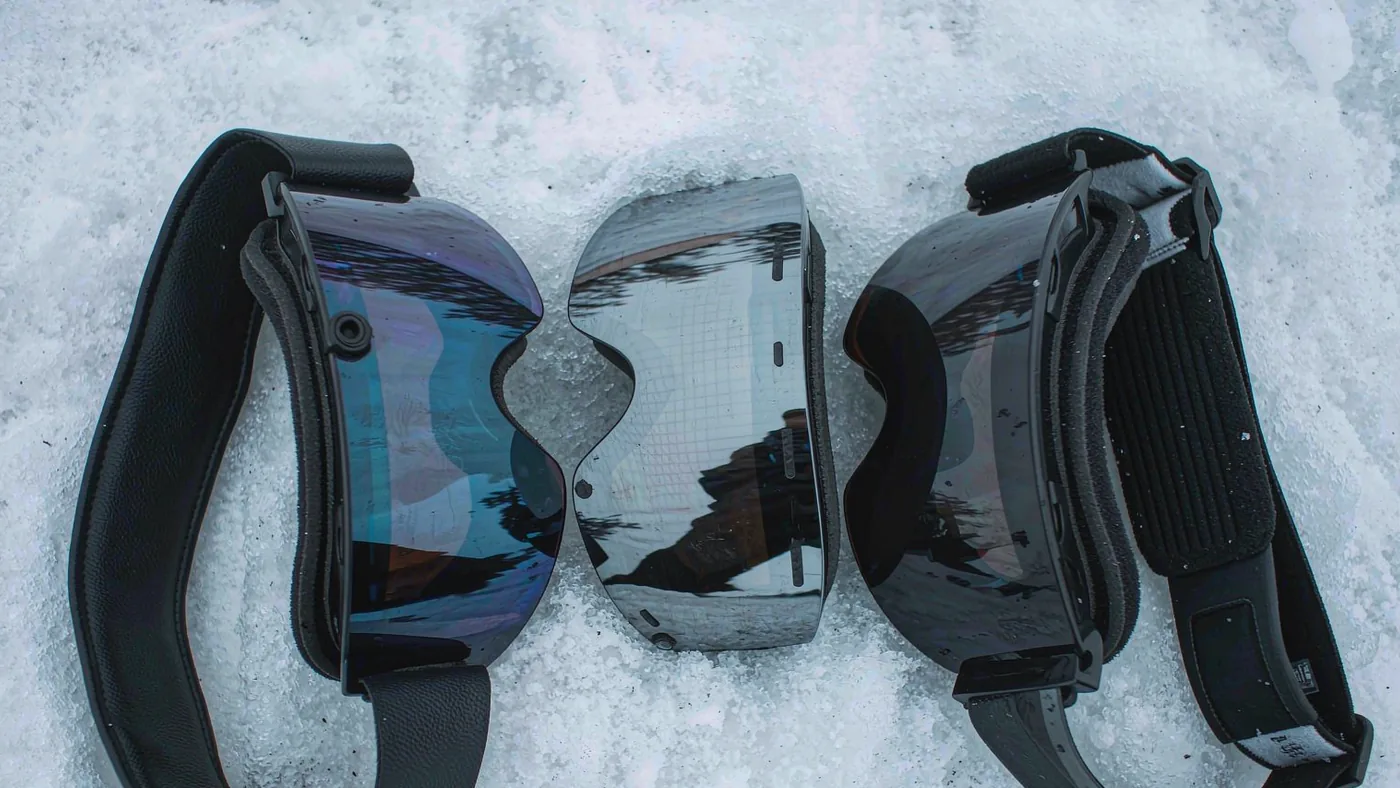
A large, toric-lens goggle with excellent peripheral vision and a magnetic lens swap. One of the best options for flat light and fog.
Best for
- Flat-light riding
- Glasses wearers
Worth skipping if
- Small faces
- Tight budgets
- Lens
- Toric, magnetic interchange
- Fit
- Large, OTG compatible
- Intended use
- All-mountain
Strengths
- Outstanding field of view
- Excellent in flat light
- Fast lens changes
Trade-offs
- Very expensive
- Can overwhelm a small face
Specifications reflect published manufacturer information, last checked 2026-09-28. We have not laboratory-tested this product; the assessment above is editorial, based on the published design and the rider profile it targets. How we review gear.
The magnetic swap is genuinely fast, which matters more than it sounds when the light changes mid-run. Expensive, and worth it if you ride flat light often.
Best for
- Riders who change lenses often
- Flat-light conditions in the Alps and Scotland
Worth skipping if
- Riders who leave one lens in all season
- Budget builds
- Lens
- Magnetic interchangeable spherical
- Fit
- Medium, OTG compatible
- Intended use
- All-mountain
Strengths
- Fastest lens swap of the options here
- Clear optics across the whole field
- Two lenses covers most conditions
Trade-offs
- Premium price
- Magnetic system needs care when packed in a bag
Specifications reflect published manufacturer information, last checked 2026-09-28. We have not laboratory-tested this product; the assessment above is editorial, based on the published design and the rider profile it targets. How we review gear.
When it really is the goggle
Sometimes the diagnosis is the equipment, and there are three cases worth recognising.
The first is a damaged anti-fog coating. Once the inner lens has been wiped, fogging becomes constant and cannot be fixed with technique. A replacement lens is the answer, and it is cheaper than a new goggle.
The second is a flat, single lens. Cheap goggles without a sealed double lens fog because the inner surface is as cold as the outer one, and no amount of venting will fully compensate.
The third is a goggle that does not suit your face. A frame that does not seal at the cheeks lets cold air in at the sides, which chills the inner lens and condenses the warm air at the centre. It looks like fogging; it is a fit problem, and the fix is a different frame shape.
Verdict
If your goggle fogs on the lift but not on the run, or fogs only after it has been in a jacket pocket, you do not have a goggle problem and a new pair will fog in exactly the same way. Start with the position on your face, the gaiter over your nose and a dry overnight. Riders who genuinely benefit from new equipment are those whose inner coating is already ruined, or who wear glasses under a shallow frame with no room for airflow.
Frequently asked questions
How should I dry my goggles overnight?
Take them out of the bag, open them up and leave them somewhere airy at room temperature with the foam facing outward. Keep them away from radiators, drying rooms and hair dryers, because heat can soften adhesives and distort the lens. This one habit prevents most afternoon fogging.
Why do my goggles fog only after lunch?
Because they have spent lunch in a warm pocket or on a damp table, or were put away wet the night before. A warm, damp goggle starts the afternoon with moisture already inside it. Hang it in the air over lunch and the afternoon fogging usually stops.
Do prescription glasses make goggles fog more?
Yes. Two lenses and two surfaces inside a small sealed space fill with moisture more quickly. The fixes are a goggle with real internal depth, more airflow, a helmet that does not press the frame down, and pushing the goggle up onto your helmet whenever you stop.
Do anti-fog sprays and cloths work?
They can help for a short period, and they will never match the factory coating on a decent inner lens. They can also smear an expensive lens if applied carelessly. Dry the goggle properly and fix the airflow first, because those two things solve more fogging than any spray.
Should I wipe the inside of my goggle lens?
No. The inner lens carries an anti-fog coating applied as a film, and wiping it with a glove removes it permanently. Once that happens, fogging becomes constant and the only real fix is a new lens. Blot with the soft bag if you must, and let it air dry otherwise.
Where to go next
If the problem is that you cannot see rather than that you cannot see through fog, the goggle lens tints explained guide covers VLT and contrast tints, and the goggles for flat light round-up deals with low-contrast days. The best snowboard goggles under 200 guide explains what a mid-range budget buys, and the best snowboard helmets round-up covers the other half of the fit equation.
For the rest of your outerwear, read the best snowboard jackets for British winters and the best midlayers for snowboarding guide. More of the same sits in outerwear.