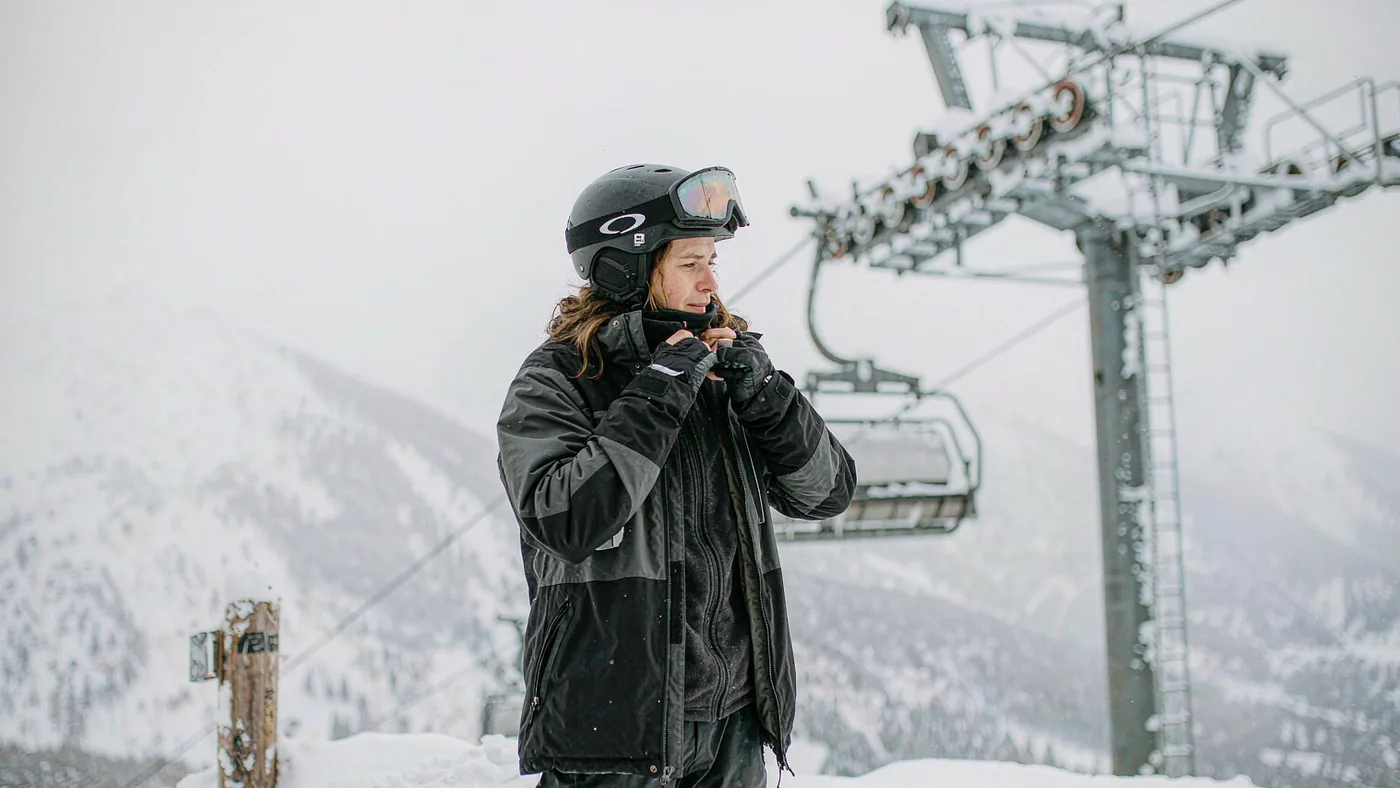
The midlayer is the piece of kit you take off and put on more than anything else you own. On a lift at nine in the morning it is doing its job and you are glad of it. By eleven, when the sun comes over the ridge and you have walked up a flight of steps in ski boots, you are unzipping it. By three, with the light going and the wind picking up, you want it back on again.
That constant in-and-out is what separates a good midlayer from a warm garment. A midlayer has three jobs: hold some warmth, move moisture off your base layer, and disappear into a shell without fighting it for space.
The honest position is that most riders overthink this layer and underthink the two around it. If your base layer is thin and your shell is genuinely waterproof, a modest fleece is plenty for a European resort winter. What the money buys above that is packability, and packability is what makes you actually take the layer off when you should.
What actually matters under a shell
Packability comes before warmth. A midlayer spends a lot of the day in your pack, which means its warmth per unit of packed volume matters more than its warmth as a number on a label. A down or synthetic-insulated layer crushes into a corner of a daypack. A fleece takes the whole pack.
Loft that is not squashed. Insulation only works while there is air trapped inside it. If a midlayer is tight across the shoulders or the elbows, your shell presses the loft flat exactly where you bend, and you feel cold at the elbows and warm everywhere else. Half a size up, not a size up, is usually the fix.
Moisture behaviour, which is where down loses. Down has the best warmth-to-weight of anything here, and it stops working when it gets wet. Under a shell you will get damp eventually, from sweat or from a wet lift, and a wet down layer goes flat and stays flat for the rest of the day. Synthetics and wool keep working when damp.
Where it sits in the stack. The base layer moves moisture, the midlayer traps warmth, the shell keeps the weather out. Air between the layers is what insulates, so a slightly loose midlayer beats a snug one.
A hood, probably not. A midlayer hood bunched under a shell hood blocks the collar seal and pushes the shell hood up off your helmet. A thin balaclava works better on a cold day.
The picks
A heavier merino layer for genuinely cold conditions. Too warm for spring, ideal for a January week in Austria.
Best for
- Cold-weather riding
- Riders who feel the cold on the lift
Worth skipping if
- Spring conditions
- Warm runs
- Fabric
- 250gsm merino wool
- Fit
- Slim
- Intended use
- Base layer
Strengths
- Very warm for its thickness
- Comfortable against the skin
Trade-offs
- Too warm for mild days
- Premium price
Specifications reflect published manufacturer information, last checked 2026-09-28. We have not laboratory-tested this product; the assessment above is editorial, based on the published design and the rider profile it targets. How we review gear.
Merino does the one thing synthetics struggle with: it stays comfortable when you sweat and then sit still on a lift. Worth the money if you ride multiple days in a row.
Best for
- Multi-day trips
- Riders who get cold when stationary
Worth skipping if
- Tight budgets
- Riders who want the fastest possible drying
- Fabric
- 200gsm merino wool
- Fit
- Slim
- Intended use
- Base layer
Strengths
- Warm when damp
- Does not pong after day three
Trade-offs
- More expensive than synthetic
- Needs careful washing
Specifications reflect published manufacturer information, last checked 2026-09-28. We have not laboratory-tested this product; the assessment above is editorial, based on the published design and the rider profile it targets. How we review gear.
An insulated jacket that keeps you warm sitting on a chairlift in January without needing three layers underneath.
Best for
- Cold conditions in the Alps and Scandinavia
- Riders who feel the cold
Worth skipping if
- Spring riding
- Riders who overheat easily
- Waterproofing
- Recycled waterproof membrane
- Insulation
- Synthetic, light
- Hood
- Helmet compatible
Strengths
- Warm without bulk
- Responsible materials
Trade-offs
- Too warm for spring
- Bulkier than a shell
Specifications reflect published manufacturer information, last checked 2026-09-28. We have not laboratory-tested this product; the assessment above is editorial, based on the published design and the rider profile it targets. How we review gear.
How they compare
| Layer | Type | Warmth | Packed volume | Best suited to | Main trade-off |
|---|---|---|---|---|---|
| Smartwool Classic Thermal 250 | 250gsm merino, slim fit | The warmest thin layer here | Small | January weeks in Austria and colder resorts | Too warm for mild days, and a premium price |
| Icebreaker 200 Oasis | 200gsm merino, slim fit | Moderate, and warm when damp | Small | Riding several days in a row | Costs more than synthetic and needs careful washing |
| Picture Organic | Lightly insulated jacket with a waterproof membrane | Warm without much bulk | Moderate — it is a jacket | Cold Alpine and Nordic days, riders who feel the cold | Too warm for spring, and bulkier than a shell |
| Typical fleece midlayer | Knitted polyester fleece | Moderate | Large, does not compress | Dry cold and budget kits | Takes the space of a spare layer in the pack |
| Typical synthetic puffer | Stitch-free synthetic insulation | Warm for its weight | Small | Cold days and packability | Less breathable under a hard-working shell |
| Typical down layer | High fill-power down | Warmest for the weight | Smallest | Very cold, dry conditions | Loses nearly all its warmth if it gets wet |
Published specifications from manufacturer product pages, last checked 28 September 2026. Warmth, packed volume and suitability are editorial judgements based on those published figures rather than measured tests.
Fleece, synthetic or down
The three families answer slightly different questions, and the market blurs them constantly.
A fleece is the most forgiving thing you can put under a shell. It works when damp, it is comfortable against a base layer, it costs the least, and it survives years of washing. Its weakness is bulk: to get the warmth of a light synthetic jacket, you need a fleece that takes most of your pack.
A synthetic-insulated layer is the modern default for a resort rider. It packs small, keeps most of its warmth when damp, and layers cleanly under a shell because the outer fabric slides. It is less breathable than fleece, which matters on a long climb or a warm spring day, though pit zips on the shell solve most of that.
Down is the warmest and smallest option and the wrong choice for most riders here. Under a shell, humidity builds up and stays there, and a damp down layer loses its loft and will not recover until it is properly dried. Carry down for genuinely cold, dry conditions and keep it dry.
Sizing a midlayer so it does not bunch
The elbows and the shoulders are where a midlayer fails. Put the layer on over your base layer, then bend each arm as if you were doing up a binding. If you can feel the fabric pull tight across the elbow, or the cuff rides up your forearm, it is too small for the job, however good it looks standing still.
Sleeve length should reach the base of your hand so it does not leave a gap when you pull your gloves on, but it should not be so long that it rucks up inside the shell cuff. Anything bunched at the wrist will feel cold within an hour.
Test the whole stack together, not each layer separately. Base layer, midlayer and shell on at the same time, then reach forward, sit down and crouch. If the midlayer rides up and leaves a bare strip at your lower back, it is too short in the body or your shell is too short to cover the join.
What the extra money buys
Above the mid-range, money buys three things: warmth for the same packed volume, better face fabrics that slide under a shell, and durability of the insulation itself. Below the mid-range, you are mostly buying weight and volume rather than a lack of performance, which is why a basic fleece is a sensible first purchase. Where you should not save is breathability on the layer that sits closest to your shell. Where you can save is on aesthetics, hoods and pocket count, none of which will keep you any warmer.
Verdict
If you ride one or two weeks a year, mostly in mild spring conditions and mostly on pistes, a midweight fleece under a shell covers everything you need and a specialised layer will sit in your bag unused. Riders who overheat constantly should think hard before buying an insulated midlayer, because the layer you will actually use is a thin one you can remove. Put the money into the shell instead.
Frequently asked questions
Do I need a midlayer if I wear an insulated jacket?
Usually not on the same day. An insulated jacket already carries its own warmth, and adding a midlayer under it makes the fit tight and the system unbreathable. If you feel the cold badly, buy an insulated jacket with room for a thin merino layer underneath and stop there.
Is down or synthetic better under a shell?
Synthetic, for most riders. Down is warmer for its weight and packs smaller, but humidity under a shell makes it lose loft, and it will not recover until it is dried properly. Synthetic insulation keeps working when damp, which is the condition you will actually meet.
How warm should a midlayer be for a European resort?
One midweight layer, around 200gsm in merino terms or a light synthetic jacket, covers most resort days between minus five and plus five. Keep a thin second layer in your pack for the coldest morning rather than buying the warmest single layer, which will be too warm by eleven.
Should my midlayer be tight or loose?
Loose enough that your shell does not press the loft flat at the elbows and shoulders, and no looser. Test it by bending your arms and crouching with your shell on. If the fabric pulls tight across the elbow, it will feel cold exactly where you bend.
Can I wear a fleece over a merino base layer?
Yes, and it is one of the most reliable combinations for a resort winter. Merino moves moisture away from your skin without smelling on day three, and fleece traps warmth and keeps working when it gets damp. The compromise is packed volume, since fleece barely compresses at all.
Where to go next
Layering only works when all three layers agree with each other, so start with the best base layers for snowboarding and then read the best snowboard jackets for British winters for the outer end of the stack. If you ride wet snow, the waterproofing ratings explained guide explains what the shell's numbers really tell you.
Everything above your legs joins up with the best snowboard pants and bibs buying guide, and the snowboard trip checklist covers how to pack the layers so you can find them. More of the same sits in outerwear.