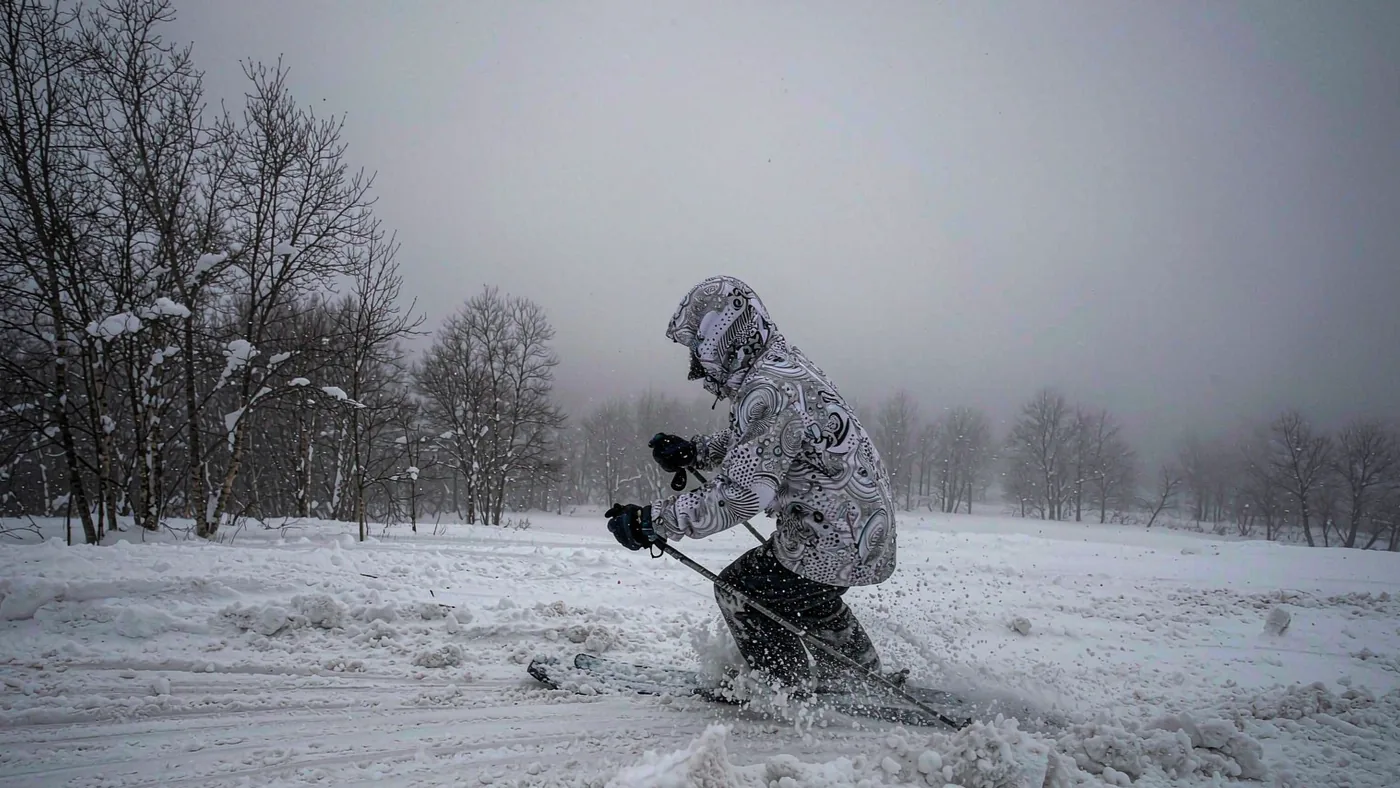
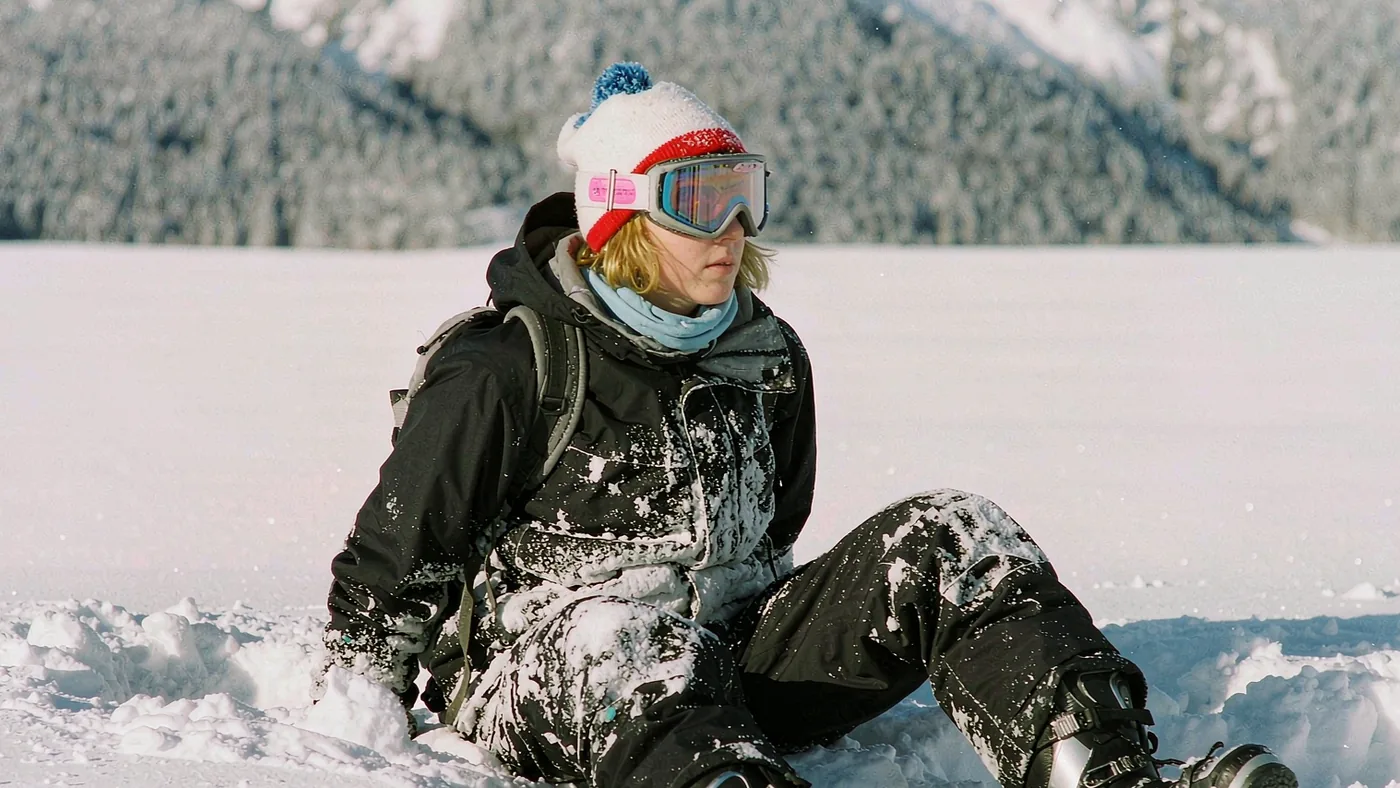
When you sit down in the snow to strap in, you have about four seconds before something cold starts running down your back. Wet snow packs against the waistband of your jacket, melts against your base layer, and by the time you stand up there is a narrow, freezing stripe down your spine. Most riders blame the jacket. Far more often the culprit is the join between jacket and trousers, which is the one part of the outfit nobody advertises.
Pants and bibs are the least glamorous purchase in snowboarding and the least researched. Jackets get compared, goggles get argued about, and the trousers get bought in a hurry the week before a trip, usually on the basis of colour and whether they are reduced. Then they spend five days a season being sat on, kneeled on and packed full of wet snow.
The honest position is this. If you ride one week a year on groomed pistes, a properly taped mid-range pair will keep you dry all week, and the upgrade that genuinely changes your holiday is a bib rather than a more expensive pair of pants. What expensive trousers buy is durability and venting — things a rider doing sixty days a season will appreciate, and a holidaymaker mostly will not.
What actually decides whether you stay dry
The join at your waist. Everything else is secondary. A jacket hem that stops above your waistband, or a pair of pants that sits low, leaves a moving gap that opens every time you sit down, bend forward or fall. A bib closes it permanently. A jacket with a powder skirt helps in one direction only, and a skirt that is not attached to the trousers still rides up.
The construction: 2L against 3L. Two-layer fabric pairs a membrane with a separate loose lining, which makes the trousers warmer and bulkier. Three-layer laminates the membrane to the face fabric and a thin backing, which makes the same protection thinner, less clammy and generally more hard-wearing, at a higher cost. For a wet, mild week at low altitude, a 3L shell is more comfortable. For a cold January week, a 2L pant with its own liner can be warmer for less money.
The rating, and what it does not cover. Waterproof ratings are measured on a flat piece of fabric in a laboratory. They say nothing about the seams, the zips or the pockets, which is where water actually gets in. A 10,000mm fabric with fully taped seams will keep you drier than a 20,000mm fabric with untaped ones, every time.
Venting, which matters on the legs more than riders expect. Your legs are working constantly, and a fully sealed trouser on a warm spring afternoon becomes a plastic bag. Inner-thigh vents with a mesh backing are the most useful feature on a pair of pants, and they are the first thing cheap trousers leave off.
Pants, bibs and the choice of construction
| Type | How it is built | Where it works | Where it falls short | Who it suits |
|---|---|---|---|---|
| 2L shell pants | Membrane plus separate lining, taped seams | Cold resort weeks, dry Alpine conditions | Bulkier, warmer, heavier | Riders who feel the cold and want simplicity |
| 3L shell pants | Membrane laminated to face fabric and backing | Wet snow, rain, spring touring | Costs more for the same waterproofing number | Riders in Scotland, the lower Alps and wet resorts |
| Insulated pants | Fixed synthetic insulation under a shell | Very cold days, riders who hate layering | Unusable in spring and on warm afternoons | Cold-sensitive riders on piste holidays |
| 2L bib | Trousers with a high back and shoulder straps | Any condition, especially wet snow | Extra torso warmth, fiddly for comfort breaks | Anyone who falls over, or sits on the snow a lot |
| 3L bib | Laminated bib, no lining | Wet weather, touring, long days | The most expensive option here | Season riders and splitboarders |
Construction descriptions follow how manufacturers publish their own designs. Published specifications, last checked 28 September 2026. Which construction suits you is our editorial judgement, not a measured result.
Why bibs suit the rider who falls over
The practical case for a bib is simple. Everything that keeps snow out of your trousers is at your waist, and a bib removes the waist entirely. That matters most to beginners, who spend a lot of the first week sitting and kneeling in snow, and to anyone riding wet snow, where a gap that is harmless in dry cold becomes a wet stripe in minutes. A bib's back panel also goes up behind your shoulders, so when you bend forward to strap in the snow has nowhere to go.
The trade-offs are real and worth saying out loud. A bib adds a layer across your torso, which is welcome in January and unwelcome on a mild spring day. The straps add a few seconds to getting dressed. And the reason many riders avoid bibs is the one nobody puts in a review: a full bib is awkward when you need a comfort break halfway up a mountain. Many modern bibs solve this with a drop seat or a zip across the back, and if that matters to you, check for it before you buy rather than after.
The details nobody checks in the shop
The inner gaiter. It should be elastic, it should sit outside the boot's liner but inside the boot's cuff, and it should be long enough to stay put when you bend.
Hem length and the boot. The hem should end below the top of your boot when you are standing on the board, so the cuff is covered, but not so far that you stand on it in the lift queue. Soles of trousers get shredded by boot soles and, on a splitboard, by crampons.
Cuff reinforcement. Look for a reinforced patch or a second layer of fabric at the inside of the ankle. That is the part that touches the edge of your board when you carry it over your shoulder or rest it on your boot, and it is the first part of a cheaper trouser to wear through.
Pockets. Thigh handwarmer pockets are the useful ones; cargo pockets are fine until you sit down. A phone belongs in the jacket rather than a trouser pocket, where it gets cold and wet.
Sizing, layering and what the extra money buys
Measure your waist and then add room for a base layer. Snowboard trousers should be loose enough to move in and not so loose that the crotch hangs below your knees when you walk; a deep sag looks relaxed in the lift queue and rides badly, because the fabric catches on your boot. You will rarely need an insulating layer under shell trousers: if you feel the cold on the legs, the better fix is a heavier base layer, which you can remove at lunchtime.
What the money buys, in order of importance, is the membrane and its seams, the durability of the face fabric, then venting, then pocket layout, then everything cosmetic. Where not to save is the membrane and the taping. Where you can safely save is insulation, colour and branding, none of which will change how dry you are on a wet Tuesday in Scotland.
Verdict
If you ride one gentle week a year in mild spring conditions, a well-taped mid-range bib is the sensible limit. Beyond that you are buying abrasion resistance and venting you will not use, plus warmth you did not want. Riders who overheat easily and ride groomed pistes in March should stay in a 3L shell pant with vents. And if your boots are already tight, do not buy insulated pants to solve cold legs — fix the base layer and the boot fit first.
Frequently asked questions
Do I need insulated snowboard pants?
Most riders do not. A shell trouser over a midweight base layer is warmer and more adaptable than insulated trousers, because you can remove a layer when the day warms up. Insulated trousers suit riders who feel the cold badly in minus-ten conditions, but they are uncomfortable as soon as the sun comes out.
What waterproof rating do snowboard pants need?
A rating of 10,000mm with fully taped seams is enough for most resort weeks. If you ride wet snow in Scotland or at low altitude in the Alps, look for 20,000mm and a membrane rather than a coating.
Are bibs warmer than pants?
Yes, noticeably. A bib adds fabric across your back and chest, a genuine benefit in January and a genuine problem in March. If you want the gap closed without the warmth, look for a bib with a low back panel in a shell fabric.
How should snowboard pants fit over boots?
The hem should sit below the top of the boot cuff with the boot done up, so no bare boot liner is showing. Too long, and you will stand on the hem and wear a hole in it within a season. Check the fit with your own boots on, not bare feet.
Where to go next
The waterproofing ratings explained guide unpicks which numbers matter on a wet day, and the best snowboard jackets for British winters covers the jacket end of the join.
Get the layer underneath right with the best base layers for snowboarding, and check the rest of your kit against the pre-trip checklist. More outerwear advice sits in outerwear.