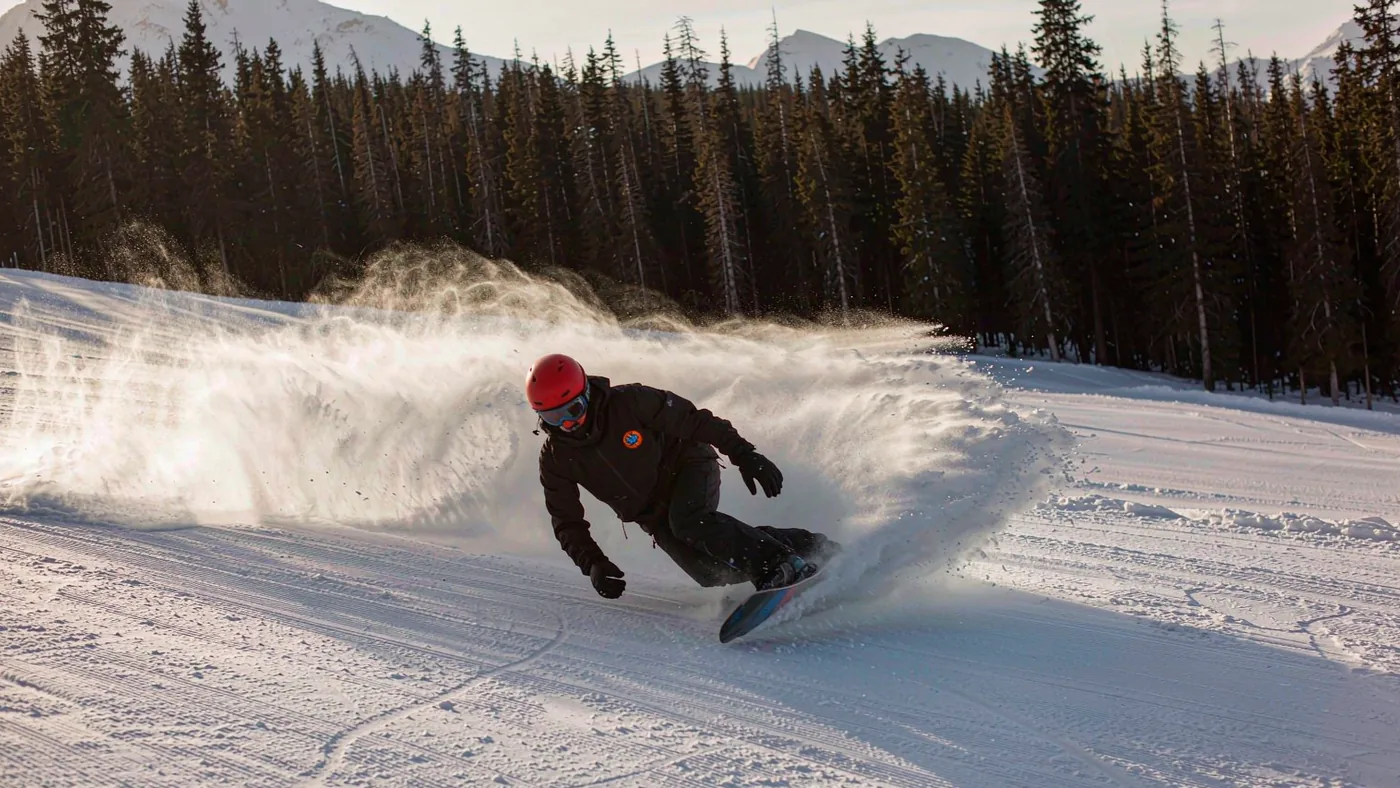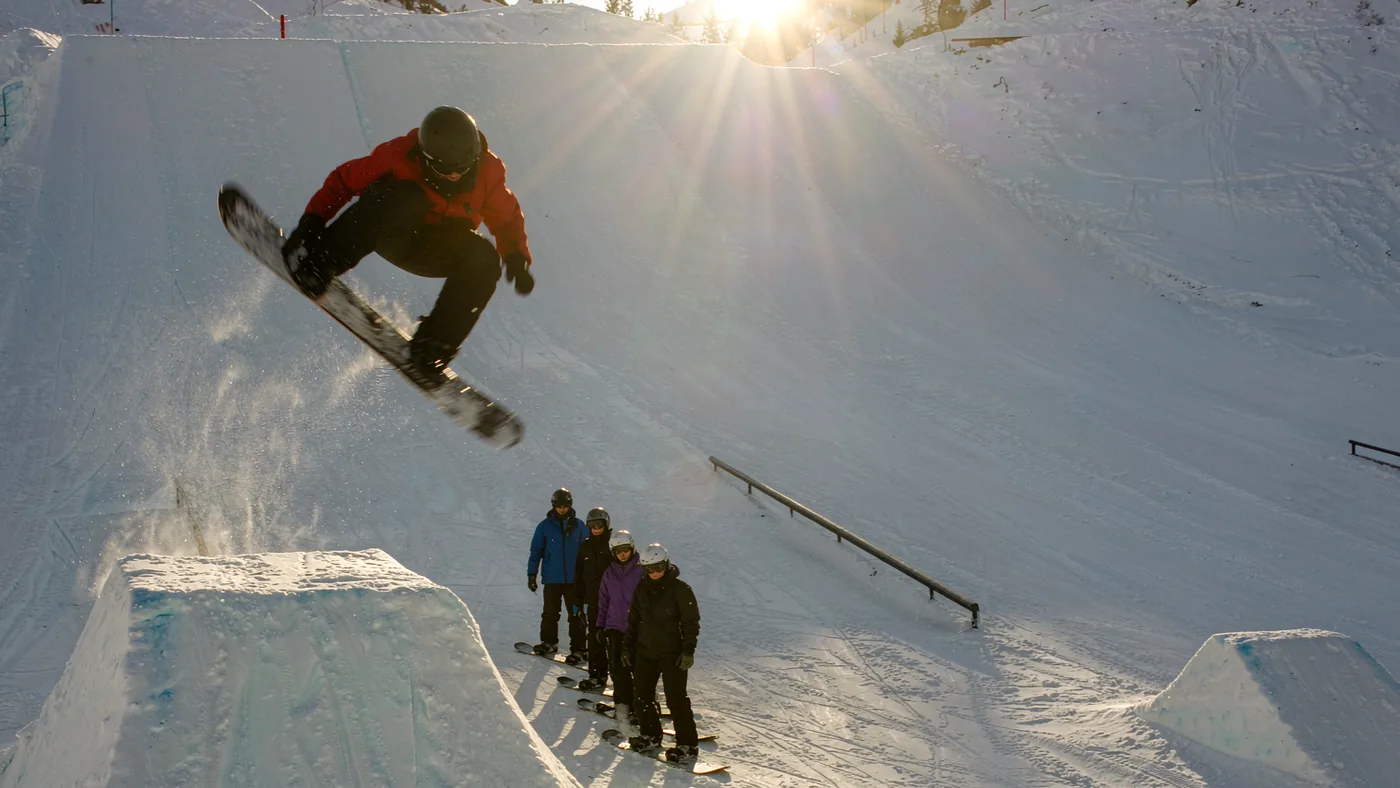
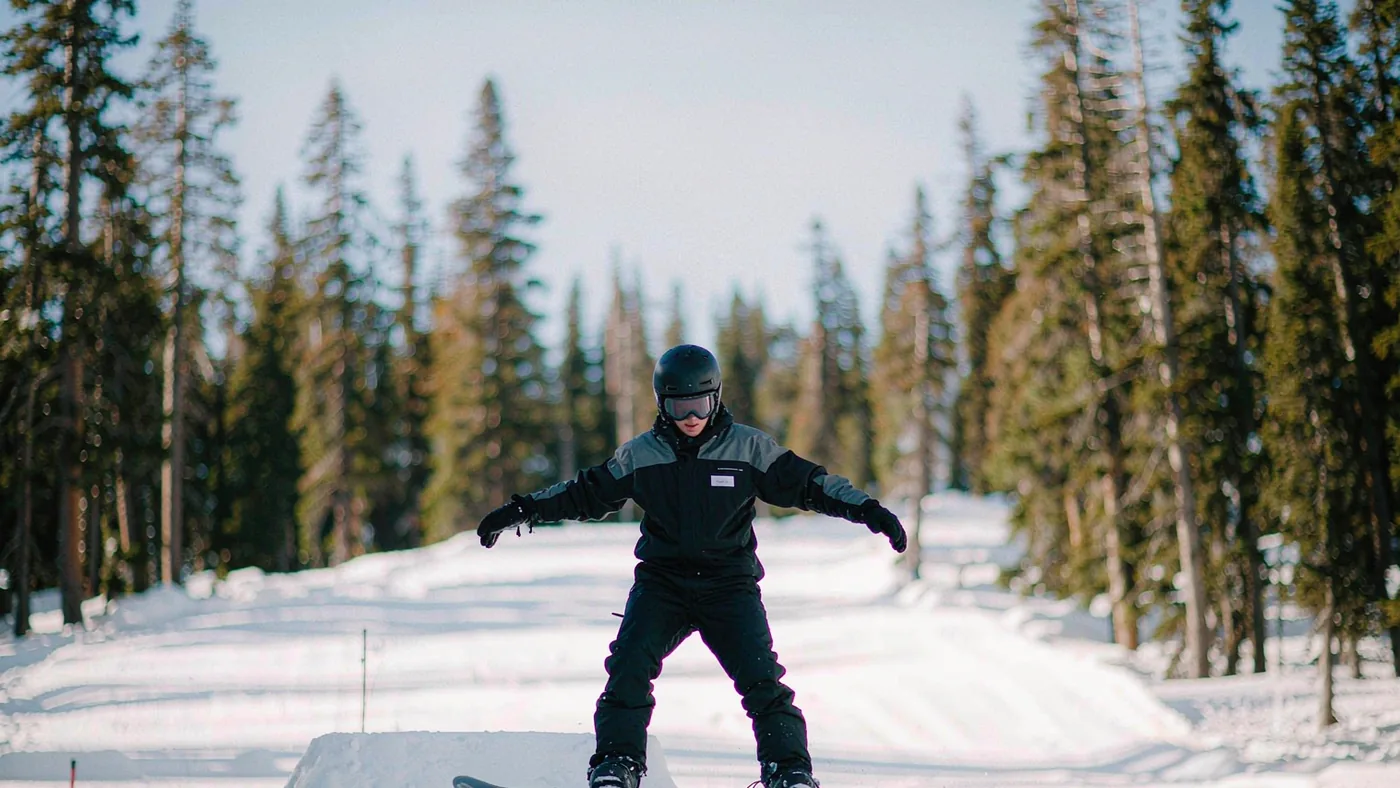
Watch a first-season park rider and you will see the same thing over and over. They approach a small kicker on a board they have barely got flat, they are still thinking about the turn they made forty metres ago, and the edge catches on the lip. The board goes one way, they go the other, and the whole thing looks like a board problem because it is one.
The mistake almost every rider makes entering the park is buying for the version of themselves they want in three years — the one spinning threes off the medium line — rather than the one standing on the lip today. That rider needs a board that refuses to catch, presses easily at low speed, and does not punish a landing that arrives slightly wrong. Stiff and precise is exactly the wrong answer for the first twenty days.
There is a second mistake, which is buying a dedicated rail board. It sounds focused and serious. In practice it gives up so much everywhere else that you end up on a deck that is miserable for the seventy per cent of your week you are not in the park. The right first park board is a compromise, and it should be.
What actually decides whether a park board helps you
Flex. A soft-to-medium flex is the whole point. It lets you press the board flat on a box, it absorbs a sketchy landing instead of transmitting it into your knees, and it bends into a shape that forgives a mistimed ollie. A stiff deck does the opposite: it holds an edge on a rail you wanted to slide, and it feels like landing on a plank. Most park beginners would ride noticeably better on a softer board.
Profile, and whether it catches. This is where the three boards below genuinely differ. A board with a raised, lifted contact area at the edges simply has less edge to catch on the approach and the lip. That is not a gimmick; on a lip that has been sideslipped to ice by lunchtime, it is the difference between committing and bailing.
Shape. A true twin, with a centred stance and a symmetric nose and tail, matters as soon as you start landing switch or riding away backwards. It is not essential in week one, but it is the reason a park deck stays useful as you improve rather than becoming a dead end.
Width against your boots. A park board is usually ridden a centimetre or two shorter than your all-mountain length. Take the same boot you would wear on any other deck and check the waist: a size UK 11 boot on a narrow park twin will drag on every carve back to the lift.
The picks
The lifted base edges make it unusually hard to catch, which is exactly what you want while learning park basics. It does give up a little grip on ice.
Best for
- Riders learning rails and boxes
- Anyone who wants a confidence-boosting freestyle deck
Worth skipping if
- Icy-morning piste riding
- Riders who want a traditional, locked-in feel
- Profile
- Camrock with raised base edges
- Shape
- True twin
- Flex bias
- Medium-soft
- Intended terrain
- Freestyle
Strengths
- Notably forgiving on landings and flats
- Builds park confidence quickly
- Holds up through a full season of abuse
Trade-offs
- Less bite on genuinely icy slopes
- The 3D base shape takes a lap or two to adjust to
Specifications reflect published manufacturer information, last checked 2026-09-28. We have not laboratory-tested this product; the assessment above is editorial, based on the published design and the rider profile it targets. How we review gear.
A pressable, playful freestyle deck that stays stable enough to ride the rest of the mountain on the way back to the lift.
Best for
- Park riders on a budget
- Riders who want one deck for park and side hits
Worth skipping if
- Hard-charging piste riders
- Deep-powder days
- Profile
- Flat-to-rocker
- Shape
- True twin
- Flex bias
- Medium-soft
- Intended terrain
- Freestyle / park
Strengths
- Excellent value in the freestyle category
- Fun at low speeds on rails and boxes
- Stable enough to lap the whole resort
Trade-offs
- Soft flex folds under a heavy rider at speed
- Needs waxing more often than sintered bases
Specifications reflect published manufacturer information, last checked 2026-09-28. We have not laboratory-tested this product; the assessment above is editorial, based on the published design and the rider profile it targets. How we review gear.
A stiffer freestyle board for riders who want a park weapon that does not fold on the way back to the lift.
Best for
- Park riders who ride fast
- Riders who want one board for park and piste
Worth skipping if
- Beginners
- Dedicated powder hunters
- Profile
- Reverse camber with camber underfoot
- Shape
- True twin
- Flex bias
- Medium
- Intended terrain
- Freestyle
Strengths
- Stable at speed for a freestyle board
- Holds up to a full season of park laps
Trade-offs
- Heavier to press than a soft twin
- Not a soft-snow shape
Specifications reflect published manufacturer information, last checked 2026-09-28. We have not laboratory-tested this product; the assessment above is editorial, based on the published design and the rider profile it targets. How we review gear.
How they compare
| Board | Profile | Shape | Flex | Forgiving on the approach | Good on the way back to the lift | Best suited to |
|---|---|---|---|---|---|---|
| Bataleon Evil Twin | Camrock with raised base edges | True twin | Medium-soft | Excellent | Fair on ice | Riders learning rails and boxes |
| Rome Warden | Flat-to-rocker | True twin | Medium-soft | Very good | Good | Park riders on a tight budget |
| CAPiTA Ultrafear | Reverse camber with camber underfoot | True twin | Medium | Good | Very good | Riders who want park and piste in one deck |
Published specifications, last checked 28 September 2026. Forgiveness and grip are editorial judgements about the design, not laboratory measurements.
Jib-friendly versus jump-friendly
These are two different boards with two different jobs, and the marketing rarely says so clearly.
A jib-friendly board is soft, usually with a flat or rockered section underfoot, and it presses into a shape you can lock onto a rail. It is fun at walking pace and it hides mistakes. Its weakness is that it folds when you take it off a big jump or point it down a fast groomer, and a heavier rider will feel that fold almost immediately.
A jump-friendly board is stiffer and has more camber, which gives it a stable platform on the lip and a landing that does not collapse. It rewards commitment. Its weakness is that it will not butter, and on a rail it fights you.
For a first park season, the sensible answer is a middle-soft true twin rather than either extreme. You will learn both skills on it. If you already know you only care about rails, buy the softer option and accept the compromise elsewhere.
What you are actually paying for, and where not to
Park decks get destroyed. They hit rails, they hit rocks under the lift, they get landed on. That changes the value calculation compared with an all-mountain board.
The top sheet will get wrecked, and that is fine. Scratches on a park board are cosmetic. Do not pay a premium to protect a surface that a metal rail will mark in a week anyway.
Bases take a beating. An extruded or cheaper base is a defensible choice here, precisely because it tolerates neglect and repairs cheaply. A fast sintered base is nice on a cat track back to the lift and irrelevant on the lip of a kicker.
Do not spend the park premium on bindings. A soft park binding is a waste for a first-season rider; a medium-flex all-mountain binding will be more comfortable, last longer and work on your next board too.
The rider who should not buy any of these
If you ride one or two weeks a year and are not sure about the park yet. Do not buy a park-specific deck. Buy an all-mountain board, spend the savings on lessons and a rail session, and discover whether you like it. A board bought on ambition will sit in the garage.
If you are over roughly 85kg. The soft flex that makes the Bataleon Evil Twin and the Rome Warden so helpful for a lighter rider will fold under you at speed on a groomer. Look at a medium or medium-stiff freestyle deck instead, and accept that the rail learning curve is steeper.
If your resort has no park, or a park that opens in March. Buy for the snow you actually ride. A park deck on an icy European piste in January is a bad week.
If you want a board you will still want in three seasons. The Rome Warden's soft flex and rapid wax consumption are real long-term costs. The CAPiTA Ultrafear is the one here that survives a rider getting better and faster, and it is not a beginner's board — its own manufacturer says so.
Verdict
The Bataleon Evil Twin is the most confidence-building first park board here, and the Rome Warden is the best value — but neither is right for a rider who intends to spend most of the season on pistes. If that is you, the CAPiTA Ultrafear is the honest choice, on the understanding that it will feel heavier and less forgiving while you learn. If you are not committed to the park at all, buy an all-mountain deck first and rent a park board for a day.
Frequently asked questions
Should a beginner park board be soft or stiff?
Soft to medium, and genuinely so. A stiff deck resists pressing, holds an edge on a rail and transmits a bad landing straight into your knees. Riders under roughly 70kg can ride a medium-soft twin happily for years; heavier riders should move up to medium to avoid folding the board at speed.
What length park board should a beginner ride?
Usually two to four centimetres shorter than your all-mountain length, but the manufacturer's weight range still decides. A shorter board spins and presses more easily, yet too short and you lose the stability you need on the run-in. If in doubt, take the middle of the weight band rather than the middle of the length run.
Can I learn park on an all-mountain board?
Yes, and many riders should. A medium-flex all-mountain twin covers park, piste and side hits without three boards. What you give up is the low-speed forgiveness and easy press of a dedicated park deck, which is exactly what makes the first twenty days easier.
Do I need a true twin for park riding?
If you plan to land switch or ride away backwards, yes. A true twin has a symmetric nose and tail and a centred stance, so the board behaves identically in both directions. A directional board will ride fine forwards and feel wrong the moment you land switch, which limits how far you can take your riding.
Why does the Bataleon Evil Twin grip less well on ice?
Because its base is lifted at the edges, which deliberately reduces the amount of edge available to catch. That is a benefit on a rail lip and a drawback on a genuinely icy piste, where you want maximum edge contact under pressure. If your resort is usually refrozen, that trade is the wrong way round for you.
Where to go next
If you are still deciding what to ride rather than what to buy, start with the best all-mountain snowboards round-up and the all-mountain vs freestyle comparison. The rocker vs camber guide explains why the three boards above feel so different on the approach.
Before your first park day, the snowboard trip checklist is worth ten minutes, and the best snowboard bindings round-up covers what to bolt to the deck. Everything else is in the boards archive.