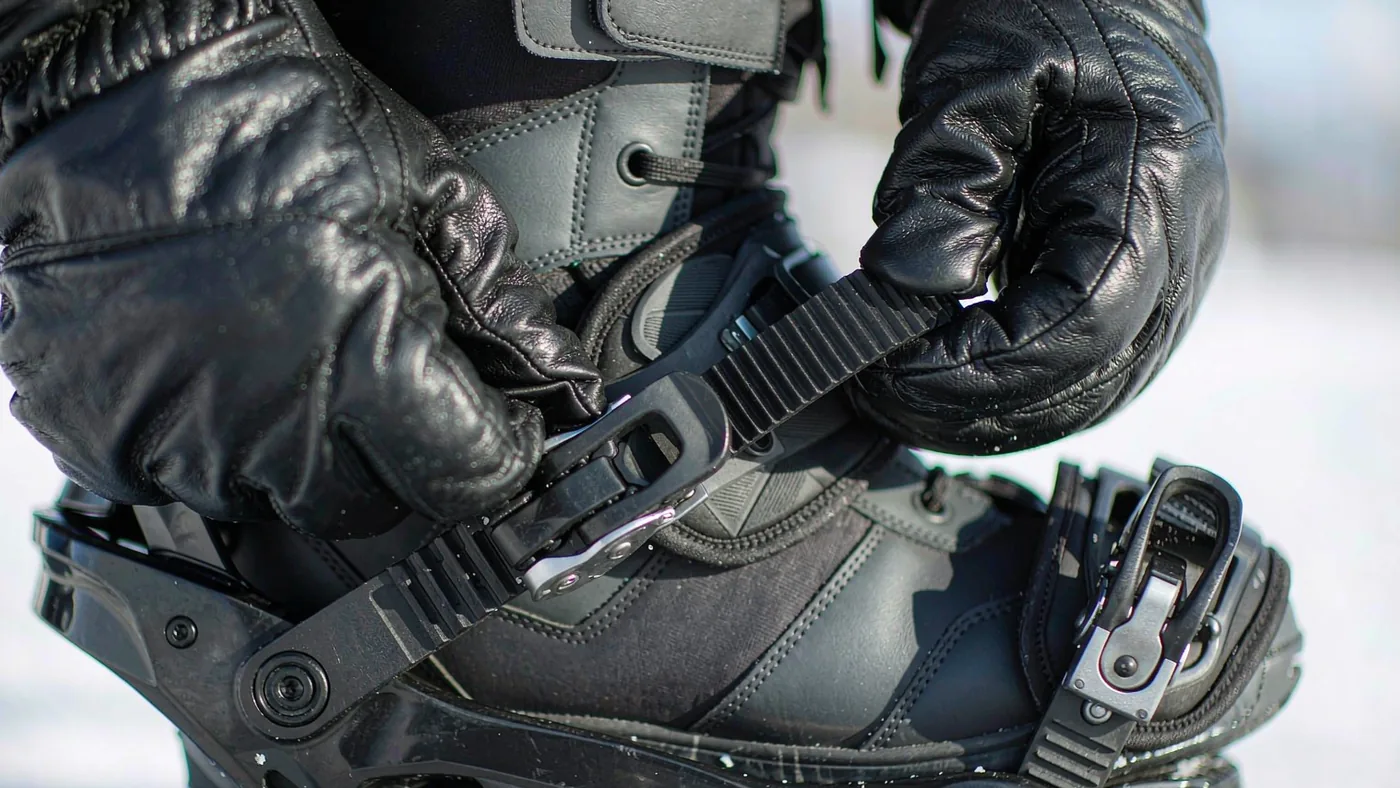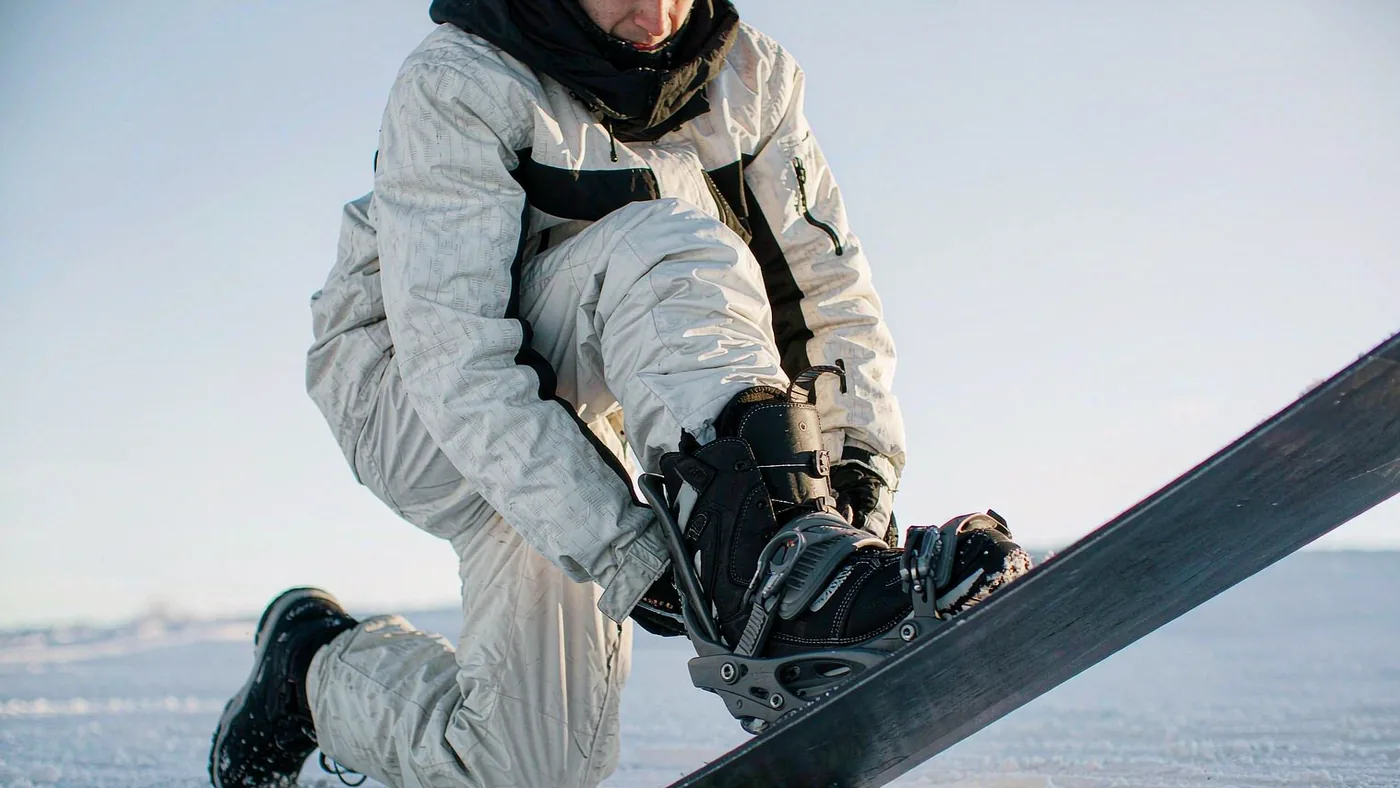
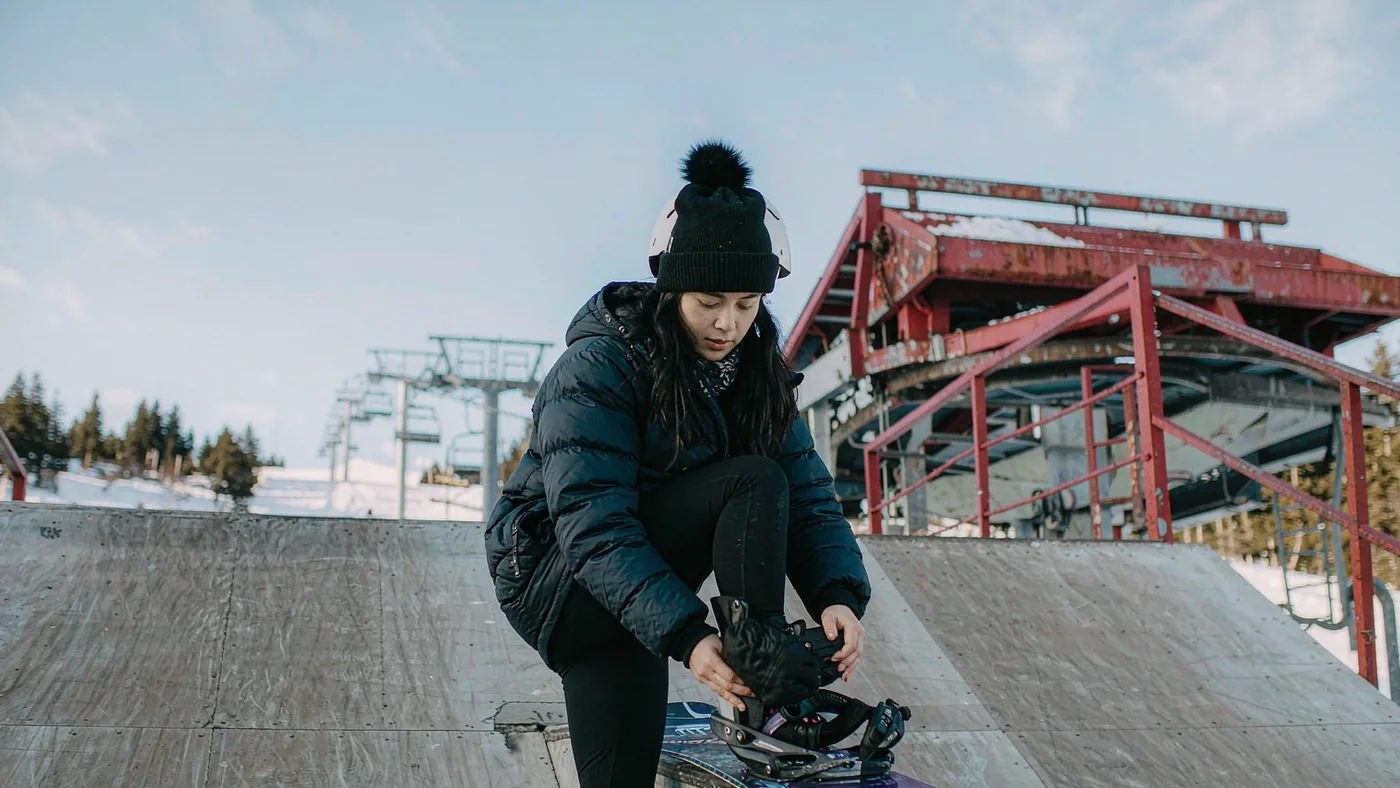
The lift ramp at Les Gets has a ten-metre flat section before the piste drops away, and half the riders standing on it are bent over, ratcheting. One is a woman of about 55kg on a 149cm board with a set of bindings described by the manufacturer as medium flex. She rides it well for two runs, then starts fighting it. The board does not wash out and it does not chatter; it simply refuses to bend into the turn the way she is asking, as if the message is being transmitted through something rigid and slightly late.
Nothing is wrong with the binding. It is a good binding, well made, correctly mounted. It is simply firmer than the rider on top of it, and that mismatch is the single most common mistake in this category — far more common than the mistake everyone worries about, which is buying the wrong gender.
Why the gender on the label matters less than you think
Most bindings on sale are unisex, and most of the ones labelled for women are the same frame in a different colourway and a smaller size range, sometimes with a shorter highback. There is nothing dishonest about that, but it means the label tells you very little. What actually changes the ride is whether the frame and the highback can be deflected by the person standing on them.
A binding does not care how tall you are. It cares about how much force arrives at the highback and the baseplate when you push into a turn. A 55kg rider asking an 85kg-rated frame to flex is asking it to do something it was not built to do, and the result is not precision. It is a board that feels dead underfoot, or — on the other side of the mismatch — a board that fights back.
The three measurements that decide it
Highback height against your lower leg. The top of the highback should sit against the middle of your calf, and its lean should follow the angle of your shin. On a shorter leg, a tall highback ends up pressing high on the calf and restricting how far your ankle can flex forward. That feels like stiffness even when the binding is soft, because the limit you are hitting is the highback, not the flex. Many bindings have a sliding heelcup or an adjustable highback that lets you shorten the whole thing; if yours does, use it before you blame the flex.
Baseplate length against a smaller boot. Baseplates are built to cover a boot range, and a smaller boot on a long baseplate leaves material sticking out beyond the toe and the heel. That overhang matters less than shops claim for drag, but it matters for leverage: your foot sits further back from the front contact point, and the binding feels vaguer than it should. If you ride a boot under about a UK 5, check that the baseplate adjusts in far enough that the boot sits centred over the disc rather than perched on the front of it.
Flex against your weight, not your gender. This is the one that changes everything. If you weigh around 55–65kg and ride at a relaxed pace, a medium-soft binding will feel firmer than the manufacturer's description suggests, and a firm binding will feel like riding with the handbrake on. A rider of the same weight who charges hard on a stiff board will want more than the description implies, because she is generating more load. The description is a starting point; your weight and your aggression decide the rest.
The picks
A comfortable, mid-flex binding that suits riders splitting time between park and groomers.
Best for
- All-mountain freestyle riders
- Riders wanting a softer binding
Worth skipping if
- Riders wanting maximum stiffness
- Flex bias
- Medium
- Intended terrain
- All-mountain freestyle
- Mounting
- Universal disc
Strengths
- Comfortable over long days
- Good value in the mid range
Trade-offs
- Less direct than a stiff binding
- Not built for extreme freeride
Specifications reflect published manufacturer information, last checked 2026-09-28. We have not laboratory-tested this product; the assessment above is editorial, based on the published design and the rider profile it targets. How we review gear.
A softer-edged, more forgiving ride than the Union Force. If you want the mountain to feel slightly less harsh underfoot, this is the one.
Best for
- Riders who prefer a damped ride
- Joint pain on hard European pistes
Worth skipping if
- Budget builds
- Riders wanting the stiffest possible response
- Flex bias
- Medium-soft
- Intended terrain
- All-mountain
- Mounting
- Channel and standard discs
Strengths
- Noticeably smoother on icy, chattered snow
- Comfortable straps, even over thicker boots
- Fits a very wide range of boards
Trade-offs
- Slightly less direct than a stiffer binding
- Priced above the cheapest competitor options
Specifications reflect published manufacturer information, last checked 2026-09-28. We have not laboratory-tested this product; the assessment above is editorial, based on the published design and the rider profile it targets. How we review gear.
The default answer when someone asks which all-mountain binding to buy. Strong, simple, and it stays stiff enough to drive a proper board.
Best for
- All-mountain riders doing piste, park and travel
- Riders who want a binding to last several seasons
Worth skipping if
- Riders wanting an ultralight touring setup
- Anyone after a flexy, surfy feel
- Flex bias
- Medium
- Intended terrain
- All-mountain
- Mounting
- Universal disc, most board inserts
Strengths
- Reliable, long-lived and easy to service
- Firm enough for aggressive piste riding
- Straps work well with bulky boots
Trade-offs
- Heavier than premium carbon options
- Not the most playful binding in the park
Specifications reflect published manufacturer information, last checked 2026-09-28. We have not laboratory-tested this product; the assessment above is editorial, based on the published design and the rider profile it targets. How we review gear.
How they compare
| Binding | Flex | Best suited to | Main strength | Main trade-off |
|---|---|---|---|---|
| Rome D.O.D. | Medium | Lighter riders splitting time between park and groomers | Soft enough to flex under a light rider, comfortable all day | Not built for extreme freeride |
| Burton Cartel | Medium-soft | Smaller riders who feel every lump of refrozen snow | Cushioned baseplate filters chatter under a light load | Slightly less direct than a stiffer binding |
| Union Force | Medium | Lighter riders who charge hard and keep kit for years | Firm enough to drive a board without being punishing | Can feel like more binding than a relaxed rider needs |
Flex and character notes are editorial judgements drawn from published manufacturer specifications and rider consensus. They are not measured figures. Published specifications, last checked 28 September 2026.
What a women's-specific binding is actually for
There are genuinely different products in the category, and they are worth knowing about. Some women's bindings shorten the highback, reduce the baseplate footprint and use a smaller heelcup opening so that a smaller boot sits properly over the disc without a wall of plastic behind the calf. Others slim the ankle strap so it sits correctly across a narrower foot rather than bunching under the instep.
Those are real design changes, and if you have small feet and a light frame, they are worth trying. But a women's binding is not automatically the right binding, and a unisex binding is not automatically wrong. The frame that flexes under you is the right one, whether it came off a women's shelf or not. Plenty of the riders I would send to the Rome D.O.D. are riding unisex boards with unisex bindings and are perfectly happy.
What is worth avoiding is the assumption that a women's binding is a softer binding. Sometimes it is; sometimes it is the same frame with a shorter highback and a different colour. Ask the shop which it is. If they cannot tell you, they are guessing too.
What not to pay for
Weight saving at the top end. Carbon in the highback and baseplate is the main thing the premium tier buys, and it is a real weight reduction. For a rider doing a fortnight a year in the Alps it changes almost nothing except the price, and the money is better spent on boots that fit your foot properly.
A stiffer binding "to grow into". This advice is given to smaller riders constantly and it is wrong every time. You will not grow into it. You will either learn to ride around it, which slows you down, or you will sell it. Buy the flex that works at your current weight and accept that you may change it once, several seasons from now, if you start riding much harder.
Verdict
If you weigh around 60kg or less and ride at a moderate pace, do not buy the Union Force because it is the safest-sounding recommendation — it is a firm binding and it will make your board feel stodgy rather than precise. The Rome D.O.D. is the more sensible starting point for a lighter rider, and the Burton Cartel is the better choice if hard morning pistes rattle your knees and shins. Go stiffer only if you are genuinely driving a stiff board hard, and be honest with yourself about which rider you are.
Frequently asked questions
Do I need women's-specific bindings?
No. Most bindings are unisex, and the ones labelled for women vary between genuinely rescaled frames and the same frame in a different colourway. What matters is whether the highback reaches the middle of your calf and whether the frame flexes under your weight. Try both if a shop has them mounted.
What size binding do I need for a UK 4 boot?
Sizes are usually split into small, medium and large with overlap between them, and the split is driven by boot length, not body size. A UK 4 to 5 boot more often sits in a small or a small-medium than a medium. Measure your boot sole, check the manufacturer's chart, and make sure the heelcup adjusts in far enough that the boot sits centred over the disc.
Why does my binding feel stiff when it is described as medium?
Almost always a weight mismatch. Flex descriptions are written for an average adult rider, and a rider 20kg lighter than average will feel a medium binding as firm. Check the highback height and the forward lean first, since an over-tall highback mimics stiffness, then consider going one step softer.
Should I buy a softer binding if I am a beginner?
A medium-soft flex is a comfortable place to start if you are light, because it bends when you ask it to and does not punish imprecise input. Do not go all the way to the softest option on the wall. Very soft bindings struggle to transmit what edge pressure you can generate, and you will feel the improvement stop after the first week.
Can I use a men's binding on a narrow board?
Yes. Baseplate footprint is the thing to check, not the board. A large baseplate on a narrow waist can hang past the edge, which adds drag on steep, hard traverses. For a waist under about 24cm, look at small or medium bindings and check the disc sits under the middle of your boot.
Where to go next
Riders still choosing a board should read the women's board round-up before matching a binding to it, and anyone comparing the two obvious mid-range bindings should start with the Union Force vs Burton Cartel head-to-head. Our best snowboard bindings round-up covers the wider range.
Boots matter more than bindings, so see the best boots for beginners and the wide feet round-up before you commit.