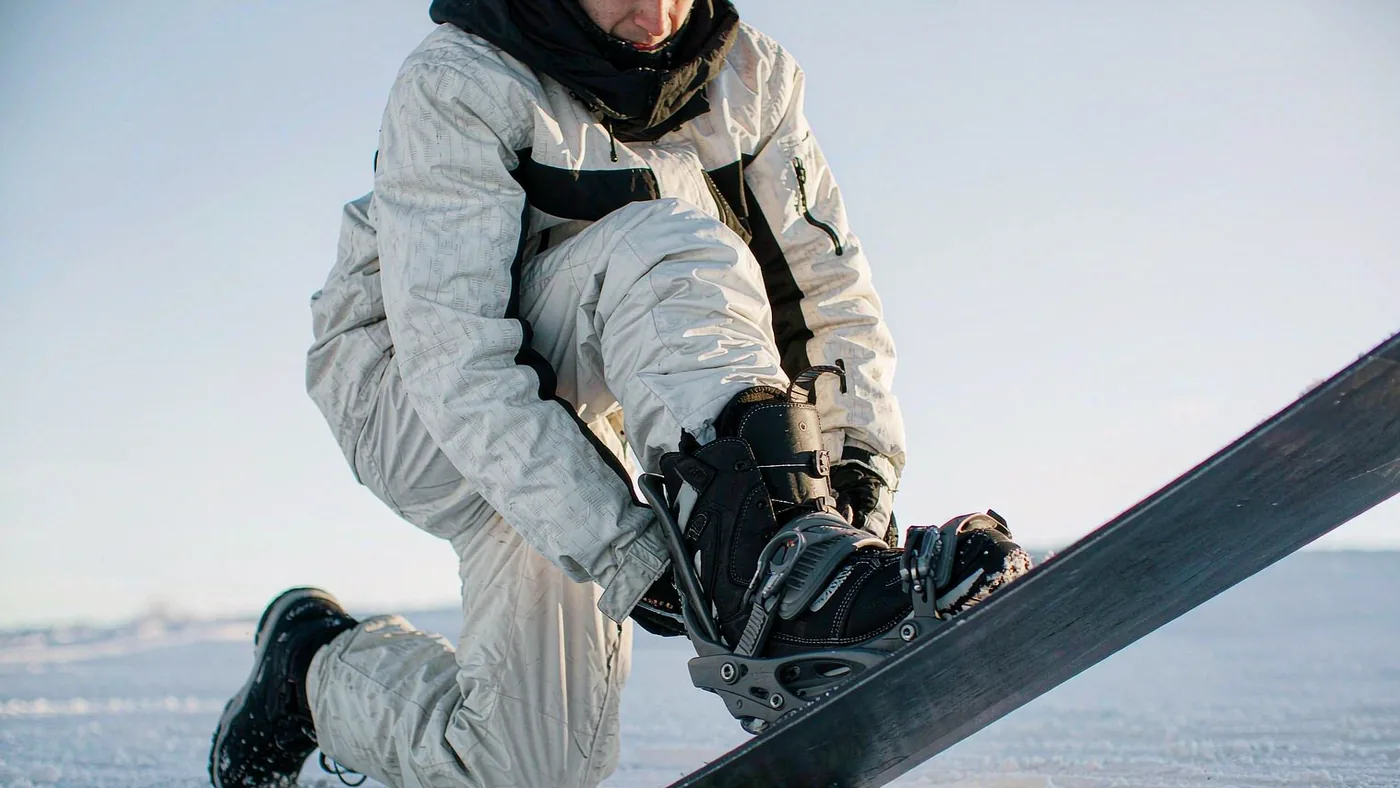
Friday night before a week in the Alps, board bag open on the landing, and the last thing anyone checks is the bindings. The board has been waxed, the edges have been looked at, the boots tried on in the hallway. The bindings, the only component connecting a human being to a board at speed, get a glance and a shrug.
That is backwards. A board that is badly waxed is slow. A boot that fits badly is uncomfortable. A binding that fails mid-turn puts you on the snow with no warning, and the failures are almost always visible weeks beforehand to anyone who knows where to look. Ten minutes with a screwdriver in November is the cheapest insurance in snowboarding.
What to check before every trip
Five things, in this order. The whole routine takes a few minutes per binding.
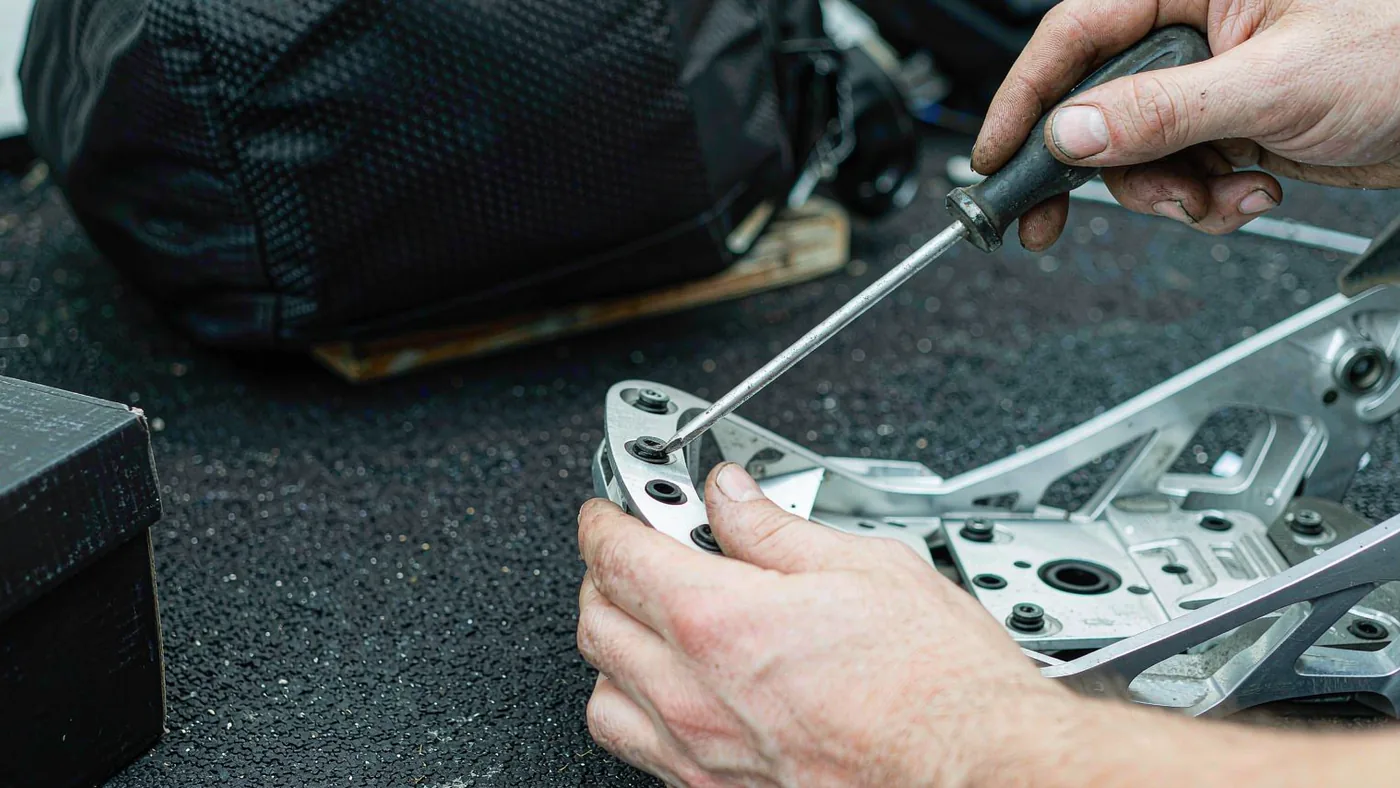
Mounting screws. Every one of them, every time. Screws work loose as the baseplate beds into the board, particularly in the first days after a fresh mount. Check them before the trip, then again after the first morning on snow, because that is when they settle. A screw that keeps coming loose after proper tightening means a damaged insert or thread, and that is a job for a shop, not for more torque.
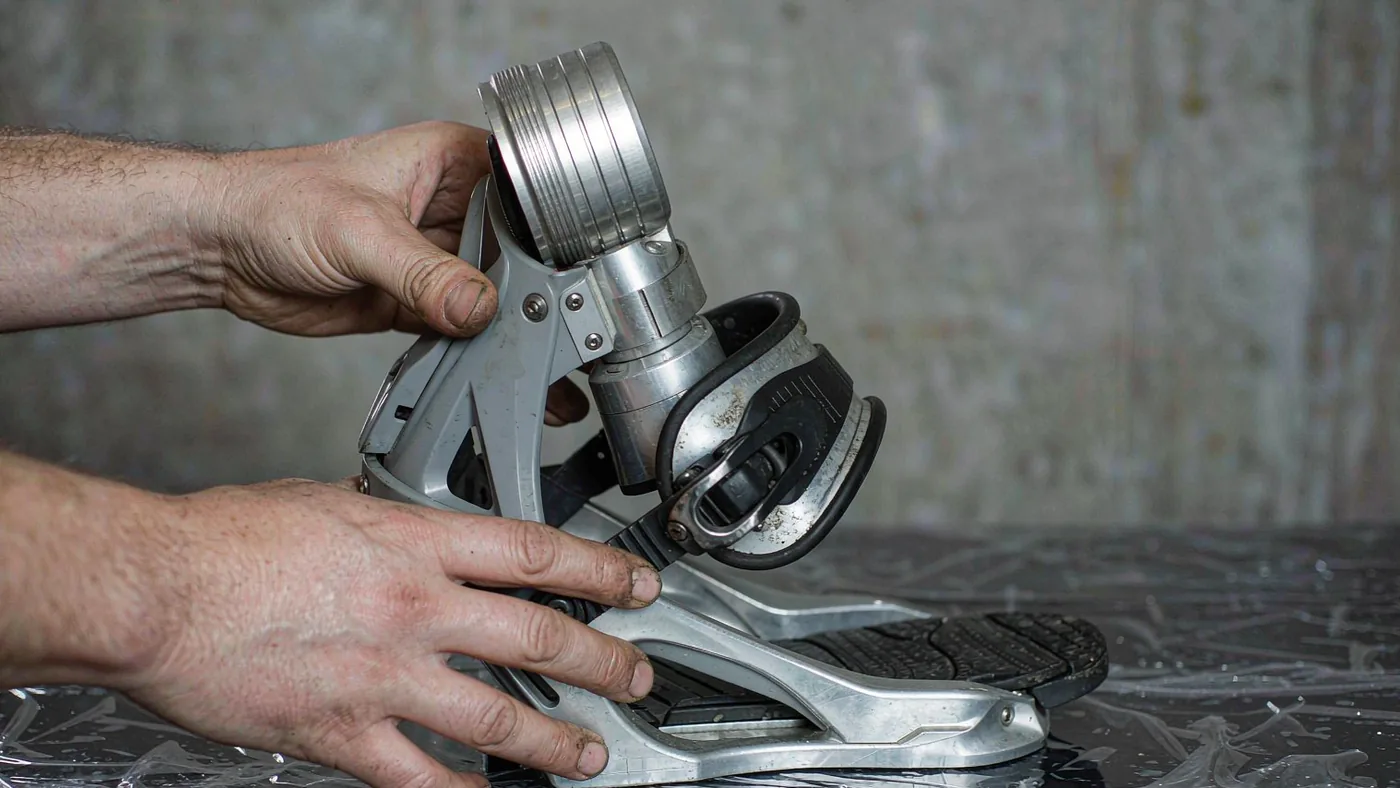
Baseplate and heelcup for cracks. Hairline cracks radiating from the mounting holes are the failure mode to look for, and they are the reason a binding gets retired. Flex the baseplate gently and look at each mounting hole in good light. A crack there means the load path is compromised, and no repair restores it.
Strap wear. Check the ankle and toe straps where they attach, and along the full length for splitting or a soft, perished feel. Straps fail at the attachment point more often than in the middle, and any strap that has started to split should be replaced, because the failure happens mid-turn on a firm piste.
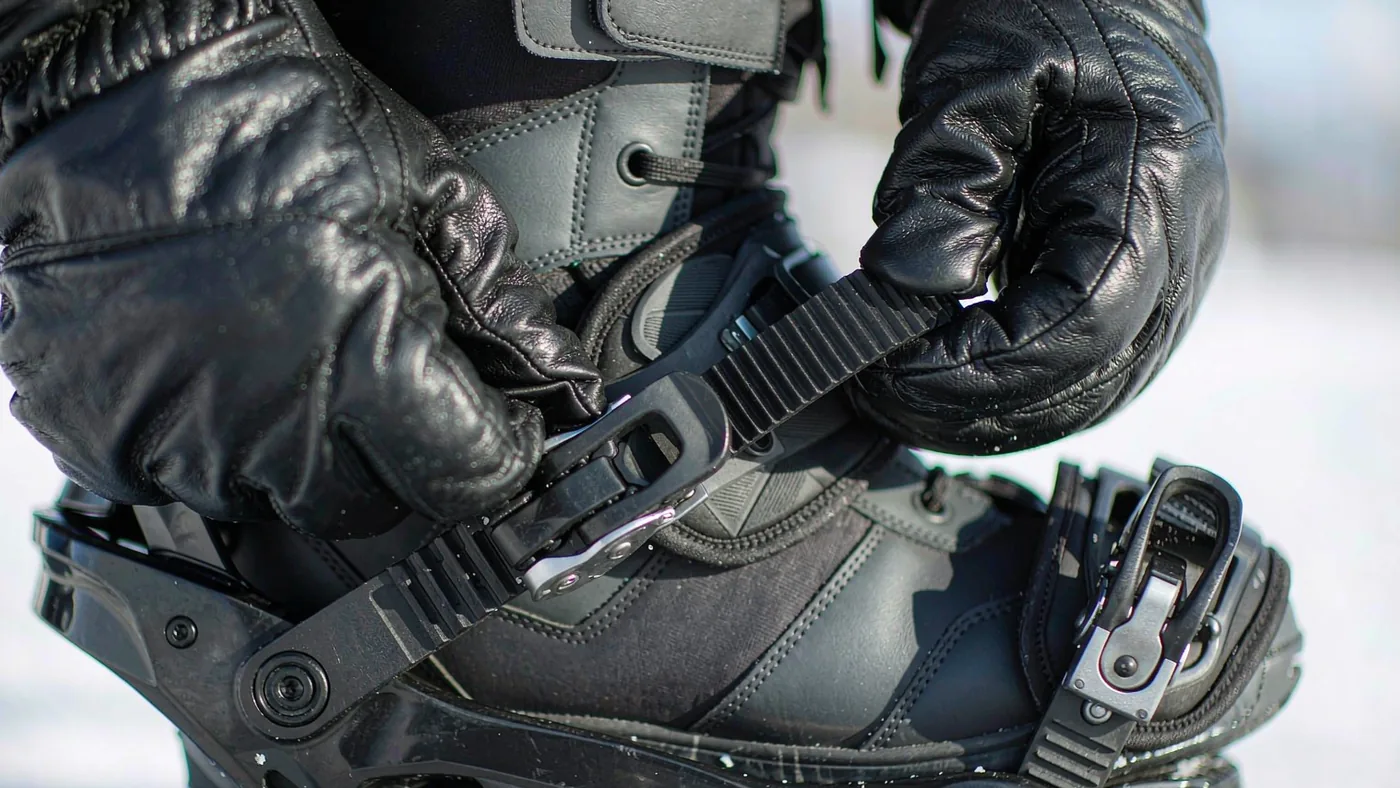
Ratchet teeth and release action. Work each ratchet through its full travel, tightening and releasing. The teeth should be square and unworn, and the release a firm, definite click rather than a soft slip. If you have to fight it now, imagine it with gloves on at the top of a drag lift.
Ladder straps. Look along the whole tooth line for cracks, white stress marks or chewed teeth. This is the most common failure in any binding and the cheapest to fix, which is why replaceable ladders matter more than a premium baseplate.
| Component | What to check | Failure sign | What to do | If you ignore it |
|---|---|---|---|---|
| Mounting screws | All screws, before the trip and again after day one | Screws backing out, or one refusing to tighten | Re-torque evenly, or take it to a shop if the thread is damaged | Baseplate works loose mid-run; potential insert damage |
| Baseplate and heelcup | Cracks around mounting holes and heelcup edges | Hairline cracks under flex | Retire the binding | Structural failure under load, with no warning |
| Ankle and toe straps | Attachment points and the full strap length | Splitting, cracking, a soft perished feel | Replace the strap | Strap snaps mid-turn, losing your connection to the board |
| Ratchet mechanism | Full travel in both directions | Gritty action, slipping, hard release | Clean and lubricate, replace if the teeth are worn | Cannot release in the cold, or the binding slips loose |
| Ladder straps | Tooth line along the whole length | Cracks, white stress marks, chewed teeth | Replace the ladder | Binding releases under load |
Inspection points and failure modes reflect published manufacturer guidance and standard workshop practice, not instrumented testing. Published specifications, last checked 28 September 2026.
Repair, replace, or retire
The general rule is that anything bolted on can be replaced and anything structural means the binding is finished.
Replace the part. Straps, ladders, ratchets, toe caps and highbacks on most bindings. These are the parts that wear, they are designed to be swapped, and swapping them is what keeps a mid-range binding in service for five seasons instead of two. This is the practical argument for choosing a binding with replaceable hardware — a simple design such as the Union Force will outlive an expensive one you cannot get parts for.
Replace the binding. A cracked baseplate, a cracked heelcup, or an insert thread pulled out of the board. In each case the load-bearing structure is compromised and there is no sensible repair. It is also the point to check the board, since a pulled insert damages the deck as well.
Retire it with the rest of the setup. If the straps, ladders and ratchets have all been replaced once already and the frame is showing its age, a new binding is the better value than a third round of parts.
Storing bindings for the summer
A binding that goes into storage wet and strapped down tight will come out in December with a perished strap and a corroded ratchet spring.
Clean first. Wipe off salt, grit and slush with fresh water and a cloth, then dry everything fully at room temperature. Do not dry them on a radiator; heat is unkind to strap compounds and to baseplate plastic.
Loosen everything. Release the ratchets and unclip the straps so no tension sits in the strap or the ladder over the summer. Elastic and plastic take a set if held stretched for months, which is what happens to a binding stored cranked down on a board.
Store dry and indoors. A garage that swings between damp and hot is the worst place; a cupboard inside the house is better. A board bag or box is fine, as long as everything inside it is dry.
Check the mounting screws before you re-mount. If the bindings come off the board for storage, check the inserts before bolting them back on, and re-torque evenly rather than driving one screw home and then the rest.
Two bindings that reward this treatment
The default answer when someone asks which all-mountain binding to buy. Strong, simple, and it stays stiff enough to drive a proper board.
Best for
- All-mountain riders doing piste, park and travel
- Riders who want a binding to last several seasons
Worth skipping if
- Riders wanting an ultralight touring setup
- Anyone after a flexy, surfy feel
- Flex bias
- Medium
- Intended terrain
- All-mountain
- Mounting
- Universal disc, most board inserts
Strengths
- Reliable, long-lived and easy to service
- Firm enough for aggressive piste riding
- Straps work well with bulky boots
Trade-offs
- Heavier than premium carbon options
- Not the most playful binding in the park
Specifications reflect published manufacturer information, last checked 2026-09-28. We have not laboratory-tested this product; the assessment above is editorial, based on the published design and the rider profile it targets. How we review gear.
A softer-edged, more forgiving ride than the Union Force. If you want the mountain to feel slightly less harsh underfoot, this is the one.
Best for
- Riders who prefer a damped ride
- Joint pain on hard European pistes
Worth skipping if
- Budget builds
- Riders wanting the stiffest possible response
- Flex bias
- Medium-soft
- Intended terrain
- All-mountain
- Mounting
- Channel and standard discs
Strengths
- Noticeably smoother on icy, chattered snow
- Comfortable straps, even over thicker boots
- Fits a very wide range of boards
Trade-offs
- Slightly less direct than a stiffer binding
- Priced above the cheapest competitor options
Specifications reflect published manufacturer information, last checked 2026-09-28. We have not laboratory-tested this product; the assessment above is editorial, based on the published design and the rider profile it targets. How we review gear.
The Union Force is the practical case for maintenance: a firm, medium-flex all-mountain binding with a metal heelcup, ratchets that stay smooth in the cold, and a construction simple enough to service with basic tools. Its trade-offs are honest — heavier than premium carbon options and not the most playful binding in the park — but it is the binding you maintain rather than replace when something small breaks.
The Burton Cartel takes the same long-life approach with a different character: a medium-soft, damped ride with a cushioned baseplate that smooths refrozen pistes, comfortable straps that work over thicker boots, and mounting hardware for both the channel and standard inserts. Its published caveats are a slightly less direct feel than a firmer binding and a price above the cheapest competitors in its class.
Verdict
If your baseplate or heelcup has cracked around the mounting holes, stop riding that binding and replace it. A cracked frame cannot be repaired, and it fails without warning under exactly the load of a hard turn. If you ride a binding with fixed, non-replaceable straps and a ladder starts to go, the whole binding is finished. Neither the Union Force nor the Burton Cartel is a lightweight boutique binding, and if you are a touring rider counting grams, both are the wrong purchase.
Frequently asked questions
How often should I check my binding screws?
Before every trip, and again after the first morning on snow after a fresh mount. Screws settle as the baseplate beds into the board, so the second check catches what the first could not. After that, a check before each holiday is enough, and a screw that keeps loosening is a thread problem for a shop.
How long should a pair of bindings last?
A well-made binding should give five seasons of a fortnight each with nothing more than occasional bolt checks and a strap or ladder replaced as it wears. The parts that fail first are the ladder straps and the ratchets, which is why replaceable hardware is worth more than a premium baseplate.
Can I ride with a cracked baseplate?
No. A crack in the baseplate or heelcup, particularly around the mounting holes, means the structure carrying your load is compromised, and it can fail completely in a hard turn with no warning. Retire the binding, and check the board's inserts at the same time in case the damage runs both ways.
Do ratchets need lubricating?
A drop of light lubricant on the pivot and spring once a season keeps the action crisp, provided you clean the grit out first. Avoid heavy grease, which collects grit and makes the release sluggish in the cold. If the teeth themselves are worn smooth or hooked, lubrication will not bring them back and the ratchet should be replaced.
What should I carry as a spare on a trip?
A ladder strap, a couple of mounting screws, and a small screwdriver that fits your hardware. Those three items weigh almost nothing and turn the most common binding failures into a mid-mountain repair rather than an early finish. On a step-in system, carry whatever the manufacturer sells as a service part instead.
Where to go next
If a part needs replacing and you want to know what it is called and why it matters, start with the binding flex explainer and the best snowboard bindings round-up, which covers which models use serviceable hardware. Riders going the other way — towards fewer moving parts — should read the step-on bindings verdict.
Set things up properly before the season with the binding setup guide, and keep the rest of the setup in order with our waxing and storage guide.