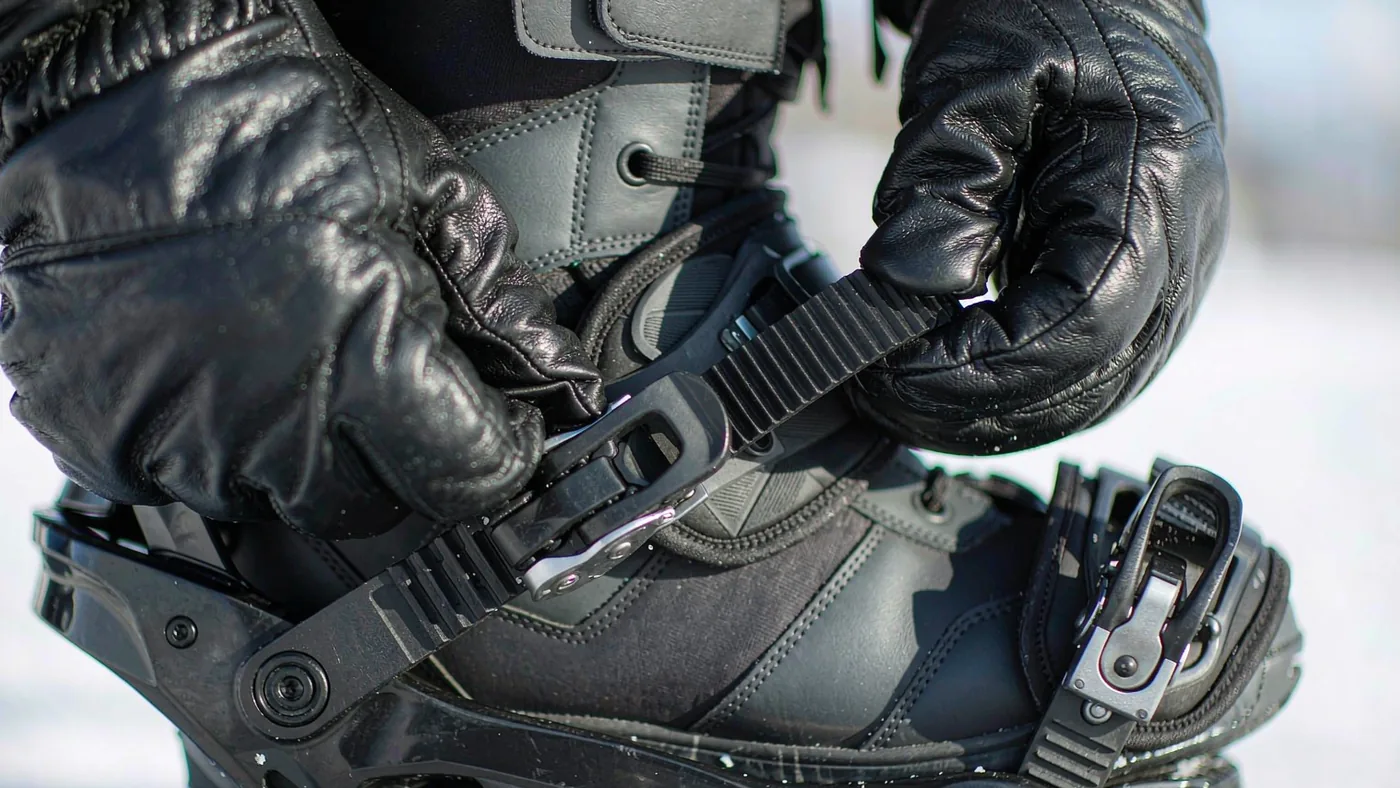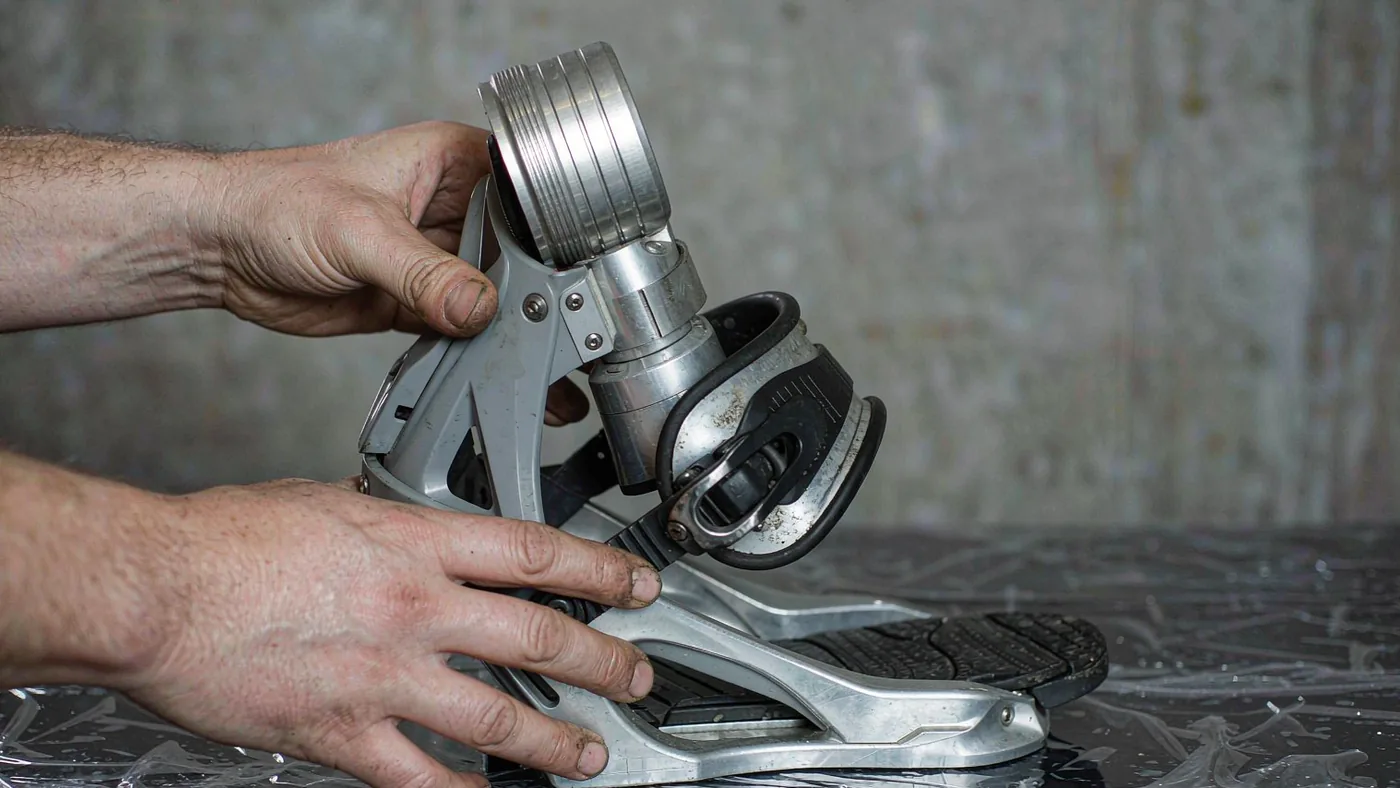
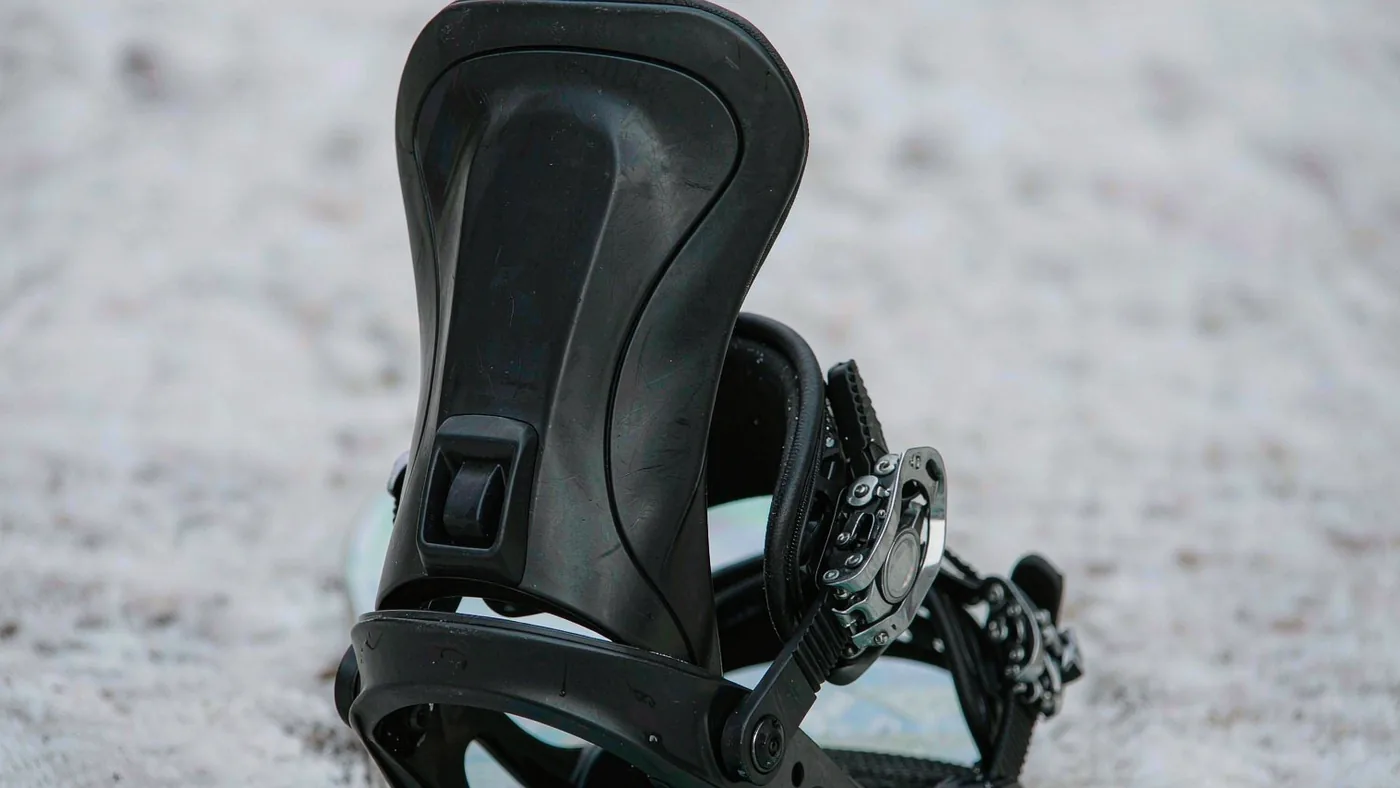
A Thursday morning in February, second run, on the long red down from the Grand Montets mid-station. The surface is firm and fast and slightly scoured, the kind of snow where you find out what your setup is actually doing. A rider on a mid-flex board with a set of Union Forces under it pushes into a turn at the top of the pitch and the board answers immediately — no delay, no vagueness, just the edge biting and the arc holding. Another rider on the same model a hundred metres back is not enjoying it quite so much. She weighs about 60kg, the board is a stiff freeride deck, and the combination is asking her to work for every turn.
Both of them are on the same binding. That is the whole character of the Union Force in one image: an excellent, unremarkable, slightly firm all-mountain binding that flatters a rider with weight and intent behind their turns and taxes a rider without them.
What the Force actually is
It is the reference point in the mid-stiff all-mountain category, and it has been for years. What that means in hardware terms is a metal heelcup that keeps the frame stiff without making it heavy, a firm baseplate, and a set of straps and ratchets built for durability rather than weight saving. The published flex is medium. The mounting is a universal disc that fits a standard insert pack, which covers almost every board on sale that is not a Burton.
Two design choices matter more than the rest. The first is the ratchet hardware, which stays smooth in cold weather — the single most important quality-of-life detail in a binding and one that cheap models fail at. The second is the simplicity of the construction. Bolts you can get a screwdriver onto, straps and ladders that can be replaced individually, no proprietary tooling required. That is the difference between a binding you keep for five seasons and a binding that becomes landfill when one strap splits.
What "medium" means in practice
Flex descriptions are relative, and a medium from one brand may feel like a medium-firm from another. So the useful question is not what the number says but what the binding does underfoot.
It reads as immediacy rather than harshness. Push into the edge and the board answers, but the response is not brittle. The Force transmits enough of the mountain to tell you what the snow is doing, which is why riders who spend their mornings on groomers tend to end up on it. It is firmer than a medium-soft binding, and the difference shows up most clearly in the first hour of a hard, cold morning.
It is firm enough for a heavier rider. If you are around or above 85kg and you ride aggressively, a softer binding will flex away from you under load and feel like it is losing support as the day goes on. The Force holds its shape under more weight, which is why it is the common recommendation for big riders on stiff boards.
It is not a park binding. It works in the park, and plenty of riders use it there, but it is not playful. Presses and butters ask the binding to flex, and this one resists. If your day is mostly kickers and rails, a medium binding with a softer highback will be more fun, and the trade-off will be a little less precision on the run back to the lift.
The durability argument
Bindings are the part of a setup riders replace last, which is either a compliment to the category or a sign that nobody services them. The Force rewards that neglect better than most. The published construction is simple and the serviceable parts are the ones that wear: ladder straps, ratchets, and the ankle and toe straps themselves.
The failure modes to watch for are the usual ones: gritty ratchets, ladder straps cracking across the tooth line, and hairline cracks around the mounting holes. All three are visible if you look, and the first two are cheap to fix on a binding like this one. Stored dry with the straps released, it will sit out a summer and come back the following December with nothing more than a wipe down.
What it is not is light. Premium carbon options save weight, and a touring rider will notice. A rider doing a fortnight a year on lifts will not, and paying the premium for that saving is money spent on nothing.
The pick
The default answer when someone asks which all-mountain binding to buy. Strong, simple, and it stays stiff enough to drive a proper board.
Best for
- All-mountain riders doing piste, park and travel
- Riders who want a binding to last several seasons
Worth skipping if
- Riders wanting an ultralight touring setup
- Anyone after a flexy, surfy feel
- Flex bias
- Medium
- Intended terrain
- All-mountain
- Mounting
- Universal disc, most board inserts
Strengths
- Reliable, long-lived and easy to service
- Firm enough for aggressive piste riding
- Straps work well with bulky boots
Trade-offs
- Heavier than premium carbon options
- Not the most playful binding in the park
Specifications reflect published manufacturer information, last checked 2026-09-28. We have not laboratory-tested this product; the assessment above is editorial, based on the published design and the rider profile it targets. How we review gear.
How they compare
The table below is not a comparison with a rival binding, because the useful comparison is with rider profiles. The Force is one product, but it suits very different people very differently.
| Rider profile | Approx weight | What they ride | Does the Force suit | Why |
|---|---|---|---|---|
| Confident all-mountain rider, one or two trips a year | 75–90kg | Piste, some park, occasional powder day | Yes | The firm platform puts your input into the edge without punishing you |
| Aggressive piste rider on a stiff board | 80kg plus | Groomed runs at speed | Yes | Holds its shape under load when a softer binding would flex away |
| Lighter rider at a relaxed pace | Under 70kg | Gentle groomers, learning the mountain | No | The flex it needs from a rider to work well is more than you will generate |
| Park-focused rider | Any | Kickers, rails, butters | No | Resists the flex that playful riding depends on |
| Touring or splitboarding rider | Any | Uphill and long days out | No | Heavier than premium options built for that job |
| Rider who wants a surfy, loose feel | Any | Soft snow, low-speed playfulness | No | Directness is the opposite of what you are asking for |
Weight bands and scenario notes are editorial judgements drawn from published manufacturer specifications and established rider consensus rather than measured testing. Published specifications, last checked 28 September 2026.
Where the Force stops being the right choice
If you want the mountain to feel softer. Some riders, particularly those with knee or ankle trouble, want the snow filtered rather than transmitted. The Force does not do that. A binding with a cushioned baseplate and a medium-soft flex does, and choosing the Force anyway means choosing discomfort you did not have to accept.
If you are light and still developing. A rider under about 70kg who is still building confidence will often go faster on a softer binding, because the board will bend into the turn rather than resist it. Firmness transfers more of your input to the edge, which only helps if the input is already accurate.
If you ride mostly park. The Force will get you round a park. It will not make you enjoy it. That is a legitimate reason to buy something else.
Verdict
The Force is the right binding for a heavier or more aggressive rider who spends the day on groomed pistes and wants to feel what the board is doing. If you are light, ride mostly park, or want a damped ride that takes the edge off refrozen snow, buy the Burton Cartel instead — it gives up a little directness on very fast pistes and gives back a lot of comfort over a full day. Do not buy the Force because it is the safest-sounding answer. It is only the safest answer for a rider whose weight and style suit it.
Frequently asked questions
Is the Union Force stiff or soft?
Published specifications describe it as medium flex with an all-mountain bias, and it feels firmer in use than the word suggests because the metal heelcup holds the frame rigid. Riders around and above 80kg read it as a comfortable all-rounder; riders well under 70kg often find it firmer than they want.
Will the Union Force fit my board?
It uses a universal disc that fits a standard insert pack, which covers almost every board except those using a proprietary channel. Burton boards have the channel, and although some aftermarket discs fit it, the simplest route on a Burton board is a channel-compatible binding. Check the mounting system of your board before ordering.
Is it a good binding for a heavier rider?
Yes. That is one of the clearest cases for it. A rider around 90kg or more puts significant load through a binding, and a medium-soft frame will flex away under that load rather than holding the edge. The Force is published as medium with a firm baseplate, which holds its shape under more weight than most of its rivals.
How does it compare with the Burton Cartel?
They occupy the same all-mountain role with opposite characters. The Force is the firmer, more direct option and the Cartel is the damper, more forgiving one. They sit in broadly the same band, so the decision is about which feel you want rather than which is better made.
Where to go next
If you are weighing it against its closest rival, the Union Force vs Burton Cartel comparison settles the question properly, and the best snowboard bindings round-up puts it alongside the rest of the category. Read the binding flex explainer if you are still working out how much stiffness you want. Before you order, check the size with the binding sizes guide, then read the binding setup guide so the angles and highback lean are right from the first run.