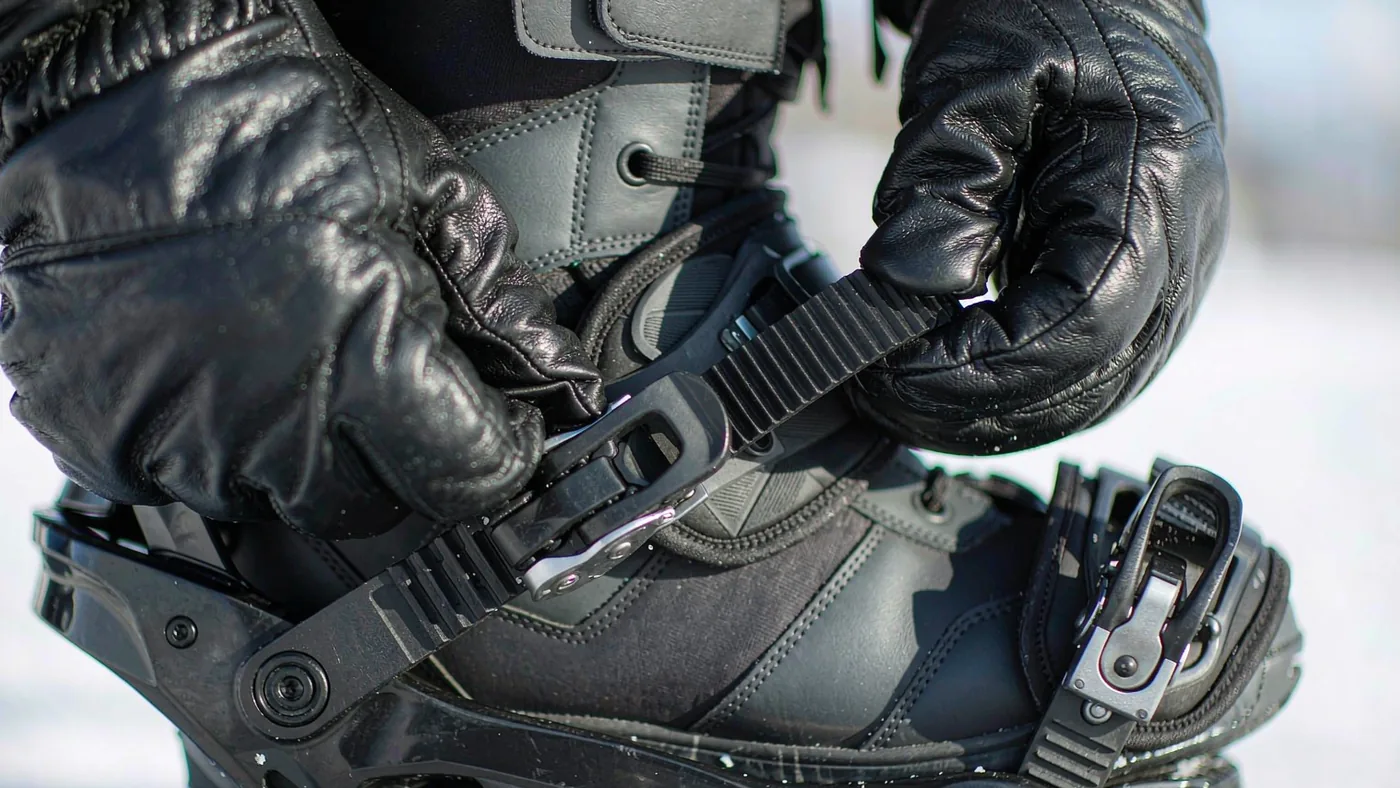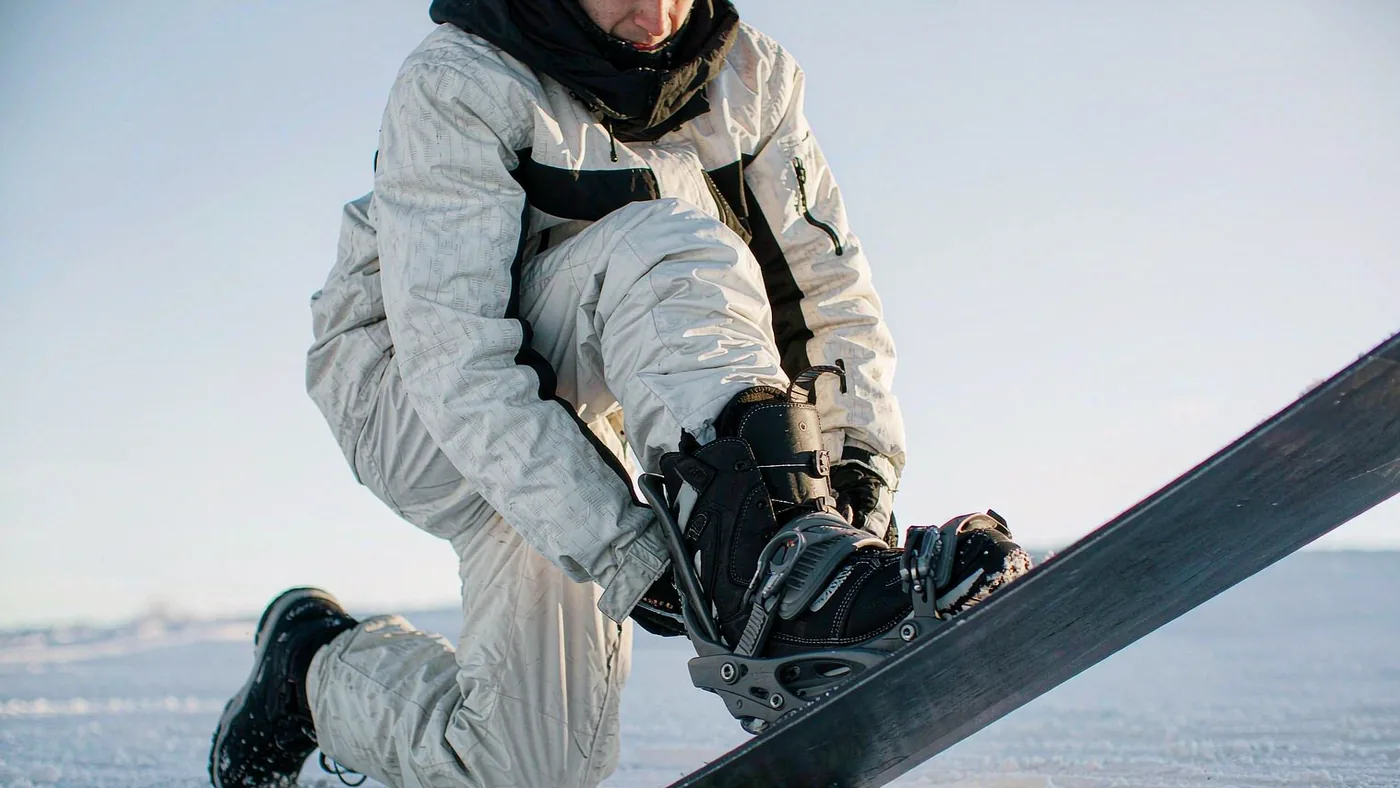
The last hundred metres before the mid-station at Laax, where the piste flattens into a traverse and everyone has to unclip one foot and skate. Watch that stretch for twenty minutes and you will see the same pattern repeat. Strap-binding riders sit down, clear the ratchet, tighten, stand up, push off. Step-in riders put a boot down, hear a click, and go. Multiply that by eight or nine lifts a day and it becomes a different holiday for the people at the back of the group.
Step-in systems have been the obvious good idea for years, and the reason they have not taken over the world is that they trade one kind of convenience for another. The Nitro Phantom is the most credible alternative to the dominant system in the category, and its specific selling point is that it does not force you into a single boot line. That difference is worth understanding before you spend anything, because everything else about the mechanism is a genuine compromise.
What the mechanism changes
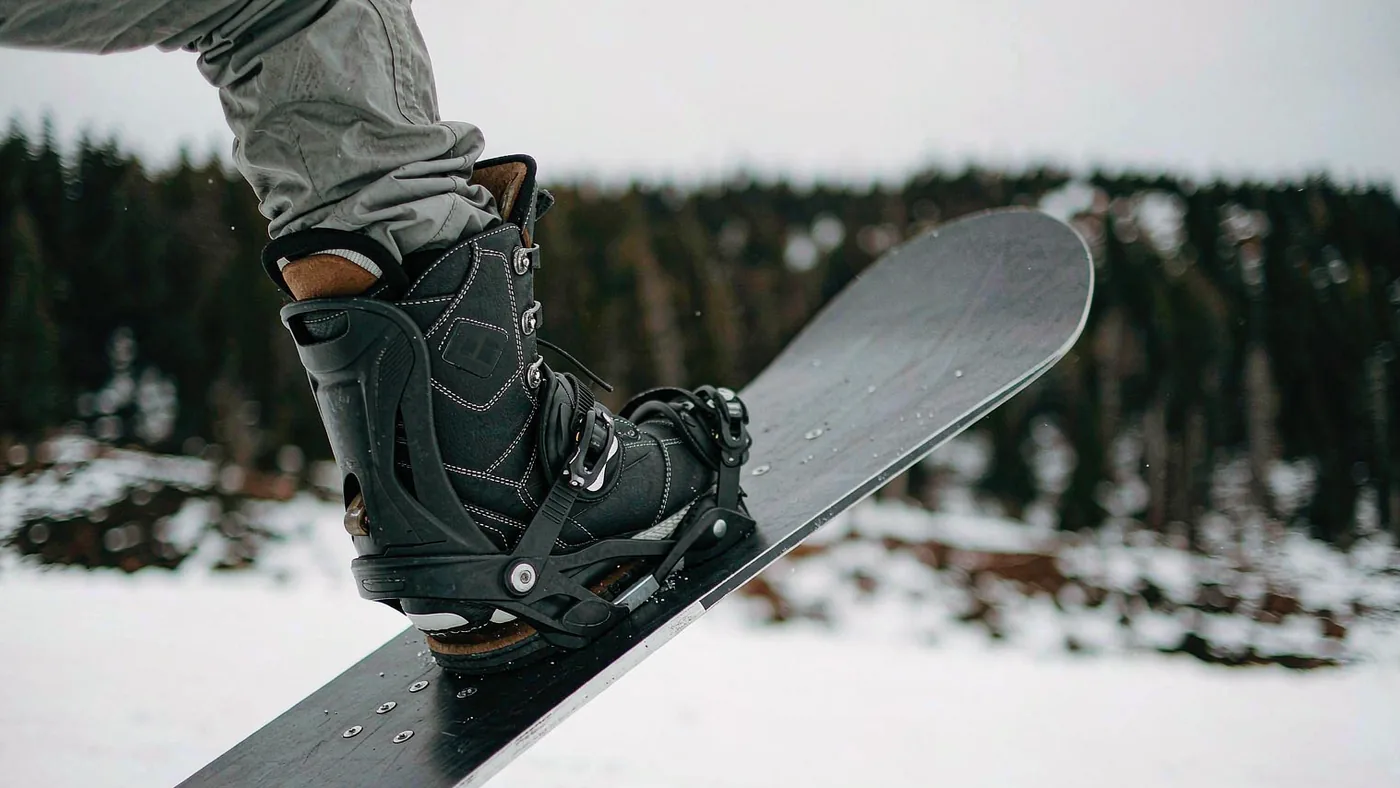
A step-in binding replaces the straps with connection points that engage the boot directly. You press down, the mechanism catches, and you are in. Flex is published as medium with an all-mountain intent, which is the sensible middle for a system like this — firm enough to drive a board, forgiving enough that riders coming off a strap binding do not feel like they have bought a race setup.
The time saved is only half the argument. The other half is that strapping in means sitting down, which means a wet backside and the awkward business of getting upright with a board attached to your feet. Riders with a bad back or troublesome knees will tell you the getting up is worse than the strapping, and step-ins remove that whole cycle.
The second benefit is specific to the kind of resorts many British and Northern European riders visit. Zipper lifts, T-bars, drag lifts and the flat access paths between resort sectors all involve unclipping and re-engaging more often than a lift-served day in a big French resort. That is the terrain the Phantom is built for. Its published best-use notes name exactly those riders: people who hate strapping in, and people who ride lifts that force them to do it constantly.
Where it costs you
Snow and ice in the connection points. Packed snow in the wrong place stops the mechanism engaging cleanly, and you knock the boot clear before it will catch. On a dry Alpine day that takes a second. On a wet, heavy day in Scotland or the Norwegian lowlands it takes longer, and at some point you are the person holding up the group while you pick ice out of a binding.
Simplicity. A strap binding has almost nothing to go wrong and no sequence to learn. A step-in has a mechanism, and a mechanism can be misunderstood. Riders used to straps take a run or two to trust the click, and anyone who has felt a boot rock slightly on a snowy mechanism will tell you the trust takes longer than the marketing suggests.
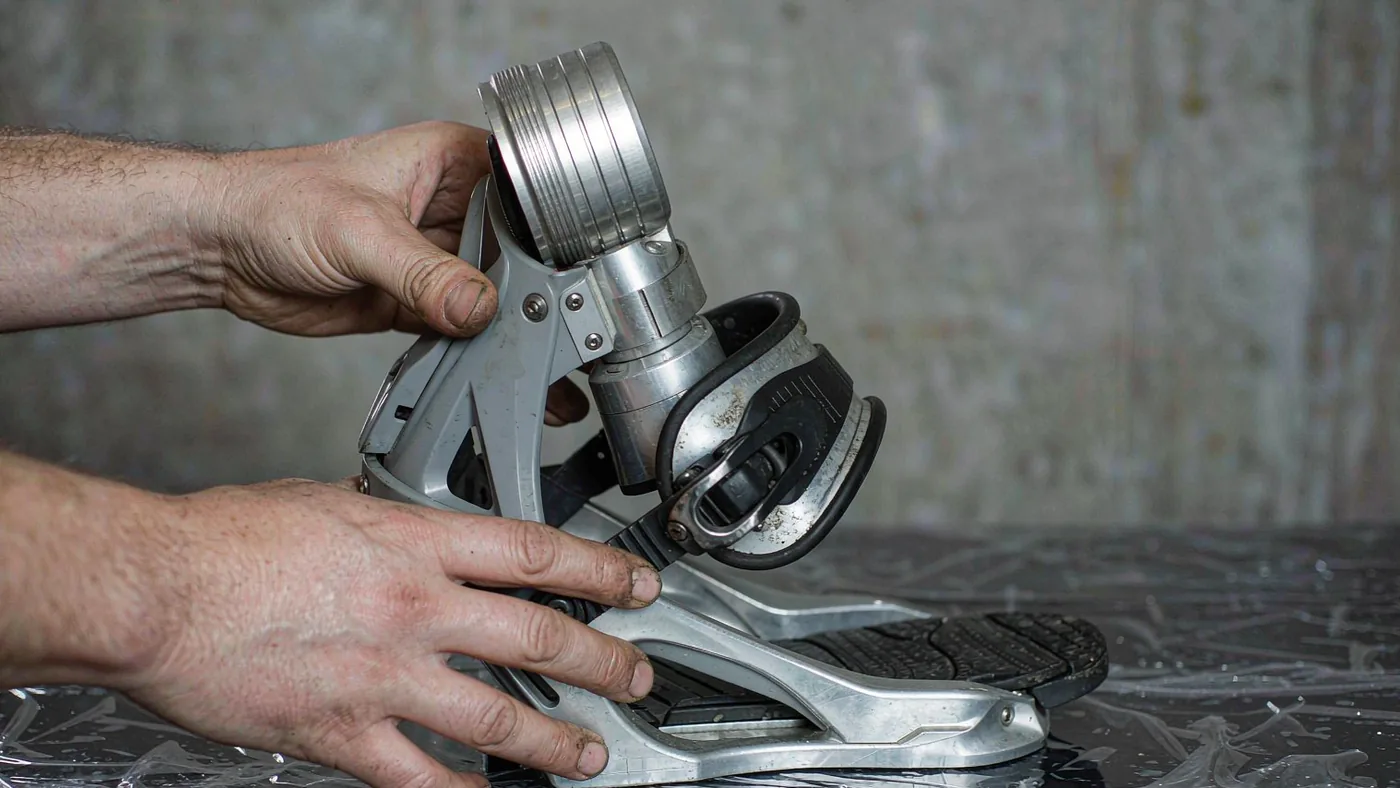
Serviceability. Straps and ladders are the world's most ordinary spare parts. A step-in mechanism is a proprietary assembly, which means repairs go through the brand rather than through any shop with a screwdriver. You are unlikely to need it, but if you do, the repair is a warranty process rather than a ten-minute job.
The second-hand market. This is the quiet cost. Strap bindings sell easily because any buyer with any board and any boots can use them, whereas a step-in binding is worth only what it is worth to riders who already own compatible boots. That is a real discount on your exit price.
The boot freedom question
This is where the Phantom earns its place. The category leader is a good system, but its compatible boots come from one manufacturer's range. If that range fits you, that is not a problem. If your feet have ever rejected a boot brand — and many riders' feet have — the ecosystem becomes a hard constraint rather than an inconvenience.
The Phantom's published compatibility is deliberately broader relative to its rivals, which means a wider pool of boots that will work with it. It is not universal; it is still a step-in system and still needs the matching connection points. But it moves the decision back where it belongs, which is on your feet rather than on a brand list.
If you have wide feet, a high instep, narrow heels or a history of boots that hurt, choosing the boot first and the binding second is the difference between a step-in system you can use and one you cannot.
The pick
The main credible alternative in the step-in category. It reduces the days lost to fumbling with straps without tying you to one boot brand.
Best for
- Riders who hate strapping in
- Zipper and access lifts
Worth skipping if
- Riders wanting the simplest possible setup
- Budget builds
- Flex bias
- Medium
- Intended terrain
- All-mountain
- Compatibility
- Requires step-in compatible boots
Strengths
- Fast in and out
- Broad boot compatibility relative to rivals
Trade-offs
- Mechanism needs clearing of snow
- Fewer boot options than strap bindings
Specifications reflect published manufacturer information, last checked 2026-09-28. We have not laboratory-tested this product; the assessment above is editorial, based on the published design and the rider profile it targets. How we review gear.
How it compares with the alternatives
| Scenario | Does the Phantom help | The gain | What it costs | If not, buy |
|---|---|---|---|---|
| Twenty lift rides a day with a lot of unclipping | Yes | Removes the sit-down and stand-up cycle from every run | More tinkering than expected on wet, snowy days | A mid-flex strap binding, if the unclipping bothers you less than the maintenance |
| Zipper lifts, drag lifts and flat access paths | Yes | The fastest realistic gain in this kind of terrain | Snow clearing before each engagement | Any strap binding, if you ride mostly chairlifts |
| Awkward feet that suit only one boot brand | Often | Broader boot compatibility than rival step-in systems | Still constrained to step-in compatible boots | Straps, if no step-in compatible boot fits your foot |
| One trip a year, kit kept for five seasons | No | The convenience does not compound over a fortnight | Higher combined cost and weaker resale value | A mid-flex all-mountain strap binding |
| Two boards shared with one pair of bindings | No | Step-in systems are not transferable in the way straps are | A second binding pair, or losing the convenience | A universal-disc strap binding |
| Simplest possible setup wanted | No | There is a mechanism to learn and maintain | A strap binding is simpler and cheaper | Any straightforward strap binding |
Scenario notes are editorial judgements based on published manufacturer specifications and the design of the system, not measurement. Published specifications, last checked 28 September 2026.
Who should stay with straps
Riders who do one or two weeks a year and keep a setup for five seasons get very little from a step-in system. The convenience is real but it does not accumulate into anything meaningful over a fortnight, and the costs — combined purchase price, weaker resale, a mechanism to clear — all apply immediately.
Riders who swap boots between bindings, borrow setups, or run two boards with one set of bindings should also stay with straps: universality is the whole point of a strap binding, and step-ins give it up. Anyone whose boots have ever been the problem should fix the boots first, because no binding mechanism makes a boot that hurts comfortable.
Verdict
If you ride a fortnight a year, keep your kit for years, or want the simplest possible setup, do not buy the Nitro Phantom — a strap binding costs less, transfers between boards, and has nothing to clear out of it on a wet day. Buy the Phantom if you ride a lot of lifts that force you in and out of your bindings, or if you want step-in convenience without being tied to a single boot line. If your boots are the problem, fix the boots first. No binding mechanism will make a boot that hurts comfortable.
Frequently asked questions
Can I use the Nitro Phantom with my existing boots?
Only if they are step-in compatible with the matching connection points, which most boots are not. Check the specific model rather than the brand, because compatibility is per boot, not per manufacturer. In practice most buyers purchase compatible boots and the binding together.
Is stepping in actually faster than strapping in?
For a practised rider on a dry day the saving is a few seconds. The bigger gain is not sitting down and standing up again, which matters more for riders with back or knee trouble than the strapping itself. Over twenty lift rides the cumulative difference is noticeable; over five rides it is not.
Do step-in bindings work in powder?
They work, but the advantage narrows. Deep snow means falling more often and spending more time with snow packed around the boot, so you clear the connection points more frequently. The convenience over straps is smallest in powder and largest on hardpack and flat traverses.
What happens if the mechanism breaks?
It is a proprietary assembly, so repairs run through the brand rather than a general workshop, and the fix is usually a warranty or parts process rather than a same-day repair. Strap bindings, by contrast, fail in ways any shop can fix with a replacement ladder or strap.
Are step-in bindings as safe as strap bindings?
The published designs engage at defined points and are established products with years of use behind them. The difference riders notice is feel, not security, because the connection is at points rather than distributed across a strap. That is a confidence adjustment over a run or two, not a safety concern.
Where to go next
If you are still weighing up whether the convenience is worth the ecosystem, read the step-on bindings verdict and the step-on vs traditional bindings comparison before you commit. Our best snowboard bindings round-up covers the strap alternatives in detail.
Whichever route you take, get the boot right first: start with the best boots for beginners, then check the size with the binding sizes guide.