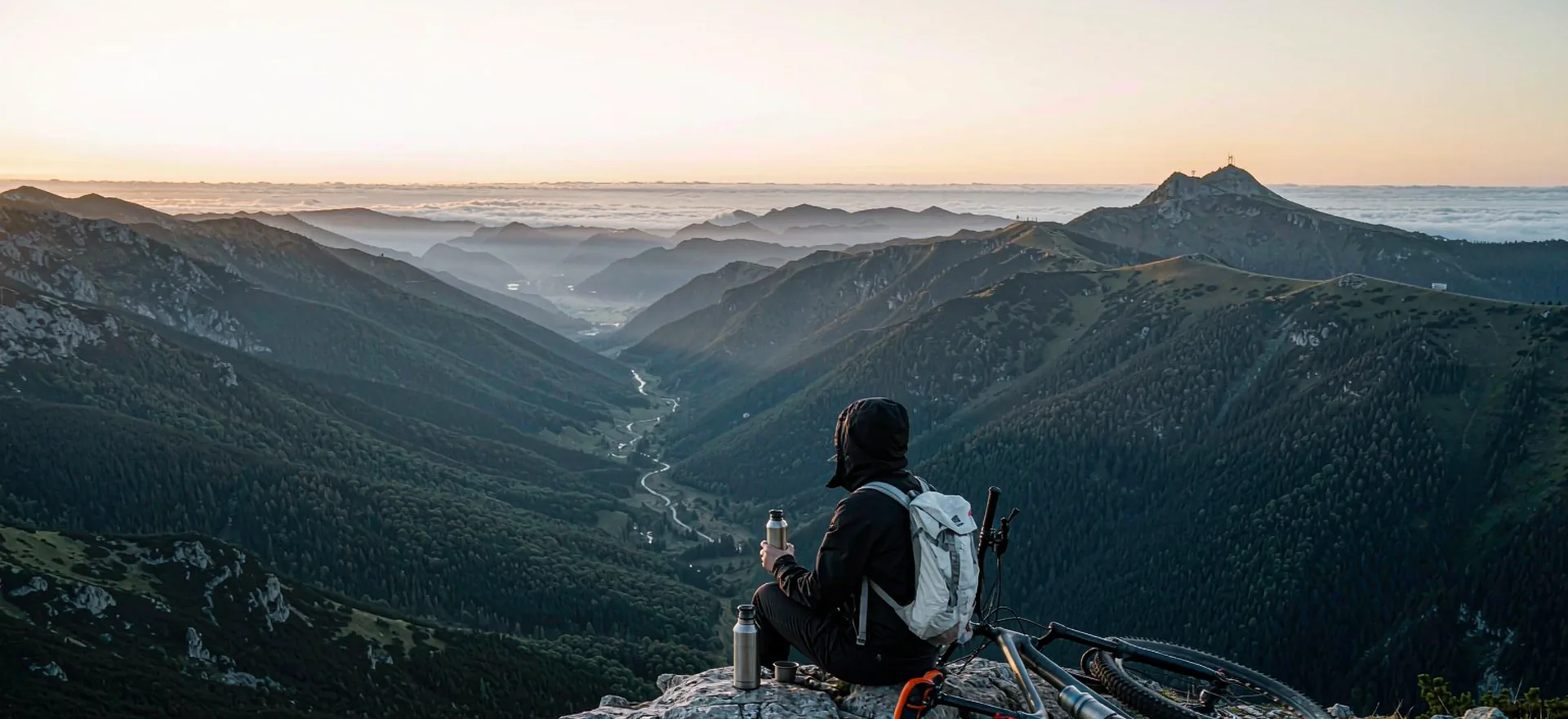
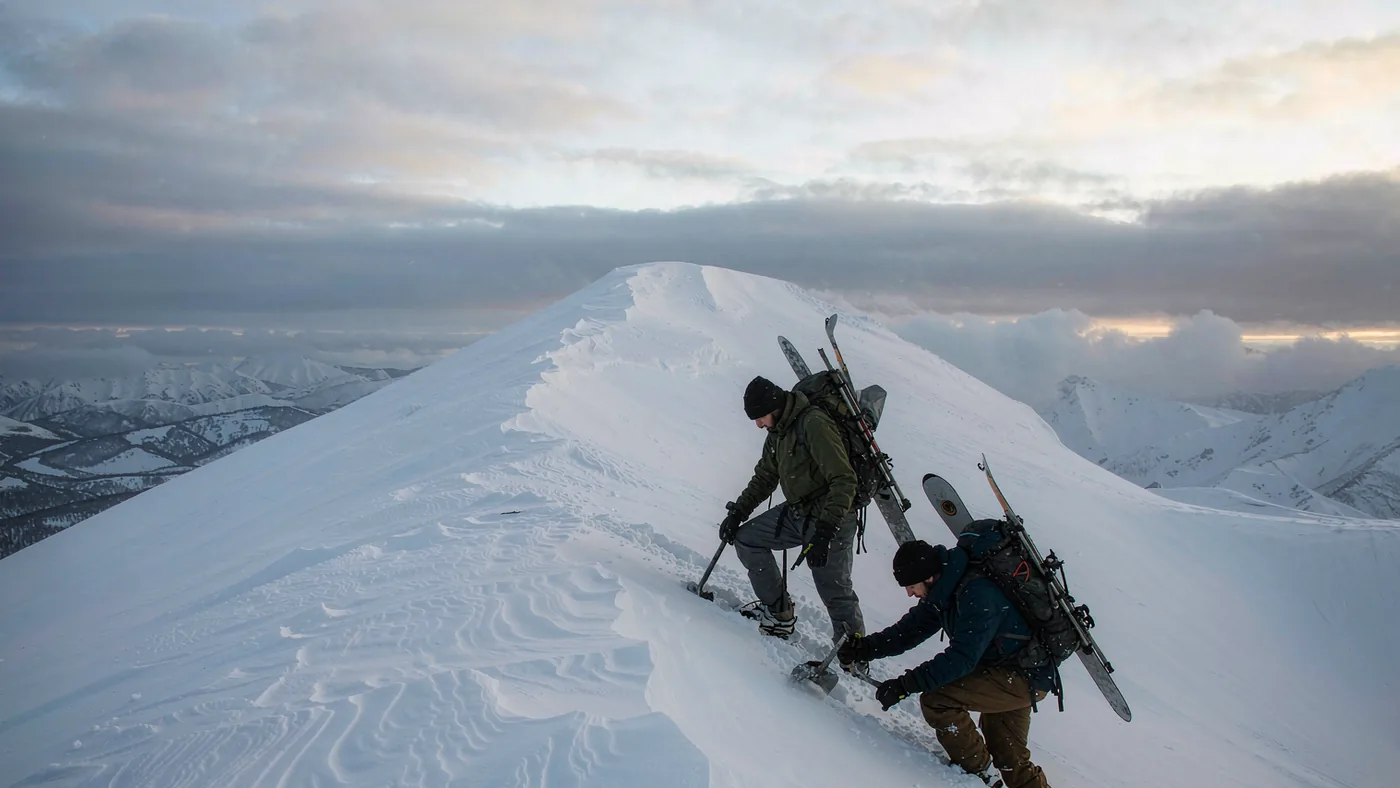
A wind-affected ridge above the tree line is often the most attractive line on the map and frequently the most dangerous place on the mountain. Snow moved by wind sits in deep, soft pockets on the lee side, it looks like the best riding of the season, and it is resting on a weak layer that formed days or weeks earlier. None of it is visible from the skin track.
Splitboarding takes you into that terrain by design, and that is why the sport carries a duty resort riding does not: you are the person deciding whether a slope is safe, and there is no patrol and no closed sign between you and the consequences. What follows is the minimum, and it is deliberately blunt, because the failure mode in avalanche accidents is rarely ignorance of a technique. It is confidence without the training to back it up.
What actually matters
Training comes before equipment, and it is not negotiable. A transceiver, a probe and a shovel are only useful if you know how to use them, and knowing how means having practised. Formal training is available in every alpine country and takes anywhere from a day to a week. Until you have done it, you should not be in avalanche terrain, however good a rider you are. Nobody outruns a slide.
Four pieces of equipment, carried by everybody, and everybody able to use them. A transceiver worn on the body rather than in the pack, switched on and checked against your partners before you set off. A probe of at least two and a half metres. A shovel carried on your back, accessible without taking the pack off. And a partner — a solo rider with a transceiver is a rider who may be found as a body, because a buried person cannot dig themselves out.
The partner is a piece of safety equipment, not company. A useful partner can see you at all times on the descent, knows where you are going and where you will stop, carries their own gear and knows how to use it, and has practised a rescue with you. Two riders on the same line a hundred metres apart are not a team. Agree the plan at the top before you drop in.
Terrain and slope angle drive risk more than anything else. The classic teaching is that avalanche terrain starts at around thirty degrees, and most accidents happen on slopes between thirty and forty-five degrees — steep enough to slide, shallow enough to look inviting. A cheap inclinometer is the most valuable judgement tool you can carry after your transceiver.
The forecast describes a region and a day, not the slope you are standing on. Considerable danger on north-facing slopes above two thousand five hundred metres tells you which slopes to avoid, not whether any specific slope is safe.
The picks
Two pieces of equipment come up constantly in this conversation and they do very different jobs. Neither is a substitute for training, and neither is an excuse to go out without a transceiver, a probe, a shovel and a partner.
An avalanche airbag pack. It is not a substitute for training, a transceiver, a probe and a shovel, but it is a real piece of safety equipment for riders going out of bounds.
Best for
- Backcountry riders with avalanche training
- Riders who go out of bounds regularly
Worth skipping if
- Resort-only riders
- Anyone without avalanche training or rescue gear
- Volume
- 22 litres
- Type
- Avalanche airbag backpack
- Intended use
- Backcountry
Strengths
- Real safety equipment for out-of-bounds riding
- Well-organised for rescue gear
Trade-offs
- Expensive
- Requires training and maintenance to be useful
Specifications reflect published manufacturer information, last checked 2026-09-28. We have not laboratory-tested this product; the assessment above is editorial, based on the published design and the rider profile it targets. How we review gear.
A split that rides like a proper board on the descent rather than a compromise. The right choice if you tour mainly to snowboard, not to tick off distance.
Best for
- Riders touring in the Alps and Scandinavia
- Anyone wanting a split that still carves
Worth skipping if
- Resort-only riders
- First-time buyers on a tight budget
- Profile
- Hybrid camber
- Shape
- Directional
- Flex bias
- Medium-stiff
- Intended terrain
- Backcountry / touring
Strengths
- Rides like a real snowboard downhill
- Confident on wind-affected and variable snow
- Durable seam construction
Trade-offs
- Expensive, especially once you add hardware
- Heavier than a dedicated lightweight touring split
Specifications reflect published manufacturer information, last checked 2026-09-28. We have not laboratory-tested this product; the assessment above is editorial, based on the published design and the rider profile it targets. How we review gear.
How they compare
| Item | What it is | What it does for you | What it does not do | Who should buy it |
|---|---|---|---|---|
| BCA Float 22 airbag pack | An avalanche airbag backpack, 22 litres | May help keep a caught rider nearer the surface of a moving slide | Cannot stop an avalanche, cannot be deployed after burial, cannot find or dig out a buried person | Trained backcountry riders who already carry a transceiver, probe and shovel |
| Jones Solution split | A directional hybrid camber split, medium-stiff | Rides like a proper snowboard on the way down and holds on wind-affected snow | Does not make the terrain safer, and costs more and weighs more than a lightweight touring split | Riders touring in the Alps and Scandinavia who want a split that still carves |
| Transceiver, probe and shovel | The rescue kit | Lets your partner find and dig you out, and lets you do the same for them | Worthless without practice and without a partner who is watching | Everybody in avalanche terrain, without exception |
Published specifications, last checked 28 September 2026. How much protection an airbag offers, and how a split behaves in variable snow, are editorial summaries of manufacturer specification and established practice rather than measured test results here.
Reading an avalanche forecast
A forecast is short, and every part of it changes what you do. Read it the night before and again in the morning.
The danger level summarises how likely triggering is and how large the resulting avalanche could be. It is regional and it is a summary, not an instruction: higher levels mean fewer slopes are reasonable, not that all slopes are equally bad.
The avalanche problem is the most under-used part. Wind slab, persistent weak layer, storm slab, wet snow and loose dry all behave differently and are triggered in different places. A persistent weak layer is the dangerous one: it can produce a large, remotely triggered avalanche days after the last snowfall, on a slope that looks perfectly stable.
Aspect and elevation tell you where to look: a forecast naming north and east aspects above the tree line is telling you which slopes to avoid and, by implication, where the reasonable riding probably is. The trend tells you what is coming, and rising afternoon danger from solar heating or a change in wind is a reason to be off the slope by lunchtime.
What an airbag does and does not do
Deploying an airbag pack makes a caught rider larger, and a larger object has a better chance of ending up nearer the surface of a moving avalanche. That is the whole mechanism. It is a real benefit, which is why the equipment exists. It is not a shield, and it is not a substitute for anything.
An airbag is not a replacement for training. It does not tell you which slope to ride, and it does not help you decide to turn around.
An airbag is not a replacement for a transceiver. If you are buried, nobody finds you with your airbag. The transceiver is what rescue is built on.
An airbag is not a replacement for a probe or a shovel. Being found is the start of a rescue, not the end of one. Locating somebody under the debris and getting them out takes a probe and a shovel.
An airbag is not a replacement for a partner. If you are alone on the slope, there is nobody to respond to a deployed airbag. The strongest protection in avalanche safety is a partner who saw where you went in.
Where to get training
Every alpine country has providers: national avalanche centres, mountain guide associations, ski schools with backcountry programmes, and clubs running rescue practice evenings. Any course worth taking includes practical transceiver searching and probing in real snow rather than a lecture, and has you dig somebody out. Go with the people you actually ride with, and practise at the start of every trip, because transceiver skills decay quickly without use.
If you have not taken avalanche training, or you do not yet own and carry a transceiver, probe and shovel, do not buy an airbag pack as your first purchase — and do not let one change where you ride. It is the last item on the list, not the first, and buying it before the training can quietly make a rider more confident in exactly the terrain they are least equipped to judge. Book the course and buy the rescue kit first.
Frequently asked questions
Can I go out of bounds without avalanche training?
No. The qualification for avalanche terrain is training, not riding ability, and riding skill has no bearing on whether a slope moves underneath you. The standard bar is a formal course, a transceiver, a probe, a shovel, and at least one partner who has all of the same and keeps you in sight.
Is an airbag pack a replacement for a transceiver?
No, and this is the error that kills people. An airbag may reduce the chance of being buried; a transceiver is what allows your partner to find you if you are. You carry both, plus a probe and a shovel, and neither works without a trained partner watching you.
What slope angle should I avoid?
The teaching most courses follow is that avalanche terrain begins at around thirty degrees, so anything at or above that deserves a deliberate decision rather than an assumption. Carry an inclinometer and use it on the slope you are about to ride rather than estimating.
How often should I practise with a transceiver?
At least once a season, and ideally at the start of every trip, with the people you will be riding with. Practice means a full companion rescue — search, probe strike and shovel work, timed. A transceiver you last used three seasons ago is unfamiliar equipment.
Where to go next
If you are choosing a touring setup, our round-up of the best splitboards covers the options and the trade-offs. For the riding itself, how to ride powder for the first time covers technique, tree wells and why you should never ride deep terrain alone.
Before a touring trip the pre-trip checklist is the place to start. There is more in the advice section.