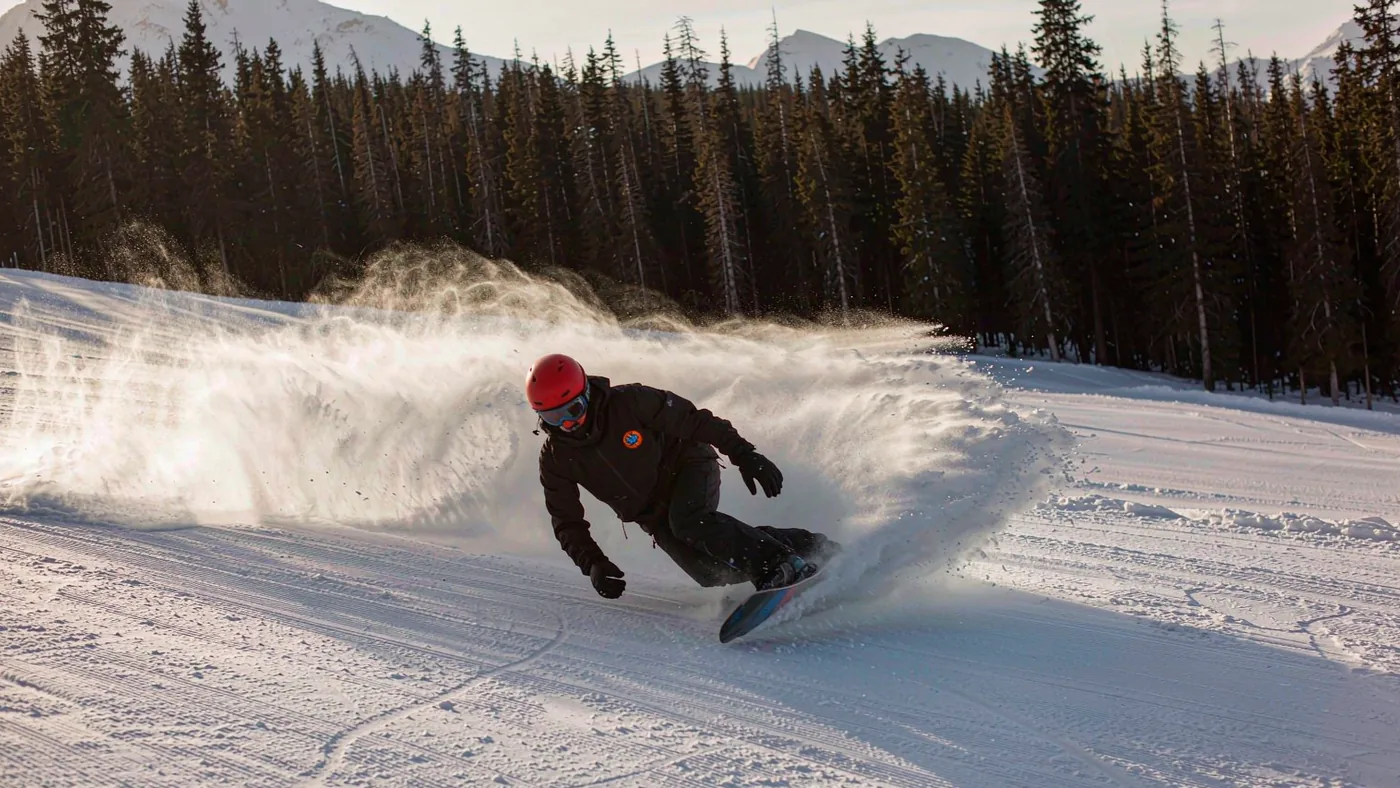
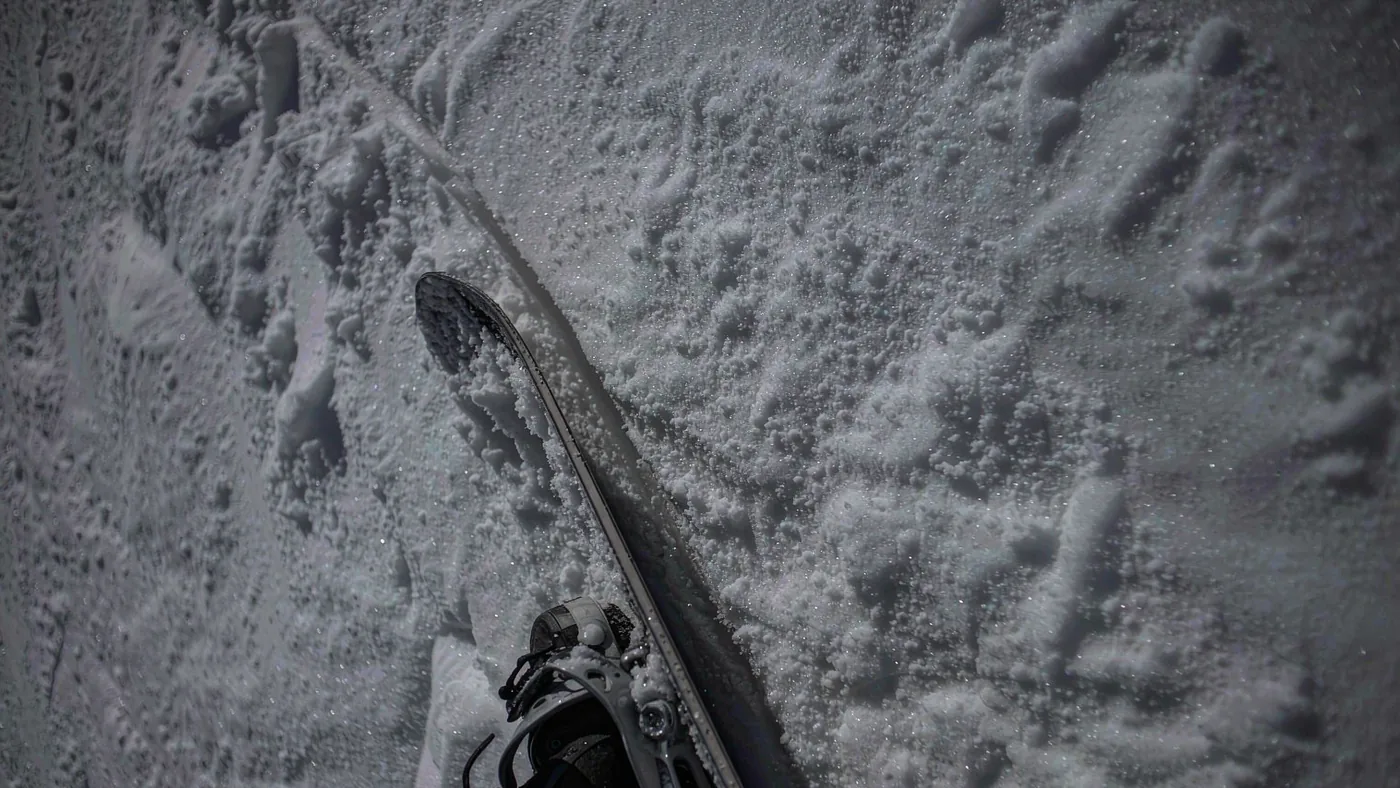
Eleven in the morning in a low Alpine resort after a week of freeze-thaw, and the piste has gone the colour of a car park. It is not blue ice — nobody who has not ridden real ice uses that phrase — but it is hard, grey and slightly polished, and the surface squeaks under an edge. Half the people coming down are skidding through their turns. The other half are carving, and the difference between them is mostly the edge under their feet.
The usual advice at this point is to go and buy a new board. That advice is often wrong. Edge hold on refrozen snow is a mechanical outcome of five things, and the board is only two and a half of them. A well-tuned mid-range camber deck will out-grip a badly maintained premium board every single time, and that is worth knowing before you spend anything.
That said, boards are not identical on hardpack. Camber-dominant shapes with a long effective edge and an aggressive edge treatment genuinely hold better, and if you ride a lot of refrozen snow they are worth choosing deliberately.
What actually grips on ice
Camber underfoot. Camber arches the board so that the contact points press into the snow along the whole running length. On soft snow that pressure is irrelevant. On hard, refrozen snow it is what puts the edge into the surface at all. This is the single biggest structural difference between a board that grips and one that skitters.
Contact-point pressure. Where the edge presses hardest, it bites hardest. That is what edge serrations and similar treatments are for: they break a long contact patch into a series of shorter, higher-pressure points. It is a real effect on genuinely hard snow, and it is not a substitute for camber, a sharp edge or a tune.
Effective edge. The edge that touches the snow, from the widest point of the nose to the widest point of the tail, is the part doing the work. Two boards of identical length can differ noticeably here. A longer effective edge puts more edge into the surface and holds a carve on a steep, polished slope with more composure.
Edge bevel and sharpness. A base bevel of about one degree lets the edge engage quickly when you roll the board over. Half a degree or zero grips harder but catches more unpredictably; two degrees feels vague on hardpack and is a park or rail setting. A blunt edge cannot be rescued by geometry at any bevel angle.
Base flatness. A base that is not flat — or worse, slightly convex — puts the edge in the air and leaves you riding on your base. No board fully compensates for this, and it is a shop job rather than a home fix if it has gone far.
The picks
The board most other all-mountain decks are judged against. Predictable, grippy on hardpack, and it stays composed when you push it harder than you meant to.
Best for
- Riders who want one board for the whole mountain
- Improvers moving up from a beginner deck
- Anyone riding a lot of European hardpack
Worth skipping if
- Park riders who want a soft, pressable twin
- Riders on a tight budget
- Profile
- Traditional camber
- Shape
- Directional twin
- Flex bias
- Medium-stiff
- Intended terrain
- All-mountain
Strengths
- Very predictable edge-to-edge behaviour
- Holds an edge on scraped European pistes
- Wide size run including wider waist options
Trade-offs
- Camber profile punishes lazy technique in powder
- Priced at the premium end for what it is
Specifications reflect published manufacturer information, last checked 2026-09-28. We have not laboratory-tested this product; the assessment above is editorial, based on the published design and the rider profile it targets. How we review gear.
A stiff, fast all-mountain deck for riders who treat groomers like a race course. It rewards commitment and punishes hesitation.
Best for
- Confident intermediate and advanced riders
- Heavier riders who flex boards easily
Worth skipping if
- Beginners
- Park-focused riders
- Profile
- Traditional camber
- Shape
- Directional twin
- Flex bias
- Stiff
- Intended terrain
- All-mountain / freeride
Strengths
- Excellent stability at speed
- Holds up on hard, refrozen slopes
- Wide sizes suit bigger riders properly
Trade-offs
- Demanding for lighter riders
- Little forgiveness for sloppy technique
Specifications reflect published manufacturer information, last checked 2026-09-28. We have not laboratory-tested this product; the assessment above is editorial, based on the published design and the rider profile it targets. How we review gear.
A stiffer, more aggressive board for riders who want to go fast and ride steep terrain. Poorly suited to anyone still building confidence.
Best for
- Advanced and expert riders
- Steep, technical terrain
Worth skipping if
- Beginners
- Park riders
- Profile
- Hybrid camber with traction edge tech
- Shape
- Directional
- Flex bias
- Stiff
- Intended terrain
- Freeride
Strengths
- Excellent grip and stability
- Holds up to hard charging
Trade-offs
- Very demanding
- Expensive
Specifications reflect published manufacturer information, last checked 2026-09-28. We have not laboratory-tested this product; the assessment above is editorial, based on the published design and the rider profile it targets. How we review gear.
How they compare
| Board | Profile | Shape | Flex | Camber underfoot | Edge treatment | Best suited to |
|---|---|---|---|---|---|---|
| Burton Custom Camber | Traditional camber | Directional twin | Medium-stiff | Full running length | Standard | Confident riders who ride mostly groomers |
| Nitro Team | Traditional camber | Directional twin | Stiff | Full running length | Standard | Heavier riders who flex boards easily |
| Lib Tech T.Rice Pro | Hybrid camber with traction edge tech | Directional | Stiff | Between the feet | Serrated contact points | Advanced riders on steep, technical terrain |
Published specifications, last checked 28 September 2026. Edge hold under pressure is an editorial judgement about the design, not a laboratory measurement.
Why rocker-dominant boards feel vague on refrozen snow
If you already own a rocker-dominant or heavily tapered board and you have noticed it feeling loose and unwilling on a hard morning, that is the design working as intended rather than a fault. Rocker lifts the contact points, which is exactly what makes a board surf in soft snow — and exactly what makes it vague when the surface is unforgiving. A tapered tail compounds it, because the rear of the board has less edge to push against.
There is no fix for this beyond the obvious one. If you own one board and it is rocker-dominant, accept that hard mornings are not its day and use the tuning section below to recover as much grip as you honestly can.
What you should not do is buy a second board for two days a season. If you ride mostly soft snow and get a handful of refrozen mornings, a sharp edge at about one degree of base bevel plus a little more edge angle in your turns will get you down comfortably. The how to ride ice and hardpack guide covers the technique side properly.
Tuning is half the answer
This is the part of the article that saves you money. On a genuinely hard piste, most riders' problem is a blunt edge, not a bad board.
A one-degree base bevel with a sharp side edge is the default for hardpack. It engages quickly and predictably. Going sharper is a real but small gain with a big cost in catchiness, and it is not something to chase at home.
Do not deepen a bevel yourself. Changing edge geometry is easy to do badly and expensive to undo. Deburring and maintaining is a home job; grinding and resetting angles is not.
Wax matters less on ice than you think, and more on the way there. A dry base does not slow you down much on hardpack, but it will hurt on the flats and traverses that get you to it. Keep the base waxed, and keep the edges sharp.
Check the edge after every trip. A single day on a rocky run-in can round an edge enough to matter, and it takes two minutes to feel for burrs with a fingernail.
Who should not buy these
If you are a beginner or a cautious improver. The Lib Tech T.Rice Pro and the Nitro Team are stiff, demanding decks that punish hesitation, and hesitation is exactly what a rider does on an icy slope they are unsure about. A softer board with a sharp edge will serve you better and be more enjoyable.
If you ride mainly soft snow. These are hardpack boards. If your season is mostly fresh snow and spring slush, you are buying gear for the minority of your days and paying for it in float and forgiveness everywhere else.
If you ride park. All three are the wrong tool for rails and buttering. Look at a soft true twin instead.
If you are on a tight budget. Buying the Burton Custom Camber to solve an edge-hold problem you could solve with a tune is the wrong order of operations. Tune first, then decide whether the board is the limit.
Verdict
The Burton Custom Camber is the safest hardpack purchase for a confident rider, the Nitro Team suits heavier riders who can actually flex it, and the Lib Tech T.Rice Pro is the specialist for steep, frozen terrain. But if you are still learning, or if your edge has not been sharpened this season, none of them is your answer. Spend the money on a full tune and a set of lessons first; that will change your icy mornings far more than a new deck will.
Frequently asked questions
What edge bevel is best for icy snowboard conditions?
Around one degree on the base with a properly sharp side edge is the standard all-round setting for hardpack. Zero or half a degree grips harder but catches unpredictably, and two degrees feels vague on hard snow. Do not change bevel angles at home — have a shop set them once and maintain the sharpness yourself.
Does a serrated or traction edge really help on ice?
Yes, to a point. Breaking a long contact patch into shorter, higher-pressure points does help on genuinely hard, smooth surfaces, which is why several manufacturers use it. It is not a substitute for camber, a sharp edge or a flat base, and on soft snow it makes no measurable difference to how the board feels.
Why does my rocker board feel bad on hardpack?
Because rocker lifts the contact points off the snow, which is what makes it forgiving and floaty in soft conditions and vague on an unforgiving surface. A tapered tail makes it worse by reducing the edge available at the back. The design is behaving correctly; it is simply not built for that surface.
How often should I sharpen my snowboard edges?
Check them after every trip and deburr as needed; a proper sharpen is typically worth doing once or twice a season for a rider on one or two holidays. If you can feel a burr with a fingernail or the edge slides across a fingernail instead of catching it, it needs work before a hard morning.
Do I need a stiff board for icy pistes?
No. Stiffness helps hold a long carve at speed on firm snow, but grip on ice comes from camber, effective edge, edge sharpness and bevel. A medium-flex cambered board with a sharp one-degree edge will out-grip a stiff board with a blunt edge, every time, at any speed you are likely to ride.
Where to go next
If grip is your problem, start with the edge sharpening guide and the how to ride ice and hardpack technique piece before you look at a new deck. The camber profiles explained article covers why profile decides so much of this.
For the rest of your week, the best all-mountain snowboards round-up is the sensible comparison, and the snowboard waxing and tuning guide covers what you can do at home. More boards in the boards archive.