The board is upside down on a workbench, the light is good, and the edge looks perfect. It is straight, it is shiny, and it runs the whole length without a mark on it. Then you take it out on the third morning of the trip, the piste has refrozen overnight, and the edge slides across the surface as though there were nothing there at all.
What has happened is not visible from a metre away. A snowboard edge does not go blunt by wearing into a rounded shape; it goes blunt by losing the crisp corner where the base edge and the side edge meet. That corner is small, it is the only part of the edge that touches the snow, and it disappears gradually — through use, through rust, through a rock strike, and through well-meaning riders running a file along it at the wrong angle.
What actually matters
Edge anatomy: two faces and one corner. A snowboard edge is a strip of steel running around the perimeter. It has a face on the base side and a face on the sidewall side, and where they meet there is a corner of roughly ninety degrees. Only that corner touches the snow, and everything in this article is about protecting and restoring it.
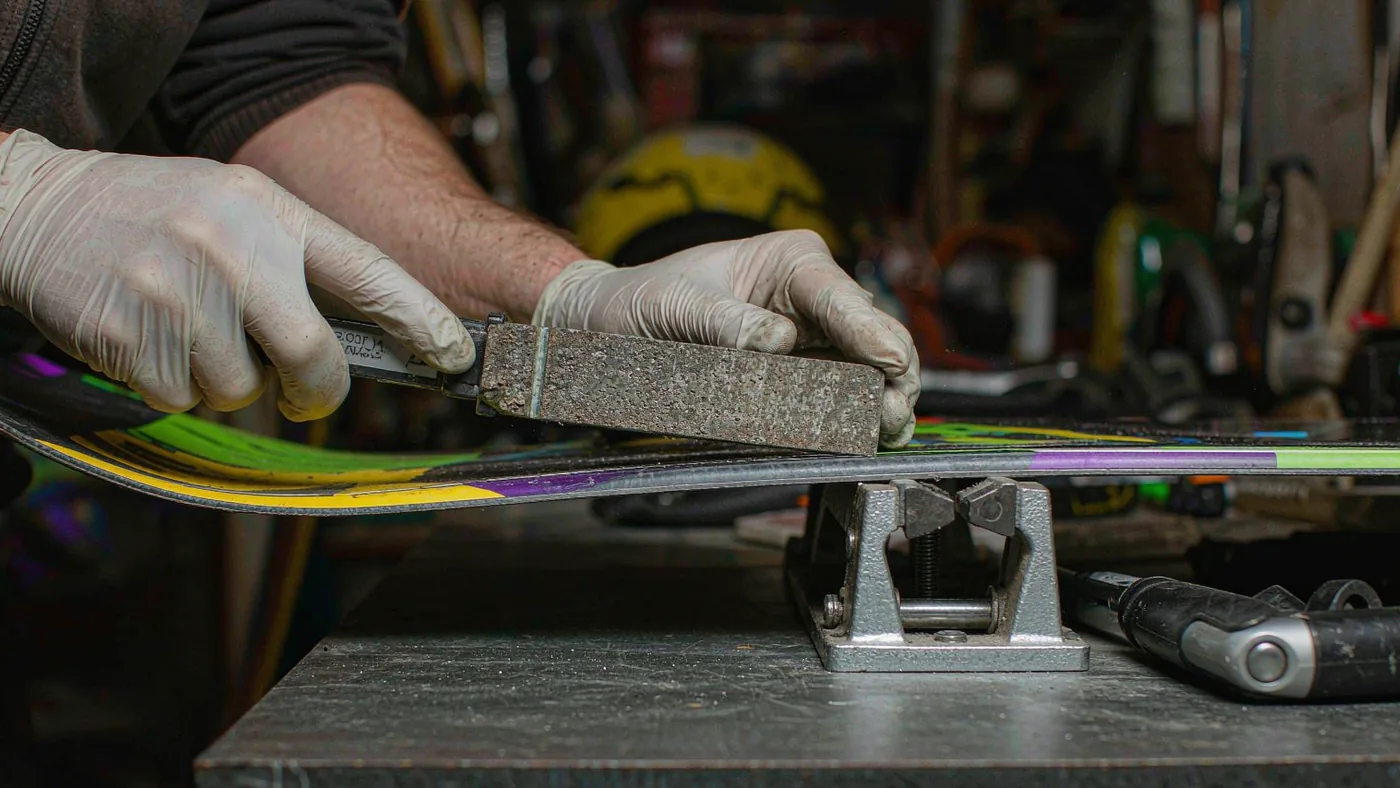
A diamond stone and a file are different tools for different jobs. A diamond stone is an abrasive plate that removes a tiny amount of material and, more importantly, cleans up burrs without changing the existing angle. A file is a cutting tool that removes material steadily and can reset an edge — which means it can also destroy one. The routine job is a stone; the resetting job belongs to somebody who knows what the angle currently is.
Base bevel and side bevel are separate settings, and the base bevel matters more than most riders realise. The base bevel is the angle at which the base edge is ground away from the snow, typically around one degree, and it is what stops the edge catching on every lump. The side bevel is the angle of the sidewall face, commonly set between one and three degrees, and a larger side bevel gives a sharper-feeling, more aggressive edge. Base bevel can only sensibly be changed on a machine.
Do not go looking for a more aggressive bevel on a board you rely on. Deepening the side bevel makes the edge sharper in the hand and more brittle in use, and once material has been taken off it cannot be put back. There is a real argument for a two-degree side bevel on a hardpack board, and no argument at all for learning how to do it on the deck you are riding next week.
The routine that keeps an edge working
This is the part that is genuinely safe for anybody with ten minutes and a stone.
- Inspect the edge in good light with the board base-up, running your eye along the whole length. Look for rust, for burrs — small bright curls of metal standing proud of the surface — and for sections hit hard enough to roll over.
- Wipe the edge dry. Water and a steel edge are a bad combination, and a damp edge left in a bag over summer will be pitted by the autumn.
- Run a diamond stone along each side edge, following the existing angle, with the stone flat against the side face. Two or three light passes from tip to tail is the routine dose. Firm pressure is not required.
- Count the passes and give both edges the same treatment. An edge stoned twenty times on one side and five on the other is no longer the same shape on both sides.
- Dry the board and put it away somewhere reasonably dry. A burr that is still standing feels sharp and behaves blunt, because it folds over the first time it touches snow.
How often edges genuinely need work
Most riders do far more edge work than they need, and do it with the wrong tool. This is the honest version.
| Task | Tool | How often it helps | Who should do it | If it goes wrong |
|---|---|---|---|---|
| Deburring and touch-up | Diamond stone | Every five to ten days of riding | Anybody, at home | Little — a stone removes tiny amounts |
| Rust removal | Diamond or gummi stone | After any storage period or wet journey | Anybody, at home | Little, unless you grind at it hard |
| Side bevel setting | File with a bevel guide | Once a season at most | Experienced tuners | A permanently thinner edge |
| Base bevel work | Shop machine | When the base is reground or the edge is rolled | Workshop only | A ruined base if attempted by hand |
| Rolled edge or rock strike | File or shop | As it happens | Workshop recommended | A bad repair shortens edge life for good |
Published specifications, last checked 28 September 2026. The intervals are editorial guidance based on how edges wear in ordinary recreational use rather than measured test results, so riders on artificial snow should check more often.
Deburring without wrecking an edge
A burr is a curl of steel folded over the corner of the edge, usually after a rock strike or a day on gritty artificial snow. It feels sharp to the touch and is useless in use, because it folds out of the way the moment it loads.
The correct treatment is a diamond stone laid flat against the side face, run along the edge in one direction rather than back and forth, with light pressure. Two or three passes will usually take a small burr off. If you can still feel it proud of the surface after six or seven light passes, stop rather than press harder.
What you should not do is take a file to a burr. A file removes material from the whole edge, so you flatten the burr and take a millimetre of good edge with it. Nor should you scrub the stone back and forth, which rolls the burr from side to side rather than removing it.
Keep a detuned board away from hardpack. Deliberately rounding the edge near the tip and tail reduces the chance of catching during spins and presses, which is useful in the park, but on a hardpack week it removes exactly the grip you need where the edge first engages. If you ride both, keep a separate board for the park.
When to pay a shop
Some jobs are worth paying for. Reach for a workshop when either of the following is true.
The base needs grinding or the base bevel needs changing. Both require a machine and somebody who understands the relationship between base structure and edge angle. This is not a bench job. The same applies if you want a different side bevel, or if the board is new and you do not know the current one — manufacturers ship boards with a stated bevel, and if you do not know it you cannot preserve it.
If you ride a lot of hardpack, ride fast, or race, do not learn to file on the board you depend on. Filing at the wrong angle removes material permanently and you cannot put it back, and each mistake shortens the working life of the edges. Learn on an old board you do not care about, or pay a workshop and keep the diamond stone for the routine work, which is safe for anybody and does most of what a recreational rider needs.
Frequently asked questions
How often should I sharpen my snowboard edges?
For routine touch-up with a diamond stone, every five to ten days of riding, and more often on artificial snow, which is abrasive. Actual filing is a once-a-season job at most, and many recreational riders never need it if the edges are stoned regularly.
What is the difference between a file and a diamond stone?
A diamond stone removes a very small amount of material and cleans up the existing corner, which makes it the right tool for routine maintenance. A file cuts steel properly and can reset an angle, which makes it a repair tool — and a destructive one in the wrong hands.
What do base and side bevel angles mean?
The base bevel is the angle ground into the base edge, usually around one degree, and it governs how easily the edge engages. The side bevel is the angle of the sidewall face, commonly one to three degrees, and a larger side bevel gives a sharper-feeling edge with less material supporting it.
Can I damage my board with a diamond stone?
Very unlikely if you use light pressure and follow the existing angle, because a stone removes tiny amounts of material. Damage comes from files, from aggressive grinding, and from changing an angle by hand without knowing what the original angle was, and edges put away damp will rust and pit long before a stone causes any harm.
Where to go next
For the base side of maintenance, read repairing snowboard base scratches and core shots, and for the full seasonal routine see snowboard care, waxing and storage. If you are bringing a board back into service after a summer in a cupboard, how to inspect a used snowboard is a useful checklist even on your own deck. There is more in the advice section.