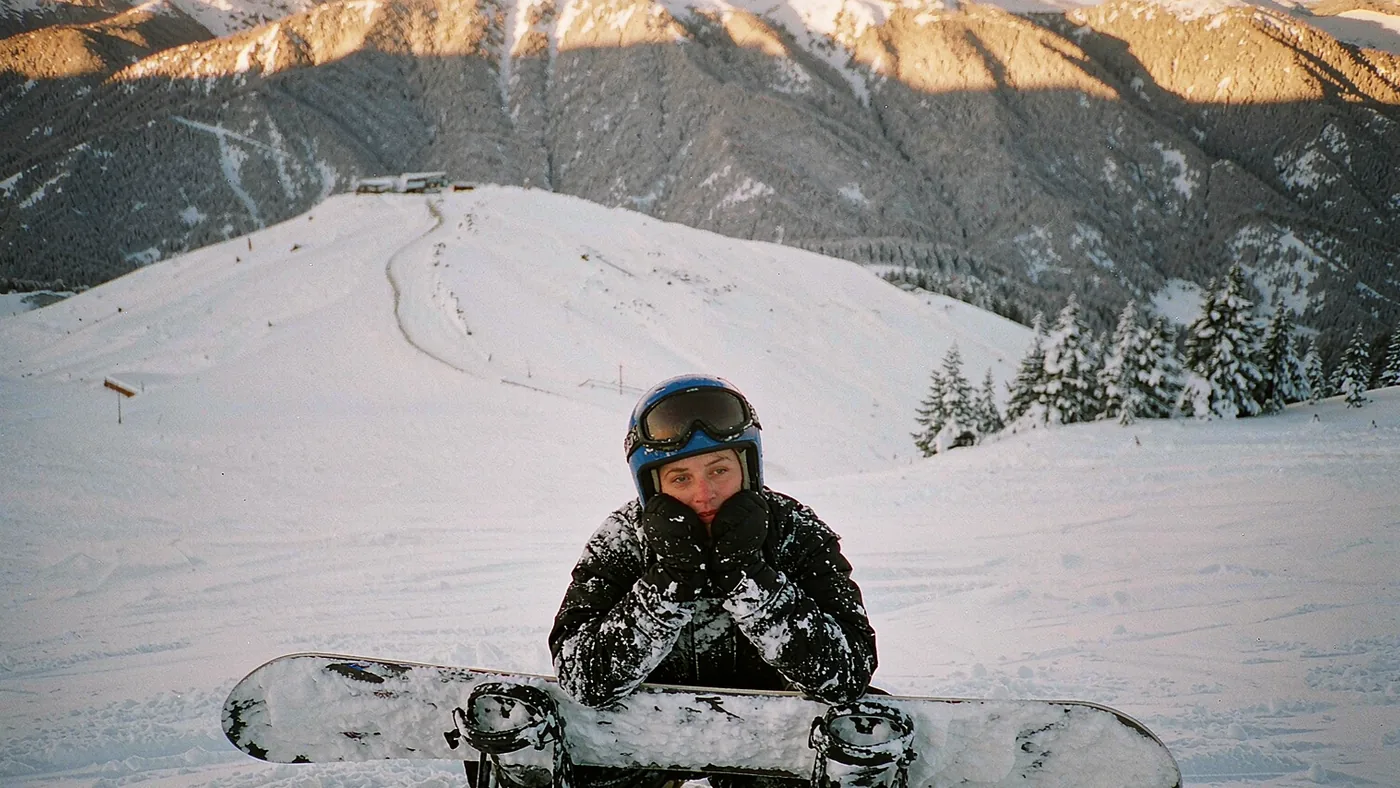
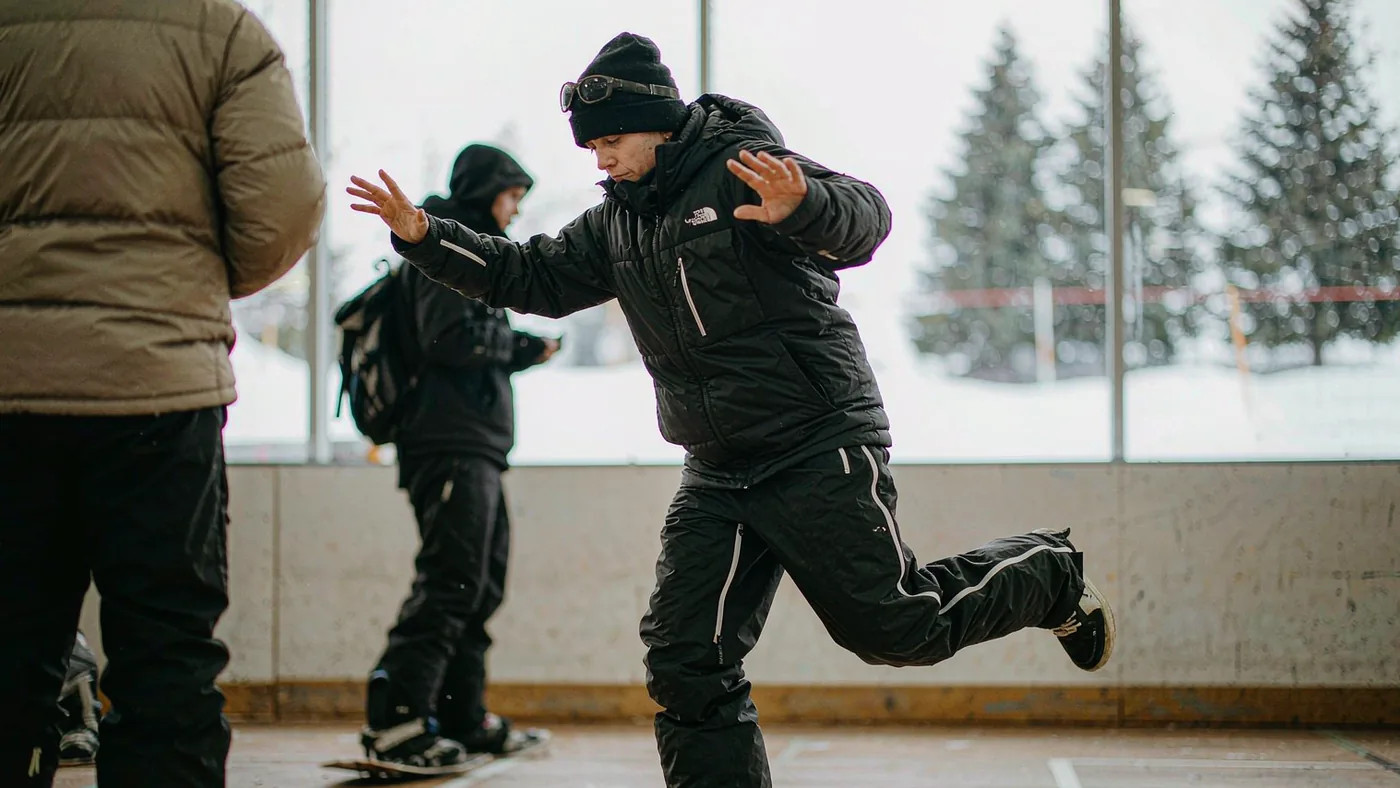
It is twenty to four on the third afternoon of your trip. You have ridden well all week. The last run is one of those flat, gentle cat tracks back to the lift, the sort you would barely notice on day one, and about halfway along it your quads simply stop answering. Your knees drift inwards, the board goes flat, and you sit down in the middle of the piste for no reason anybody watching could identify.
That moment is not a technique failure and it is not a verdict on your ability. It is the end of a fuel tank, and it arrives at a predictable time on a predictable day. The two things that actually end snowboard trips are quad failure on the final run of the day and falls that happen because you are tired — and both are largely decided before you leave home.
What actually matters
Single-leg strength. Snowboarding is a series of balancing acts on one leg at a time, in a held shallow squat, on a moving surface. Your weight lives on whichever foot is on the working edge, and that alternates constantly. Squats with both feet on the floor strengthen the wrong pattern; the useful version is a one-legged squat, a split squat or a step-down, where one leg takes everything.
Hip and ankle stability. The board transmits every lump in the snow up through the ankles and knees, and the muscles around the hip joint decide how much of that reaches your lower back. If your hip drops when you stand on one leg, the whole chain is doing more work than it needs to, and it will be the first thing to fail in the afternoon.
A core that resists rotation rather than one that crunches. Snowboarding is an anti-rotation sport. Your shoulders and hips stay broadly aligned while your legs steer the board underneath you, and the effort of holding that alignment is what a tired core gives up first. Planks with a shoulder tap, side planks and dead bugs train that job; sit-ups do not.
An aerobic base that outlasts a riding day. Not fitness for winning anything, fitness for holding your form from nine in the morning until four in the afternoon across five or six consecutive days at an altitude your body is not used to. Riding is stop-start, so the useful base is moderate and long rather than sharp and short.
A realistic six-week structure
You do not need a gym and you do not need to be athletic when you start. Two or three sessions a week, each lasting thirty to forty-five minutes, is enough to change how day three feels.
| Week | Primary focus | Sessions | Session shape | The trap to avoid |
|---|---|---|---|---|
| One | Remembering how to move | Two | Full-body, moderate, learn the movements with no weight | Going far too hard in the first week |
| Two | Single-leg strength | Two | Split squats, step-downs, one-leg balance holds | Adding weight before the balance is clean |
| Three | Hip and ankle stability | Three | Balance pads, single-leg reaches, ankle work | Ignoring the wobble and rushing the rep |
| Four | Anti-rotation core | Three | Planks with a shoulder tap, side planks, dead bugs | Training abs with crunches and calling it done |
| Five | Endurance plus strength | Two or three | Longer cycling, rowing or hill walking alongside the strength work | Dropping the strength work in favour of cardio |
| Six | Taper | Two | Half the volume, same movements, nothing new | Cramming in a final hard week before flying |
Published specifications, last checked 28 September 2026. The exercise selection and the order of the weeks are editorial judgement, not measured outcomes, and the plan is generic rather than personal. If you have an injury or a medical condition, take advice before starting.
The movements worth doing
Split squats and step-downs. Stand in a lunge and lower until the back knee is close to the floor, or step off a low box onto one leg and control the drop. Slow and controlled beats fast and heavy, because the quality that matters is eccentric control — lowering under load, which is exactly what a tired quad cannot do.
One-leg balance holds. Stand on one foot, then on a cushion or stability pad, and hold for thirty to forty-five seconds without letting your knee collapse inwards. Then try it with your eyes closed. This trains the ankle and hip together and transfers better than any other exercise here.
Lateral band work. A resistance band above the knees, a quarter squat, and side steps across a room. Hip abductor strength is what keeps your knee tracking over your foot when the quad behind it is exhausted.
Planks with a shoulder tap. A high plank, feet a little wider than usual, then lift one hand and tap the opposite shoulder without letting your hips rotate. Ten taps per side. It is the closest gym equivalent to what holding a stance actually asks of your midsection.
Something long and boring. Cycling, rowing or an hour of walking uphill, at a conversational effort. Build this over weeks five and six so that a full day at altitude is not a shock.
Why late-day fatigue causes the injuries
Most snowboard injuries do not happen to riders trying something beyond them. They happen to riders doing something well within their ability at the end of a day, when the things that normally protect them have quietly shut down.
Tired legs cannot hold an edge, so the board slides out on a surface you rode confidently all morning. A tired core stops resisting rotation, so a wobble that would have been absorbed becomes a twist through the knee. Tired judgement is the least discussed of the four: the decision to take one more run on empty legs is itself a symptom.
The answer is not willpower, it is planning. Ride what you actually want in the morning, take a proper lunch, and treat the last hour as optional. Four hours ridden well are worth more to your progress than eight that end with a fall.
What not to bother with
Long runs alone. Running builds a useful engine and almost nothing of the one-legged eccentric strength that fails on a snowboard. Keep it if you enjoy it, but do not let it replace the strength work.
Static stretching before you ride. It does not prepare muscles for load and may reduce the force they produce for a while. Use it after riding, when it helps you feel human the next morning.
Machine leg presses. Two legs pushing together along a fixed path barely resembles snowboarding, and the machine holds you in a stability the mountain never will. Use free weights and single-leg variations instead.
If you are riding three or four days in total this season, on gentle pistes, at a low-altitude resort, a six-week programme is more effort than the problem deserves. Two or three sessions of whole-body exercise a week, plus a few sets of split squats and balance holds, will cover it. Save the structure for the year you book a fortnight, ride consecutive days, or go somewhere high.
Frequently asked questions
How far ahead should I start training?
Six weeks is where a structured plan starts to pay off, and it leaves room for one taper week before you fly. If you only have two or three weeks, do split squats, single-leg balance holds and planks twice a week and skip everything else.
Do I need a gym to get fit for snowboarding?
No. Bodyweight split squats, step-downs from a stair, balance holds on a cushion and plank variations cover most of it in twenty minutes at home. A resistance band and something to step onto are the only equipment that genuinely helps.
Why are my legs fine on day one and useless on day three?
Day one runs on enthusiasm and unfamiliar stimulus. The accumulated fatigue shows up once the soreness from the first days has settled in and the sleep and hydration debt has built, which is why the third and fourth afternoons are where most trips go wrong.
How many days in a row can a normal rider manage?
For most recreational riders, four or five consecutive full-length days is where afternoon form starts to degrade noticeably. On a longer trip, plan one proper rest day around the middle rather than trying to ride every day.
Does altitude change what I should do?
It changes pacing more than training. Above roughly two thousand metres, expect poor sleep for the first two nights and breathlessness doing things that are easy at home. Keep day one short and drink more water than you think you need.
Where to go next
For the day-by-day shape of a first trip, and why the middle of the week hurts, see first season snowboarding. The pre-trip checklist covers the practical jobs before you fly, and ice and hardpack technique is worth reading before a week that will test your legs.
Padding for the inevitable falls is covered in our guide to impact shorts and pads, and there is more in the advice section.