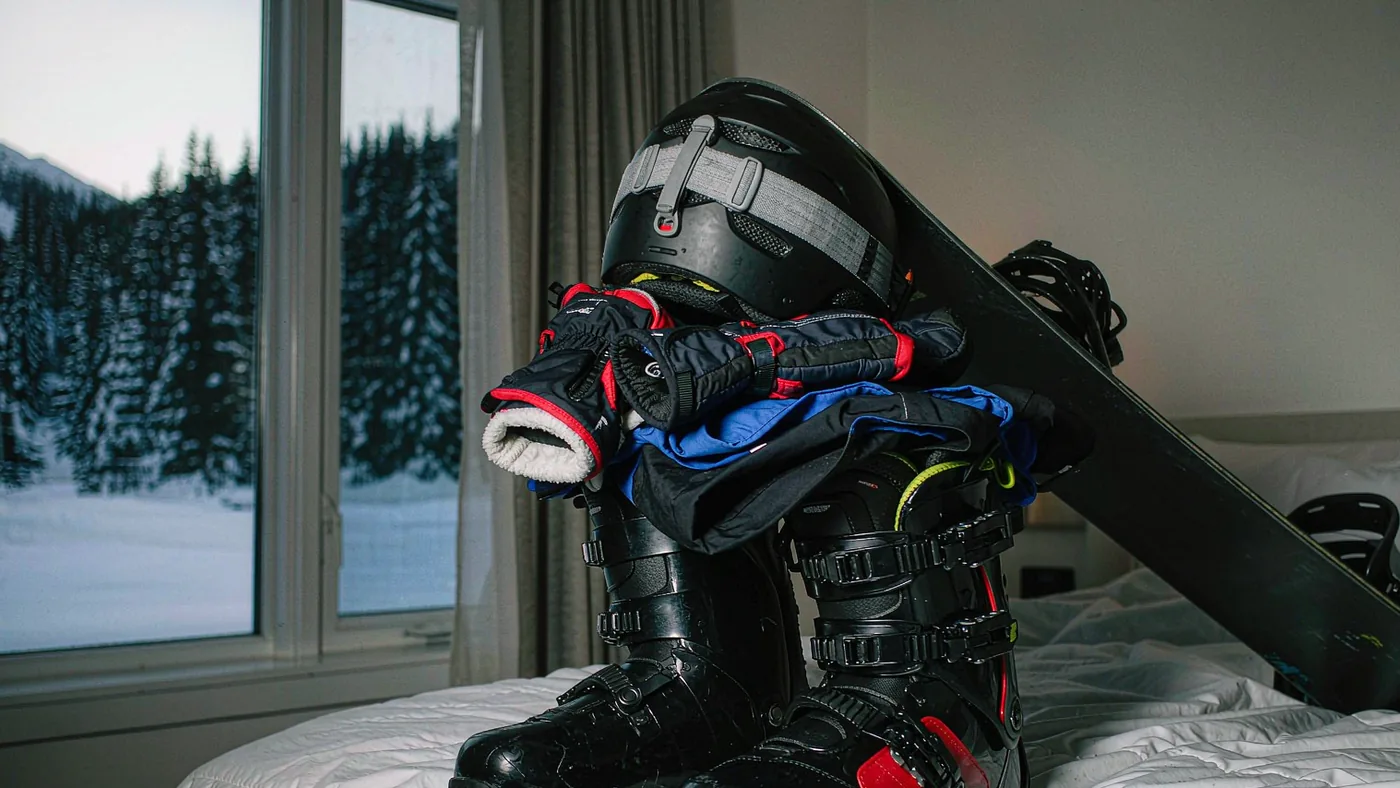
The last evening of a first trip is when the arithmetic usually happens. Boots drying by the radiator, a board you hired for the week leaning in the corner, and a phone open on the airline's baggage page trying to work out what the next trip will cost. Almost everyone who does that sum for the first time is surprised by the same thing: the kit was not the expensive part, and the board — the thing they spent three weeks researching — was the cheapest column of all.
A first season has four costs: travel, lift pass, lessons and kit. They are not the same size, and they do not behave the same way. Two of them are fixed once you have chosen your resort. Two of them you control, and one of those two is where the whole thing is won or lost.
The four buckets
Travel. Flights, transfers, accommodation and the bag fee. This is usually the largest single number, and the hardest to reduce at short notice, because the good weeks are booked months in advance and school holidays dictate the price for anyone with children. Moving one week earlier or later in the season can change this more than any decision about gear.
Lift pass. The second fixed cost, and often the one people forget when they compare a short break with a long one. A six-day pass is the single biggest line item of a week's riding after accommodation, and it is bought whether or not you feel well, whether or not the weather is good, and whether or not you are still riding well by day four. Book it with the travel where the resort offers that, and check what a beginner's area pass costs if you are spending the first two days on the nursery slope.
Lessons. The best-value purchase of the entire season, and the one beginners cut first. Two half-day group lessons early in the week will do more for your riding than any equipment upgrade, because they replace a season of guessing with a morning of correction.
Kit. Everything you wear and strap on. It is usually the smallest of the four buckets, and it is the only one that keeps its value after the trip ends.
| Bucket | Roughly how big | What drives the cost | Where it can be cut | Where it should not | Year-one decision |
|---|---|---|---|---|---|
| Travel | The largest single item | Week chosen, school holidays, airport, transfers | Shoulder weeks, bigger airports, self-catering | Baggage allowance — pay for the bag, not the excess fee | Book early, book outside half term |
| Lift pass | Second largest | Resort, number of days, beginner area | Buy fewer days and rest one | Buying six days if you will ride four | Buy with travel; check beginner-area pricing |
| Lessons | A meaningful minority of the total | Group or private, half day or full day | Group lessons, mornings only | Cutting lessons entirely to fund kit | Two half-days in week one, at least |
| Kit | Usually the smallest | Boots, helmet, goggles, outerwear, board | Hire the board and bindings in year one | Boots, helmet and goggles | Buy boots, helmet, goggles and gloves |
Editorial guidance about the relative size of each cost bucket rather than any measured spending data, last checked 28 September 2026. Actual costs depend on resort, season, party size and how you travel.
The kit decision, item by item
Boots: buy. This is the only item in the whole pile where hiring reliably ruins the week. Hire boots have been on dozens of feet, the liners have moulded to somebody else's foot shape, and a boot that does not fit properly turns every run into a test of endurance. Buy a mid-range boot that fits, and read boot sizing before you do.
Helmet: buy. Hire helmets exist, but you cannot tell what has happened to one before you put it on, and a lid that fits your head is a different object from a lid that fits the hire rack. Our helmet buying guide covers the fit checks.
Goggles: buy. They are not expensive at the entry level, they are useless when hired and misted, and they are the difference between a foggy afternoon and a good one. A single decent goggle with a versatile lens outperforms a cheap set that you cannot see through.
Gloves or mitts: buy. Cheap hire gloves are usually cold and wet by 11am. This is a small purchase with an outsized effect on the day.
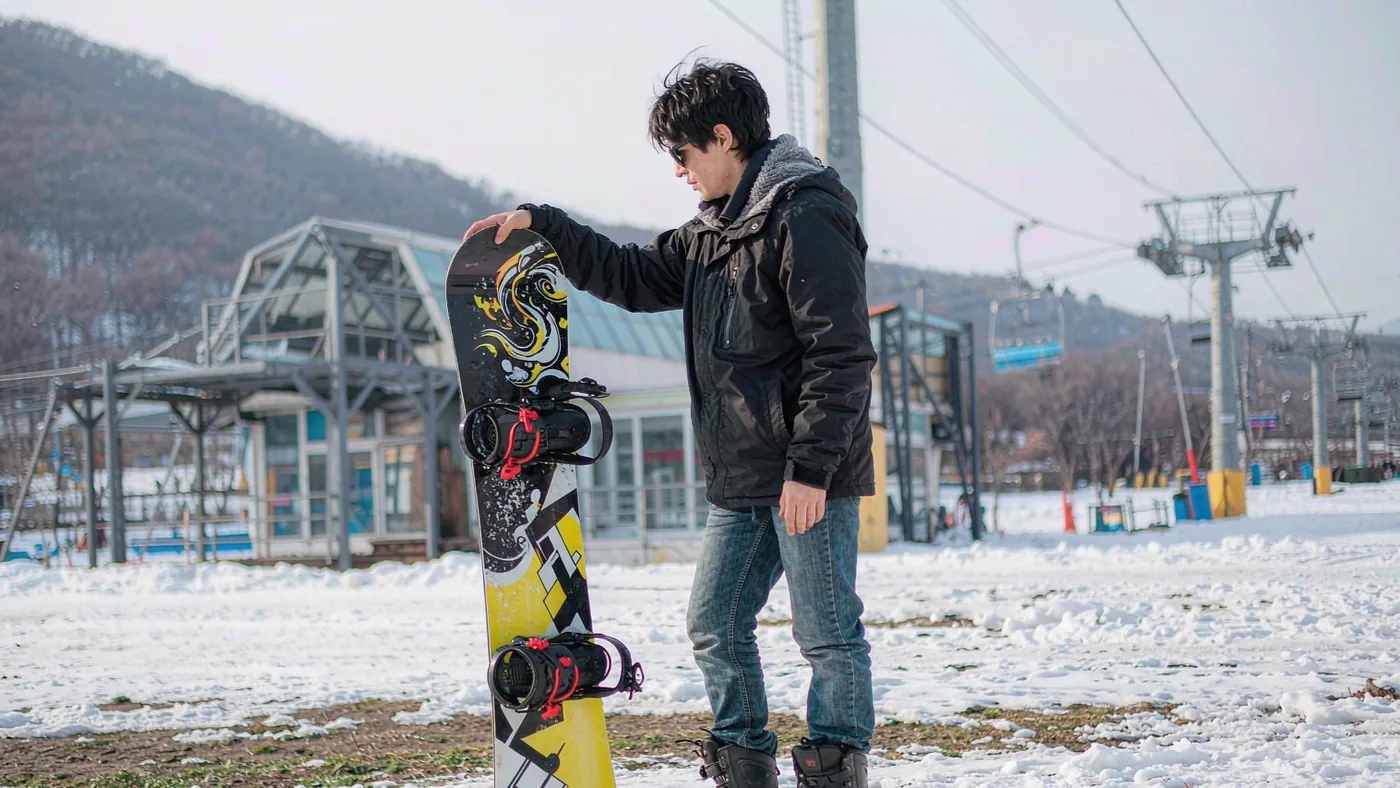
Board and bindings: hire in year one, probably. For one or two weeks in a first season, hire costs a fraction of a full setup and removes transport, storage and servicing from the equation. Buy when you know you are coming back, and when you know what you like riding. Our comparison of buying against renting sets out where the line sits.
Why lessons are the best value thing you will buy
A first season is not a test of equipment. It is a test of whether you learn enough control to enjoy yourself.
Lessons change the arithmetic in three ways. They shorten the time it takes to link turns, so a greater share of your expensive lift pass is spent riding rather than falling. They remove the habits that are expensive to unlearn later. And they reduce the risk of the injury that ends a season early, which is the most expensive outcome of all.
Group lessons are usually the better value. You get less individual attention, but you also watch other riders make the same mistakes, which is an effective way to learn.
Half days beat full days. A morning lesson followed by a free afternoon to practise what you were shown is worth more than a full day of instruction that leaves you tired at lunchtime.
Front-load them. Book lessons for the first two or three days, not the last two. A lesson on day one prevents a week of wrong turns.
Where the money quietly goes
The kit is visible. These are not, and they are why a first season often overshoots.
Baggage. A board bag counts as a sports item on most airlines, and being over the weight limit at the desk is one of the worst ways to spend money on a trip. Weigh the packed bag at home.
Days you will not ride. A week's pass bought with good intentions is wasted on two days of sore legs, so budget for the pass you will actually use.
What not to buy in year one
A stiff or premium board. It will make learning harder rather than easier, and it will still be there, unchanged, when you are a better rider.
Second-hand boots. Liners mould to the first owner's foot and will never fit you properly. Buy boots new, or at least buy them fitted.
A second-hand helmet. You cannot tell whether it has taken an impact, and a cracked or compressed shell does not show on the outside.
Verdict
If your first season is one week in a resort, with hire shops at the bottom of the lift and a flight to pay for, hire everything except boots, helmet, goggles and gloves. Buy a setup when you have ridden enough days to know what you like and when the travel maths has stopped changing — that is usually the second season, and the money is better spent on lessons and an extra week in the first one.
Frequently asked questions
Should I buy a board in my first season?
Not usually. Hiring a board and bindings for one or two weeks costs a fraction of a new setup and avoids transport and servicing. Buy once you know you are returning next season and you know what sort of riding — piste, park or powder — you actually enjoy.
Are private lessons worth the extra?
Sometimes, and mostly for specific problems. A private lesson fixes a single issue quickly, while group lessons give you more hours of instruction for the same spend. For a first week, two or three half-day group lessons are the better value than one private session.
What is the cheapest way to start snowboarding?
Book a shoulder week outside school holidays, buy boots, a helmet, goggles and gloves, hire the rest, and spend the savings on lessons. Riders who hire everything for two seasons before buying usually have better technique and no gear they regret.
How many days should I book for a first trip?
Five or six riding days out of seven works well, because most beginners need one rest day. A short break of three or four days is enough to learn the basics but leaves little time to consolidate them, and a two-week trip in year one is usually more than a beginner's legs can use.
Where to go next
If you are planning the first trip, start with your first season of snowboarding for the order things happen in, and buying versus renting before you commit to any hardware. The trip checklist covers the weeks either side of the flight.
On the kit side, boots for beginners explains what to look for in the one item worth buying, and the first setup guide covers the sequence when you do decide to buy.