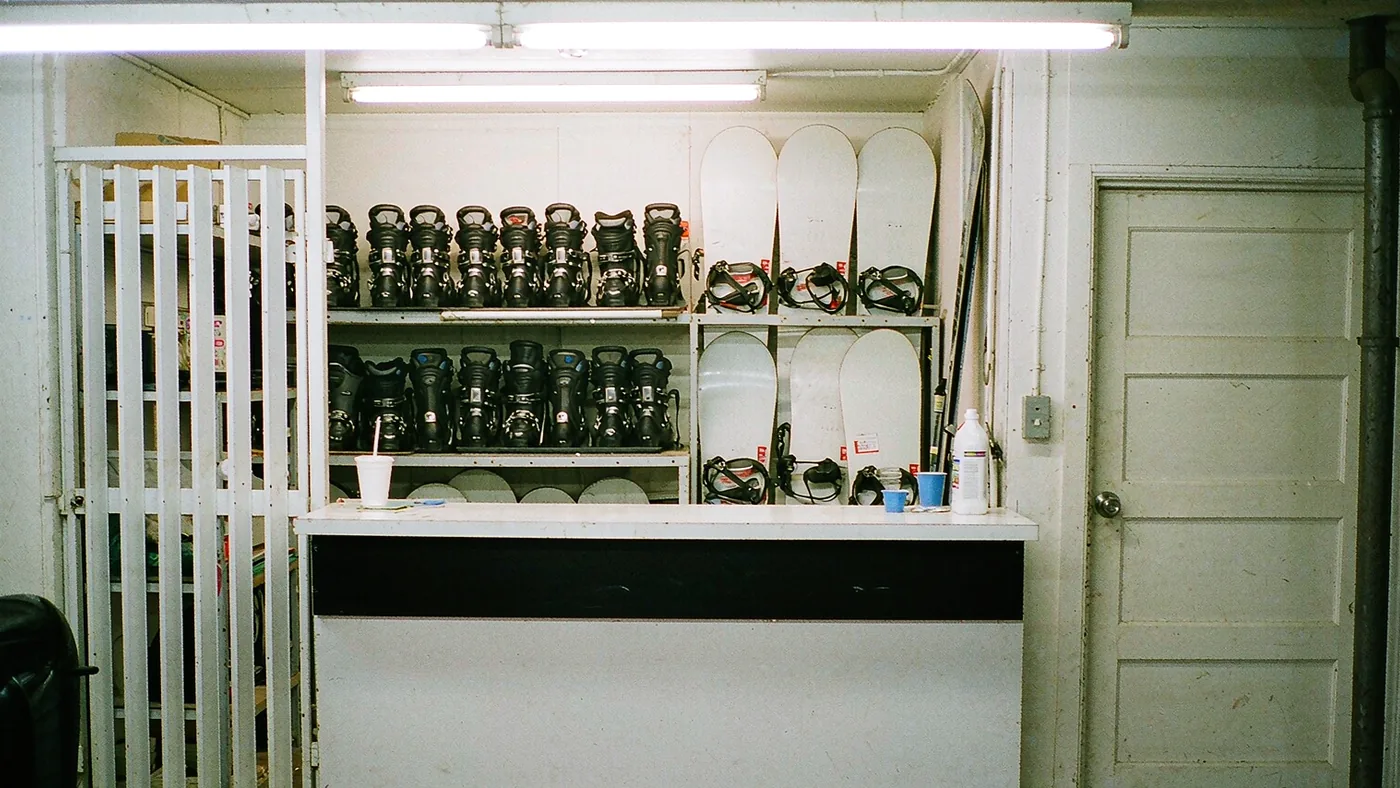
At twenty past eight on a February morning in Alpe d'Huez, the rental shop is a queue of people in softshell jackets holding paper tickets. Behind the counter is a wall of boots in every size, and behind that a rack of boards that were, two seasons ago, the mid-range of somebody's range. The person in front of you is being handed boots half a size too big and a board a little too long, and taking them, because the lift opens in ten minutes.
That is the honest picture of renting: much better than it used to be, and still not as good as kit that fits you. The question is not whether hire equipment is decent, it is which parts of it you should stop hiring and when. The position here is simple. Boots, helmet, gloves and goggles are worth owning before your first trip. The board, the bindings and the outerwear are worth hiring until you know what you want. And every decision should be made by counting days, never by comparing a hire charge with the price of an object.
What rental kit is actually like now
Standard hire has improved. Most resort shops run two or three tiers, from a basic package to a performance range, and the difference is mostly the age and specification of the board rather than the service. The basic tier is usually a soft entry-level deck with bindings to match — fine for a first week, dull by the end of a second.
Performance tiers are genuinely good. Ask for the higher tier and you often get a recent mid-range or premium board with a decent edge and a fresh structure: the cheapest demo you will find.
Boots are the weak point. Hire boots are used by many people, so liners are packed out and sizing is approximate. A hire boot half a size too big lets your heel lift, the most common reason a beginner cannot hold an edge.
The queue is a real cost. Hire shops are busiest between eight and nine, and again when it snows and everyone wants a different board.
What to buy before your first trip
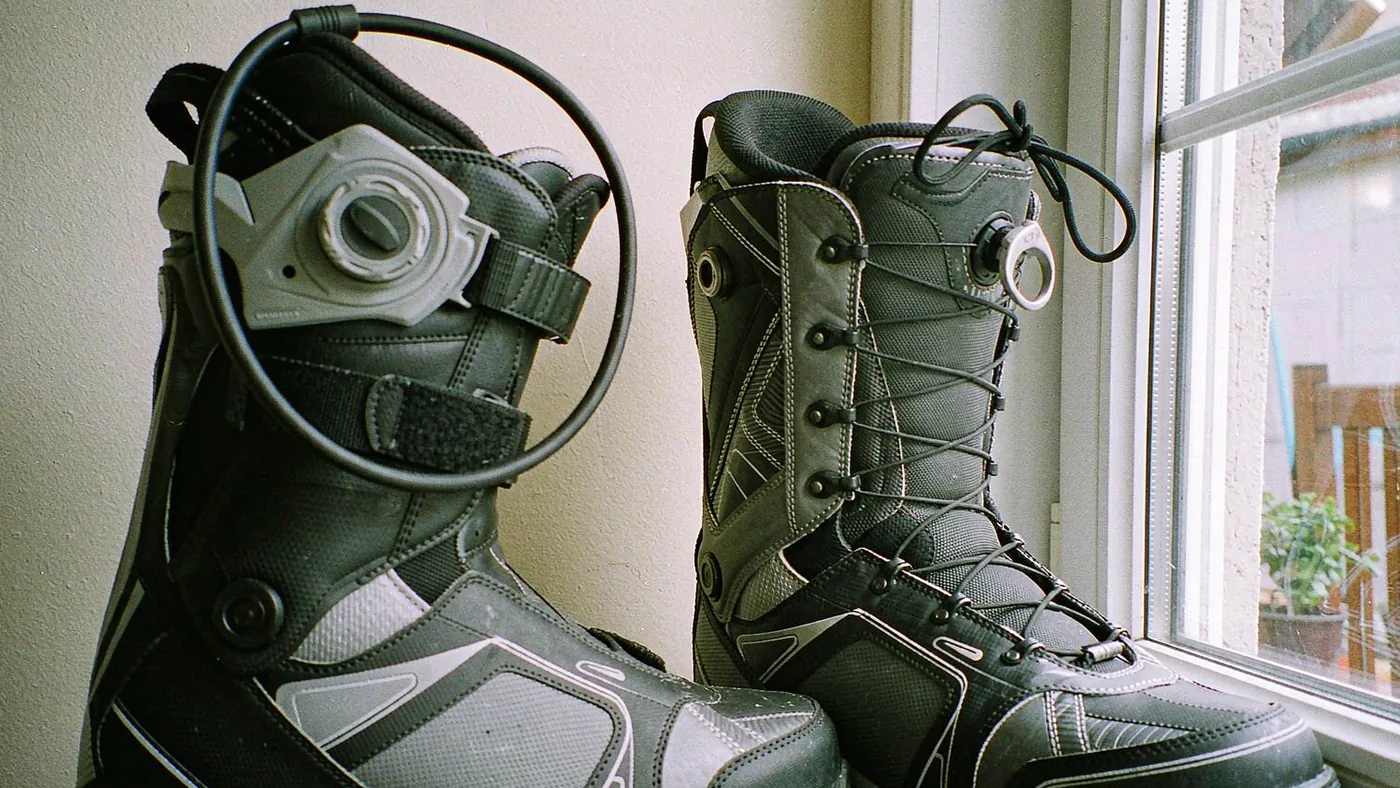
Boots. The one purchase that pays for itself immediately and in a way you can feel. Boots bought from a shop that measures your feet will be the right shell size, will have a liner that moulds to your foot rather than someone else's, and will still be your boots next season.
A helmet. Hire helmets are available almost everywhere and usually in reasonable condition, but a helmet is fit-critical and shared. An entry-level helmet with rotational-impact protection will fit you properly, which a pooled one will not.
Gloves and goggles. Both are cheap to own, unpleasant to share and central to your comfort. Goggles that fit your face and your helmet without a gap beat better ones that do not, and hire goggles are rarely available.
What to hire, and why
The board. Board choice depends on the snow, your progress and your size, and in year one you do not yet know your preferences. Hiring lets you ride a soft beginner deck in week one and a mid-range all-mountain shape next season.
The bindings. These follow the board, and hire bindings are set up for the board you are riding, which removes a whole class of compatibility mistakes in the first season.
The outerwear. A hired or borrowed jacket and pants gets you through a first trip. Sizing, venting and waterproofing only matter once you ride regularly and know how cold you personally get.
How they compare
| Item | Hire it if | Buy it if | Break-even, in days ridden | Why |
|---|---|---|---|---|
| Boots | Never, in practice | You are riding at all | Payback from the first multi-day trip | Fit decides whether you can hold an edge |
| Helmet | You are riding once and travelling light | You will ride again | Buy immediately | Shared helmets fit badly, and hygiene matters |
| Gloves and goggles | If the shop offers them at all | Always | Buy immediately | Cheap to own, miserable to borrow |
| Board | Under about ten days of riding | You will pass ten to twenty days | Around the second or third season | Preference and size only become clear with mileage |
| Bindings | With a hired board | At the same time as the board | Same as the board | Bound to the board, and a compatibility risk alone |
| Outerwear | Year one, or borrowed | You ride more than a week a season | Roughly a season of regular riding | You need to know how cold and wet you get |
Published product tiers and editorial guidance on how hire equipment is organised in European resorts, last checked 28 September 2026. Break-even is expressed in days ridden rather than in money, because hire rates and retail prices both move constantly.
The break-even question, in days rather than money
Forget the price comparison, because it misleads. A hire package costs a modest amount per day; a board costs a lump sum. Whether that lump sum is sensible depends on how many days you will actually ride, and riders overestimate that number almost universally.
Days already booked. A single week is seven days, of which you might ride six. That does not justify buying a board.
Days you will realistically ride next season. If last year's trip was a one-off, and the year before there was none, assume one trip again.
Days over the next three seasons. That is the honest horizon. Add the trips you have booked and the ones you are confident about, and ignore the ones you would like to take.
For boots the calculation is different. Even at six days over two seasons, boots you own will be better fitted than a pair from a hire rack, and the money does more for your riding than a board would.
Where hiring genuinely wins
Children. Hire boots and boards profitably, because a child grows a size in a season and their preferences change faster than that. Buy them a helmet and gloves and hire the rest.
One-off trips. If this is a trial run, hire everything. It is a rational way to find out whether you enjoy it.
Mixed groups and uncertain snow. Hiring lets you change a board when the forecast changes, rather than riding the board you brought whatever the mountain decides to do.
Where hiring quietly costs you
Fit. The recurring theme, and not a small thing. Boots half a size too big let your heel lift, and heel lift becomes vague steering, tired feet and a rider who blames their technique.
Progress. A rider handed a longer, softer board than they need stays in the beginner category longer than they should. Hire decks are chosen for durability in the hands of novices, not for one rider's weight.
Time and edges. Queues at both ends of the day cost holiday rather than money, and shared boards are tuned for volume rather than sharpness. In a refrozen week, a blunt edge is the difference between turning and skidding.
Verdict
If you have one trip booked, or you are not certain you will ride again next season, do not buy a board and bindings — hire them, and spend the difference on boots that fit, a helmet, gloves and goggles, all of which you keep. And if you are buying for a child, buy the helmet and gloves and hire the rest, because they will outgrow it before it wears out.
Frequently asked questions
How many days of riding justify buying a board?
Roughly ten to twenty days across the next two or three seasons, since it takes about that long to know what you want. Under that, hire. Above it, buying stops being a gamble.
Are hire boots really that bad?
They can be, and the problem is fit rather than quality. Hire boots are used by many riders, so liners are packed out and sizing is approximate, which produces heel lift. Heel lift is what stops a beginner controlling an edge.
Should a beginner hire a board or buy a used one?
Hire for the first trip or two, then buy used. A used board bought after a few days of riding can be sensible at the right price. Read our inspection guide before you buy anything second-hand.
Can you hire goggles and gloves in a resort?
Goggles are rarely available and gloves effectively never are. Both are inexpensive to own and unpleasant to borrow, so buy them before you travel rather than assuming you can pick them up at the resort at eight in the morning.
Is it worth paying for a performance hire tier?
Yes if you can already turn and want to know what a better board feels like. A performance tier puts you on a recent mid-range or premium deck with a sound edge, which is the cheapest way to test a shape or a longer length.
Where to go next
If you have decided to buy, start with how to choose your first setup rather than with the board. The boot guides matter more than anything else, so begin with boots for beginners.
A realistic look at the whole first season sits in what a first season costs, and riders buying second-hand should read new vs used and how to inspect a used board.