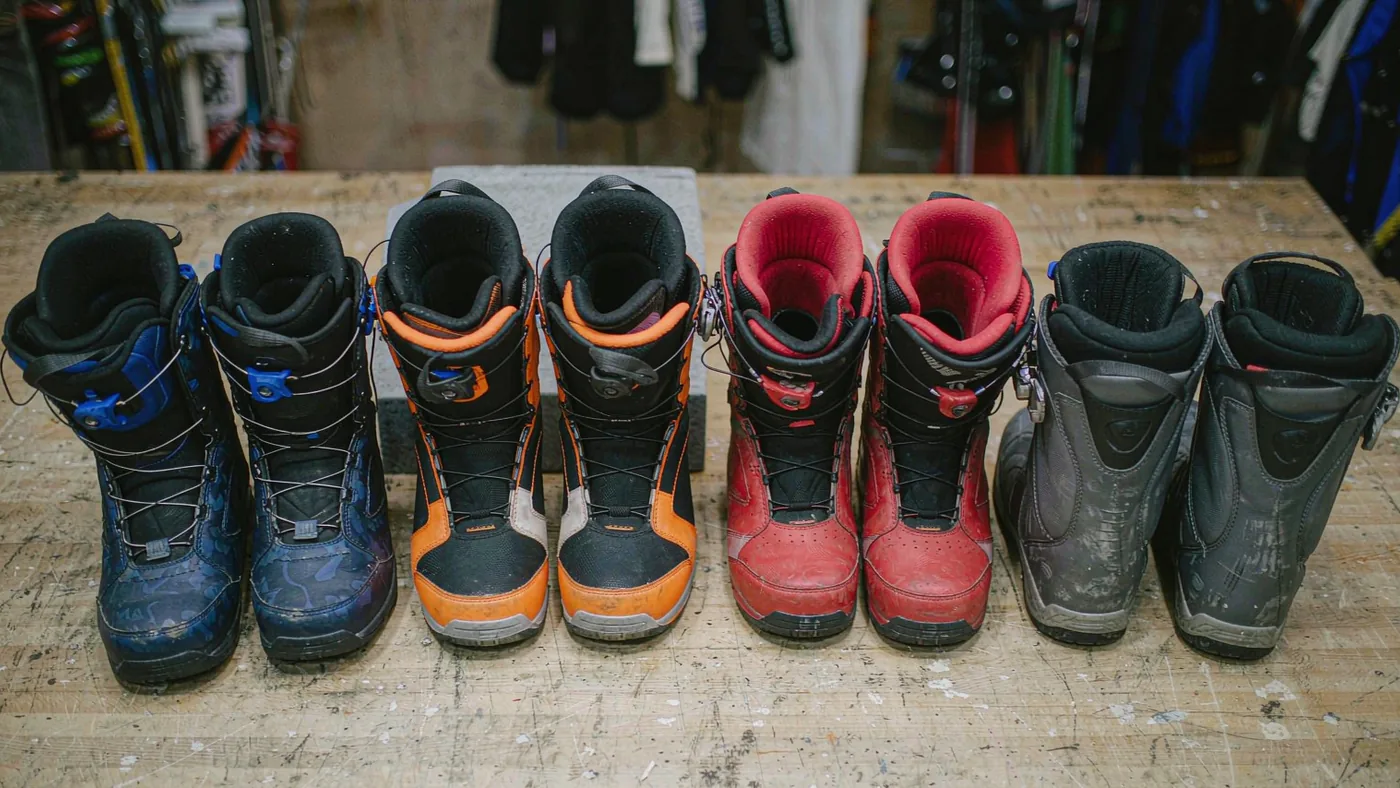
A boot bench in a shop in Sheffield, mid-November, four pairs side by side and a rider trying to work out why one costs roughly twice what another does. They look similar: both black, about the same height, both with a liner you can pull out and hold. The difference is invisible on the shelf and obvious after four days on snow, which is why boots are the hardest purchase in snowboarding to make well.
Mid-range is the tier where a boot stops being disposable. An entry-level boot is a shell with padding and a simple liner, and it does its job for a season or two before the liner packs out and the shell goes slack. A mid-range boot has a liner designed to hold its shape, a sole built to grip a wet car park, and lacing hardware that survives more than a handful of seasons.
Boots are also the one item in a setup worth stretching the budget for. A better board makes you slightly faster. Better boots make you able to ride at all, because the connection between your foot and the board is where every input starts.
What the money actually buys
A liner that holds its shape. This is the single biggest difference between the tiers. Entry-level liners pack down quickly and unevenly, and once they have, the boot no longer holds your heel no matter how hard you lace it. A mid-range liner keeps its volume for several seasons, which is why the boot still fits well in year three.
Grip on the sole. You walk in these boots: across an icy car park, up a metal-edged staircase, along a village street at the end of the day. Softer compounds lose their tread quickly, while the mid-range tier uses harder, better-patterned soles that stay usable. The difference becomes obvious the first time you carry a board down a wet concrete ramp.
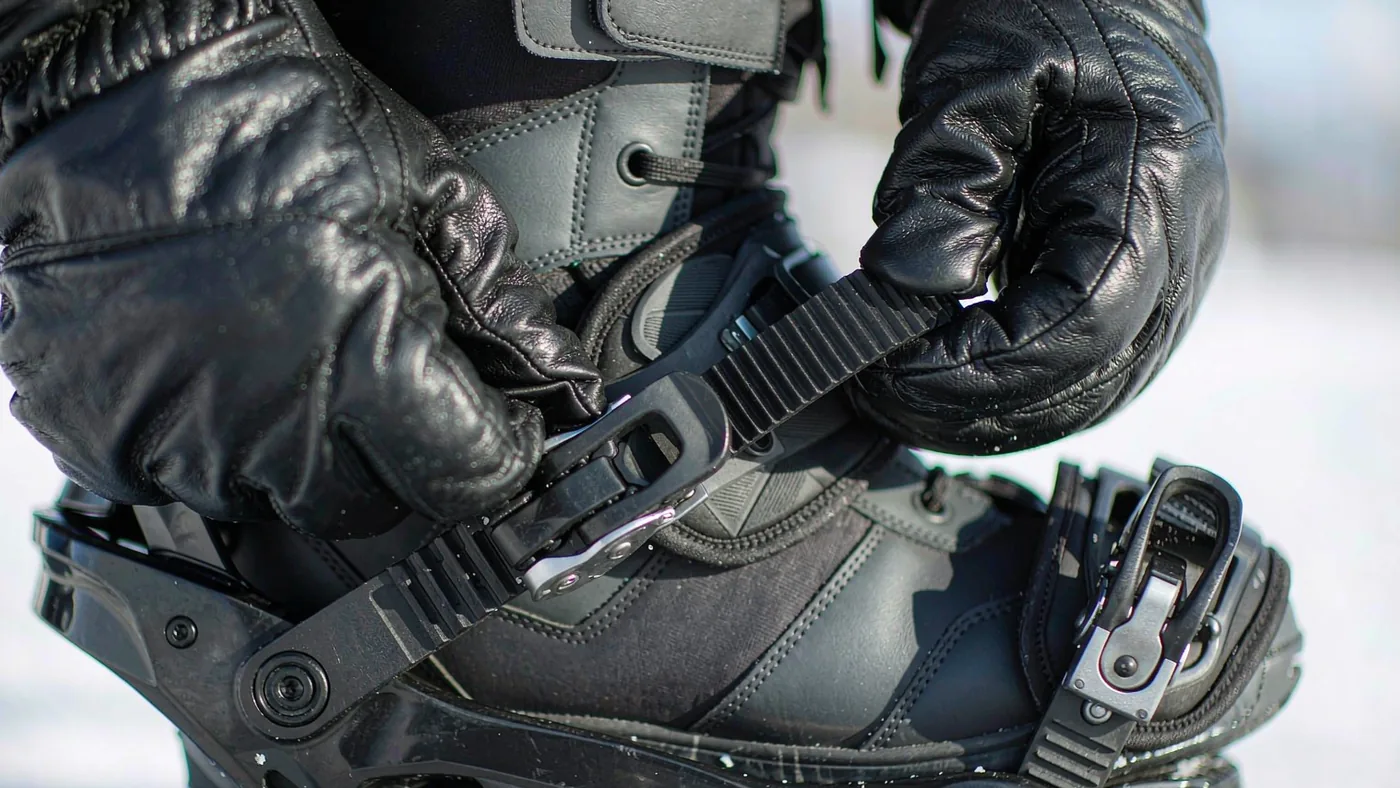
Lacing hardware that survives. Whichever system you choose, the mid-range tier gets the version of it that does not fail in the cold. Ratchets, cleats and dials in this tier are built for a season's use rather than a season's worth of shop fittings.
Support you can still use as you improve. Entry-level boots are soft because beginners cannot use support, which is sensible for week one. A mid-range boot gives you something to push against, and a rider who has stopped falling on every turn will feel that within a single run.
The picks
A supportive boot that will still be worth wearing once you can ride properly. Good if you only want to buy boots once.
Best for
- Improving riders who want support
- Riders with an average-width foot
Worth skipping if
- Absolute beginners
- Riders wanting maximum softness
- Flex bias
- Medium-stiff
- Lacing
- Quick-pull lacing
- Intended terrain
- All-mountain
Strengths
- Supportive without being brutal
- Lasts several seasons
Trade-offs
- Firmer than a beginner wants
- Costs more than an entry boot
Specifications reflect published manufacturer information, last checked 2026-09-28. We have not laboratory-tested this product; the assessment above is editorial, based on the published design and the rider profile it targets. How we review gear.
A comfortable, mid-flex boot that suits riders splitting time between park and groomers. Wide-ish fit and a reputation for lasting.
Best for
- Park and piste riders
- Riders who want one boot for everything
Worth skipping if
- Riders wanting a very stiff freeride boot
- Very narrow feet
- Flex bias
- Medium
- Lacing
- Traditional laces
- Intended terrain
- All-mountain freestyle
Strengths
- Comfortable immediately, no long break-in
- Holds up over multiple seasons
- Versatile flex for most riders
Trade-offs
- Neutral fit suits average-width feet best
- Not the lightest option
Specifications reflect published manufacturer information, last checked 2026-09-28. We have not laboratory-tested this product; the assessment above is editorial, based on the published design and the rider profile it targets. How we review gear.
A well-rounded mid-flex boot that suits most riders. Good comfort out of the box and enough support for piste riding.
Best for
- Most riders
- Riders wanting one boot for everything
Worth skipping if
- Riders with very narrow feet
- Extreme freeride
- Flex bias
- Medium
- Lacing
- Quick-pull lacing
- Intended terrain
- All-mountain
Strengths
- Comfortable quickly
- Versatile flex
- Easy to tighten with gloves
Trade-offs
- Average-width last only
- Laces harder to field-repair
Specifications reflect published manufacturer information, last checked 2026-09-28. We have not laboratory-tested this product; the assessment above is editorial, based on the published design and the rider profile it targets. How we review gear.
A lower-volume boot that grips a narrow foot properly. If standard boots leave your heel lifting, this is the shape to try.
Best for
- Narrow and low-volume feet
- Riders with heel-lift problems
Worth skipping if
- Wide or high-volume feet
- Flex bias
- Medium
- Lacing
- Traditional laces
- Intended terrain
- All-mountain
Strengths
- Proper heel hold for narrow feet
- Supportive for a mid-flex boot
Trade-offs
- Too tight for high-volume feet
- Limited size availability at times
Specifications reflect published manufacturer information, last checked 2026-09-28. We have not laboratory-tested this product; the assessment above is editorial, based on the published design and the rider profile it targets. How we review gear.
How they compare
| Boot | Flex | Lacing | Fit and volume | Best suited to | Main trade-off |
|---|---|---|---|---|---|
| K2 Maysis | Medium-stiff | Quick-pull | Average width, supportive shell | Improving riders who want to buy boots once | Firmer than a beginner wants and costs more than an entry boot |
| ThirtyTwo Lashed | Medium | Traditional laces | Neutral, wide-ish | Park and piste riders wanting one boot for everything | Not a true wide last, and not the lightest |
| Salomon Dialogue | Medium | Quick-pull | Average width only | Most riders wanting comfort out of the box | Not for very narrow feet, and laces are harder to field-repair |
| Ride Lasso | Medium | Traditional laces | Low volume, narrow | Narrow feet and riders with heel-lift problems | Too tight for high-volume feet, and sizes sell out |
Fit, volume and flex notes are editorial judgements based on published manufacturer specifications and established fitting practice, not measured results. Published specifications, last checked 28 September 2026.
Choose on fit, not on specifications
Once you are inside this tier, the specifications stop separating the boots: all four are mid-flex or medium-stiff, all four are built for all-mountain riding, and all four will drive a mid-flex board competently. What separates them is the shape of the last they are built on, and that is the one specification most brands do not publish clearly.
So work backwards from your foot.
If your foot is average width and your heel lifts in most boots, the answer is a boot with genuine volume control rather than more lacing tension. The Salomon Dialogue is the comfortable generalist here, with quick-pull lacing that is easy to tighten in gloves, and its published limitation is that it is built on an average-width last only. If your foot is very narrow, it will not hold you.
If your foot is narrow or low-volume, start with the Ride Lasso, which grips a narrow foot properly and holds the heel well for a mid-flex boot. It uses traditional laces, so a snapped lace is a ten-minute fix rather than a dealer problem. The trade-offs are real: it is too tight for high-volume feet, and its sizes sell out quickly, so check early in the autumn.
If you want support you can grow into, the K2 Maysis is the supportive end of this group: medium-stiff, sturdy, built to last several seasons, and still worthwhile once you can ride properly. It is firmer than a beginner wants, and it is not the boot to buy if you are looking for maximum softness.
If you split your time between park and piste and want one boot, the ThirtyTwo Lashed is the middle answer: a medium flex, comfortable immediately with no long break-in, a reputation for lasting, and a neutral fit that suits average-width feet best.
Where not to save
Do not save on the liner to afford a better board. Liners are the part that packs out, and a packed-out liner ends the useful life of the whole boot. This is the trade that leaves riders with a good board and boots that hurt all day.
Do not buy a size up to make a stiff boot comfortable. Extra length lets your foot slide, which lifts the heel and causes the toe-banging and bruising you were trying to avoid. If a boot in your size is uncomfortable in the shop, the answer is a different boot, not a bigger one.
Do not buy the cheapest deal without trying the brand's last. Boots are the purchase where shop advice earns its keep, because fit is decided by a last you cannot see in a photograph. Take your measurements — length and width across the ball of the foot — and ask to try the brand you are considering.
Verdict
If you have never ridden before, do not start with the K2 Maysis or any medium-stiff boot. It is the firmer end of this group, and a beginner will spend the week feeling that firmness rather than using it. Learn to turn on a soft beginner boot and come back to this tier when you can hold an edge, because that is when support becomes useful rather than tiring. If your feet are genuinely wide, skip the Ride Lasso entirely — it is built for narrow, low-volume feet, and no amount of lacing adds width to a shell.
Frequently asked questions
How much more should I pay for a mid-range boot than an entry-level one?
The gap is usually modest relative to the rest of a setup, and it is the best-value upgrade available in snowboarding. What you are buying is a liner that holds its shape for several seasons instead of one, a sole that grips, and hardware that does not fail in the cold. Entry-level boots are not bad; they are simply disposable by design.
Should I buy boots before or after my board?
Boots first, always. The boot decides your foot position, your flex and your stance, and then the binding and board are chosen to match. Buying the board first is how riders end up with a board they like and boots that make it unpleasant to ride.
Can I use mid-range boots with rental boards?
Yes, and it is the best thing you can do if you are renting for a week. Rental boards are usually adequate; rental boots are frequently the reason a holiday is uncomfortable. Taking your own well-fitted boots removes the biggest variable from a hire package at very little cost.
How long should a mid-range boot last?
Expect three to five seasons of a fortnight a year before the liner packs down enough to change the fit. Lacing hardware and the sole will outlast the liner in most cases, which is why liner quality is the specification worth caring about most.
Is traditional lacing worse than a dial or a pull system?
Not in fit terms. Laces give the most precise control over where the boot is tight, which matters at the instep, and a snapped lace is easy to replace. What a dial or speed-zone pull buys is speed and glove-friendly tightening, which matters more than fit tuning if your hands go numb in the cold.
Where to go next
If you are still working out which last your foot needs, start with the wide feet boot round-up or the narrow feet option, and settle the length question with the boot size versus shoe size guide.
The lacing systems comparison covers dials, pulls and laces in detail, and our break-in advice covers what to do when the boots arrive.