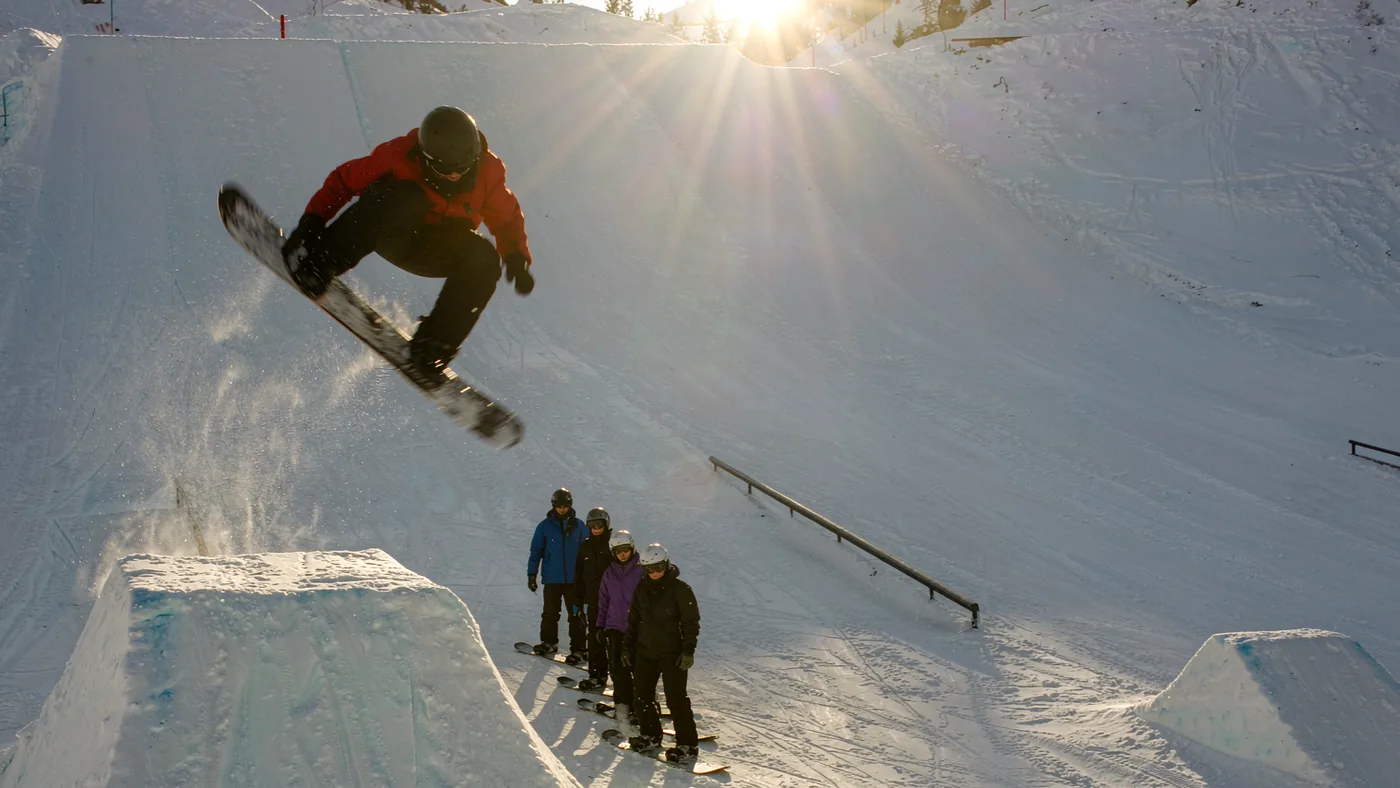
The moment you find out whether you need a true twin is usually a landing. A rider comes off a small kicker, gets the rotation slightly wrong, and touches down facing the wrong way — backwards down the run, weight over what is now the leading foot. On a symmetric board with a centred stance, that lands the same way it did going forwards and the rider rides away. On a directional deck it does not: the tail is stiffer, the nose is longer, and the board wants to swap ends.
Most riders who buy a true twin do not buy it for that moment. They buy it because it is what freestyle boards are, and because everybody says twins are more playful. Some of them are right. A good number of them spend two seasons on a symmetric board, never once riding switch deliberately, and wonder why their board feels less capable in powder than a friend's cheaper directional deck.
That is the trade the twin makes, and it is worth understanding before you spend.
What a true twin actually is
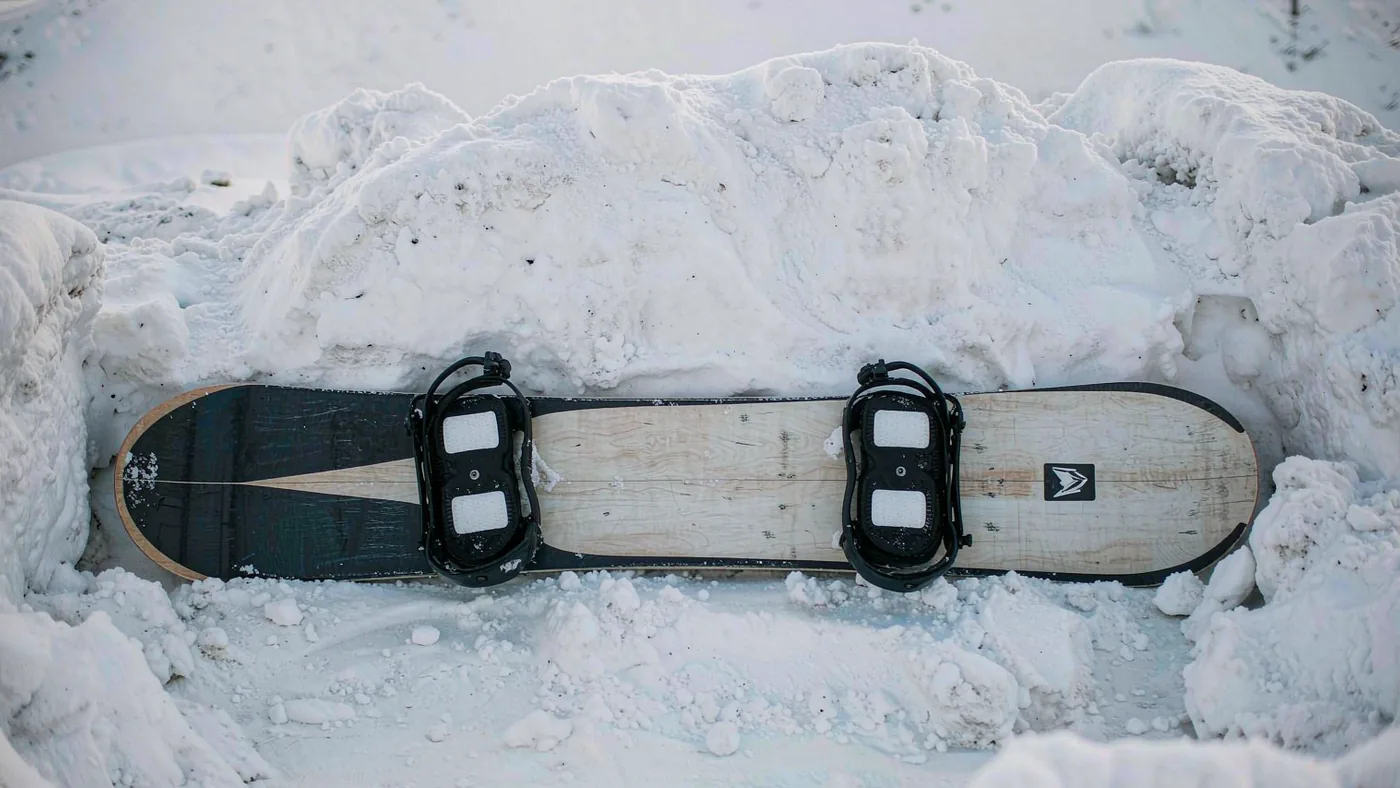
A symmetric shape. The nose and tail are identical in length, width and profile. Nothing about the board tells it which end should go first.
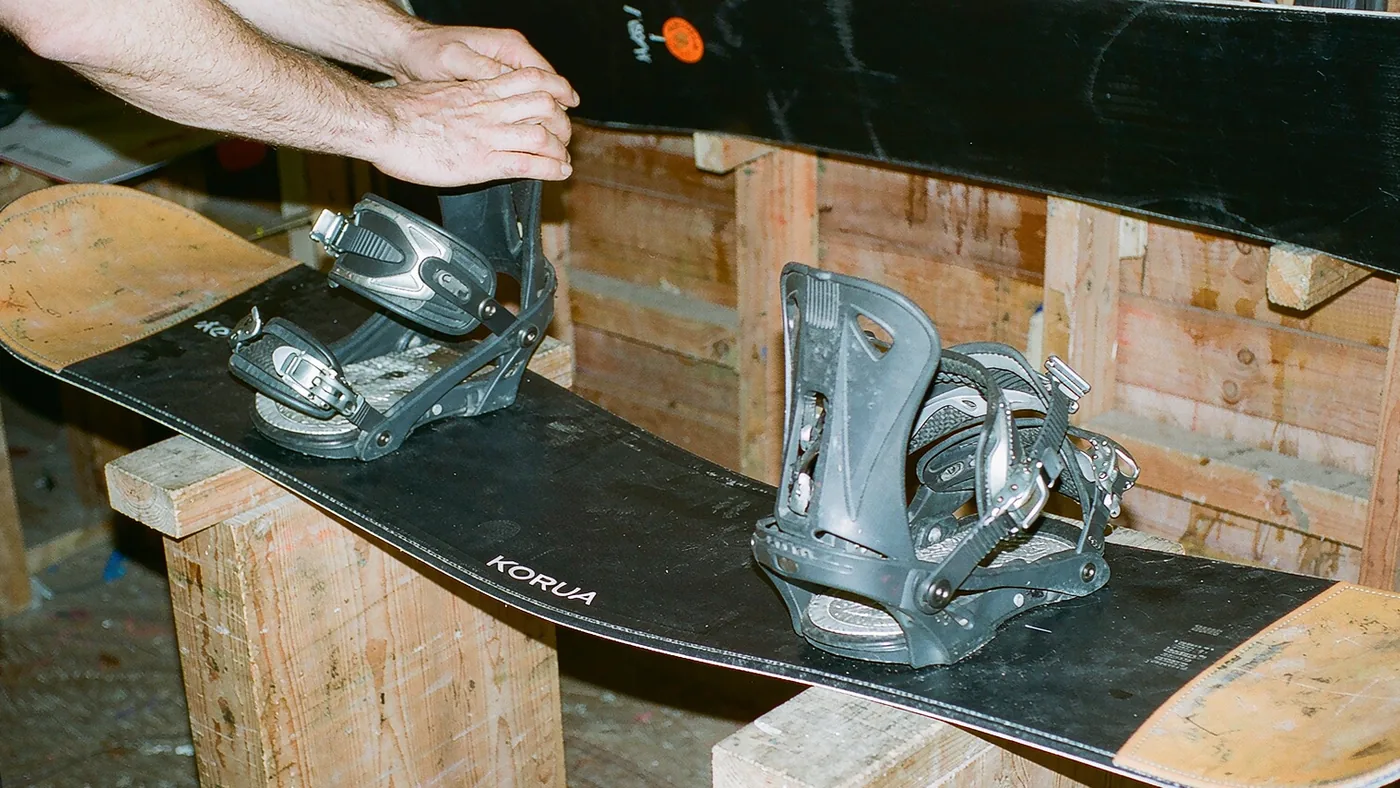
A centred stance. The insert pack sits in the middle of the running length, so your feet are equidistant from each end. That is what makes the board behave identically in both directions rather than merely looking symmetric.
A shared effective edge. Because both ends are the same, the effective edge is not biased towards one direction. Nothing about the geometry encourages the board to finish a turn towards the nose.
Not the same as a directional twin. This is where the marketing gets loose. A directional twin has a symmetric outline but a stance set slightly back and often a flex biased towards the tail. It rides forwards with a little directional help and switch with a little vagueness. A true twin has neither bias. If a spec sheet says "directional twin", it is not a true twin.
What symmetry costs you
Float. No taper and no set-back means nothing is helping the front of the board stay up in deep snow. A rider on a true twin has to work for float, keep the speed up and sit back consciously. A tapered or volume-shifted directional shape will do noticeably better on the same day.
A little edge hold. Taper and set-back both help the rear of the board load up in a turn. Remove them and the edge feels marginally less planted on hard snow, particularly at the finish of a fast turn. How much this matters depends on the board — a stiff, cambered twin gets most of it back, a soft rockered twin does not.
Turn finish, in a specific way. A directional board completes a carved turn with a little more drive at the end because the shape is helping. A twin finishes more neutrally, which is exactly what you want when you are landing backwards and not what you want when you are chasing a clean carve down a firm piste.
Nothing, in the park. In the park, a true twin gives up nothing at all. That is the point.
The parked-stance question
A "parked" stance means leaving your bindings in the same duck-footed angles all season rather than changing them for piste days. It is the default for most twin riders and it is fine — a duck stance with a modest angle on each foot works for carving as well as it works for switch. What it is not is free: a very wide duck stance restricts how much you can drive your knees forward into a turn, which is why freeride riders tend to ride more positive angles on the front foot.
The practical answer is to pick a stance you can ride all day in both directions and leave it. Twin riders gain nothing from fiddling every other day, and the binding angles guide explains how to choose a starting point.
The picks
A twin that still holds an edge. Better than most twins in crud, and happier in the park than most all-mountain boards.
Best for
- Riders who want switch riding without giving up grip
- Resort riders who mix piste and park in one lap
Worth skipping if
- Deep-day powder hunting
- Riders who want a soft, jib-friendly feel
- Profile
- Hybrid camber
- Shape
- True twin
- Flex bias
- Medium
- Intended terrain
- All-mountain freestyle
Strengths
- Strong grip for a twin
- Handles chunder better than the flex suggests
- Solid eco-credentials with no performance penalty
Trade-offs
- Overkill if you never ride switch
- Notably more expensive than comparable twins
Specifications reflect published manufacturer information, last checked 2026-09-28. We have not laboratory-tested this product; the assessment above is editorial, based on the published design and the rider profile it targets. How we review gear.
A wider twin built for riders who need more surface area underfoot without going up a length.
Best for
- Heavier riders wanting a twin
- Riders with big feet
Worth skipping if
- Light riders
- Riders wanting a soft park feel
- Profile
- Hybrid camber
- Shape
- True twin
- Flex bias
- Medium-stiff
- Intended terrain
- All-mountain freestyle
Strengths
- Real solution for big-footed riders
- Stable at speed
Trade-offs
- Wide waist needs effort from a light rider
- Not designed for deep powder
Specifications reflect published manufacturer information, last checked 2026-09-28. We have not laboratory-tested this product; the assessment above is editorial, based on the published design and the rider profile it targets. How we review gear.
A stiffer freestyle board for riders who want a park weapon that does not fold on the way back to the lift.
Best for
- Park riders who ride fast
- Riders who want one board for park and piste
Worth skipping if
- Beginners
- Dedicated powder hunters
- Profile
- Reverse camber with camber underfoot
- Shape
- True twin
- Flex bias
- Medium
- Intended terrain
- Freestyle
Strengths
- Stable at speed for a freestyle board
- Holds up to a full season of park laps
Trade-offs
- Heavier to press than a soft twin
- Not a soft-snow shape
Specifications reflect published manufacturer information, last checked 2026-09-28. We have not laboratory-tested this product; the assessment above is editorial, based on the published design and the rider profile it targets. How we review gear.
How they compare
| Board | Profile | Shape | Flex | Grip on firm snow | Float in powder | Best suited to |
|---|---|---|---|---|---|---|
| Jones Mountain Twin | Hybrid camber | True twin | Medium | Very good | Fair | Riders who want switch without giving up grip |
| YES Greats | Hybrid camber | True twin | Medium-stiff | Good | Fair | Heavier riders and big-footed riders wanting a twin |
| CAPiTA Ultrafear | Reverse camber with camber underfoot | True twin | Medium | Fair | Poor | Park riders who ride fast |
Published specifications, last checked 28 September 2026. Grip and float are editorial judgements about the design, not laboratory measurements.
Do you actually need a true twin?
Count the switch riding you have done deliberately in the last two seasons. Not accidental landings, not the two hundred metres back to the lift on a flat cat track — deliberate, practised switch riding. If that is close to zero, a directional deck will serve you better.
Ask whether you land jumps switch. If you are working on spins and taking off switch, a true twin is not a preference, it is a requirement. Landing switch on a directional board is possible and consistently less pleasant.
Check how much you care about powder. If your season includes any meaningful soft-snow riding, the float you give up is real. A directional twin with a slight set-back sits in the middle and gives away less in both directions.
Do not buy a twin to future-proof a skill you have not started learning. Learning switch is easier while you are still early in your riding, not later, which is an argument for starting now rather than for buying the board first. The learning to ride switch guide covers the progression.
Who should not buy a true twin
If you never ride switch. You are paying for symmetry and receiving nothing. A directional all-mountain deck will grip better and float better for the same money.
If powder matters to you. None of these three is a powder shape. The YES Greats is not designed for deep snow, and the CAPiTA Ultrafear is explicitly not a soft-snow shape. If deep days are your priority, buy a tapered directional deck.
If you are a big-footed rider who wants to ride short. The YES Greats solves boot drag at a conventional length. A volume-shifted board solves it by letting you shorten as well, which is a different answer to the same problem and worth comparing.
If you want a soft, pressable park feel. The Jones Mountain Twin is a firm medium, and the CAPiTA Ultrafear is heavier to press than a soft twin. Riders who want effortless buttering should look at a medium-soft flat-to-rocker board instead.
If you are a lighter rider looking at the YES Greats. A wide waist and a medium-stiff flex need a rider who can drive them. Look at a narrower twin in your own weight band.
Verdict
The Jones Mountain Twin is the best all-round true twin here and the YES Greats is the right answer for a heavy or big-footed rider who wants symmetry. But if your switch riding is theoretical and your best days are the deep ones, this is the wrong category for you — a directional, tapered board will float better, grip better and cost no more. Buy a true twin because you use both directions, not because it is what freestyle boards are supposed to be.
Frequently asked questions
What is the difference between a true twin and a directional twin?
A true twin has identical nose and tail dimensions and a centred stance, so it rides the same in both directions. A directional twin has a symmetric outline but a slightly set-back stance and often a stiffer tail, which helps it ride forwards. If you land switch regularly, only the true twin behaves properly.
How much float do you lose on a true twin?
A noticeable amount on a genuinely deep day, because there is no taper and no set-back to lift the nose. You compensate by keeping your speed up and sitting back, which is work rather than a fix. On a two-week European holiday it rarely matters; on a season with regular powder it does.
Do I need a true twin to ride switch?
No, but it makes it much easier and more rewarding. A directional twin will ride switch adequately for getting down the hill, and it will feel wrong the moment you land a jump the wrong way round. If switch is something you are practising deliberately, a true twin is the sensible choice.
Can you ride a true twin on hardpack?
Yes. Symmetry costs you a little edge hold because there is no taper or set-back helping the rear of the board, but a stiff, cambered twin like the Jones Mountain Twin grips close to a directional all-mountain deck on firm snow.
What stance and angles suit a true twin?
A duck stance with a modest angle on each foot, set at a width you can ride all day in both directions, works for most twin riders. Very wide duck stances restrict how far you can drive your knees into a turn, which is why freeride riders tend to use more positive front-foot angles.
Where to go next
The true twin vs directional comparison sets out the shape decision properly, and the learning to ride switch guide is the cheapest way to start using the symmetry you paid for. The binding angles guide covers stance setup.
If symmetry turns out not to be what you need, the best all-mountain snowboards round-up covers the directional alternatives, and the best women's park snowboards guide looks at the same question for lighter riders. More in the boards archive.