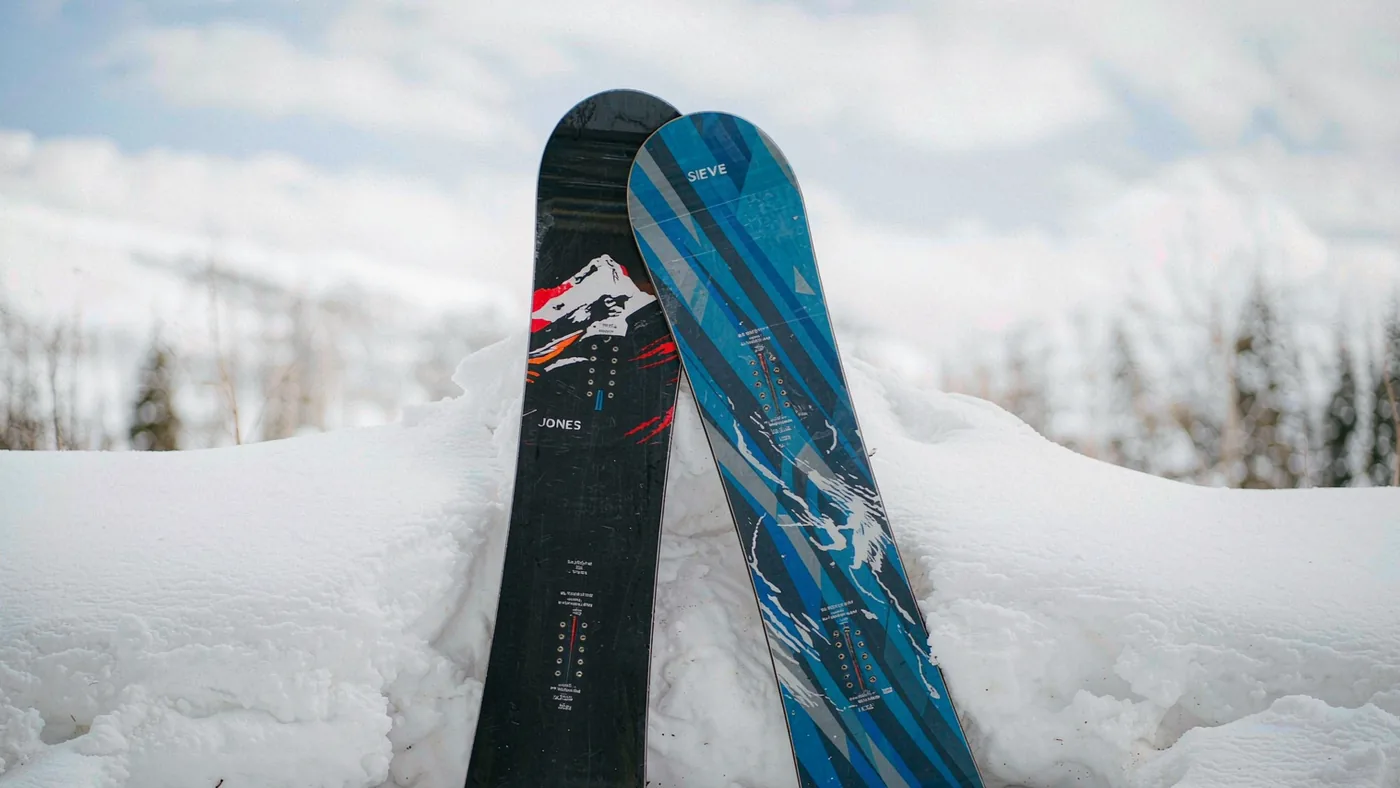
Two boards are leaning against the kitchen wall on a Sunday evening in Bristol, and you are waxing both before a trip. On the first, the iron passes over the base and the wax sinks in almost immediately, leaving a dull film that needs another pass. On the second, the wax beads on the surface exactly where you put it and stays there in little pools, waiting to be scraped off. Same wax, same iron, same room, different base.
That difference is the whole argument between sintered and extruded bases. A sintered base is porous and absorbs wax into the material. An extruded base is smooth, dense and closed, so wax sits on top and wears off. From that one fact follow speed, wax life, repair behaviour and how much punishment a base takes. What does not follow is a dramatic difference in your holiday: for a rider doing one or two weeks a season on groomed pistes, base material is a refinement, not a transformation.
What actually matters
How the base is made. Sintered bases are made by compressing polyethylene powder under heat and pressure into a sheet, which leaves the material porous at a microscopic level. Extruded bases are made by melting pellets and pushing the molten material through a die, giving a uniform, closed sheet with no porosity. Sintering costs more to produce, which is why it appears on more expensive boards.
What wax retention means for you. A sintered base holds wax inside it, so a freshly waxed sintered board keeps its glide across a longer day and needs waxing less often. An extruded base takes wax onto the surface only, so it slides well for the first hour after a fresh wax and then fades. This is the most reliable difference and the one you feel without instruments.
Tolerance of neglect. Here the order reverses. An extruded base loses less when you never wax it, because there is less structure to dry out. A sintered base ridden hard for a fortnight without wax will feel slower than an extruded board that has at least been scraped. Sintered rewards maintenance; extruded is indifferent to it.
Where you notice it at all. Almost never mid-turn. You notice base material on flat sections, long cat tracks, run-outs to the lift and any traverse where the group is trying to keep momentum. A faster base buys you metres there and nothing at all on a steep pitch.
How they compare
| Base type | How it is made | Glide when waxed | Wax retention | Tolerance of neglect | Repair | Cost tier |
|---|---|---|---|---|---|---|
| Extruded | Melted and pushed through a die | Moderate | Low | High | Very easy, p-tex blends well | Lowest |
| Sintered | Powder compressed under heat and pressure | High | High | Low | Straightforward with the right material | Middle |
| Sintered with additives | Sintered base with graphite or carbon | High, better glide in wet snow | High | Low to moderate | Depends on the additive | Highest |
| Sintered and stone-ground | Sintered base with a cut structure | Highest in the right snow temperature | High | Low | Shop work for a re-grind | High |
Published specifications, last checked 28 September 2026. Glide and retention ratings describe how each material behaves in principle; snow temperature, wax choice and the base grind change the outcome more than the material alone.
The third category, and where the money goes
Most manufacturers sell a sintered base with something added — graphite for wet and warm snow, carbon for hardness, or a branded high-end material reserved for their most expensive decks. These are genuine improvements in specific conditions, particularly in wet spring snow, where a graphite additive is well established as a help to glide. They are also priced accordingly.
The second thing money buys is the grind. A base cut with a structured pattern manages water between the base and the snow far better than a smooth one, and it works on both materials. A structured base is often the difference riders credit to the material.
What you notice on a cat track, and what you do not
The cat track back to the lift. This is where a sintered base is worth something. In a group of similar riders, the board that glides best keeps momentum and needs fewer skate steps. If your home resort is full of long flat returns, a better base and a good wax buy comfort on every run.
The steep pitch. Nothing. Edge grip and flex decide the turn; the base only affects how long it takes to get there and how much skating you do at the bottom.
The wet, heavy afternoon. This is where the gap widens rather than closes. Warm, wet snow creates suction under the board and glide falls away for every base. It is the condition in which a high-end sintered base, freshly waxed and properly structured, earns its price.
Repair, and what happens when you hit a rock
Base material matters most on the worst day of your board's life.
A deep scratch or a core shot needs filling, and fill material binds most predictably to a base of the same type. Extruded bases are the easiest to repair and the least fussy — a shop, or you at home with a p-tex candle, can fill a gouge and get you riding with a rough but functional patch. Sintered bases repair well too, but a large patch on a fast base is a local difference in glide, and on an expensive structured base it is worth having a shop do the work and re-grind afterwards.
The urgent rule is the same for both: seal a core shot before the board goes back on snow. A gouge that reaches the core lets water in, and water in the core is how a board dies.
If you do not know what your board has
Most boards say. Look for a description near the model name, and be sceptical of words that describe a finish rather than a material — "hard", "durable" and "fast" appear on both.
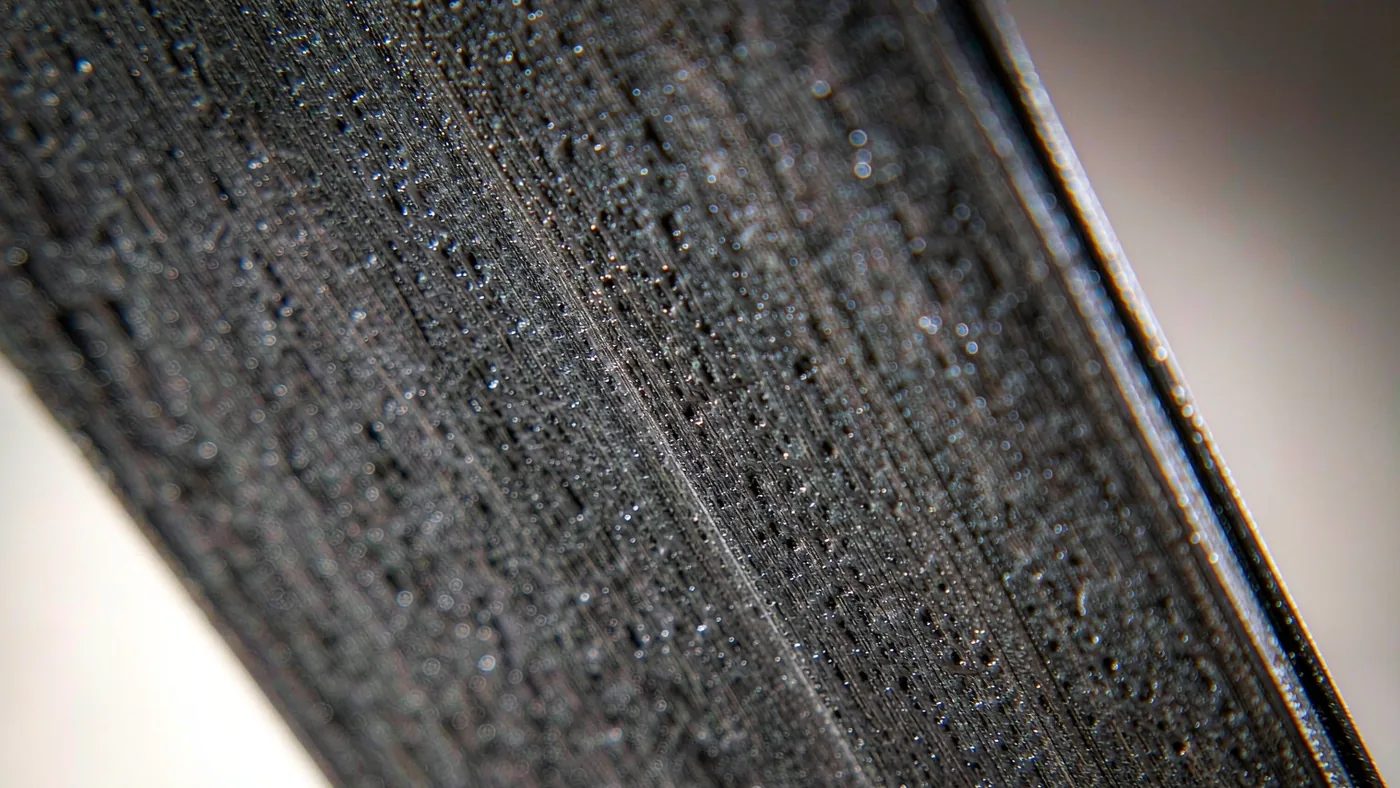
The test that needs no specification is the one at the top of this article. Iron a thin layer of wax on, let it cool, and scrape. A base that swallowed most of the wax is sintered; one where the wax sat on top and scraped off in sheets is extruded. You can also feel the difference with a fingernail on a clean base: sintered has a faint texture and a matte finish, extruded is smoother and glossier.
Verdict
If you ride a fortnight a year, never wax your board and mostly stay on groomed pistes, do not pay extra for a high-end sintered base — you will not be able to tell it from a good extruded one, and the money is worth more in boots or a lesson. Conversely, if you ride thirty days or more a season, race the return tracks with friends, or ride a lot of wet spring snow, an extruded base is the wrong place to save.
Frequently asked questions
Is a sintered base always faster than an extruded one?
No. A well-waxed, structured extruded base will out-glide an unwaxed, dried-out sintered base on most snow. Sintered material holds wax longer, so over a long day or a long week it pulls away, but freshly waxed examples of both are closer than the marketing suggests.
How often does a sintered base need waxing?
More often than most riders bother. Sintered bases give their best glide for a handful of riding days after a wax, so a fortnight-long trip deserves a fresh layer before you fly and another partway through. Extruded bases need it less urgently because they have less to lose.
Can I repair a sintered base at home?
Yes for small scratches and shallow gouges, using the correct p-tex material and a scraper. Deep gouges, core shots and anything on a structured racing base are best handed to a shop, which can fill the damage and re-grind the structure so the repair does not become a permanent slow spot.
What does graphite in a base actually do?
Graphite additives are used to improve glide in wet and warm snow, where water between the base and the surface creates drag. That is a well-established convention in base materials. The benefit is most obvious in spring conditions and much less obvious in cold, dry snow.
Does base material matter on a beginner board?
Very little. Beginners ride at moderate speeds on groomed pistes, where base material is the least important variable on the board. Shape, flex and fit all matter more. An extruded base at the right price is not a reason to walk away.
Where to go next
Base care is the cheapest performance you can buy, and our guides to waxing and tuning at home and care and storage cover the routine properly. If your base has taken damage, repairing scratches and core shots explains what must be sealed before you ride again.
Buying second-hand? The used board inspection tells you when a base has been ground down past saving, and the comparisons archive covers the rest of the questions that come up before you buy.