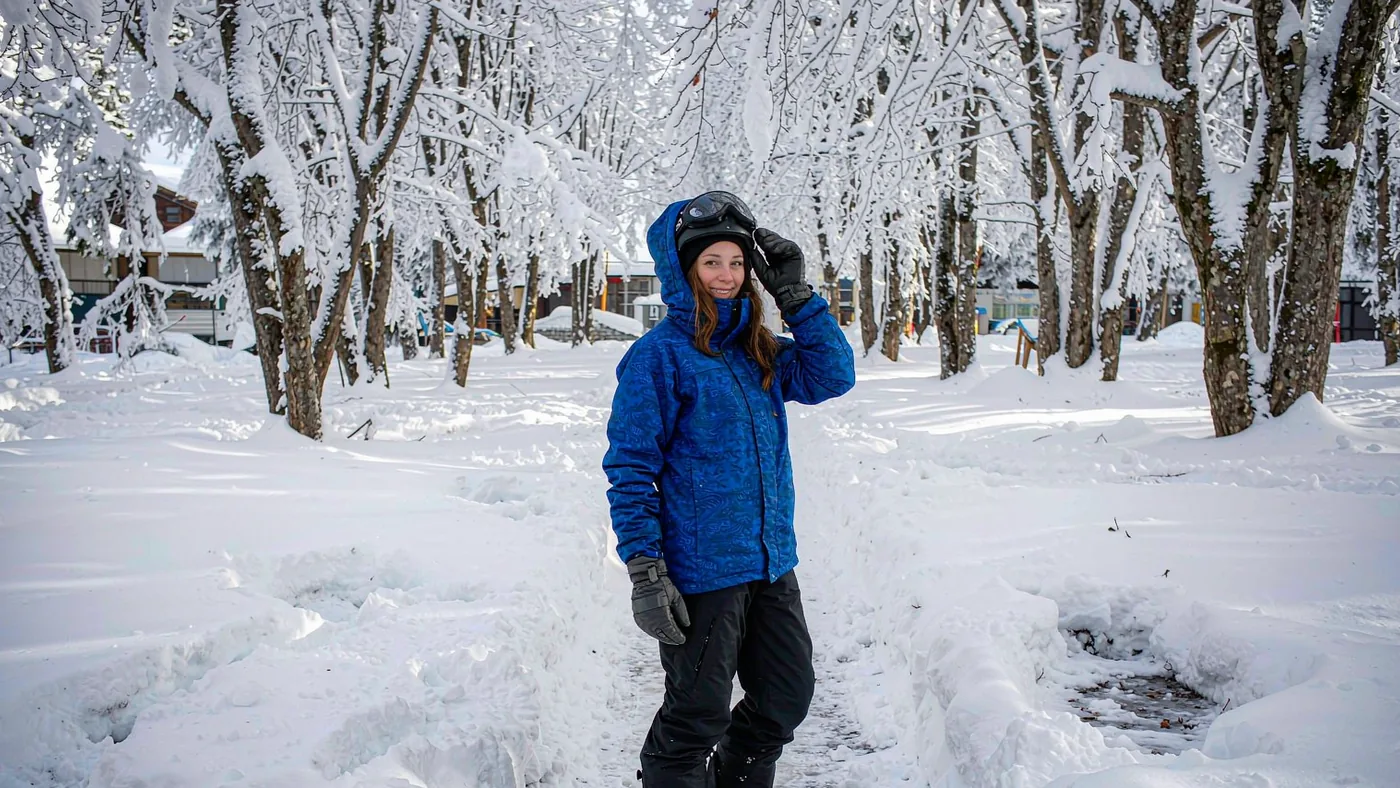
You are in a shop with your base layer and your midlayer on, because that is the only way to try a jacket honestly. The first one you pull over your head fits beautifully at the waist and across the back, and the sleeves finish somewhere past your knuckles. The second has sleeves that are right and a chest that leaves you no room to move your arms forward. The third fits, but the hem rides up over your hips the moment you sit down to strap in. Three jackets, one body, and none of them is simply "smaller than a men's".
That is the actual state of women's snowboard outerwear. Some brands build a genuinely separate pattern. Others take a men's block, narrow it and adjust the colour, and the difference shows up in the shoulders, the sleeve length and the hip. Neither approach is automatically better, but you need to know which one you are looking at, because you will feel the difference on the mountain rather than in the changing room mirror.
This is a guide to three jackets for three different riders, followed by a set of fit questions that matter more than any specification. If you ride wet, mild snow you want one kind of jacket; if you ride deep January cold you want another; if you are buying your first one on a budget you want a third.
What actually matters in a women's jacket
Shoulder and chest room for a midlayer. The most common failure is a jacket that fits over a base layer and feels tight the moment you add a fleece. Reach both arms forward as though you were doing up a binding. If the back of the jacket pulls taut against your shoulder blades or the fabric pinches under the arm, it is too small — regardless of what the size label says.
Sleeve length against your glove. Sleeves should reach the base of your hand so that nothing bare appears when you raise an arm, and they should not be so long that they bunch inside a glove cuff. Women's patterns often shorten the sleeve, which suits a shorter arm and leaves longer arms exposed. Test it with your gloves on, in the shop.
Hem length over a bib or trousers. Sit down. If the hem rides up above your waistband, snow goes down your back on the first run. Jackets with a dropped hem cover more, and a hem drawcord lets you pull the jacket down rather than sitting on it.
Hood geometry over a helmet. A helmet-compatible hood has to go over the shell and still leave the peak usable, and the collar has to sit in front of your chin rather than under it. If you wear your hair in a braid or a bun, check how the hood and the helmet's rear adjuster sit together as you actually wear them.
The picks
A genuine waterproof shell rather than a fashion jacket. Built for the wet, heavy snow you actually get in Scotland and the lower Alps.
Best for
- UK and Scottish riding
- Riders who ride in the rain
Worth skipping if
- Riders who run hot inside a warm jacket
- Waterproofing
- GORE-TEX membrane
- Insulation
- Shell, no insulation
- Hood
- Helmet compatible
Strengths
- Keeps out genuinely wet snow
- Layers well over a mid-layer
Trade-offs
- Shell only, so you need to layer properly
- Premium price
Specifications reflect published manufacturer information, last checked 2026-09-28. We have not laboratory-tested this product; the assessment above is editorial, based on the published design and the rider profile it targets. How we review gear.
An insulated jacket that keeps you warm sitting on a chairlift in January without needing three layers underneath.
Best for
- Cold conditions in the Alps and Scandinavia
- Riders who feel the cold
Worth skipping if
- Spring riding
- Riders who overheat easily
- Waterproofing
- Recycled waterproof membrane
- Insulation
- Synthetic, light
- Hood
- Helmet compatible
Strengths
- Warm without bulk
- Responsible materials
Trade-offs
- Too warm for spring
- Bulkier than a shell
Specifications reflect published manufacturer information, last checked 2026-09-28. We have not laboratory-tested this product; the assessment above is editorial, based on the published design and the rider profile it targets. How we review gear.
A solid, unfussy jacket at a price that leaves budget for boots. Not the most technical fabric, but it does the job in a normal European winter.
Best for
- Riders on a budget
- Resort riding in normal conditions
Worth skipping if
- Serious wet-weather riding
- Backcountry
- Waterproofing
- Coated waterproof fabric
- Insulation
- Light synthetic
- Hood
- Adjustable
Strengths
- Good value
- Warm enough for most resort days
Trade-offs
- Coating needs reproofing over time
- Not built for sustained rain
Specifications reflect published manufacturer information, last checked 2026-09-28. We have not laboratory-tested this product; the assessment above is editorial, based on the published design and the rider profile it targets. How we review gear.
How they compare
| Jacket | Type | Waterproofing | Warmth | Best suited to | Main trade-off |
|---|---|---|---|---|---|
| Volcom L GORE-TEX | Uninsulated shell | GORE-TEX membrane with taped seams | None of its own | Wet snow, Scottish riding, riding in rain | You have to layer properly underneath, and it costs the most |
| Picture Organic | Lightly insulated | Recycled waterproof membrane | Light synthetic insulation | Cold Alpine and Nordic days, riders who feel the cold | Too warm for spring and for mild wet days |
| DC Command | Lightly insulated | Coated water-resistant fabric | Light synthetic insulation | Normal resort days on a budget | The coating needs reproofing and will not cope with sustained rain |
Waterproofing and warmth descriptions are editorial judgements based on published manufacturer specifications, last checked 28 September 2026. Fit will always vary with the pattern and your own measurements.
Three riders, three jackets
The rider who is wet more often than cold. If most of your riding is at low altitude, in wet snow, or in Scotland, buy the shell. It gives no warmth of its own, which is the point: on a two-degree day with sleet in the air, an insulated jacket becomes a sauna while a shell over a base layer is comfortable. You will need to own a midlayer as well, and you need to accept that.
The rider who is cold more often than wet. If your week is in January at altitude, and your main complaint is the ride back down in the shade at four o'clock, an insulated jacket is the more comfortable purchase. It has one setting and you cannot turn it off, which is why it fails in spring, but it removes a decision at seven in the morning.
The rider buying a first jacket on a budget. A mid-priced coated jacket will survive a normal resort week and leave money for boots, which matter more to your week than anything you wear on your top half. What you give up is long-term reliability in wet weather, because a coating wears out and needs reproofing.
Where the fit questions actually get decided
Try the jacket with the layers you will ride in. Every jacket fits over a vest. Almost every jacket fits badly over a midlayer, and the winter sale is full of jackets bought in October over a T-shirt.
Check the jacket against your bib. If you wear a bib, the jacket hem does not have to close the waist gap by itself, so you can choose a shorter, cleaner jacket. If you wear trousers, the hem length and the powder skirt become critical.
Consider the length of your arms, not the size of the jacket. This is where women's patterns differ most, and there is no adjustment for sleeve length. It is the one specification you cannot fix later.
When a women's cut is worth paying for
The pattern matters most for riders at the extremes: tall riders, petite riders, riders with broad shoulders or a long torso, and anyone who layers heavily. If you sit in the middle of a brand's size range and you layer lightly, a well-chosen unisex jacket will do the job comfortably, and there is no reason to pay a premium.
Where the premium genuinely buys something is in the pattern work: a jacket cut with a shorter sleeve and a shaped hem, sized on real chest and hip measurements rather than scaled down, will layer better and move better. The way to tell the difference is to check whether the brand publishes a measurement chart with sleeve lengths and body lengths, rather than a single chest measurement and a size letter.
Verdict
If you ride one week a year in dry, cold conditions and never ride in rain, the premium shell is more jacket than your week requires. Buy the insulated option, or the mid-priced jacket, and put the difference towards boots and a helmet. Riders who overheat in the lift queue should also avoid the insulated jacket, however cold the resort claims to be in January.
Frequently asked questions
What is different about a women's snowboard jacket?
It is cut from a different pattern, usually with narrower shoulders, shorter sleeves, a shaped waist and more room at the hip. The differences that matter most are sleeve length and shoulder room, because neither can be adjusted later. Some brands do this properly, others scale a men's pattern down.
Should I size up in a snowboard jacket?
Size up only if you are buying a shell you intend to layer heavily under, and then only by one size. Sizing up in an insulated jacket gives you a loose, cold jacket with the insulation sitting away from your body where it cannot trap heat. Check the reach and crouch test before you commit.
How do I know a jacket hood will fit over my helmet?
Look for a stated helmet-compatible hood and check the collar height, then test it with your own helmet if the shop allows. The hood should go over the shell with the peak still usable, and the collar should sit in front of your chin rather than pressing under it.
Do I need a jacket with a powder skirt?
It helps if you wear trousers rather than a bib, particularly in wet snow and when you fall. If you ride in a bib, the skirt is mostly redundant because the bib already closes the gap at your waist. A jacket with a removable skirt covers both arrangements.
How long should a women's snowboard jacket be?
Long enough that the hem stays below your waistband when you sit down to strap in. A dropped hem covers more and looks looser; a shorter jacket layers better over a bib. Judge it by sitting down in the fitting room rather than standing in front of the mirror.
Where to go next
The best snowboard jackets for British winters covers the waterproofing side of the same decision in more detail, and the waterproofing ratings explained guide unpicks what the numbers on the label really mean. Since the layers under the jacket decide how warm the whole system is, read the best midlayers for snowboarding before you buy.
If the fit problem is at your waist, the best snowboard pants and bibs guide covers how the two halves meet, and the men's vs women's snowboards comparison explains where a women's specific build genuinely matters. More of the same sits in outerwear.